


Antique Oak Tridarn
An antique oak tridarn is a substantial three-tier Welsh vernacular cupboard holding centuries of domestic history within its sturdy timber frame.
Antique Oak Tridarn
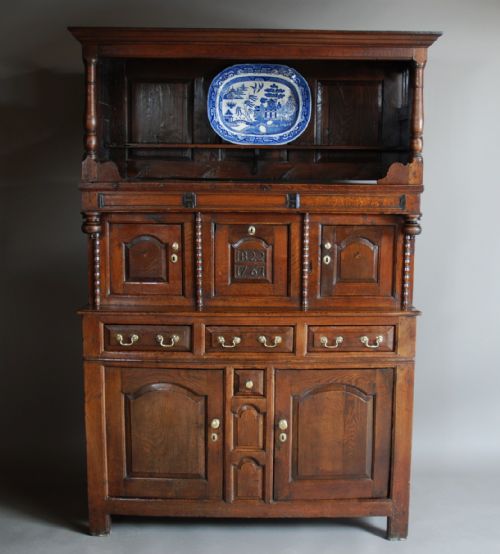
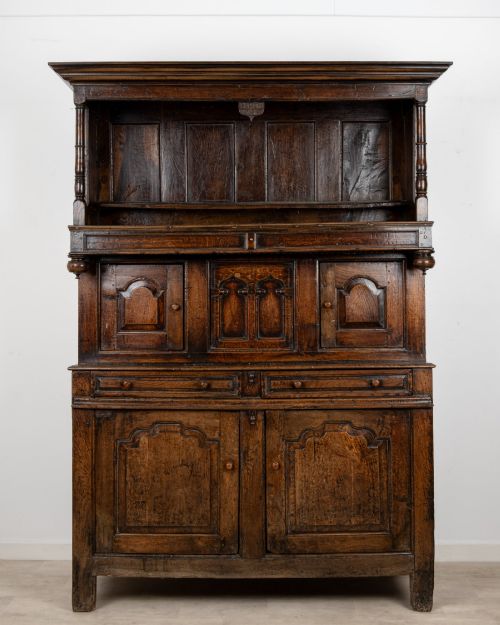
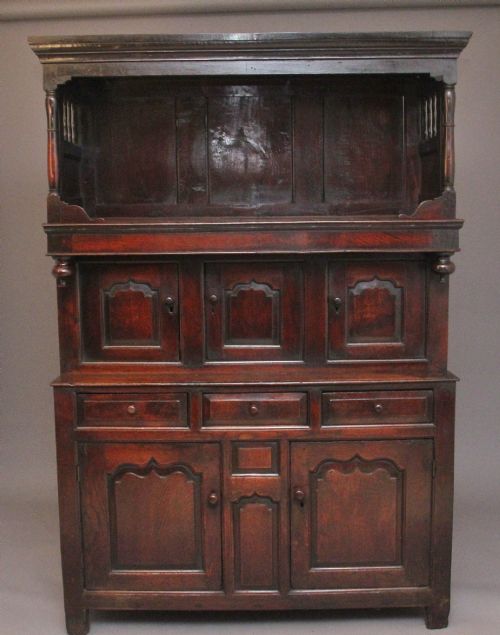
When you search for an antique oak tridarn, you encounter large regional press cupboards divided into three distinct vertical stages, often originating from Welsh country workshops.
The pieces on this page span from the seventeenth century through the Georgian era, occasionally appearing alongside related deuddarn two-part cupboards and dressers.
Most examples present a three-section form with an enclosed upper canopy, an open middle stage with pendants, and a base cupboard section.
Materials and construction
Cabinet makers built these imposing cupboards primarily using solid oak, occasionally incorporating yew-wood for specific panels or details alongside wrought iron and brass hardware.
Construction methods rely on traditional joined timber techniques, panel framing, and pegged joints designed to withstand heavy domestic use over generations.
Materials recorded across the available pieces include solid oak, yew-wood, wrought iron, and brass.
Assessing quality and character
Quality rests upon the depth of the natural timber patina, the crispness of any regional carving, and the survival of original hanging components.
Proportion and scale dictate desirability, with smaller formats and alternative woods such as yew commanding particular attention from collectors.
The Antique Oak Tridarn Glossary
- Tridarn
- A traditional Welsh three-tier cupboard featuring an upper canopy, a middle section with hanging pendants, and a lower press base. This form evolved from the simpler two-tier deuddarn.
- Deuddarn
- A two-part Welsh cupboard lacking the topmost canopy tier of the tridarn. These pieces share the same regional vernacular construction methods.
- Cwpwrdd tridarn
- The traditional Welsh language term for a three-part cupboard. Cabinet makers in North Wales frequently built these for prosperous farmhouses.
- Patina
- The surface sheen and colour developed by aged timber through decades of waxing, handling, and environmental exposure. A deep natural surface indicates minimal modern intervention.
- Vernacular
- Architecture and furniture built by local craftsmen using regional materials and traditional styles rather than metropolitan academic designs.
Antique Oak Tridarn: Frequently Asked Questions
How were tridarns used originally?
These cupboards served to store household provisions, linens, and valued tableware in rural Welsh households. The open middle tier often displayed select plates and vessels.
The enclosed upper and lower sections kept items protected from dust and damp conditions in traditional stone dwellings.
Where do most tridarns originate?
The surviving evidence points directly to Welsh country workshops, with specific examples originating from Snowdonia and North Wales. Regional cabinet makers shaped the local vernacular style.
Different valleys and districts developed subtle variations in carving patterns, proportions, and timber selection, particularly when working with oak or yew.
How do you style an oak tridarn at home?
Placing a tridarn in a modern interior requires a substantial wall space to accommodate its height and depth. The timber tones pair naturally with lime-plastered walls and stone floors.
The open middle stage provides a practical surface for displaying pottery, while the cupboards offer concealed storage for everyday belongings.
How do tridarns differ from dressers?
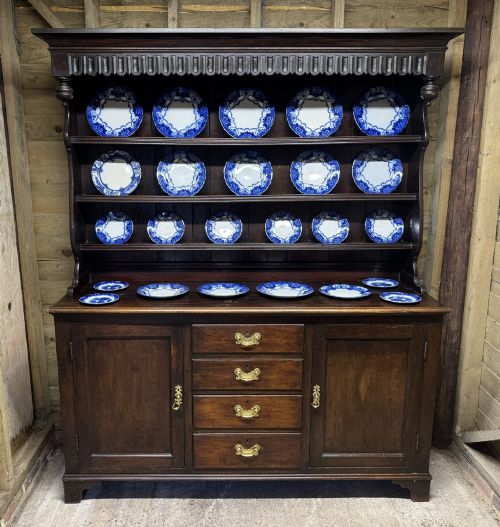
While both forms emerge from Welsh country traditions, a tridarn is fundamentally a stacked cupboard with enclosed compartments across three tiers. Dressers typically combine a lower base with an open plate rack above.
Several pieces on this page bridge these categories, reflecting the varied terminology used by historic makers and modern dealers alike.