
Antique Oak Slope
An antique oak slope is a sloping-lidded desk or box built for correspondence, running from seventeenth-century Bible boxes to Edwardian writing desks.
Antique Oak Slope
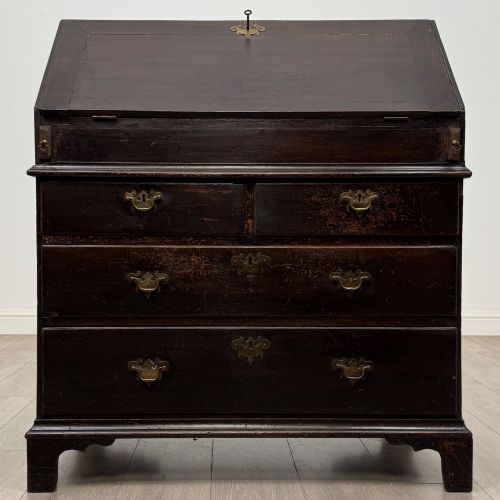
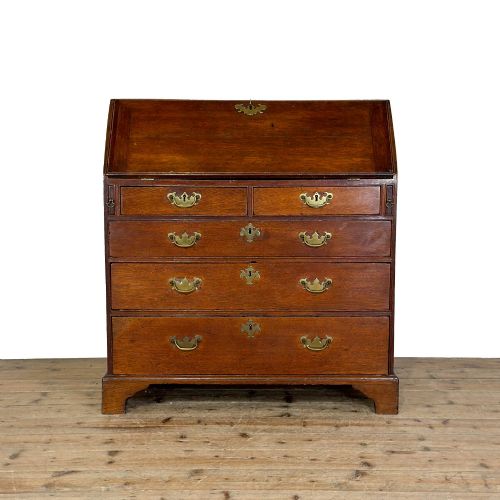
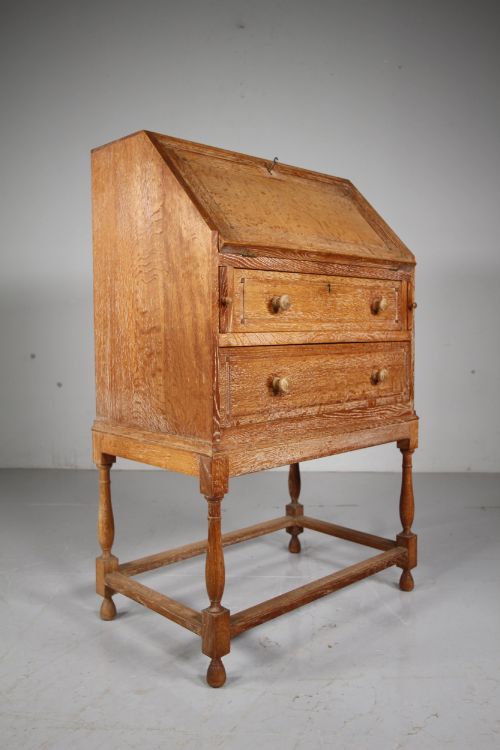
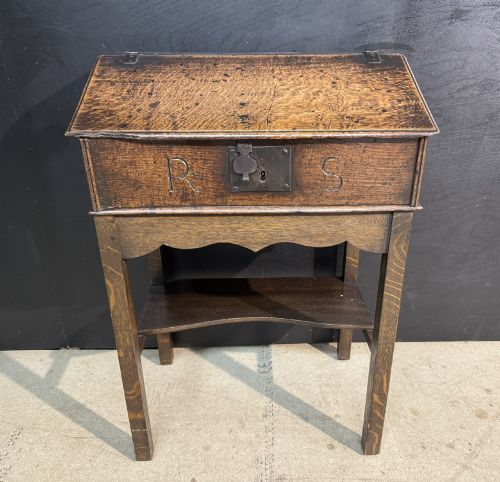
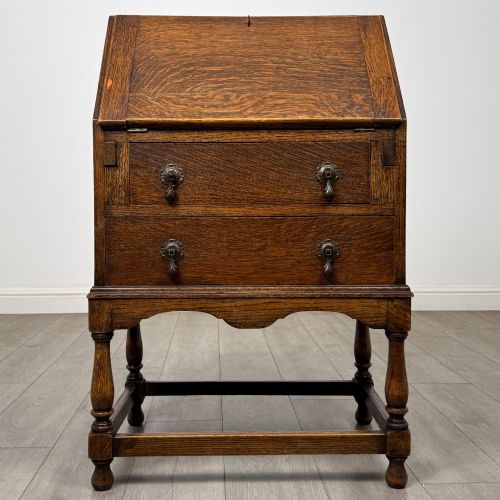
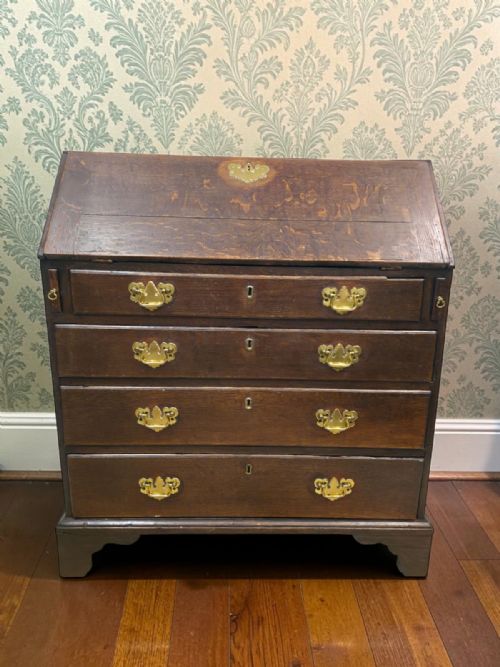
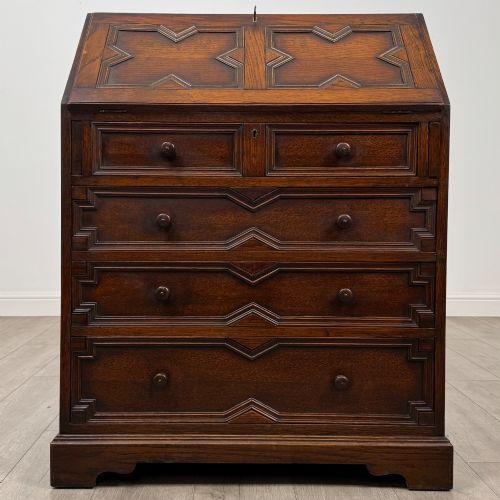
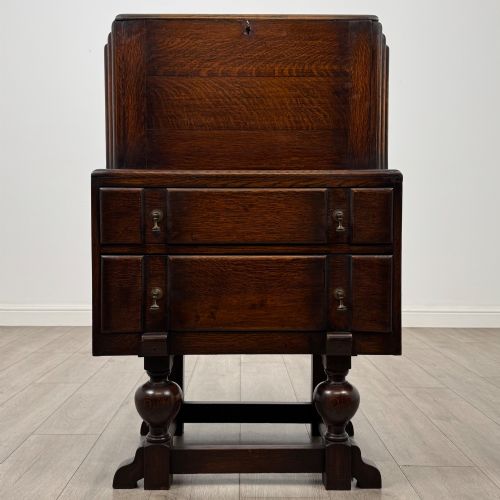
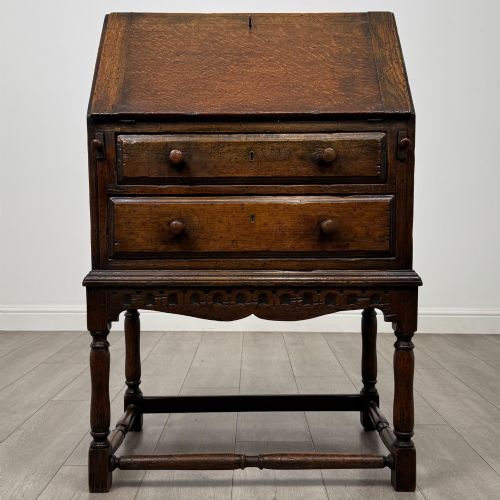
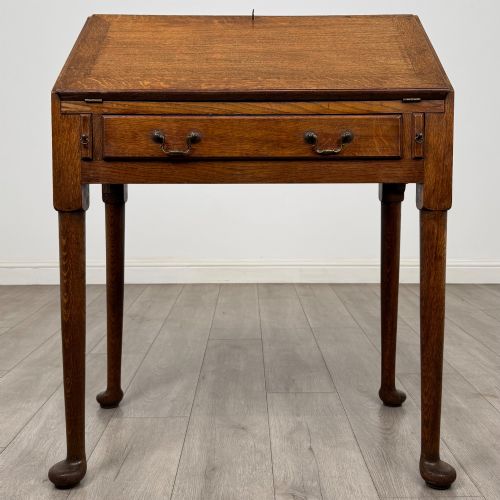
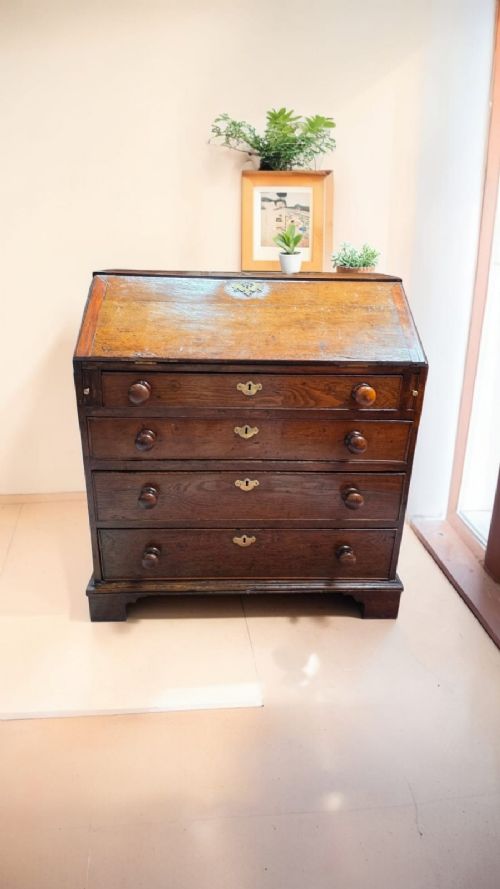
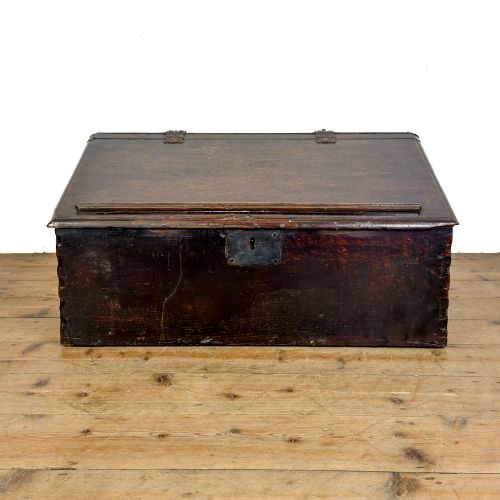
When you search for an antique oak slope, you encounter everything from portable table-top writing boxes and Bible boxes to full-sized Georgian and Victorian bureaux with fall-front writing flaps. The seventeenth-century examples often present as simple desk boxes or slant-front Bible boxes designed to rest on tables. By the eighteenth and nineteenth centuries, the form evolves into substantial oak bureaux and clerk desks fitted with internal drawers and pigeonholes.
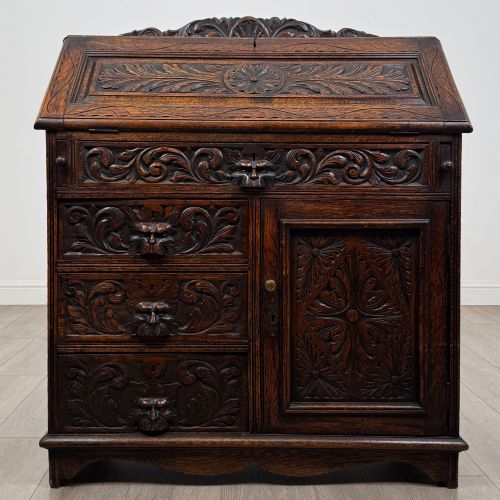
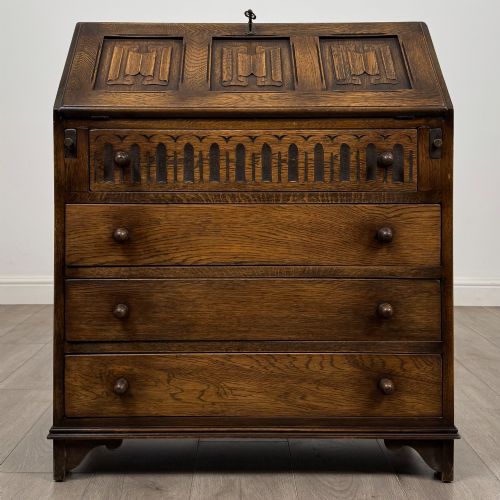
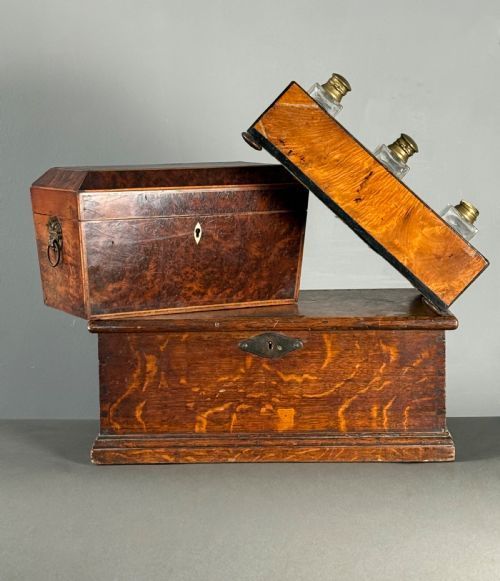
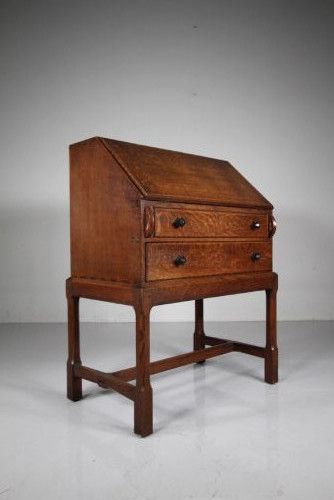
The Edwardian era brings lighter golden oak writing desks and stationery cabinets, alongside revival pieces adopting Jacobean linenfold or Green Man carving. You will also find specialised pieces like architect desks, lecterns, and campaign-style boxes fitted with brass mounts. Solid oak dominates the selection, occasionally paired with pollard oak, walnut, or brass hardware.
Materials and construction
Makers relied principally on solid oak, utilising its dense grain to build robust carcasses that survived centuries of daily writing use. Secondary woods appear inside drawers, while brass hinges, locks, and binding provide both structural reinforcement and decorative contrast.
Joinery methods range from early pegged frame-and-panel construction on seventeenth-century bible boxes to nineteenth-century dovetailed drawer boxes and fall-front hinges. Interiors often feature carved detailing, leather writing surfaces, or intricate boxwood and bone inlay.
The listings span multiple centuries, uniting 17th-century Bible boxes with Arts and Crafts slope-shelf book troughs and Edwardian golden oak stationery cabinets.
Judging the work
Quality rests upon the crispness of the timber's figure and the integrity of the original construction rather than surface embellishment. Earlier vernacular pieces depend on the proportion of the box and the depth of the hand-carved panels, while later desks are judged by the complexity of their internal stationery fittings.
The survival of original brass hardware, working locks with keys, and untouched interior compartments elevates a piece significantly. Altered stands, replaced slopes, or heavy modern refinishing diminish the historical merit of the woodwork.
Heals of London·Stanley Webb Davies·Pairs MFG Co
The Antique Oak Slope Glossary
- Bible box
- A small, sloping-lidded wooden box originally made to hold a folio Bible or household documents. These seventeenth-century pieces represent the earliest form of desk slope.
- Fall-front
- A hinged writing flap that drops down to provide a horizontal or angled surface for correspondence. This mechanism characterises standard bureaux and writing desks.
- Pollard oak
- Oak timber taken from trees that have been pollarded, producing a highly figured, knobbly grain pattern utilised for decorative veneer on finer slopes.
- Stationery box
- A tabletop desk tidy designed with tiered compartments and a fall-front door to hold envelopes and writing paper. These appear frequently in Victorian and Edwardian iterations.
- Jacobean style
- A heavy, seventeenth-century design aesthetic featuring geometric moulding, strapwork, and dark oak finishes that saw major revivals during the nineteenth and twentieth centuries.
Antique Oak Slope: Frequently Asked Questions
What is an antique oak slope?
An antique oak slope is a writing desk or portable box featuring an inclined writing surface. These pieces range from seventeenth-century Bible boxes to Edwardian fall-front bureaux.
They were built to provide a stable, angled board for handwriting before flat partner desks became common.
How were antique writing slopes used?
Writers placed them on tables or used them as standalone desks to draft letters and store important documents. The sloping lid created an ergonomic angle for quill or pen work.
Interior compartments held inkwells, quills, sealing wax, and folded stationery.
How do I date an oak Bible box?
Early seventeenth-century boxes display pegged frame-and-panel joinery, hand-carved strapwork, and vernacular iron hardware. Later nineteenth-century revival pieces utilise machine-cut joints and lighter golden oak.
Examine the construction of the baseboards and the wear patterns around the keyholes for clues to age.
Where should I place a slope at home?
Tabletop Bible boxes and writing slopes sit well on side tables, chests of drawers, or dedicated writing desks. Full-sized bureaux function practically as working desks in studies or living rooms.
Keep them away from direct heat sources and strong sunlight to protect the aged oak finish and leather surfaces.