


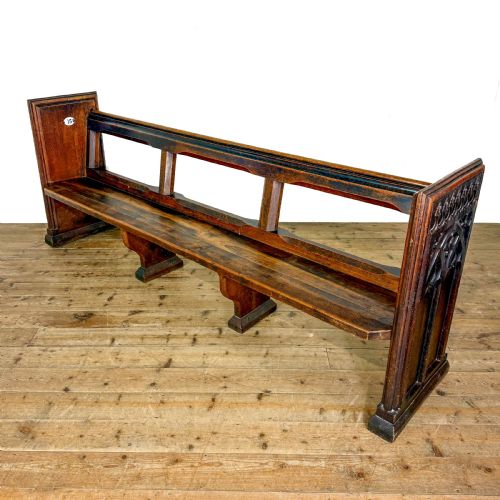

Antique Oak Pews
These antique oak pews bring substantial timber architecture and ecclesiastical presence into domestic interiors.
Antique Oak Pews
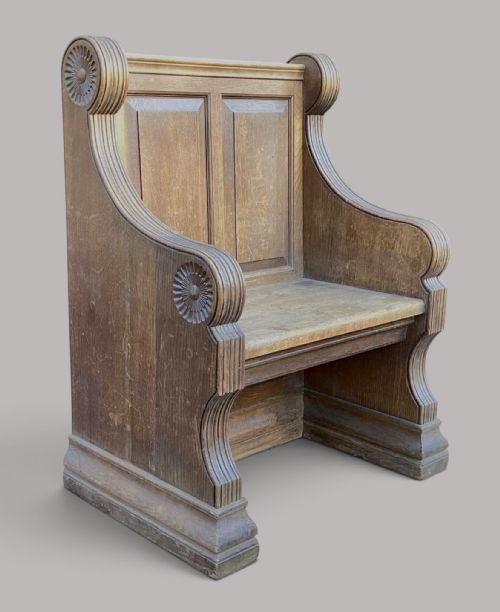
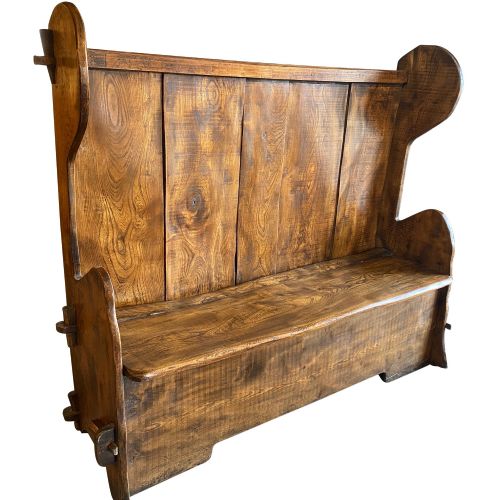
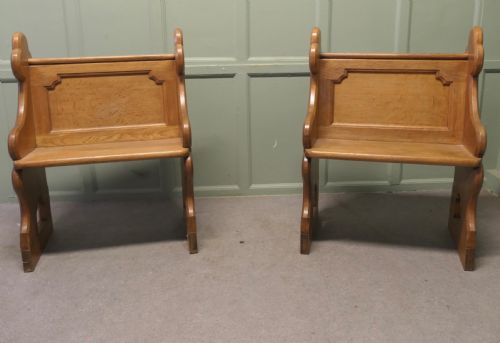
When you search for antique oak pews, you find long benches, settles, and church seating originating primarily from the eighteenth and nineteenth centuries. These pieces encompass styles ranging from Georgian and Gothic Revival to rustic country forms.
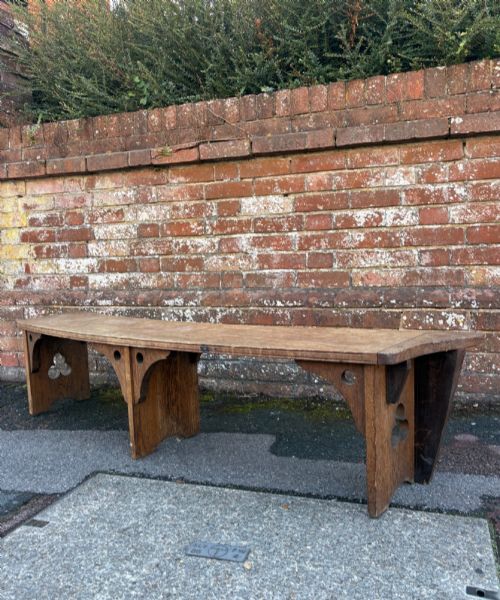
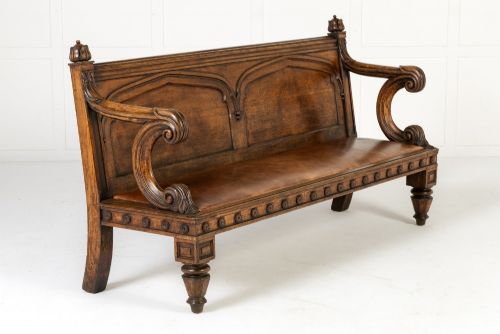
The examples most commonly encountered on this page date from the Victorian and Edwardian eras, often showing architectural influences like trefoil carved supports or high panelled backs. Many of these seating forms transition easily into hallways, dining spaces, and large living rooms.
Makers and origins vary from local country house workshops to pieces bearing specific church provenance, such as those marked for St Paul's Cathedral or parish churches. The category also stretches to include related tavern benches and solid elm or chestnut settles.
Assessing quality and character
Quality in these heavy seating pieces rests upon the integrity of the timber and the depth of the architectural carving. Pieces retaining their original structural density and unaltered surface patination stand apart from heavily restored or adapted examples.
The distinction between standard domestic benches and pieces with documented institutional provenance, such as church or cathedral commissions, influences the overall character and historical interest of the furniture.
Listings feature pieces spanning the eighteenth century to the early twentieth century, incorporating styles from Georgian simplicity to Gothic Revival.
The Antique Oak Pews Glossary
- Settle
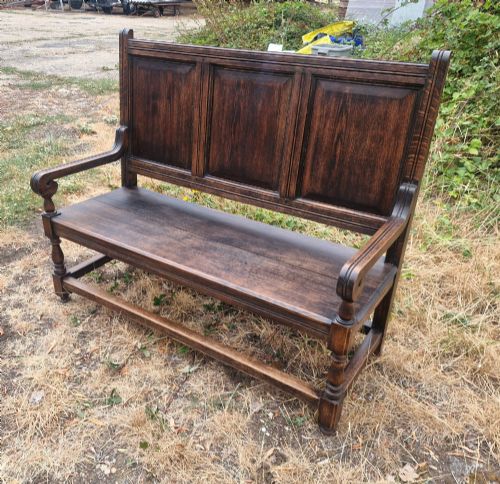
- A wooden bench with a high back, solid arms, and often a enclosed box base for storage. This form kept draughts away from sitters in older domestic interiors.
- Gothic Revival
- An architectural and decorative style popular during the nineteenth century that mimics medieval pointed arches, trefoils, and ecclesiastical motifs. Pews and hall benches frequently adopted this aesthetic.
- Poppy Head
- An ornamental carved finial topping the end of a bench or pew, typically shaped like a stylised leaf or flower bud. These appear on ecclesiastical and Gothic seating.
- Trestle
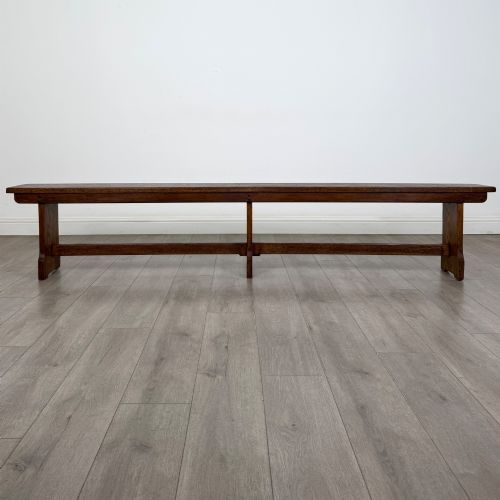
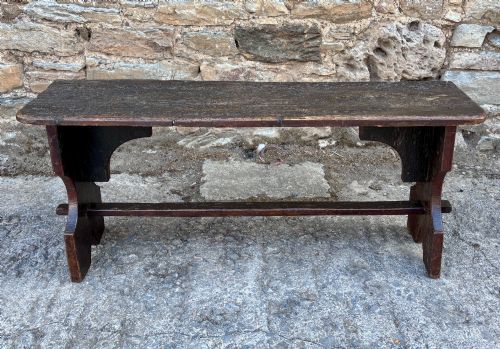
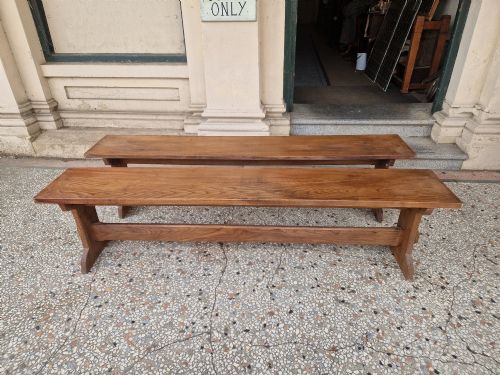
- A structural support system where a horizontal beam rests on vertical legs or frames. These supports frequently underpinn long tavern and refectory benches.
Antique Oak Pews: Frequently Asked Questions
Where do antique oak pews work best at home?
These substantial seats fit naturally into large entrance halls, along dining tables, or against long walls in high-ceilinged rooms. Their architectural presence anchors a space effectively.
Because many examples feature high backs or enclosed storage bases, they also function well as room dividers in open-plan areas.
How do I distinguish church pews from domestic settles?
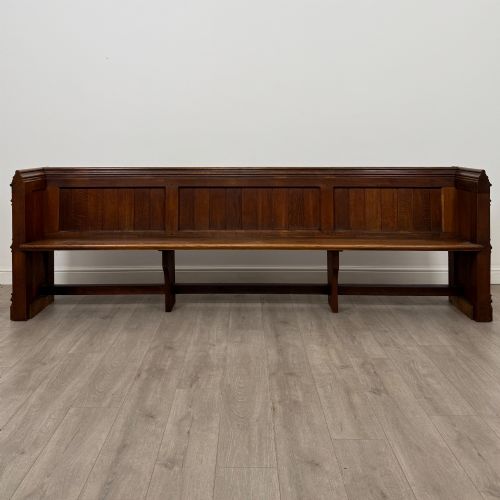
Church pews generally lack enclosed backs or storage compartments, designed instead for rows with open undersides or simple book ledges. Settles were built for homes, featuring solid panelled backs and enclosed bases to block cold draughts.
Both forms share heavy timber construction, but their original placement dictates their layout and detailing.
What periods do these oak pews represent?
The listings span from the eighteenth century through to the early twentieth century, taking in Georgian, Victorian, and Edwardian eras. Revival movements during the Victorian period heavily influenced nineteenth-century production.
Earlier eighteenth-century pieces display simpler country craftsmanship and deeper panelled construction compared to later Gothic Revival interpretations.
Are these benches comfortable for daily seating?
Solid timber seats offer firm, upright support rather than cushioned lounging, reflecting their original utilitarian and ecclesiastical functions. Adding loose squab cushions easily adapts them for modern dining or hallway use.
Their deep proportions and high backs provide a distinct seating posture suited for short or medium periods.