


Antique Oak Pedestal Sideboard
An antique oak pedestal sideboard is a sturdy dining room storage piece built to anchor a formal interior.

Antique Oak Pedestal Sideboard
An antique oak pedestal sideboard brings heavy timber presence and substantial storage to a dining space. Buyers searching for an antique oak pedestal sideboard will encounter nineteenth-century interpretations alongside earlier iterations.
The form typically incorporates flanking pedestals supporting a central counter or mirrored back. Most examples on this page date from the Victorian era, spanning various revival styles.
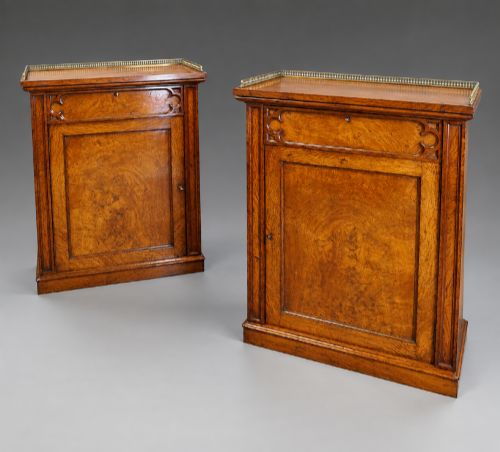
Makers often drew upon Gothic revival or Renaissance motifs to ornament the sturdy timber frames. Alongside traditional sideboards, the selection includes related side cabinets and desks utilising similar materials.
How they were made
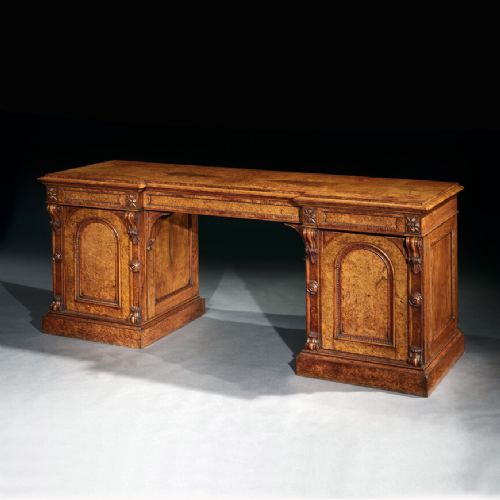
Carpenters utilised solid oak, frequently augmented with pollard oak or walnut veneers to create striking grain patterns. Brass fittings and mirror glass appear on grander Victorian iterations.
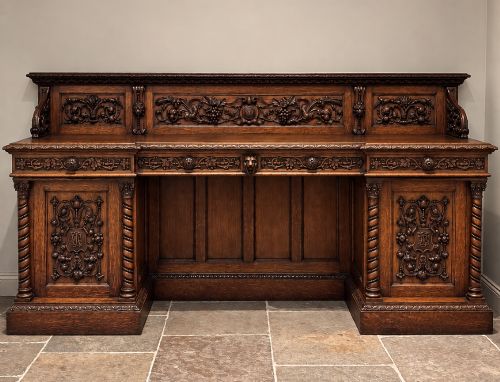
Carving was executed directly into the timber, ranging from geometric panels to elaborate relief work. Bleached finishes also appear on select items, altering the natural dark tone of the wood.
One Victorian sideboard hides its grandeur behind a mirror back and geometric carving, built to impress every dinner guest.
What varies in quality
The ambition of the carving and the choice of secondary timbers dictate the standing of a piece. Exceptional examples feature figured pollard oak or specialised specimen wood inlay rather than plain timber.
Proportion and scale also separate standard utility items from grand exhibition pieces. The integration of original mirror glass and substantial brass hardware elevates the overall execution.
Étienne Kohlmann
The Antique Oak Pedestal Sideboard Glossary
- Pedestal sideboard
- A large dining room storage unit featuring two structural end columns or cupboards linked by a central section. These pieces provide substantial surface and interior capacity.
- Pollard oak
- Timber taken from trees that have been pollarded, producing a dense, highly figured grain pattern prized by cabinetmakers. It is frequently utilised for drawer fronts and decorative panels.
- Gothic Revival
- A nineteenth-century design movement drawing inspiration from medieval architecture. Pieces in this style often incorporate pointed arches, tracery, and heavy carved details.
- Mirror back
- An upright wooden superstructure holding a glass mirror plate attached to the rear of the sideboard. This feature reflects light and displays decorative objects placed on the counter.
Antique Oak Pedestal Sideboard: Frequently Asked Questions
What is a pedestal sideboard?
A pedestal sideboard is a large dining room furniture item featuring two distinct side pillars or cupboards. They provide heavy storage capacity and a substantial serving surface.
These pieces typically date from the nineteenth century and were designed to anchor formal dining spaces with heavy timber construction.
Where does pollard oak come from?
Pollard oak is harvested from trees that have been cut back near the trunk to encourage dense, branching growth. This pruning method creates a swirling, highly decorative grain.
Cabinetmakers utilised this timber for prominent panels and drawer fronts on high-status nineteenth-century furniture.
How do I style a mirror back sideboard?
A mirror back sideboard works best against a solid dining room wall where its scale can be fully appreciated. The integrated mirror reflects natural light and illuminates objects placed on the counter.
Keep surrounding furniture balanced in proportion, as these sideboards possess a commanding visual presence.
What is Gothic Revival furniture?
Gothic Revival furniture draws upon medieval architectural elements such as pointed arches, quatrefoils, and heavy mouldings. Makers revived these styles during the Victorian period for dramatic effect.
Such pieces are characterised by dark timber, deep relief carving, and robust structural framing.