


Carved Oak Mirror Back Credenza
A carved oak mirror back credenza combines deep relief carving and reflective glass to anchor a dining room.
Carved Oak Mirror Back Credenza
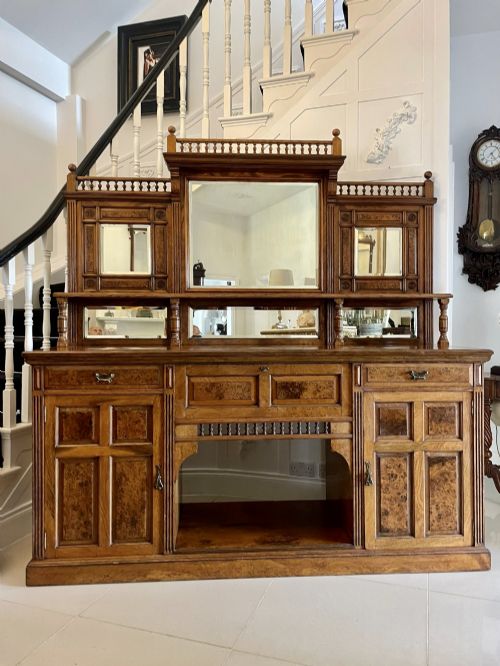
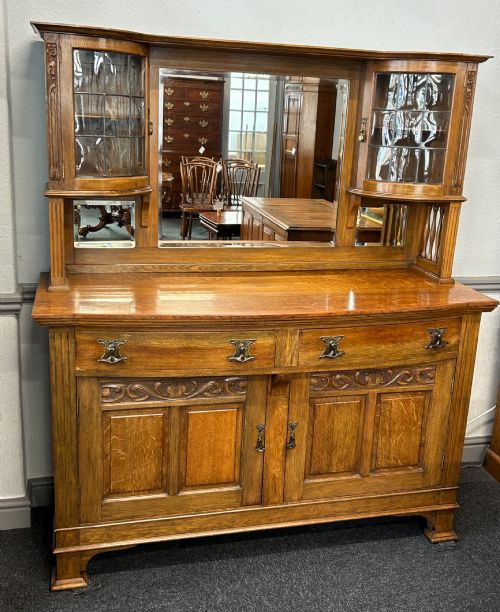
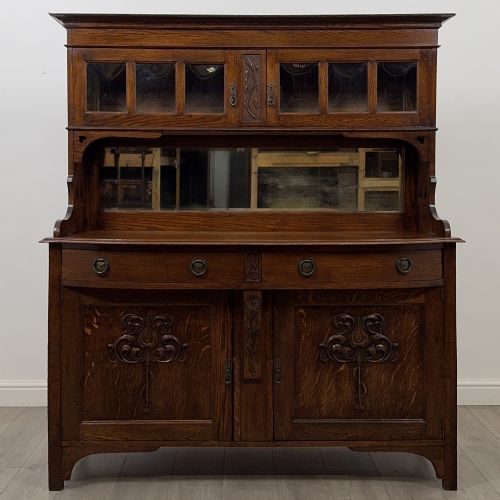
A carved oak mirror back credenza is primarily represented by large Victorian and Edwardian sideboards, buffets, and cabinets featuring tall mirror backs. These substantial pieces served as grand focal points in formal dining rooms for displaying silver and serving food.
The selections span from robust mid nineteenth century Victorian Gothic and Renaissance revivals through to lighter Edwardian Arts and Crafts interpretations. While many pieces date from the Victorian era around eighteen eighty, examples extend from eighteen sixty into the nineteen thirties.
Makers utilised various oak tones, ranging from dark pollard oak and golden oak to bleached oak, often pairing the timber with brass hardware. The integration of large mirror glass plates distinguishes these credenzas from standard sideboards.
Materials and construction methods
Cabinet makers constructed these pieces predominantly from solid oak and pollard oak veneers, selected for distinctive grain patterns and durability. Specialised techniques included deep hand carving for geometric, floral, and figural motifs such as Green Man carvings.
Bevelled mirror glass was secured into elaborate wooden frames surmounting the base cabinet, which typically incorporated cupboards, drawers, and open display shelves. Brass fittings and copper details completed the hardware assembly on many Arts and Crafts and Victorian pieces.
Listings feature oak alongside materials such as pollard oak, brass, copper, and mirror glass across Victorian and Edwardian periods.
Distinctions in quality and execution
Quality separates pieces through the crispness and depth of the hand carving, where intricate figural or geometric relief work demands superior craftsmanship. The selection of timber, particularly highly figured pollard oak or specially chosen specimen woods, elevates the status of a piece.
Structural complexity and the integration of the mirror back frame also define the upper tier. Comprehensive proportions, substantial brass or copper hardware, and maker attribution indicate higher echelon workshop production.
T Simpson and Son
The Carved Oak Mirror Back Credenza Glossary
- Credenza
- A sideboard or buffet cabinet originally used for serving food and displaying plate. These pieces often feature extensive lower storage and upper display elements.
- Pollard oak
- Oak timber taken from pollarded trees, noted for clustered growth rings that create highly decorative, mottled grain patterns. It was favoured by nineteenth century cabinet makers for high end furniture.
- Green Man
- A sculptural architectural ornament depicting a human face entwined with or sprouting foliage. This motif appears frequently in the relief carving of Victorian and Gothic Revival pieces.
- Arts and Crafts
- A design movement prioritising traditional craftsmanship, visible construction, and simple forms over mass produced ornamentation. It influenced late Victorian and Edwardian oak furniture.
- Gothic Revival
- An architectural and decorative style drawing inspiration from medieval forms, featuring pointed arches, heavy moulding, and robust carved details.
Carved Oak Mirror Back Credenza: Frequently Asked Questions
What rooms suit a carved oak mirror back credenza?
These substantial pieces are traditionally placed in dining rooms or large hallways where their scale and reflective glass can enhance the surrounding space.
They provide extensive surface area for serving and deep interior storage for tableware, making them practical for modern living spaces with adequate wall capacity.
How do I distinguish Victorian from Edwardian pieces?
Victorian examples typically display heavier carving, darker pollard oak finishes, and elaborate revival styles such as Gothic or Renaissance motifs.
Edwardian pieces often shift towards lighter oak tones, simpler lines, and Arts and Crafts influences with reduced surface ornamentation.
Are mirror back credenzas difficult to move?
Most credenzas of this scale are heavy, often constructed in two sections with the mirror back detachable from the lower sideboard base for transport.
Careful handling is required to protect both the solid oak framework and the heavy glass plates during relocation.
What is pollard oak?
Pollard oak is timber harvested from trees that were cut back close to the trunk to promote dense, branched growth.
This pruning method creates a swirling, highly decorative grain pattern that cabinet makers utilised on prominent panels.