



Edwardian Oak Chiffonier
An edwardian oak chiffonier is a robust dining room storage piece, prized for its honest grain and practical surface space.
Edwardian Oak Chiffonier
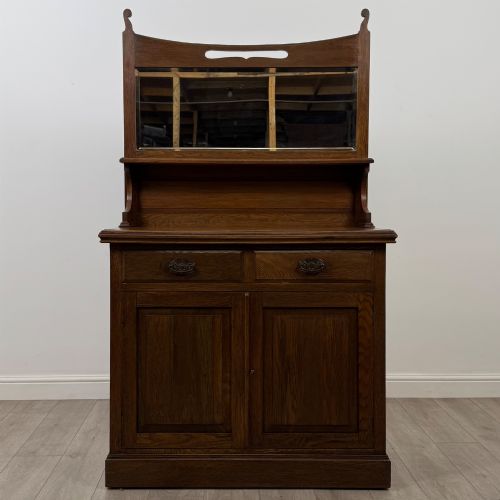
An edwardian oak chiffonier bridges the gap between Victorian heft and simpler Arts and Crafts utility. These pieces combine lower cupboard storage with useful surface tops, occasionally featuring mirror backs for reflecting light in smaller reception rooms.
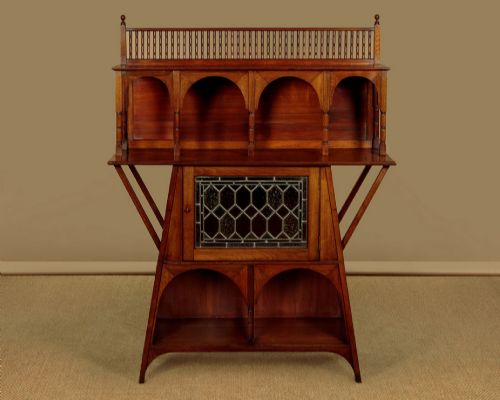
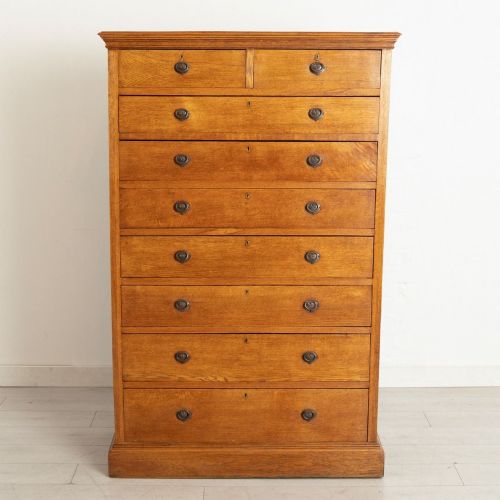
The examples gathered here span the turn of the twentieth century, taking in both Edwardian production and related late Victorian or Arts and Crafts variants. You will encounter low sideboards, side cabinets, and buffet forms alongside the core chiffonier type.
Most pieces rely on golden or dark oak timbers, sometimes employing pollard oak for figured panel grain. Their origins are rooted in British domestic workshop traditions, built to withstand daily household service.
How they were made
Cabinetmakers built these pieces using solid oak boards and sturdy framing, complemented by brass handles, hinges, and occasional copper detailing. Glass doors or leaded glass panels appear on upper sections to display tableware.
Construction techniques prioritise functional joinery, with fielded panels and carved ornamentation kept restrained in line with Arts and Crafts ideals. Surfaces receive traditional wax or polish finishes that highlight the natural figure of the timber.
Some of these cabinets still hide the faint, lingering scent of decades-old beeswax and dining linen inside their lower drawers.
What varies in quality
The distinction between standard utility furniture and superior examples lies in the selection of timber and the crispness of any carved detail. Grain selection, particularly the use of figured pollard oak, elevates the visual presence of a piece.
Hardware quality also separates the tiers, with heavy brass or copper mounts and original fitted key escutcheons indicating a higher grade of workshop production. Structural integrity in the door frames and drawer linings determines longevity.
Liberty & Co.
The Edwardian Oak Chiffonier Glossary
- Chiffonier
- A low sideboard or cabinet featuring a combination of cupboards and drawers beneath a top shelf or mirror back. It served primarily for storing and serving dining silver and glassware.
- Pollard Oak
- Timber taken from trees that have been pollarded, producing wood with a dense, speckled cluster grain. This decorative veneer was prized for door panels.
- Arts and Crafts
- A design movement advocating traditional craftsmanship and simple forms over mass-produced ornamentation. It heavily influenced the hardware and structural lines of these cabinets.
- Leaded Glass
- Glass panes held together by narrow strips of lead, often forming geometric patterns in cabinet doors. It adds texture and transparency to otherwise solid wooden elevations.
Edwardian Oak Chiffonier: Frequently Asked Questions
What is an edwardian oak chiffonier used for?
These pieces functioned as dining room servers for holding silverware, linen, and glassware while providing a flat surface for display. Today they serve equally well in living spaces as media consoles or general storage cabinets.
The enclosed lower cupboards keep everyday clutter concealed, while any upper shelving or mirrors help anchor a room's wall space.
How do I distinguish Edwardian from Victorian oak?
Victorian examples tend to feature heavier carving, darker finishes, and more imposing mirror backs with elaborate cresting. Edwardian pieces generally lean towards lighter golden oak tones and cleaner, more restrained lines.
The transition around the turn of the century also saw strong influence from the Arts and Crafts movement, replacing heavy elaboration with honest construction.
Are these pieces suitable for smaller rooms?
Many sideboards and chiffoniers from this era were built for compact suburban townhouses rather than sprawling country estates. Their modest depths make them practical for hallways or dining areas where floor space is limited.
Versions featuring mirror backs also assist in bouncing natural light around a darker reception room.
How should I care for the oak surface?
Maintaining the finish requires little more than occasional dusting with a dry lint-free cloth and an infrequent application of traditional beeswax. Avoid placing the timber in direct sunlight or beside intense heat sources to prevent warping.
Keeping the environment stable preserves both the polish and the original brass or copper hardware.