




Antique Oak Jewellery Chest
These antique oak jewellery chests are compact masterworks of timber and joinery, offering collectors a clever place to keep small valuables safe.
Antique Oak Jewellery Chest
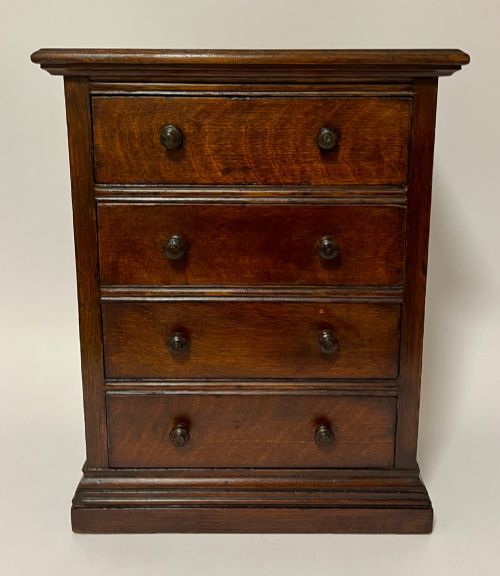
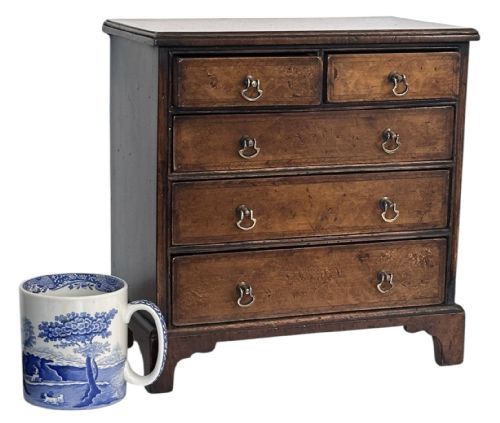
When you search for an antique oak jewellery chest, you enter a varied landscape of small-scale furniture spanning several centuries. The selections here include miniature chests of drawers, tabletop cabinets, and small coffers designed to house precious items.
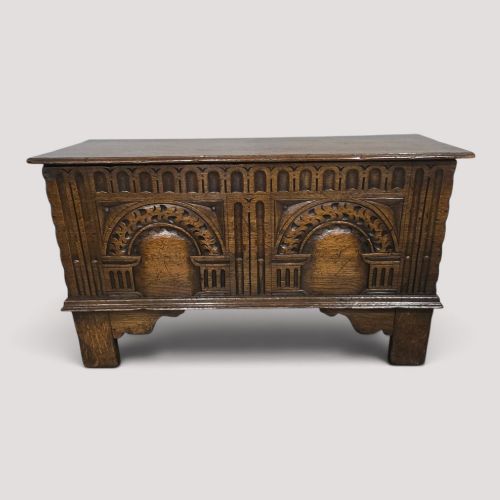
The versions you meet most frequently on this page date from the nineteenth and eighteenth centuries, though seventeenth-century examples and early twentieth-century pieces also appear. They take forms such as apprentice pieces, miniature commodes, and small Welsh coffor bach.
How they were made
Joiners built these miniature chests primarily from solid oak and burr oak, sometimes incorporating inlay wood for decorative effect. They employed traditional carpentry joints suited to small-scale cabinetry, creating sturdy miniature furniture.
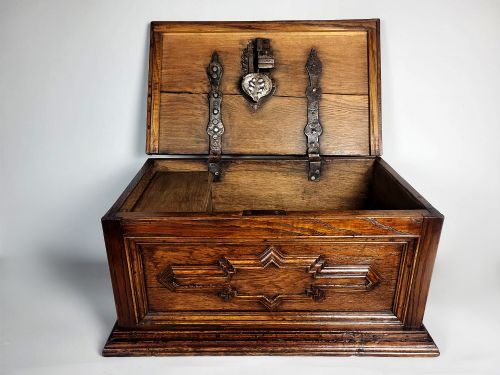
Metal components played a crucial role in both function and security, featuring brass handles and escutcheons alongside iron and steel locks. Some seventeenth-century boxes display chip carving directly into the timber surface.
Object types include miniature commodes, compactum wardrobes, specimen cases, and chip-carved boxes alongside standard chests of drawers.
What varies in quality
The calibre of these small chests depends heavily on the crispness of the cabinet work and the fidelity of the miniature proportions. Superior examples maintain the structural integrity and joinery standards of full-sized furniture.
Original hardware, such as complex steel locks with working keys and period brass pulls, elevates a piece significantly. Finer specimens display carefully selected burr oak or precise inlaid wood rather than plain surfaces.
The Antique Oak Jewellery Chest Glossary
- Coffor bach
- A small Welsh chest traditionally used for storing valuables or linens. These miniature oak pieces often feature hinged lids and small drawer bases.
- Apprentice piece
- A small item of furniture created to demonstrate a woodworker's skill to a guild. They show the same joinery techniques as larger household furniture.
- Compactum
- A multi-functional wardrobe or chest designed for efficient storage. Miniature versions combine hanging space with small drawers.
- Escutcheon
- A protective plate surrounding a keyhole. On these chests, they are typically made of brass.
- Chip carving
- A decorative technique where small chips are removed from the surface of the timber to form geometric patterns.
Antique Oak Jewellery Chest: Frequently Asked Questions
Were these chests made by apprentices?
Some small chests are traditional apprentice pieces, created by woodworkers demonstrating mastery of their craft. Other items functioned as miniature furniture for display or tabletop use.
Cabinetmakers applied full-scale joinery techniques to these reduced dimensions.
How do I date an oak chest?
Dating relies on construction methods, timber selection, and stylistic details. Seventeenth-century examples often feature chip carving and iron locks, while Georgian and Victorian pieces show different drawer construction and brass hardware.
Comparing the style to known furniture periods helps narrow the decade.
What wood was used?
Oak is the primary timber seen across these listings, occasionally paired with burr oak for enhanced grain patterns. Inlaid woods also appear on later Victorian and Edwardian specimens.
Hardware incorporated brass, iron, and steel for hinges and locks.
Did these chests have keys?
Many collector's cabinets and miniature chests retain their original keys and functional locks. Seventeenth-century boxes often feature complex steel locking mechanisms.
Locks and keys varied in sophistication depending on the period and the value of the contents stored.