


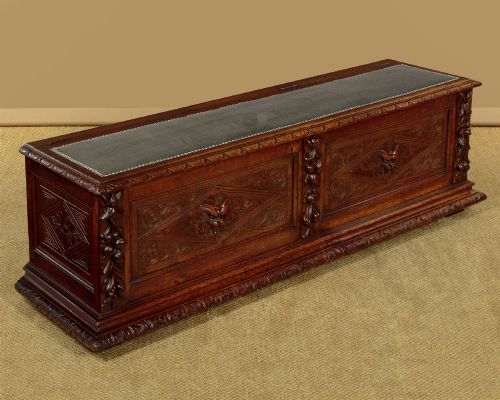
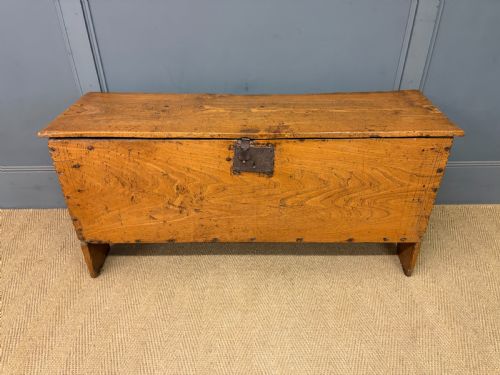
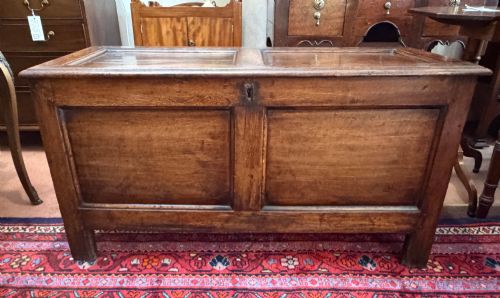
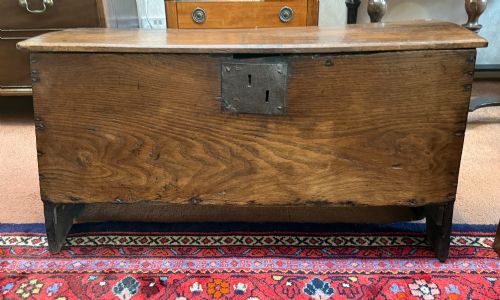
Antique Oak Box Trunk
An antique oak box trunk brings centuries of utility and sturdy timber grain into a room.
Antique Oak Box Trunk
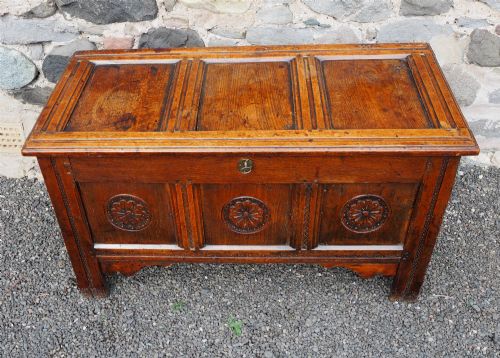
An antique oak box trunk spans utilitarian storage vessels, heavy coffers, and mule chests designed for household linens and valuables. These pieces range from small bible boxes and sword chests to large panelled coffers originating across the sixteenth, seventeenth, and eighteenth centuries.
Buyers seeking an antique oak box trunk encounter regional variations such as Welsh coffer bachs, alongside later revivals from the Edwardian and Arts and Crafts periods. The majority of pieces on this page comprise joined and panelled oak construction intended for domestic storage.
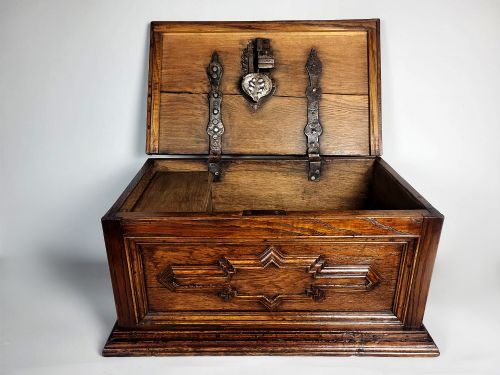
Objects listed under this heading include boarded construction and boarded storage chests, frequently featuring hinged lids and internal till compartments. Their robust nature ensured survival across domestic and regional settings over hundreds of years.
How They Were Made
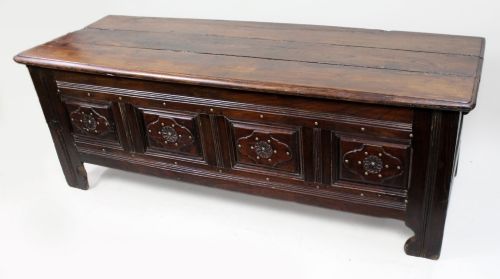
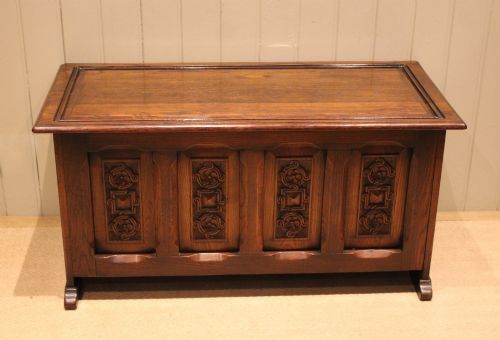
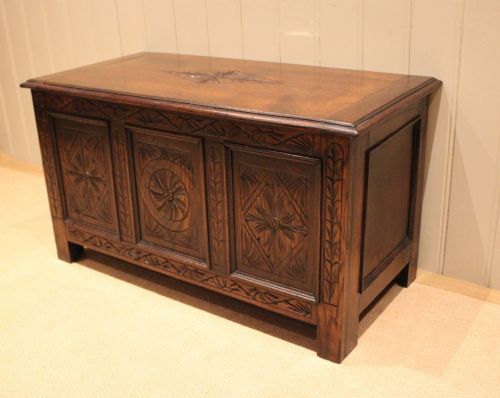
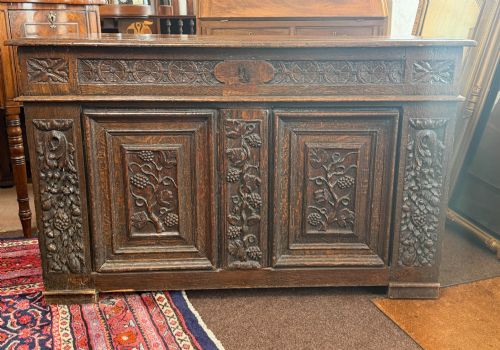
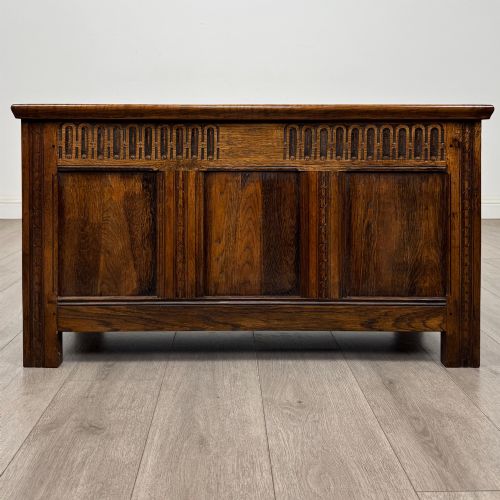
Makers utilised solid oak alongside secondary timbers like elm, joining panels with pegged mortise and tenon joints to accommodate seasonal wood movement. Surfaces were frequently hand-carved with geometric motifs, foliage, or arcading.
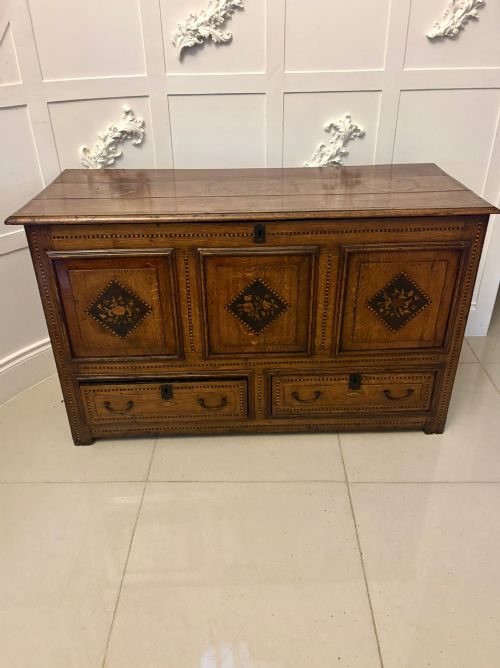
Hardware played an essential structural role, incorporating hand-wrought iron hinges, strapwork, and brass escutcheons secured by handmade nails. Some examples display marquetry inlay or geometric mouldings applied to the front panels.
Listings feature solid oak, elm, brass, iron, and marquetry inlay across periods spanning the sixteenth century to the Art Deco era.
What Varies in Quality
The standard of a piece depends upon the depth of the timber's natural patina, the crispness of surviving hand-carving, and the integrity of the original joined framing. Untouched surface skins and minimal timber replacement elevate an example above heavily restored items.
Proportion and regional character also dictate distinction, with smaller proportions, dated inscriptions, and integrated drawer bases on mule chests commanding greater interest among collectors.
The Antique Oak Box Trunk Glossary
- Coffer
- A heavy wooden chest traditionally used for storing valuables, documents, or textiles. These sturdy receptacles typically feature hinged lids and boarded or panelled frames.
- Mule Chest
- A storage chest fitted with one or more drawers at the base beneath the main compartment. This form bridges the evolution between the traditional coffer and the chest of drawers.
- Bible Box
- A small tabletop or portable desk box utilised for holding sacred texts and writing implements. They frequently share the construction methods and carved ornamentation of larger trunks.
- Marquetry Inlay
- The decorative art of applying small pieces of veneer to a structural surface to form geometric or floral patterns. This technique enhances the visual richness of select panelled fronts.
- Patina
- The deep surface sheen and colour developed by timber over centuries of handling, waxing, and exposure to light. A desirable skin reflects genuine age and careful maintenance.
Antique Oak Box Trunk: Frequently Asked Questions
What were antique oak box trunks used for?
These robust vessels originally stored valuable textiles, household linen, silver, and important documents securely within domestic or ecclesiastical settings. Their heavy construction and locking lids protected contents from dampness and theft.
Over subsequent centuries, owners adapted them for general household storage, blanket placement, or occasional coffee table use within modern interiors.
How can I tell a seventeenth-century trunk from a later revival?
Early pieces display hand-riven timber, peg-joined mortise and tenon frames, and hand-wrought iron hardware that shows irregular tool marks. The framing timbers shrink and distort naturally over hundreds of years.
Later Victorian and Edwardian revival items often utilise machine-sawn boards, standard commercial screws, and uniform distressing applied to simulate genuine age.
What is the difference between a coffer and a mule chest?
A standard coffer consists of a single deep cavity accessed exclusively via a hinged lid at the top. This simple design focused entirely on bulk storage for textiles and valuables.
A mule chest incorporates one or more drawers built into the base beneath the main chest cavity, offering easier access to smaller items without disturbing the lid.
How do I care for an antique oak trunk at home?
Keep the timber away from direct heat sources, radiators, and strong sunlight to prevent the oak from drying out, splitting, or shrinking. Maintaining a stable room temperature protects the structural joints.
Apply a traditional beeswax polish occasionally to nourish the surface grain and preserve the natural patina without sealing the wood pores.