
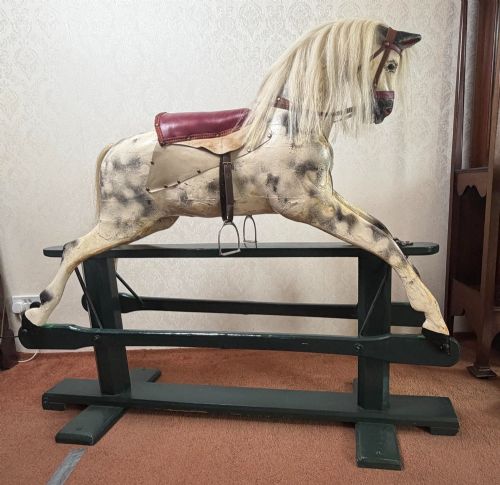


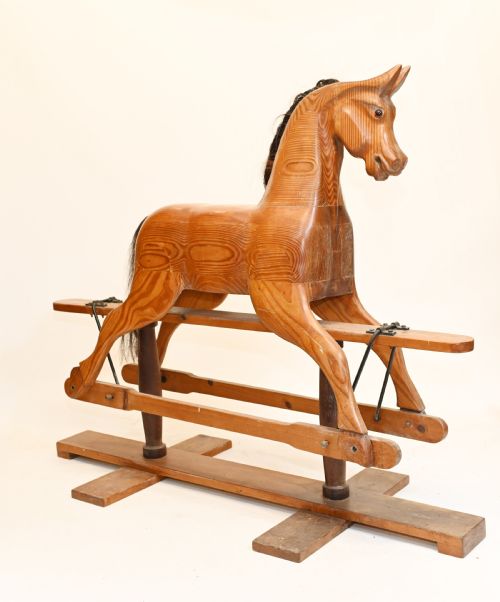


Antique Nursery Decor Horse
These antique nursery decor horse pieces are tactile wooden companions that bring traditional character into modern rooms.
Antique Nursery Decor Horse
When you search for an antique nursery decor horse, you encounter sturdy wooden playthings designed to sit within traditional interiors. The selections span the nineteenth century through to the mid-twentieth century, capturing enduring childhood forms.
Rocking horses dominate the offerings, appearing alongside pull-along toys and naive folk art examples. You most frequently meet substantial carved pine and painted wooden horses mounted on their original rocking frames.
Origins stretch across British and European workshops, encompassing traditional Victorian craftsmanship alongside Spanish folk art pieces. Each object reflects the utilitarian yet decorative nature of early children's playthings.
How they were made
Maker's hands shaped these horses primarily from solid pine and carved hardwoods, utilising iron and metal for structural bracing and fixings. Craftsmen applied surface finishes using traditional paint layers that now show historical wear.
Detailing often incorporates natural materials such as genuine horsehair for manes and tails, complemented by leather harness straps. These organic components were secured directly to the carved wooden bodies during initial construction.
Current listings feature wooden horses spanning the Victorian era through to the interwar period, utilising pine, leather, and horsehair.
What varies in quality
Quality rests upon the sculptural confidence of the carving and the survival of original surface paint rather than mere age. Pieces retaining their untouched early pigments demonstrate greater integrity than those stripped or heavily restored.
The sophistication of the wooden form separates standard workshop production from finer folk art examples. Surviving original rockers and integrated leather or horsehair details elevate the physical presence of individual horses.
Ayres·Collinsons
The Antique Nursery Decor Horse Glossary
- Rocking horse
- A carved wooden toy mounted on curved wooden bows that allow forward and backward movement. These structures formed the centrepiece of traditional Victorian nurseries.
- Pull-along horse
- A smaller toy fitted with wheels or mounted on a wooden platform for a child to drag across the floor. These pieces date predominantly to the late nineteenth century.
- Original paint
- The initial surface coating applied to the wood during manufacture, untouched by later stripping or modern overpainting. Collectors prize this layer for its authentic historical patina.
Antique Nursery Decor Horse: Frequently Asked Questions
What is an antique nursery decor horse?
These items are traditional carved wooden toys, primarily rocking horses and pull-along figures, originating from the nineteenth and early twentieth centuries.
Originally built for children's play, they now function as sculptural decorative objects within residential interiors.
How do I date a wooden rocking horse?
Dating relies upon examining the construction methods, nail types, and the style of the carved wooden body. Earlier pieces often display naive folk art characteristics and hand-forged metal fixings.
The presence of original paint layers and early horsehair tack also provides reliable clues to the period of manufacture.
How do I style a rocking horse at home?
These large wooden figures sit effectively as freestanding sculptural pieces in living rooms, hallways, or children's bedrooms. Their neutral wood tones and aged paint surfaces complement both traditional and contemporary interior schemes.
Allowing sufficient floor space around the piece ensures its visual form remains the focal point of the room.
What materials are used in these horses?
Makers constructed the primary bodies from carved woods such as pine, often mounted on heavy wooden rocking frames. Details were finished using genuine horsehair, leather straps, and traditional paint layers.
Metal brackets and iron components frequently provide structural support within the older frames.