


Victorian Carved Toy Horse
A victorian carved toy horse brings genuine nineteenth-century playrooms into a modern home with carved timber and real character.
Victorian Carved Toy Horse
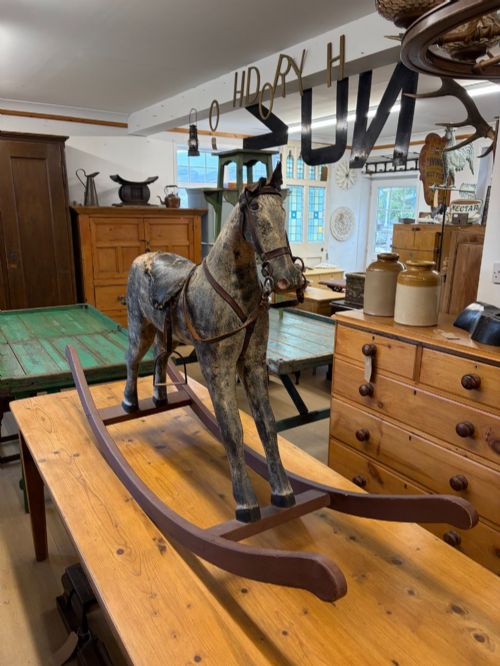
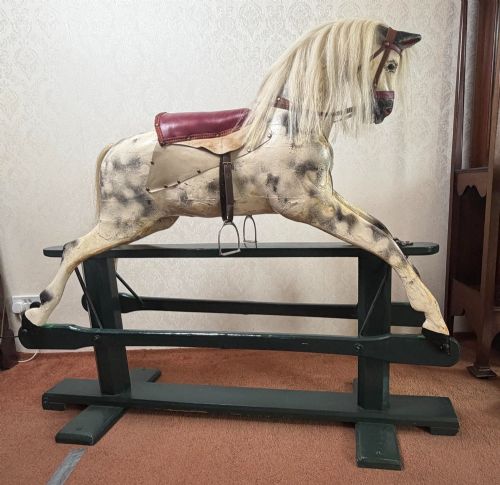
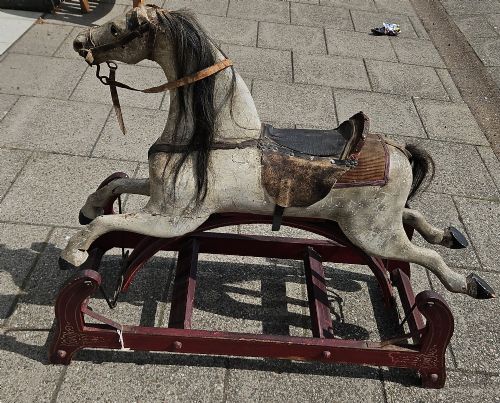
A victorian carved toy horse appears primarily as a rocking horse or ride-on toy, built for nursery use during the nineteenth and early twentieth centuries. These pieces span periods from the nineteenth century through to the early decades of the twentieth century, reflecting varied regional origins including English, American, Spanish and French examples.
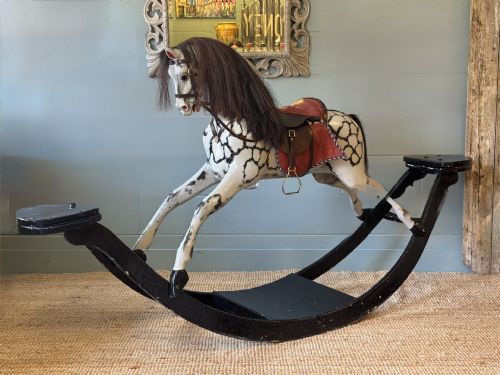
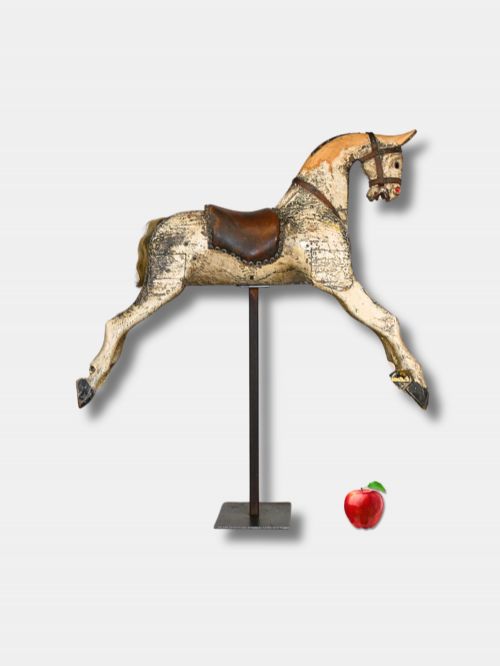
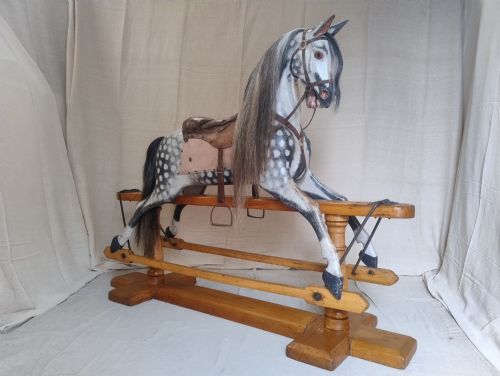
The form ranges from large workshop pieces mounted on original curved rockers or swinging stands to smaller primitive and naive wooden sculptures. Buyers most frequently encounter pine rocking horses and carved wooden toy horses retaining traces of original paint.
Makers such as G & J Lines, F.H. Ayres and Collinson produced substantial rocking horses that survive alongside unsigned folk art carvings. The selection encompasses both grand dappled workshop models and simpler rustic toys fashioned from local timber.
Materials and Construction
Makers fashioned these toy horses primarily from carved wood, utilising pine and other solid timbers for the body and curved rockers. Iron and steel components provided structural reinforcement to joints and rocking mechanisms, whilst metal brackets secured the horse to its stand.
Surface finishes relied on layers of paint, often creating the classic dappled appearance seen on larger workshop examples. Upholstery details typically incorporated leather for saddles and tack alongside real horsehair for manes and tails.
Many antique rocking horses still carry the faint, ghostly prints of tiny nursery fingernails pressed into their painted manes.
Evaluating Quality
Quality in a carved toy horse rests upon the strength of the initial timber carving and the survival of original surface decoration. Pieces retaining their original paintwork and authentic tack hold greater visual presence than those stripped or heavily repainted.
The presence of an original maker or a documented workshop attribution elevates the standing of a piece within the category. Structural integrity, particularly the retention of original curved rockers or swinging stands, defines the upper tier of surviving examples.
G & J Lines·F.H. Ayres·Collinson
The Victorian Carved Toy Horse Glossary
- Rocking horse
- A toy horse mounted on curved wooden bows or a safety stand designed for a child to ride. These objects served as both nursery toys and substantial pieces of domestic furniture.
- Folk art
- Objects created by self-taught or traditional craftsmen outside academic artistic traditions. In toy horses, this style displays naive proportions and direct use of local materials.
- Dappled
- A painted surface finish imitating the spotted coat of certain horses. Makers applied this pattern in grey or dark tones over a lighter base coat.
- Rockers
- The curved wooden pieces attached to the feet of a rocking horse that allow it to sway. Original rockers are essential for historical completeness.
Victorian Carved Toy Horse: Frequently Asked Questions
How do I date an antique rocking horse?
Dating relies on construction methods, timber choice and style. Nineteenth-century examples often display pegged joints and hand-carved details.
Later pieces from the early twentieth century utilise machine-sawn elements and different hardware, while retained original paint layers provide further chronological clues.
Are these horses safe for children to ride?
Antique rocking horses are historical objects and delicate folk art pieces rather than modern toys. They are best suited for display and decorative use in a room.
Allowing children to ride them can compromise fragile historical timber, old paint surfaces and aged structural joints.
What is the difference between workshop and folk art horses?
Workshop pieces, such as those from established makers, feature sophisticated carving, anatomical accuracy and professional dappled paint. They were produced in quantity for affluent nurseries.
Folk art horses show naive proportions and simpler construction, reflecting local craftsmanship rather than factory production.
How should I care for a painted wooden horse?
Keep the piece away from direct sunlight, heating vents and damp environments to protect the historic wood and original paint. Dust gently with a dry, soft cloth.
Avoid liquid cleaners and aggressive polishes that might lift or dissolve nineteenth-century paint layers.