


Antique Dappled Grey Horse
An antique dappled grey horse is a traditional wooden toy or a fine painting that brings centuries of British craftsmanship into a modern room.
Antique Dappled Grey Horse
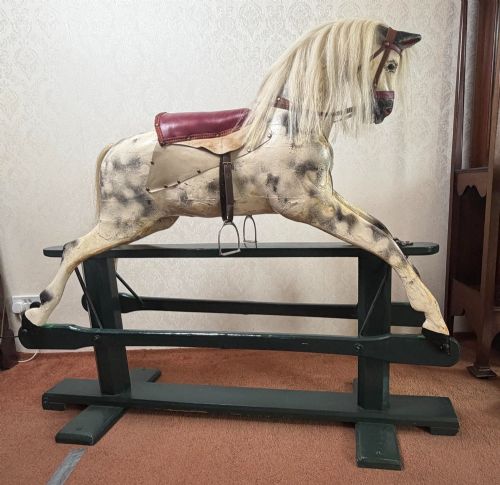
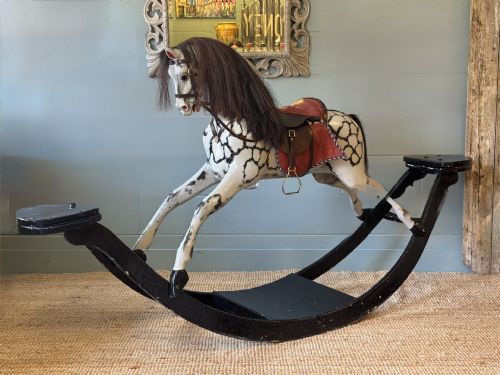
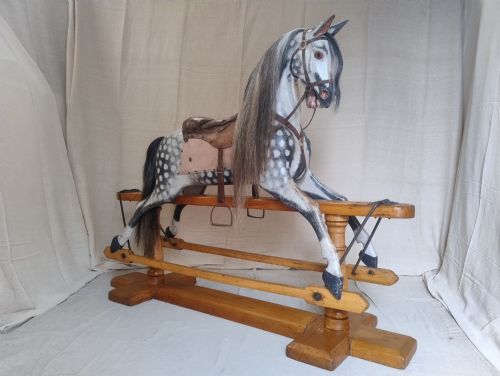
When you search for an antique dappled grey horse, you encounter a collection dominated by carved wooden rocking horses alongside oil and watercolour paintings. These pieces span from the late nineteenth century through the interwar period, capturing both playroom favourites and sporting portraiture.
The rocking horses appear mounted on original wooden rockers or safety stands, often featuring carved pine bodies with real horsehair manes and leather tack. Painters recorded the animal through equine portraits and works by artists such as Clifton Tomson and Snaffles.
Most examples hail from established British makers or the Victorian folk art tradition, showing the distinctive dappled paintwork that gives the group its character. Collectors find both full-size playroom companions and smaller decorative works.
Materials and construction
Carvers shaped bodies from pine and other woods, building up the dappled grey surface with layers of gesso and oil paint before applying distinct brushmarks. Real horsehair provided the tails and manes, while leather and metal formed the bridles and stirrups.
Painters utilised oil and watercolour on canvas or paper to depict horses alongside grooms and landscapes, capturing the texture of coat and tack through pigment and wash. Makers mounted the wooden bodies onto curved pine rocking frames using iron and steel fixings.
Several horses survive with glass eyes that still follow you across the nursery.
Factors of quality
Quality rests upon the depth of the carving and the preservation of the original painted dappled surface rather than mere age alone. Maker attribution to firms such as F.H. Ayres or G & J Lines elevates a piece through documented workshop standards.
The survival of original tack, leather, and horsehair distinguishes pieces that retain their complete historical integrity from those with later replacements. In paintings, the skill of the artist and the condition of the paper or canvas dictate the standing of the work.
G & J Lines of London·F.H.Ayres·Lines Bros Sportiboy·Clifton Tomson·Snaffles
The Antique Dappled Grey Horse Glossary
- Rocking horse
- A carved wooden toy mounted on curved wooden rockers or a safety stand designed for children to ride. These objects form the majority of the three-dimensional pieces in this category.
- Dappled grey
- A coat colour pattern of grey horses featuring darker circular spots or rings across a lighter grey base. Makers applied this specific paint effect by hand to mimic the natural markings of the animal.
- Tack
- The equipment used in horse riding, including bridles, saddles, and reins. On these horses, tack is typically rendered in genuine leather and metal hardware.
- Folk art
- Utilitarian or decorative objects created by self-taught or traditional craftsmen rather than academic artists. Victorian examples often display charming individuality in their carving and finish.
- Safety stand
- A rigid wooden frame holding a rocking horse via swinging iron arms rather than traditional floor rockers. This innovation prevented the horse from tipping over during vigorous play.
Antique Dappled Grey Horse: Frequently Asked Questions
How do I date a rocking horse?
Dating relies on construction methods, ironwork fixings, and the style of the carving. Earlier nineteenth-century examples often feature chunkier proportions and simpler rocker profiles.
Makers' marks, where present on the wooden base or bracket, provide a clearer window into the exact decade of manufacture.
Are these horses safe for children?
While traditional wooden rocking horses were built for play, many antique examples now function primarily as decorative objects. Their historic construction and dried leather components require careful handling.
Buyers intending regular use often seek advice on structural stability and the weight limits of the specific rocker.
What is the difference between Ayres and Lines horses?
F.H. Ayres horses are celebrated for their spirited carving, expressive glass eyes, and robust build. They represent the pinnacle of late Victorian and Edwardian rocking horse production.
G & J Lines and later Lines Bros pieces offered sturdy playroom utility with distinctive factory styling that appealed to middle-class households.
How should I care for the painted surface?
Keep wooden horses and paintings away from direct sunlight and sources of extreme heat to prevent the gesso and paint from cracking. Gentle dusting with a dry, soft cloth is sufficient for routine maintenance.
Avoid using water or chemical cleaners on the antique dappled surface, as moisture damages the original finish.