


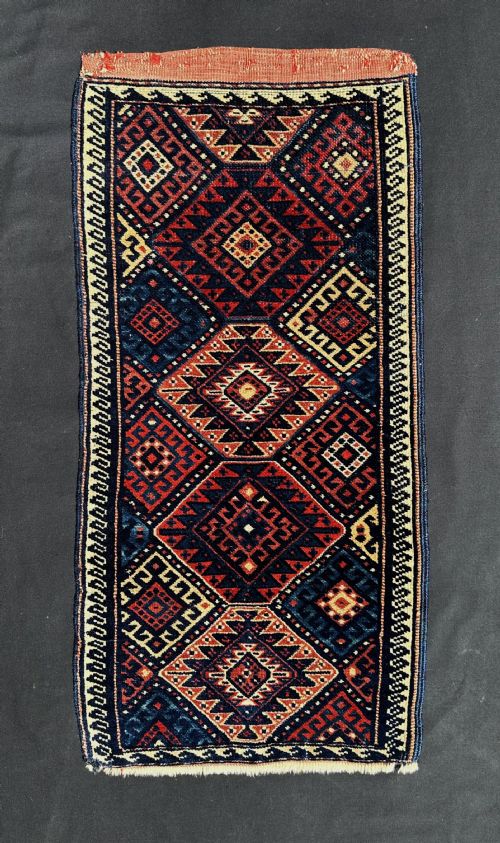

Antique Nomadic Bag Face
An antique nomadic bag face carries the concentrated history and tribal identity of weavers from Persia, Central Asia, and the Caucasus.
Antique Nomadic Bag Face
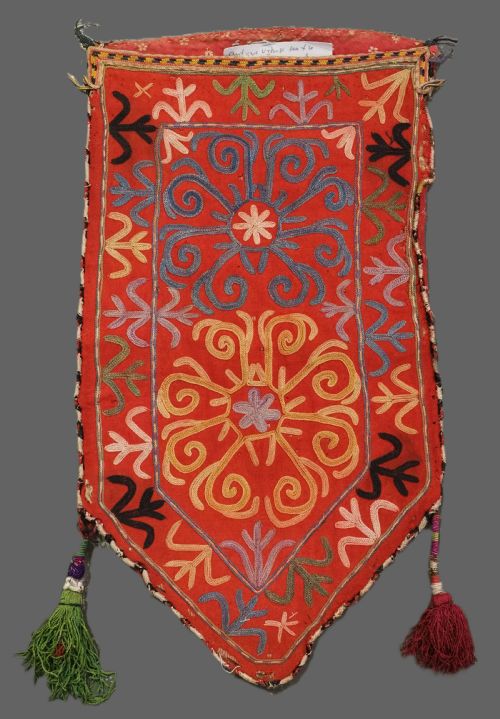
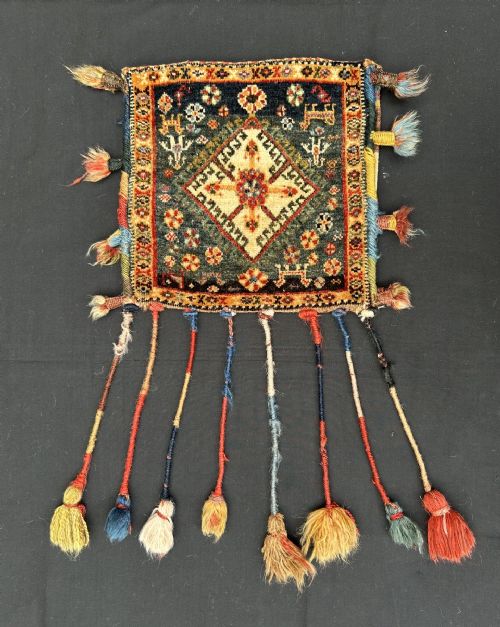
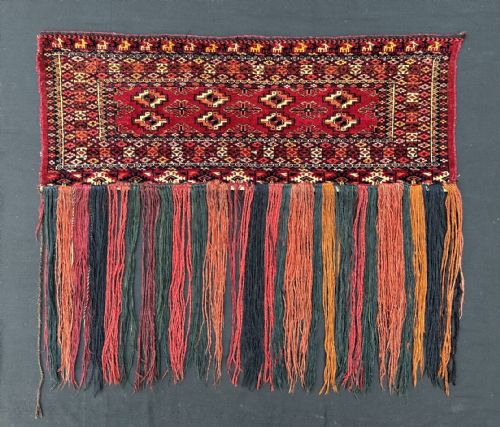
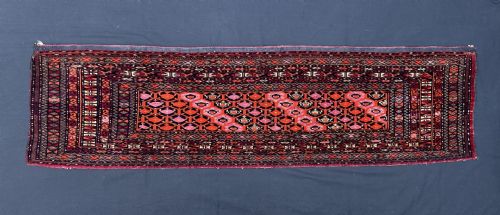
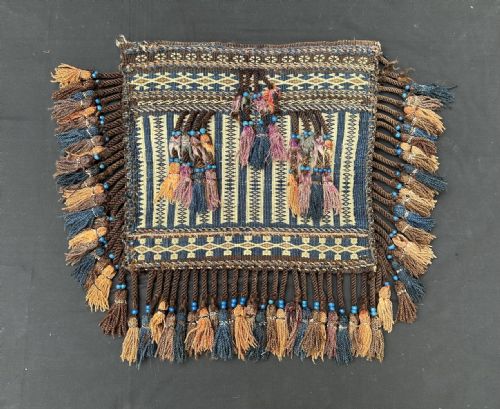
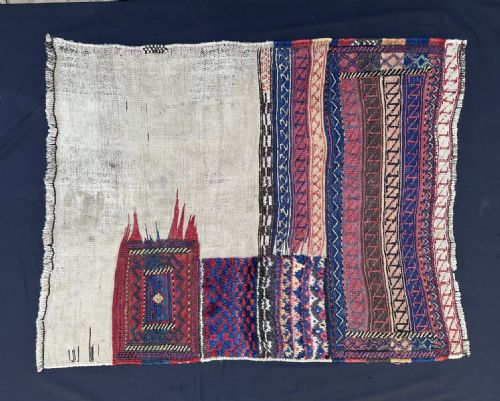
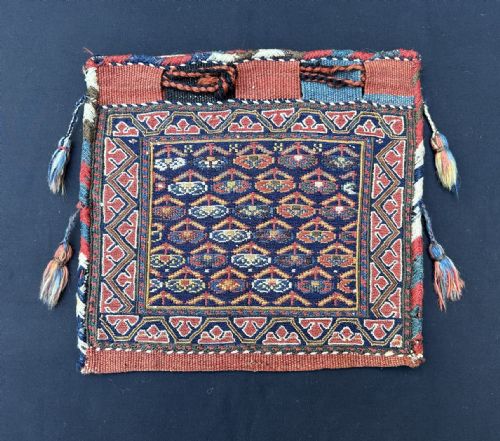
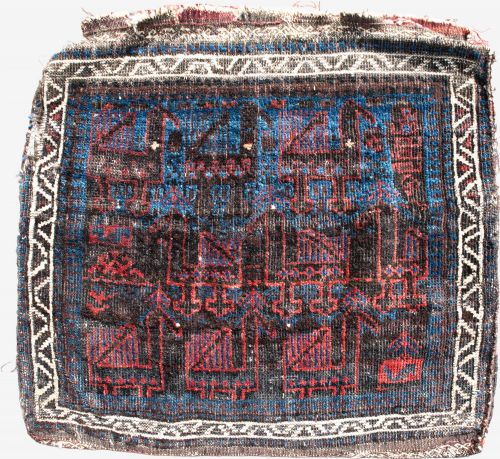
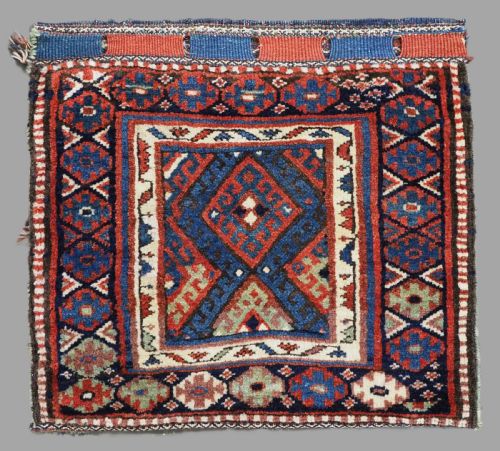
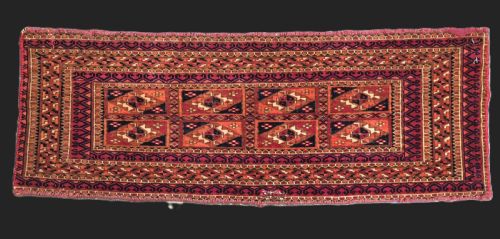
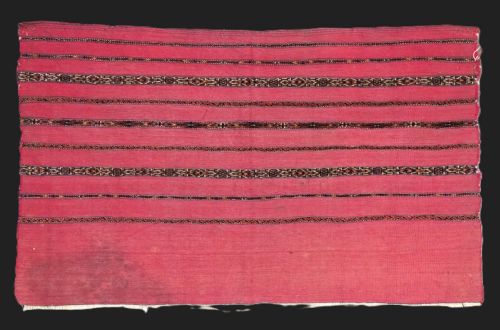
An antique nomadic bag face represents the front panel of a utilitarian storage sack, tent bag, or saddlebag woven by tribal groups. These items served practical purposes for storage and transport during seasonal migrations across Persia, Turkmenistan, Afghanistan, and Uzbekistan.
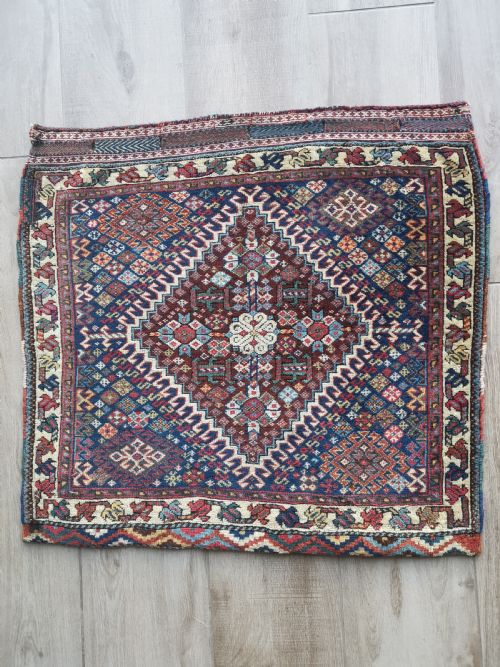
The pieces encountered on this page encompass various tribal identities, including Turkmen groups such as the Teke, Yomut, Saryk, and Ersari, alongside Persian confederations like the Qashqai, Baluch, Shahsavan, and Lori-Bakhtiari. Examples range from small vanity bags and pillow covers to larger storage sacks and tent band fragments.
Originating predominantly from the nineteenth and early twentieth centuries, these woven fragments isolate the most decorative portion of a larger container. Buyers acquire them as textile art suitable for wall display or tabletop presentation.
Evaluating Quality
Quality rests upon the fineness of the knotting or weave density, which dictates the clarity and precision of the tribal motifs. Tighter structures allow intricate geometric medallions and guls to emerge with sharp definition.
The brilliance and stability of the natural dyes influence the aesthetic impact of the textile, with well-preserved colour saturation elevating the piece. Additionally, the crispness of the tribal design layout and the balance of the composition distinguish exceptional examples.
Some Baluch weavers tucked tiny glass beads directly into the weave to ward off misfortune during long desert journeys.
The Antique Nomadic Bag Face Glossary
- Chuval
- A large Turkmen tent storage bag used for bedding and household goods. Surviving chuval faces display elaborate primary guls arranged in strict grid patterns.
- Khorjin
- A traditional double saddlebag woven for transport on horses, donkeys, or camels. Many surviving examples are separated into individual bag faces.
- Gul
- A repeating medallion or floral motif central to Turkmen and other Central Asian tribal weaving. Each tribe utilised distinct gul designs to signify lineage and identity.
- Soumac
- A flatweave technique involving wrapped supplementary weft threads that create a raised, braided surface texture. This method provides greater structural durability than standard plain weave.
Antique Nomadic Bag Face: Frequently Asked Questions
What is an antique nomadic bag face?
A nomadic bag face is the decorative front panel removed from a larger utilitarian storage sack or saddlebag made by tribal weavers. These panels were preserved because their intricate patterns and wool work represent the highest artistic expression of the maker.
They function today as compact textile artworks that capture the specific tribal designs of regions like Persia and Central Asia.
How were these bags used originally?
Nomadic tribes utilised these woven containers inside tents or on pack animals during seasonal migrations. They stored grain, bedding, clothing, and personal items while serving as decorative elements within the portable dwelling.
Over time, the functional backs wore out or were removed, leaving the patterned faces intact for preservation and trade.
How do I display a bag face at home?
Bag faces adapt well to wall hanging by using conservation-grade mounting techniques or a sleeve stitched to the reverse. Their manageable dimensions also allow them to be laid flat on tables or displayed within shallow frames.
Keep them away from direct sunlight to protect the natural dyes from fading over time.
How can I tell different tribal designs apart?
Tribal attribution relies on specific geometric motifs, border arrangements, and colour palettes unique to each group. For instance, Turkmen weavers utilised octagonal guls like the kepse or tekke design, while Persian groups such as the Qashqai and Baluch favoured distinct medallion layouts and animal forms.
Comparing structural wool quality and knotting style further clarifies regional origins.