


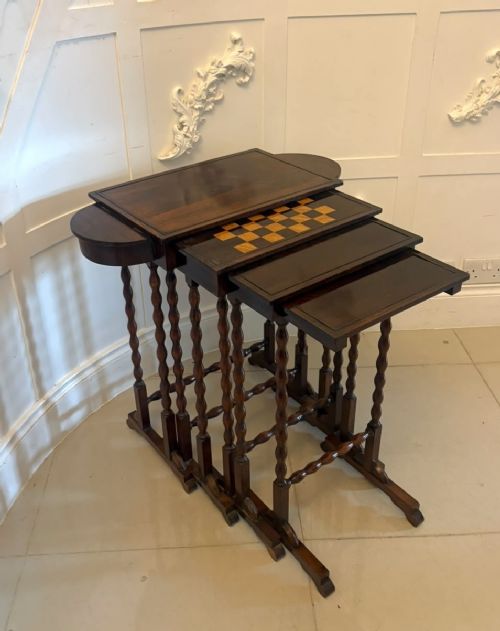

Antique Nest of Four
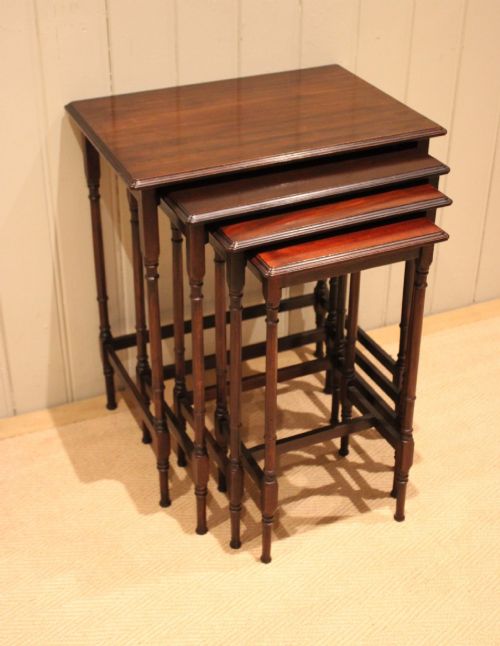
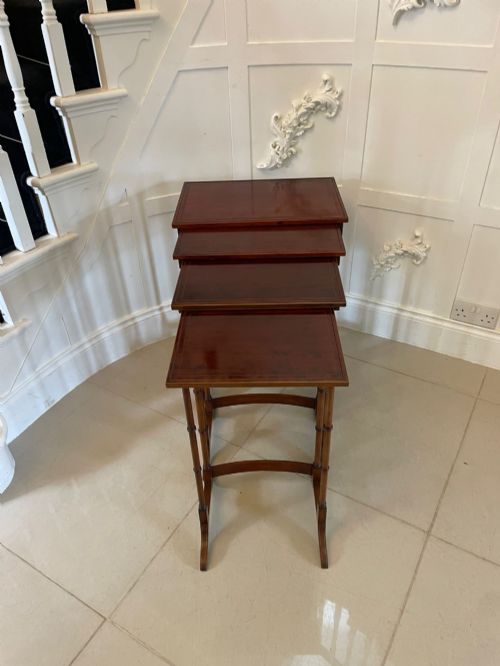
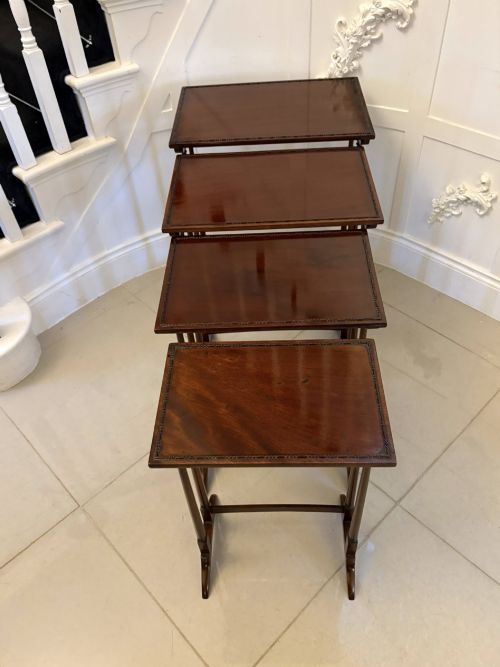
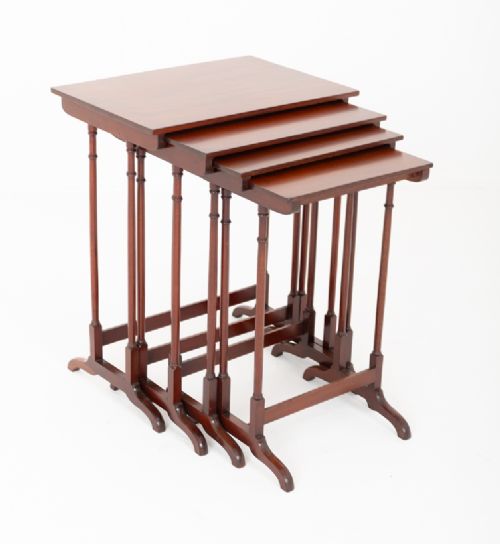
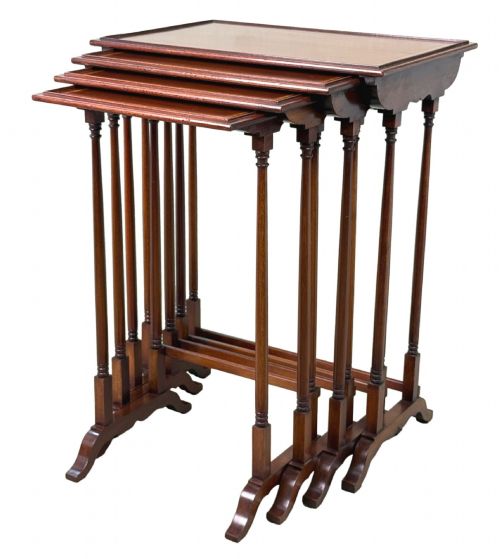
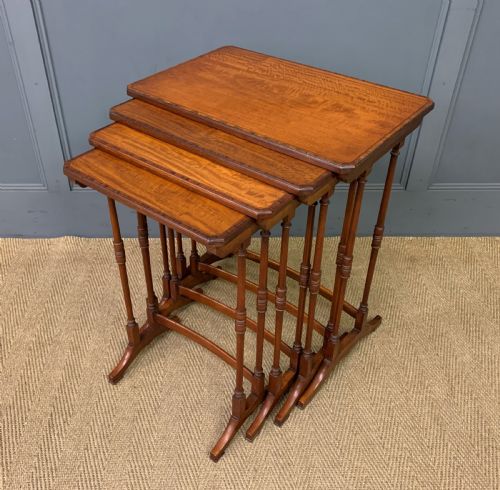
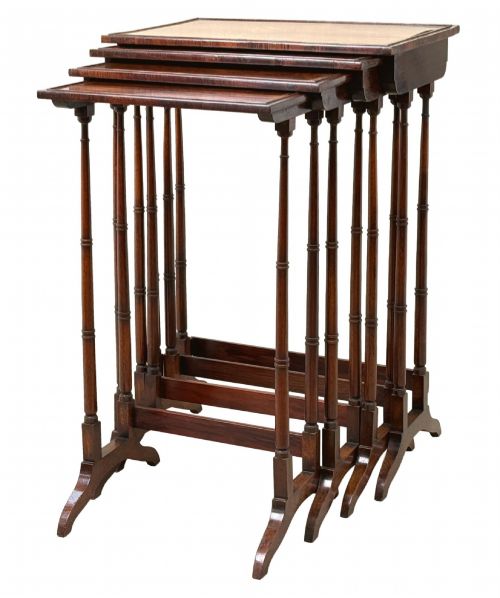
An antique nest of four is a set of four graduating tables designed to slide neatly beneath one another when not in use.
Antique Nest of Four
An antique nest of four is a set of four graduating tables designed to slide neatly beneath one another when not in use, offering practical surface space without crowding a room. The versions most commonly met on this page date from the nineteenth and early twentieth centuries, spanning Victorian, Edwardian, and later periods.
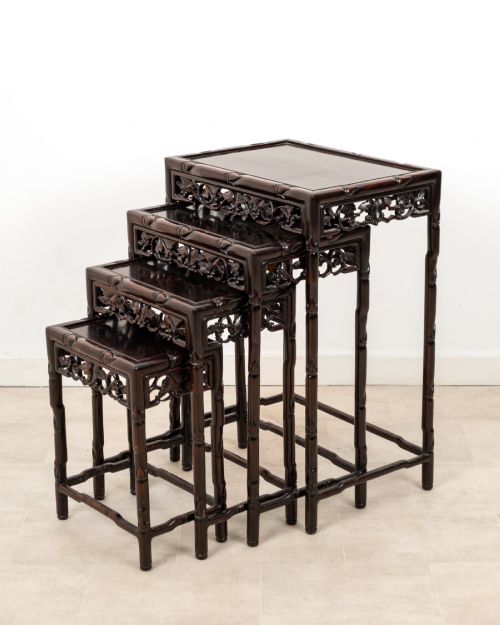
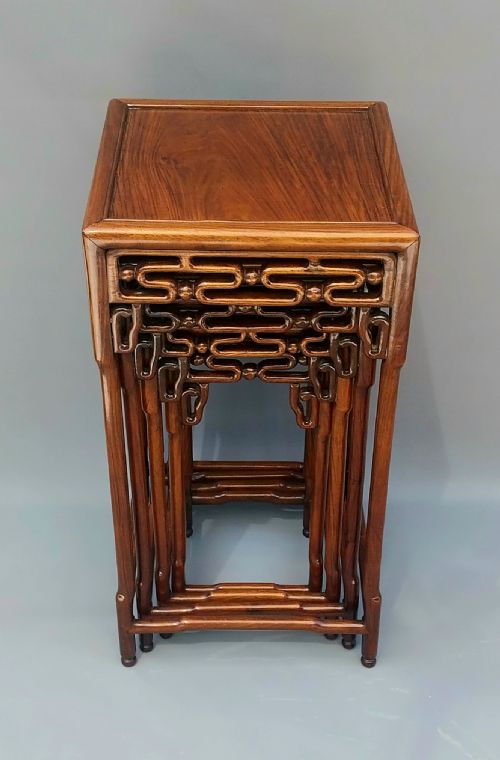
The form typically comprises English mahogany or walnut versions alongside Chinese hardwood and red lacquered examples. Makers from these periods produced matching sets intended for occasional use as side, lamp, or coffee tables.
Materials and construction methods
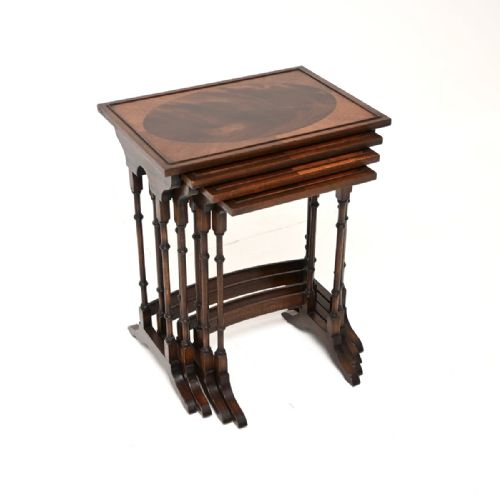
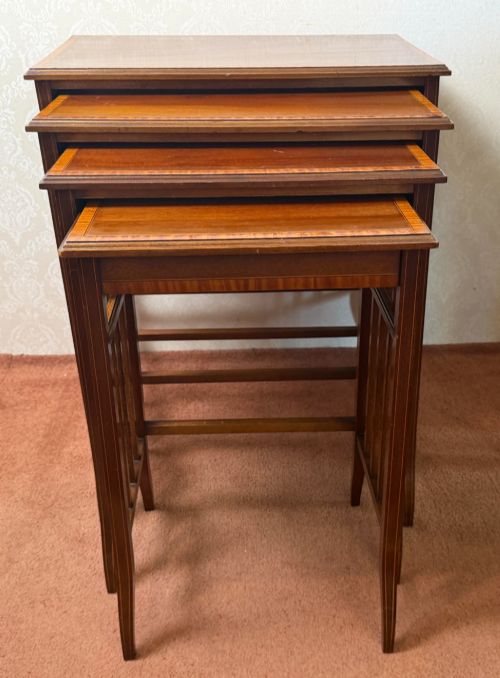
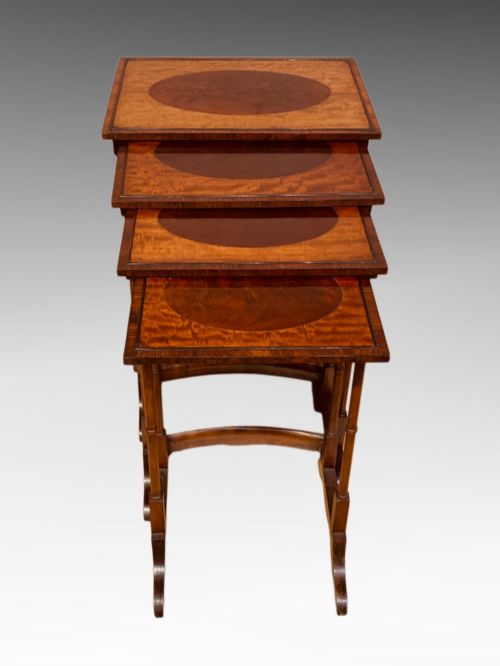
Cabinet makers utilised dense hardwoods such as mahogany, walnut, rosewood, and satinwood, often applying veneers and cross-banding to the table tops. Frames frequently feature turned or square tapered legs, sometimes incorporating intricate hand carving or subtle inlay work.
Sets from the nineteenth and early twentieth centuries rely on precise scaling so that each of the four tables fits snugly within the next. Chinese export examples often employ carved hardwoods like hongmu, while French pieces utilise marquetry and floral inlay.
Factors that distinguish the finest pieces
The standard of an antique nest of four rests upon the selection of timber and the precision of the graduated joinery. Sets featuring figured mahogany, burr walnut, or carefully matched satinwood banding demonstrate superior cabinet making.
Finer examples maintain structural integrity across all four tiers, ensuring each table slides smoothly without binding. The crispness of carved details or the complexity of inlaid marquetry further separates workshop pieces from standard production.
The Antique Nest of Four Glossary
- Quartetto
- A traditional term for a set of four nesting tables. It derives from musical terminology indicating a group of four.
- Cross-banding
- A decorative technique where a strip of veneer is applied to the border of a table top with the grain running perpendicular to the centre. This frames the primary timber of the surface.
- Marquetry
- The art of creating decorative patterns on wood surfaces using small pieces of veneer in various colours and materials. It frequently appears on French and Edwardian examples.
- Hongmu
- A translation meaning red wood, used to describe dense, dark Chinese hardwoods utilised in export furniture. It provides a heavy and durable structure for carved nesting tables.
- Satinwood
- A lustrous timber native to India and Sri Lanka, prized for its golden yellow colour. Cabinet makers used it for delicate inlays and banding on mahogany frames.
Antique Nest of Four: Frequently Asked Questions
What is a quartetto table?
A quartetto table is simply the historical term for a set of four nesting tables designed to stack together. The name was widely used during the Victorian and Edwardian periods.
These sets function as versatile occasional furniture, allowing all four pieces to occupy the floor space of just one small table when stored.
How were nesting tables used historically?
Historically, these sets provided temporary surface space for tea, writing, or sewing in drawing rooms. Servants or hosts could easily separate the tables and place them around a room as guests required.
Once the gathering concluded, the tables slid back into a single stack against a wall or beside a chair.
How do I date an antique nest?
Dating relies on observing timber choices, leg profiles, and construction methods. Earlier nineteenth-century examples often feature solid mahogany or rosewood, while Edwardian versions frequently incorporate satinwood inlay and lighter framing.
Matching the overall style to periods like the Victorian era or the early twentieth century helps narrow down the decade of manufacture.
Are Chinese export nests different from English ones?
Chinese export nests typically utilise dense oriental hardwoods like hongmu or feature red lacquer finishes. They often display intricate hand-carved motifs rather than the inlay work common on English pieces.
Both traditions followed the same graduating four-tier principle for space-saving utility.