
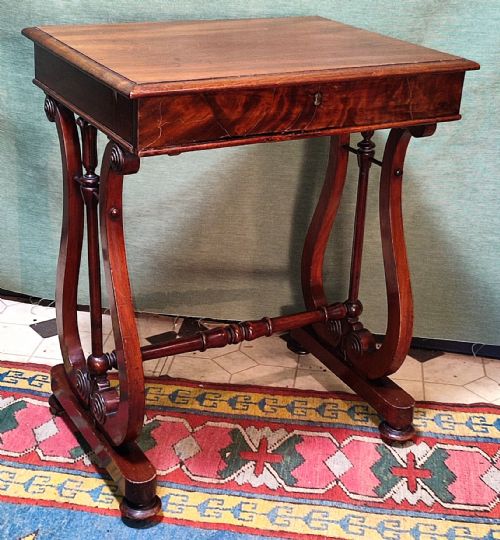


Carved Lyre Leg Tables
Carved lyre leg tables bring distinct architectural form and rich timber into a room, offering both history and sturdy everyday surfaces.
Carved Lyre Leg Tables
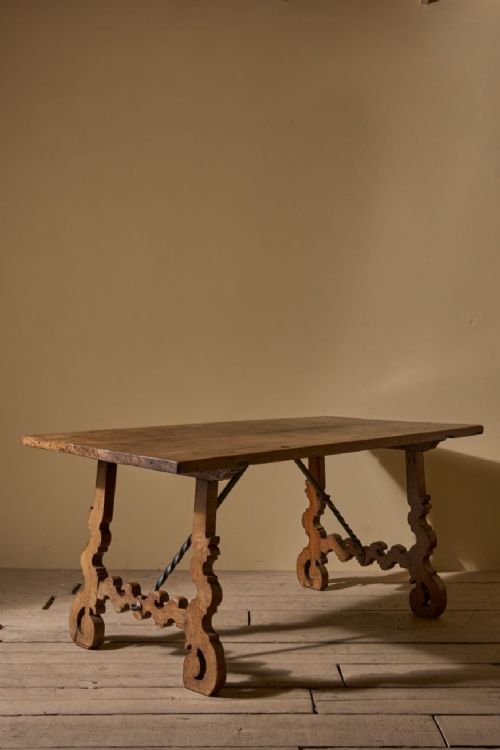
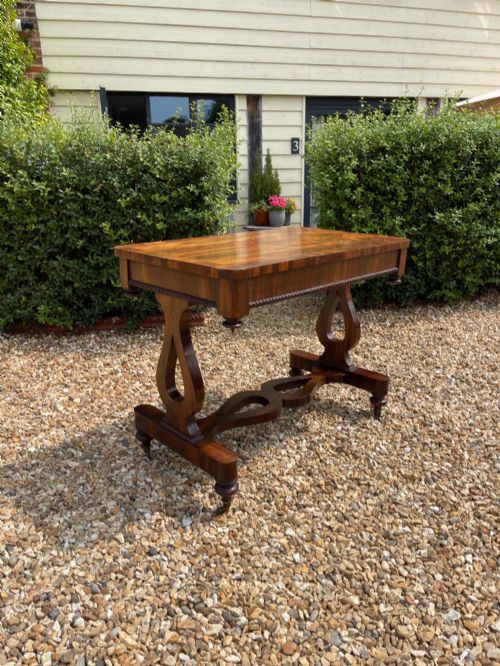
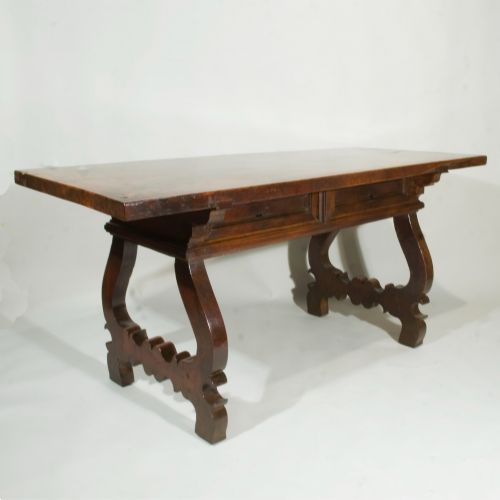
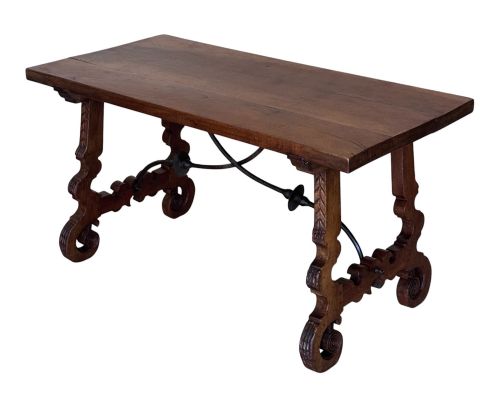
Carved lyre leg tables combine architectural scrolling supports with timber tops, originating across several European centres. When you search for carved lyre leg tables, you encounter forms ranging from compact occasional pieces to large dining boards.
The versions most commonly found here include walnut and mahogany examples spanning the seventeenth century through to the early twentieth century. These embrace styles such as Regency, Spanish Baroque, and Italian Renaissance Revival.
Makers utilised various formats including centre tables, side tables, dining tables, and ladies' desks supported by characteristic lyre-shaped pedestals. Each piece demonstrates how makers adapted classical stringed instrument motifs into heavy furniture architecture.
How they were made
Carpenters constructed these tables using dense hardwoods, primarily solid walnut and mahogany, occasionally applying flame mahogany veneer for decorative surface depth. Timber selection dictated the structural stability required for heavy lyre supports.
Carvers shaped the scrollwork and lyre profiles by hand, sometimes incorporating wrought iron or brass stretchers to brace the legs. Joinery methods relied on traditional mortise and tenon construction to withstand the downward pressure of large wooden tops.
Listings span periods from the 17th century through to 1920, predominantly featuring walnut and mahogany timbers.
What varies in quality
The depth and crispness of the hand carving on the lyre supports set superior examples apart from simpler production. Sharp undercut details and well-proportioned scrolls indicate a more accomplished hand at the workbench.
Timber figure and grain continuity across the top boards determine visual distinction. Richly figured walnut and flame mahogany elevate the presence of a table far beyond plain timber surfaces.
The Carved Lyre Leg Tables Glossary
- Flame mahogany veneer
- A thin slice of mahogany timber cut from the fork of the tree where branches meet. This produces a dramatic flame-like pattern across the table surface.
- Centre table
- A freestanding table designed to be viewed from all sides rather than pushed against a wall. These often occupy the middle of a principal room.
- Spanish Baroque
- A decorative style prevalent in the seventeenth century known for bold carving and dramatic proportions. Furniture from this tradition uses dark walnut timbers.
- Regency
- An English design period spanning the early nineteenth century characterised by classical restraint and archaeological revival. Pieces from this era often display clean mahogany surfaces and brass detailing.
Carved Lyre Leg Tables: Frequently Asked Questions
Where do carved lyre leg tables fit best?
These tables find natural placement as centrepieces in hallways, studies, or principal reception rooms where their architectural bases remain fully visible.
Smaller formats function effectively as side tables or occasional surfaces next to seating.
How do I care for antique walnut tables?
Keep wooden surfaces away from direct heat sources and strong sunlight to prevent the timber and veneer from drying out.
Apply natural beeswax periodically to nourish the grain and maintain a soft sheen.
What is the difference between Regency and Spanish Baroque tables?
Regency tables rely on refined classical proportions, smooth mahogany surfaces, and restrained decorative elements typical of early nineteenth-century English design.
Spanish Baroque examples showcase heavier walnut construction with dramatic, deep carving reflecting seventeenth-century Continental aesthetics.
Were lyre leg tables used for dining?
Larger examples function primarily as dining tables or library tables, providing stable floor support for heavy use.
Smaller versions serve as writing desks, ladies' desks, or side tables designed for lighter daily tasks.