




Antique Coffee Table Set
An antique coffee table set offers a practical tier of tables, most often found as a nested quartetto.
Antique Coffee Table Set
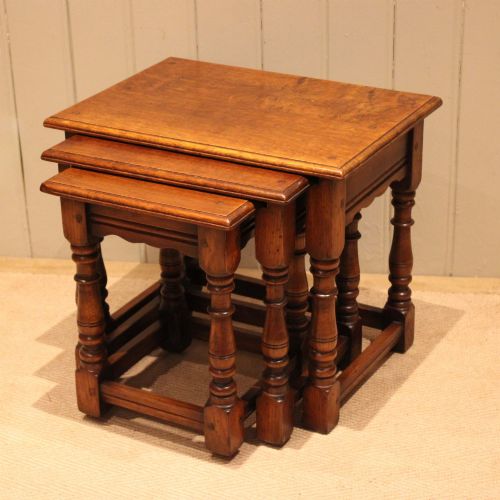
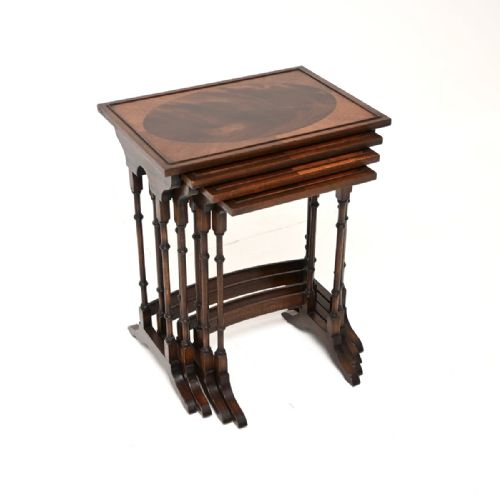
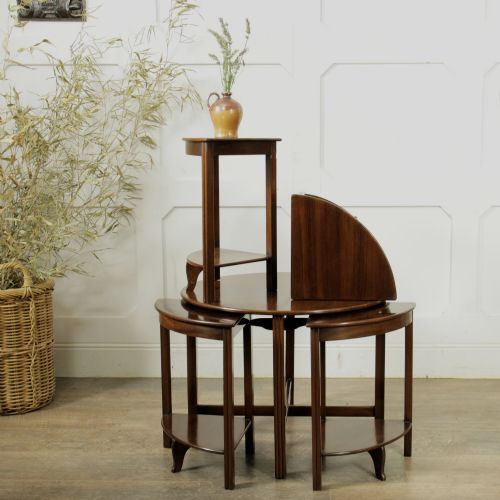
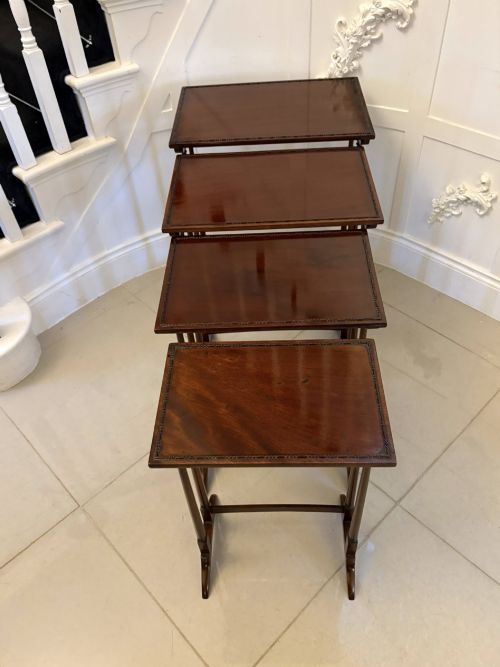
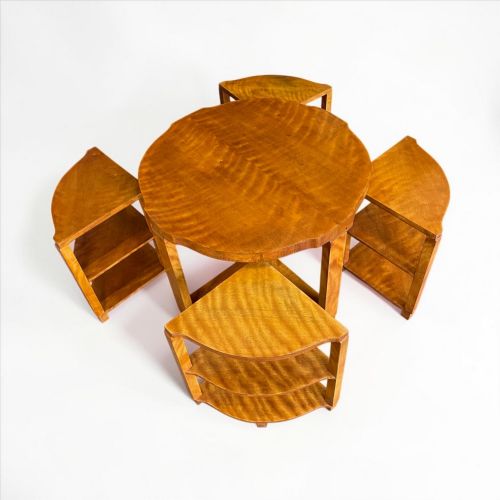
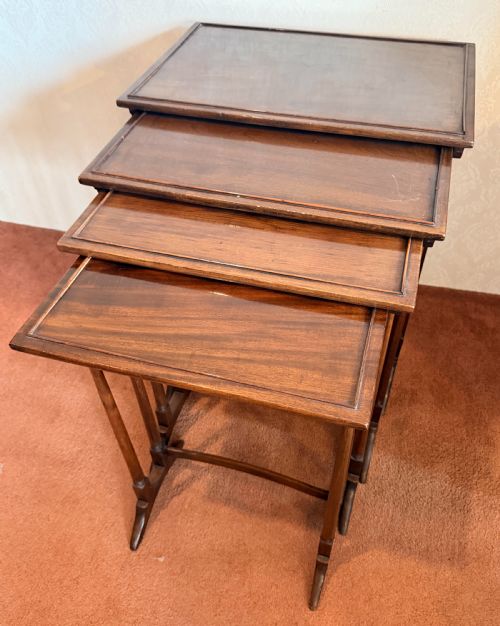
An antique coffee table set most commonly appears as a nest of tables, offering a clever space-saving arrangement where smaller tables slide neatly beneath a larger primary surface. Buyers searching for an antique coffee table set encounter formats ranging from sets of three to sets of five, with four-table quartetto sets appearing frequently.
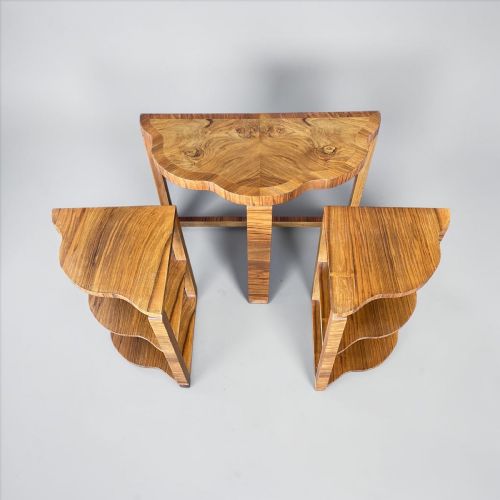
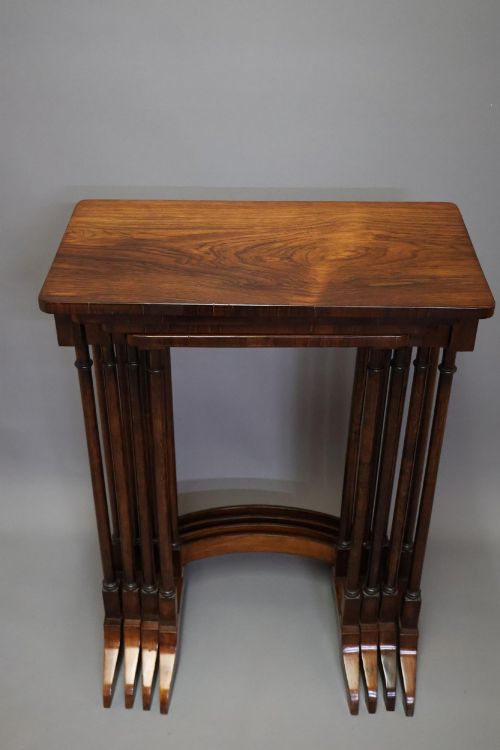
The pieces span various periods from the nineteenth century through the 1930s, encompassing Edwardian satinwood-inlaid designs, Art Deco walnut examples, and Regency rosewood pieces. Formats include circular, oval, square, and rectangular tops shaped from oak, mahogany, and exotic hardwoods.
Origin and style variations include English country oak pieces, Chinoiserie decorated sets, and Spanish mosaic cafe tables. These multi-tiered arrangements served various domestic functions as occasional, lamp, or wine tables before being adapted into modern coffee table arrangements.
Materials and construction
Cabinet makers utilised dense timber stocks such as mahogany, walnut, and oak to build these multi-tiered sets, frequently applying decorative veneers and contrasting satinwood inlay to tabletops. Hardwoods provide the structural integrity required for frames and slender legs that must support stacking without binding.
Joinery methods rely on traditional techniques to ensure durability across multiple moving parts, while specialised finishes like lacquer and French polish protect the wood surfaces. Surface decoration often includes parquetry, floral inlay, or hand-painted Chinoiserie motifs applied to the primary panel.
Some Victorian sets cleverly hide four tables inside the footprint of one, proving our ancestors took stacking very seriously.
Measures of distinction
Quality in a nested set rests upon the precision of the carpentry, ensuring that each smaller table slides smoothly into its designated position without excessive clearance or friction. The choice of timber grain, particularly figured mahogany or burr walnut, separates standard utility pieces from finer cabinet work.
The intricacy and preservation of decorative elements, such as fine satinwood stringing, parquetry patterns, and hand-painted Oriental motifs, distinguish superior examples. Consistency in proportion across all tiers indicates the hand of a skilled workshop rather than mass production.
Heal's·Gillows
The Antique Coffee Table Set Glossary
- Quartetto
- A set of four matching stacking tables designed to nest inside one another. This term appears frequently in Edwardian and Regency records.
- Quintetto
- A set of five matching stacking tables designed to nest together. These larger sets offer an additional tier compared to standard quartetto groups.
- Veneer
- A thin layer of figured wood applied over a secondary timber base to create decorative surfaces. Walnut and mahogany veneers add visual depth to tabletops.
- Parquetry
- Geometric mosaic woodwork formed by small pieces of fitted timber arranged in patterns. This technique appears on French walnut table surfaces.
- Satinwood
- A durable, lustrous yellow-brown timber used primarily for contrasting inlay and stringing on dark mahogany tables.
Antique Coffee Table Set: Frequently Asked Questions
What is a quartetto set?
A quartetto set consists of four graduating tables designed to slide neatly beneath one another. This clever arrangement saves floor space while providing multiple surfaces.
Cabinet makers produced these sets widely during the nineteenth and early twentieth centuries in mahogany and walnut.
How were nested tables used?
These tables served as versatile occasional furniture for holding drinks, books, or lamps in Victorian and Edwardian drawing rooms. Individual tiers could be pulled out as needed and returned to the stack when space was required.
Their flexible nature made them popular additions to sitting rooms and libraries.
How do I identify Edwardian sets?
Edwardian nested tables often feature light mahogany frames combined with delicate satinwood stringing and inlay. The construction tends to be lighter and more slender than earlier Victorian examples.
Many retain clean lines influenced by Georgian revival styles popular around nineteen hundred.
Are Art Deco sets different?
Art Deco nested tables from the 1930s favour bold geometric forms and rich burr walnut veneers over intricate inlay. The silhouettes are typically cleaner and reflect modern design priorities of the interwar period.
Sets from this era often include five tiers rather than the traditional four.