

Antique Needlework Panel
An antique needlework panel brings centuries of domestic handiwork and vibrant threadwork directly to your wall.
Antique Needlework Panel
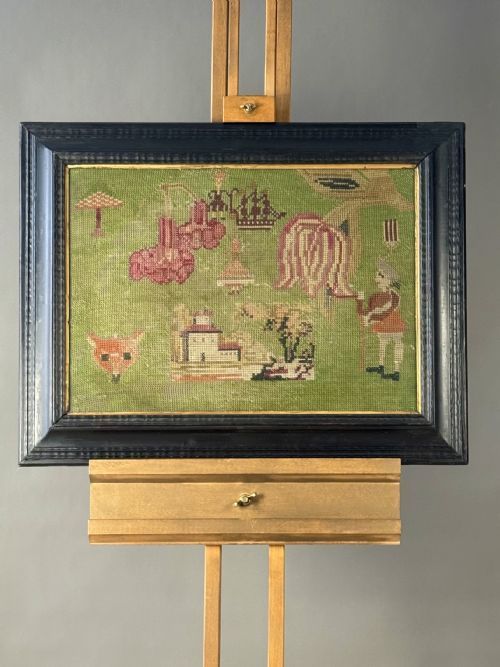
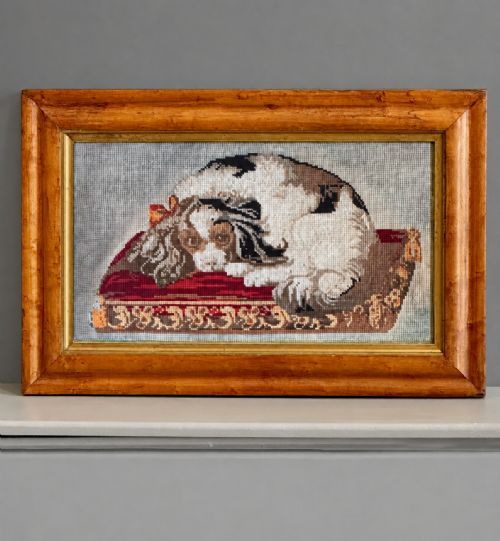
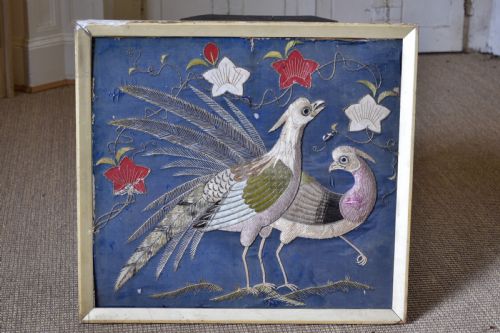
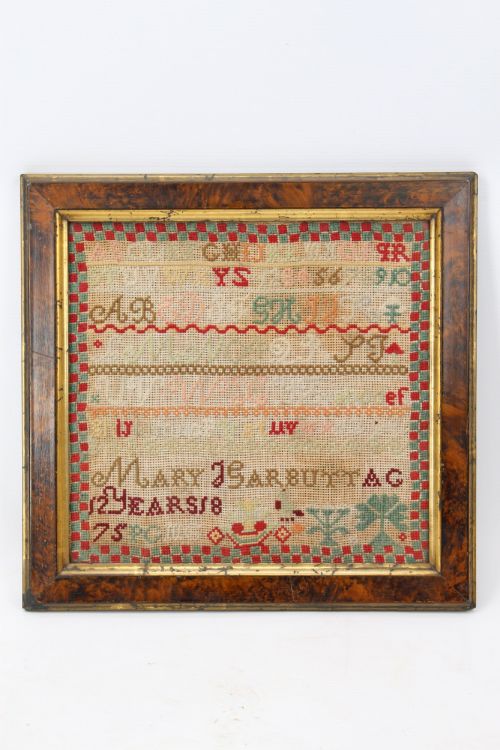
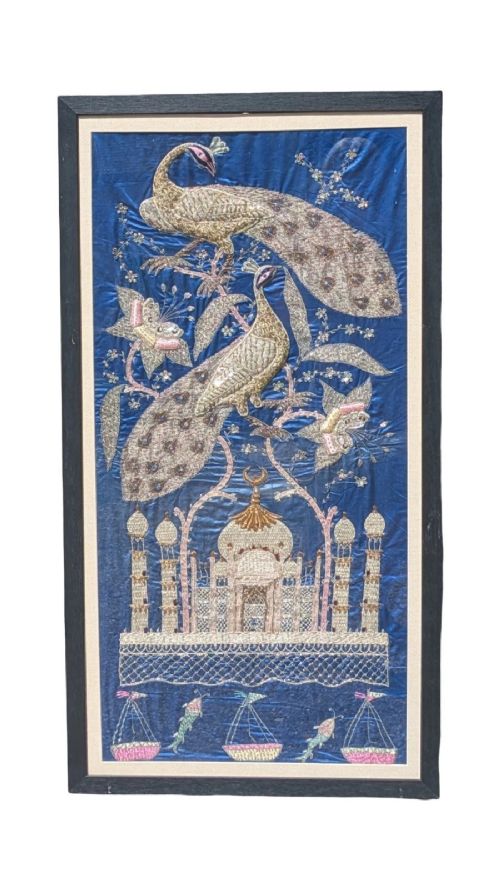
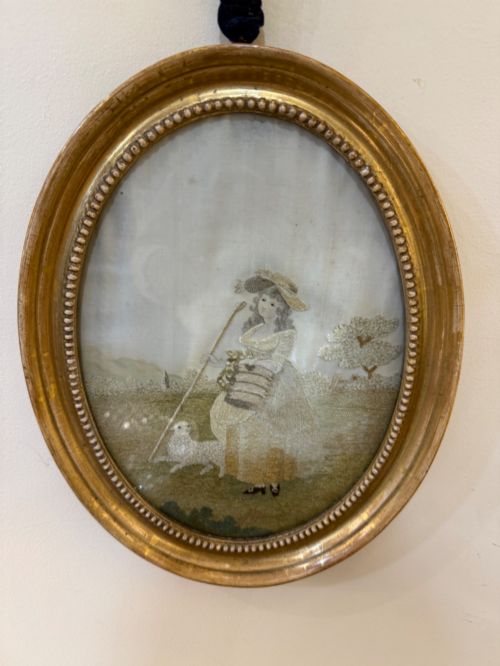
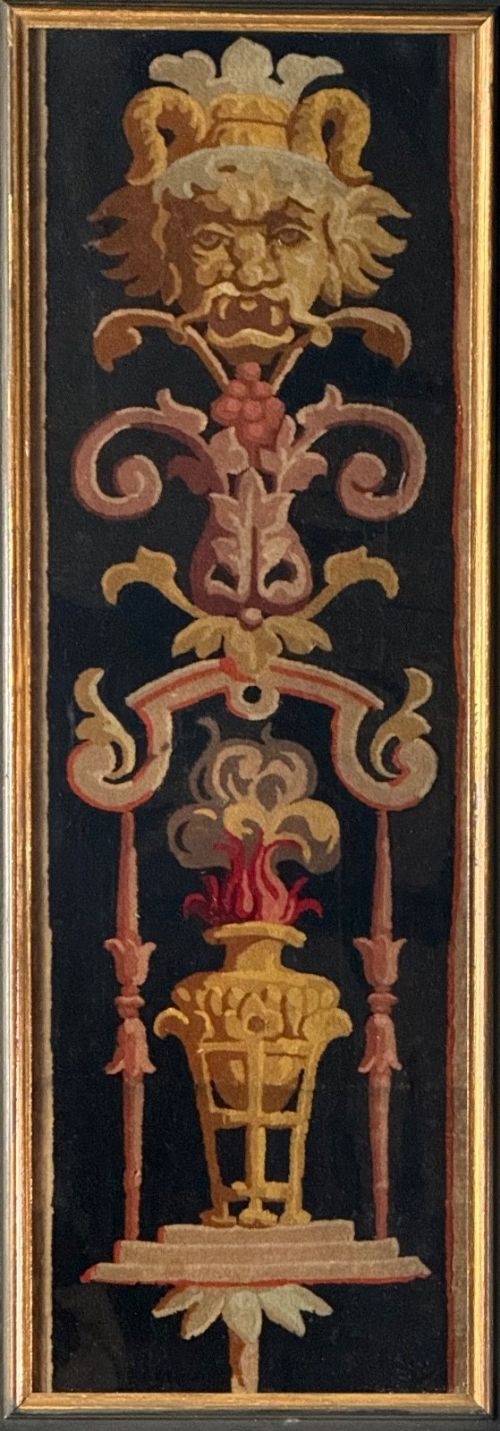
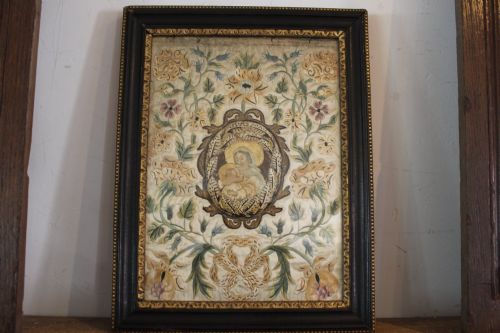
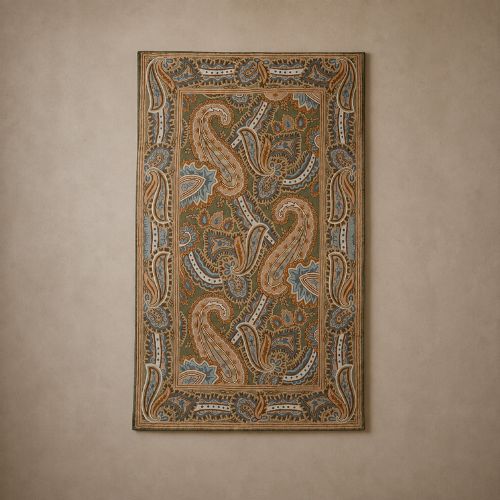
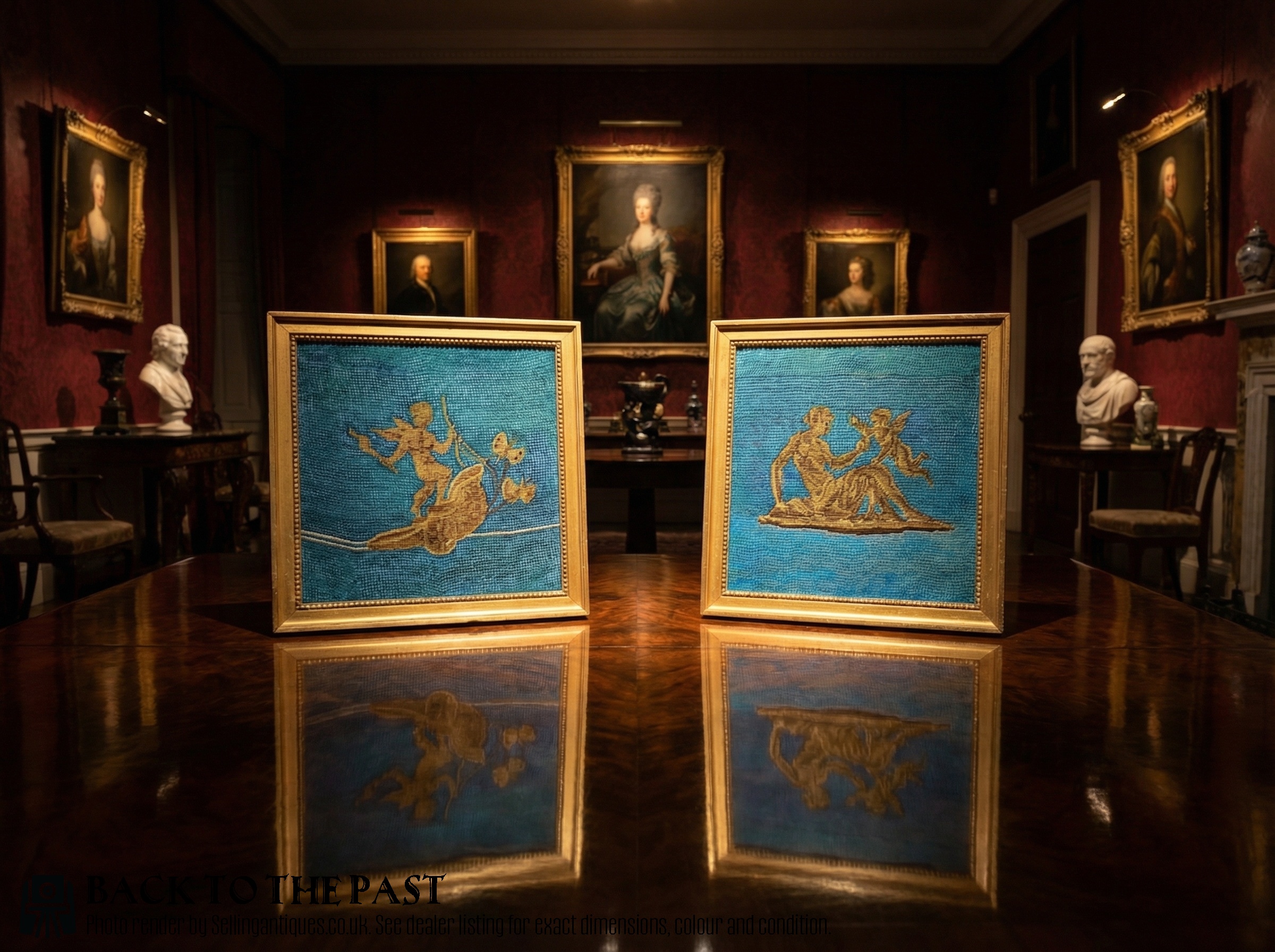
An antique needlework panel encompasses framed pictures, samplers, wall hangings and furniture inserts worked by hand in silk, wool, cotton and metallic thread. These textiles range from seventeenth-century stumpwork and band samplers to nineteenth-century Berlin work and Central Asian suzanis.
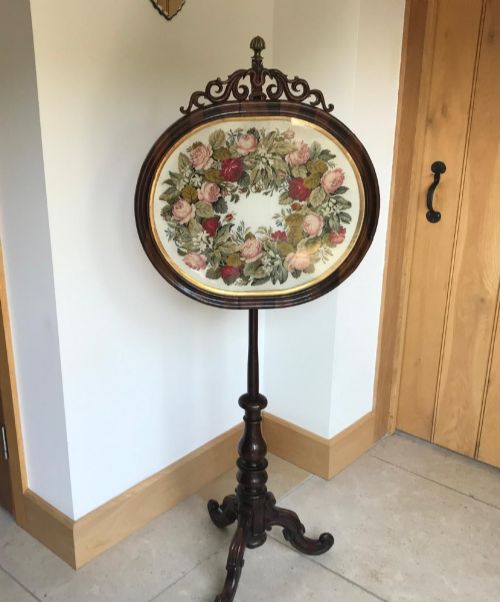
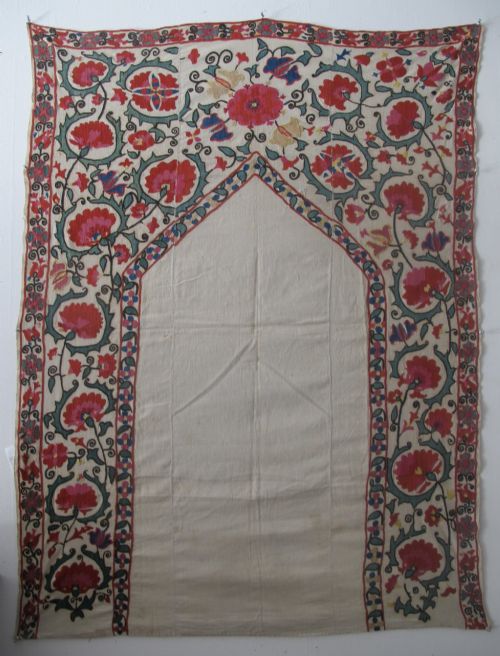
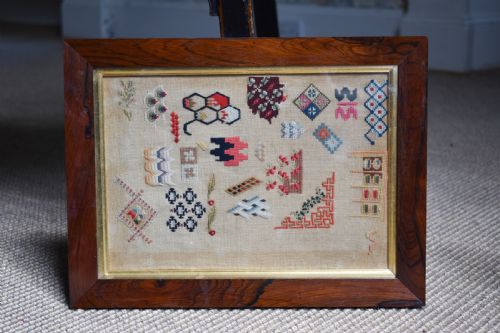
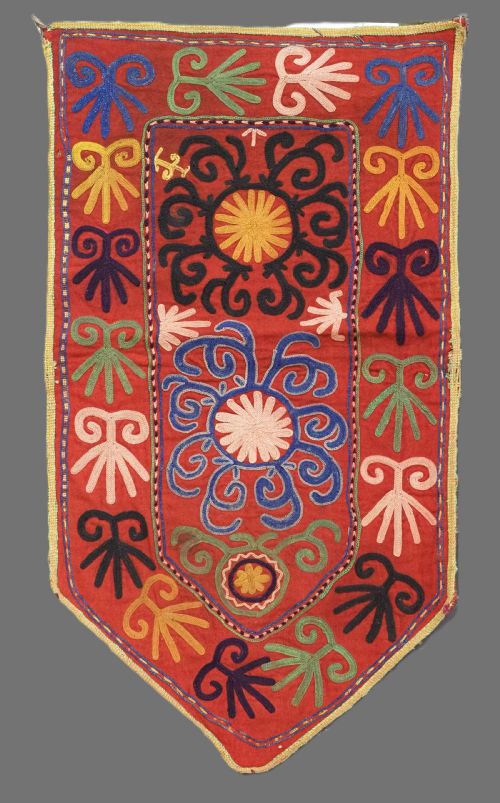
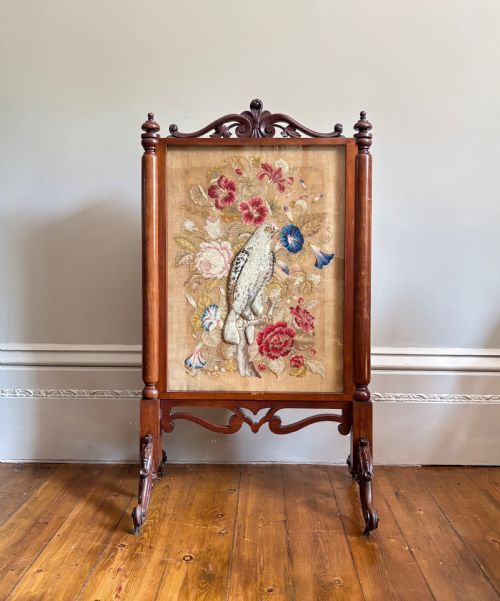
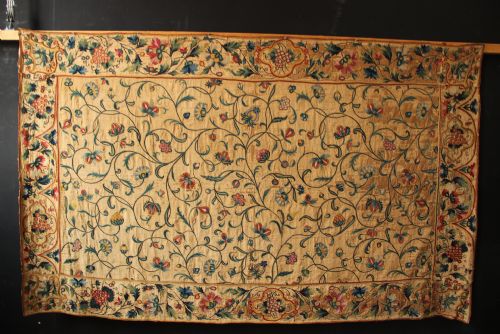
Buyers frequently encounter nineteenth-century Berlin work, Victorian samplers, and large crewelwork or embroidered wall hangings on this page. Pieces span domestic schoolroom exercises, tribal embroideries from Central Asia and Greece, and decorative panels originally mounted in fire screens or rosewood frames.
How they were made
Maker's work relied on foundational grounds of linen, canvas, or cotton, stitched with silk floss, wool yarn, and occasionally metal thread. Ground fabrics support dense surface embroidery, gros-point, or counted-thread patterns.
Finished textiles often received custom framing in burr maple, rosewood, or faux tortoiseshell, while larger panels served as wall hangings, bedsheet borders, or functional upholstery inserts within cheval fire screens.
Antique Needlework Panel Retail Price Guide 2026
Typical asking prices for needlework panel among the pieces listed under this phrase on Sellingantiques today, from the lower quarter to the upper quarter. They describe what is for sale here now, not the wider market.
Listings feature works spanning from the seventeenth century to the early twentieth century, utilising silk, wool, cotton, linen, glass, wood, and canvas.
What varies in quality
Excellence rests in the precision of the stitch work, the complexity of the design, and the vibrancy retained by silk and wool threads over centuries. Finely executed shading and intricate pictorial detail elevate a panel above standard schoolroom samplers.
The survival of original framing, such as burr maple or rosewood surrounds, contributes significantly to the integrity of the piece. Ground stability and minimal thread loss distinguish well-preserved examples from heavily restored fragments.
The Antique Needlework Panel Glossary
- Berlin work
- A style of nineteenth-century needlework stitched in wool on canvas using patterned grid charts. This technique produced vivid, richly coloured pictorial scenes.
- Sampler
- A piece of needlework demonstrating a maker's skill in various stitches, alphabets, or motifs. These exercises were frequently signed and dated by young makers.
- Stumpwork
- A raised embroidery style popular in the seventeenth century featuring padded figures and three-dimensional elements. Silk and metal threads build elaborate pictorial scenes.
- Suzani
- Large, embroidered tribal wall hangings originating from Central Asia, worked in silk on cotton or linen grounds. These textiles often display bold floral and architectural designs.
- Crewelwork
- Embroidery executed with fine wool yarn on a heavy linen or cotton twill ground. This technique creates textured surface patterns found on seventeenth-century hangings and later panels.
Antique Needlework Panel: Frequently Asked Questions
How do I hang a textile panel?
Most framed pieces mount securely with standard picture hooks suited to the weight of the timber frame and glass. Unframed panels require specialist conservation mounting behind UV-protective glass to support the fabric safely.
Larger wall hangings often utilise a hidden sleeve or discreet brass clips along the top edge to distribute the textile's weight evenly across the wall.
How were these panels used originally?
Many examples began as educational samplers, domestic decorative pictures, or functional furnishings such as fire screens and bedsheet borders. Elaborate embroidered panels also served as wall hangings in grand houses.
Tribal pieces like suzanis functioned as dowry textiles or decorative covers within Central Asian homes before entering collections as wall art.
How do I clean an antique textile?
Surface dust should be removed gently using a soft brush with low suction held behind a mesh screen. Professional textile conservators must handle any deeper cleaning or washing.
Water and household detergents can dissolve historic dyes or shrink ground fabrics, risking permanent damage to delicate silk and wool threads.
How do I date an embroidered panel?
Dating relies on stylistic clues, framing materials, and inscribed dates or makers' names found on samplers. Seventeenth-century pieces often feature stumpwork or band formats, while Victorian works commonly employ Berlin wool work.
Fabric analysis and the type of thread, such as hand-dyed silk floss or early metal thread, provide further confirmation of the period.