




Antique Needlework Cabinet
An antique needlework cabinet is a functional piece designed to hold sewing implements, and here you will find tables and boxes crafted in mahogany, rosewood, and walnut.
Antique Needlework Cabinet
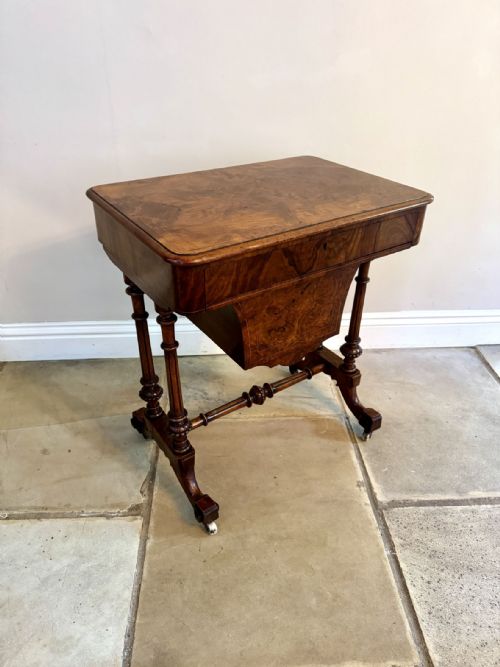
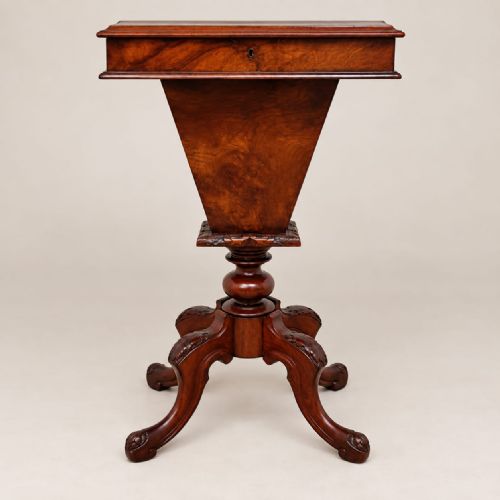
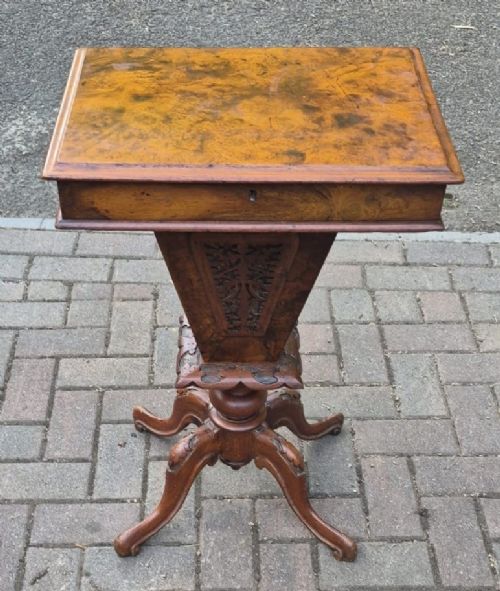
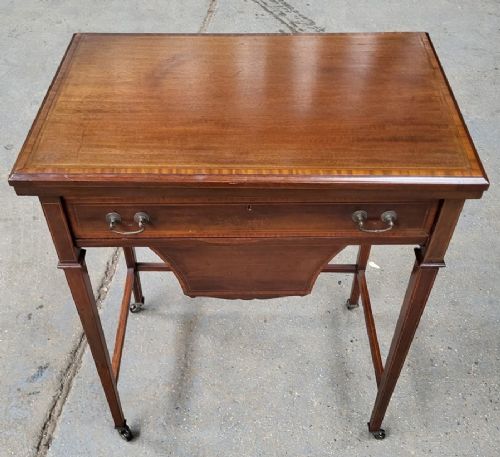
An antique needlework cabinet encompasses sewing tables, work tables, and workboxes originating from periods including Regency, Victorian, and Edwardian. These pieces combine domestic utility with refined cabinetmaking, providing dedicated storage for textiles, threads, and implements.
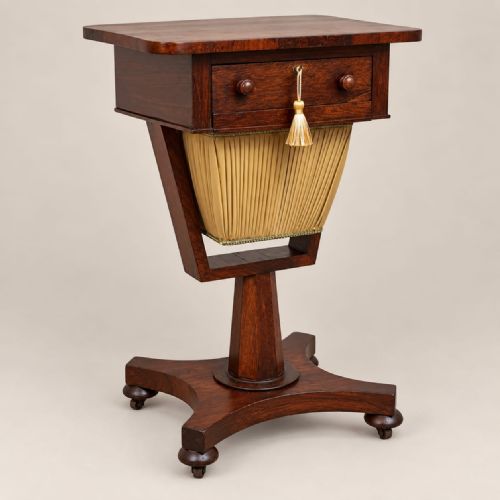
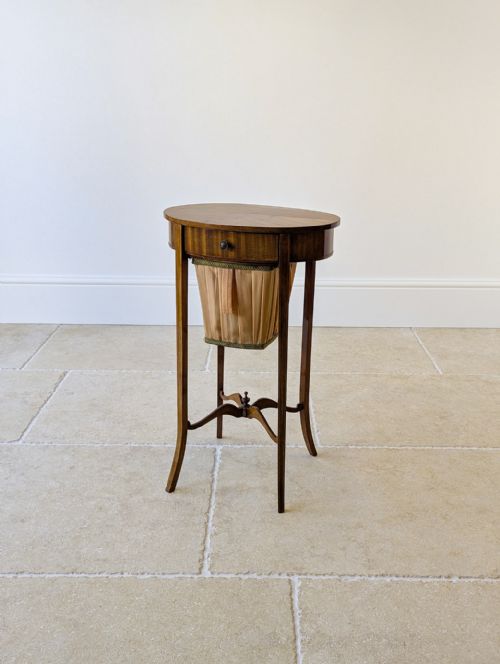
On this page, you are most likely to encounter freestanding work tables and sewing tables made from timber such as mahogany and walnut. Many examples incorporate fitted interiors or silk baskets designed to contain ongoing needlework projects.
Construction and Materials
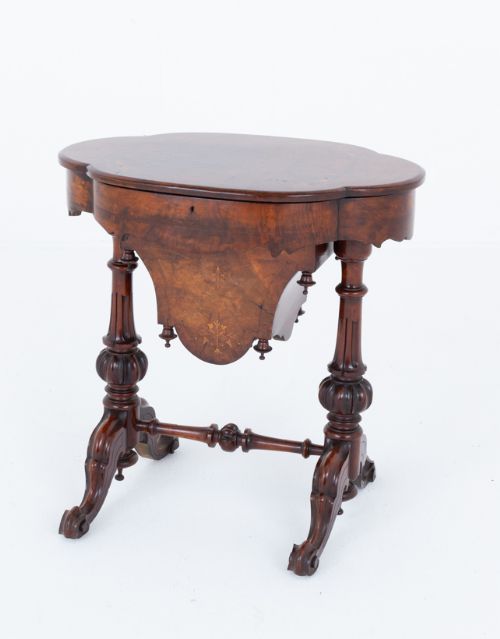
Cabinetmakers utilised dense hardwoods like mahogany, rosewood, and walnut for the primary structure, frequently applying cross-banding, satinwood inlay, or burr walnut veneers to the exterior surfaces. Alternative construction methods include tiger bamboo and lacquered finishes, alongside japanning on early nineteenth-century workboxes.
Working components typically involve integrated drawers with fitted compartments, flanked or underlined by fabric or silk baskets for holding textiles. Brass hardware secures lids and compartment covers, while turned or carved supports elevate the tables.
Tiger bamboo makes a surprisingly jaunty appearance among the traditional mahogany and rosewood.
Assessing Quality and Execution
The degree of refinement in timber selection and decorative technique separates standard utility pieces from exceptional examples. Finer cabinets display meticulously matched burr veneers, delicate stringing, and precise cross-banding rather than plain surfaces.
Internal organisation also dictates distinction, with superior pieces retaining original fitted trays, carved ivory or bone implements, and intact silk or fabric storage components. The execution of the joinery and the stability of the supporting frame complete the assessment.
Waring & Gillow
The Antique Needlework Cabinet Glossary
- Work table
- A small freestanding table equipped with drawers and a fabric bag or box for holding sewing materials. These pieces gained immense popularity during the Georgian and Victorian eras.
- Workbox
- A portable box designed to hold sewing tools and materials, which may sit upon a dedicated stand or table. Early examples often feature decorative japanning or detailed internal compartments.
- Cross-banding
- A decorative border technique where strips of veneer are applied so the grain runs perpendicular to the main surface. This frames the top or drawer fronts of finer cabinets.
- Japanning
- A European imitation of East Asian lacquerwork popular on furniture and boxes during the eighteenth and early nineteenth centuries. It involves layering varnishes and often incorporates raised motifs.
Antique Needlework Cabinet: Frequently Asked Questions
What is an antique needlework cabinet used for?
These pieces were designed to store sewing supplies, threads, patterns, and unfinished textile projects close to hand in the drawing room or parlour.
Today, they function as versatile small tables or storage cabinets that integrate easily into modern living spaces.
How do I identify a Regency sewing table?
Regency examples typically feature classical proportions, rosewood or mahogany timbers, and specific brass mounts or lyre-shaped supports.
They reflect the neoclassical tastes of the early nineteenth century, often displaying clean architectural lines.
Are the silk baskets usually original?
The fabric or silk drop-bags suspended beneath the work tables frequently show signs of replacement due to the perishable nature of textiles.
Survival of original fabric depends on the storage environment and how actively the piece was used over the centuries.
Where should I place a work table at home?
Work tables work exceptionally well as lamp tables beside a sofa or as occasional tables in a study or bedroom.
Their compact footprints and internal storage make them practical for holding small items while adding period character to a room.