


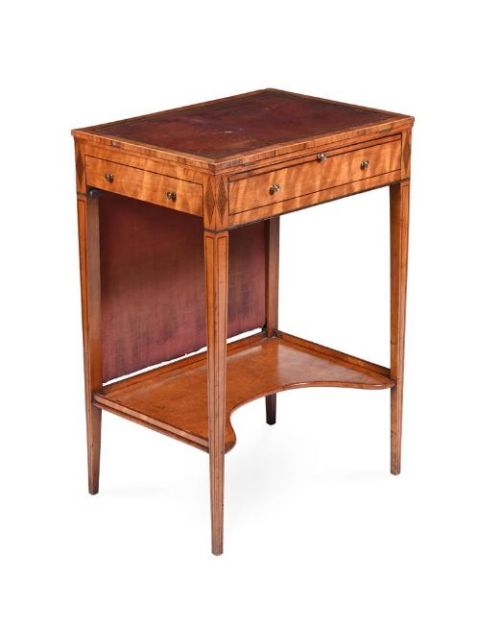


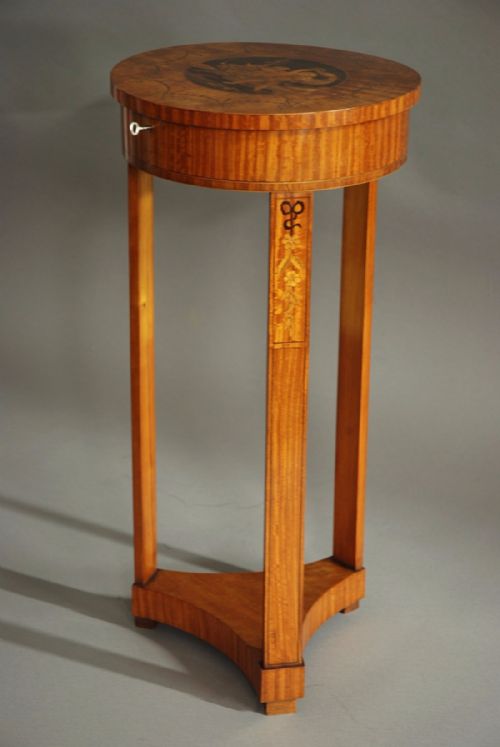
Satinwood Inlaid Sewing Table
A satinwood inlaid sewing table brings light timber, marquetry and fitted compartments together to serve a nineteenth or eighteenth century interior.
Satinwood Inlaid Sewing Table
A satinwood inlaid sewing table combines a compact writing or work surface with interior storage for needlework and small valuables. These pieces appear across several eras, including the Edwardian, Victorian, and Georgian periods, alongside Sheraton and Regency styles.
The form frequently emerges as a work table or occasional table, often featuring drop leaves, serpentine edges, or secret rising compartments. Examples on this page range from late nineteenth-century continental decorative work tables to eighteenth-century Sheraton pieces.
Buyers encounter forms constructed from satinwood, mahogany, and rosewood, frequently enhanced with boxwood, ebony, and wood inlay. The primary function remains domestic and decorative, designed for the parlour or drawing room.
How they were made
Cabinetmakers utilised dense timbers like mahogany and rosewood as primary structural woods, pairing them with pale satinwood veneers for the exterior surfaces. Boxwood and ebony supplied contrasting stringing and banding to accentuate the edges and tabletops.
Wood inlay and marquetry created intricate botanical or geometric patterns across the panels, occasionally supplemented by hand-painted portrait decoration. Brass fittings and drop leaves provided both mobility and mechanical function for the folding flaps and internal compartments.
Materials recorded across the inventory include satinwood, mahogany, rosewood, brass, boxwood, fabric, wood inlay, and ebony.
What varies in quality
The precision of the wood inlay separates standard production from superior cabinetwork, particularly in the sharpness of the contrasting boxwood lines and marquetry motifs. Finer examples display meticulous grain selection in the satinwood veneers, creating a balanced and luminous surface across the top.
Internal complexity dictates the standing of a piece, with secret rising compartments and fully fitted sewing boxes representing higher craftsmanship than basic single-drawer variants. The integration of hand-painted portrait decoration or secondary timbers like rosewood further distinguishes the grade of the work.
The Satinwood Inlaid Sewing Table Glossary
- Satinwood
- A hard, yellow-tinted timber valued for its reflective sheen and smooth grain. Cabinetmakers used it extensively as a veneer on late eighteenth and Edwardian furniture.
- Marquetry
- Decorative patterns formed by fitting together contrasting pieces of wood veneer onto a structural base. This technique creates pictorial or geometric designs on tabletops and drawer fronts.
- Drop leaf
- A hinged flap on the side of a table that can be raised to extend the surface area or lowered when space is restricted. It relies on wooden or brass swing brackets for support.
- Stringing
- A thin, linear inlay of contrasting wood, such as boxwood or ebony, used to outline panels, drawers, and table borders. It provides a sharp visual boundary against darker or lighter timbers.
- Work table
- A small domestic table fitted with drawers, bags, or compartments designed to hold sewing materials and needlework tools. These pieces gained widespread popularity during the Georgian and Victorian eras.
Satinwood Inlaid Sewing Table: Frequently Asked Questions
What is a satinwood inlaid sewing table?
A satinwood inlaid sewing table is a small antique furniture piece designed for needlework, featuring internal compartments, drop leaves, and decorative woodwork.
These tables date from the eighteenth to the early twentieth century and serve both practical and display purposes in a room.
How were sewing tables used?
Owners used these tables to store sewing threads, needles, and fabric while sitting in the parlour or drawing room. The top surface doubled as a writing desk or a place for small decorative objects.
Secret rising compartments provided secure storage for personal items and valuable sewing accessories.
How do I date an Edwardian sewing table?
Edwardian examples typically feature lighter mahogany or satinwood construction with delicate shell inlay and Sheraton Revival styling. They often incorporate serpentine drop leaves and fabric work bags.
Comparing the secondary timbers and the style of the wood inlay helps distinguish Edwardian production from earlier Georgian pieces.
What woods are used in these tables?
Makers relied on satinwood for the primary decorative veneer, supported by structural carcase woods like mahogany and rosewood. Contrasting details utilise boxwood, ebony, and various other wood inlays.
Brass hardware frequently appears on the handles, hinges, and occasional castors.
Where should I place a work table?
These compact tables fit well beside armchairs, sofas, or in smaller alcoves where floor space is limited. Their finished backs and decorative marquetry allow them to stand freestanding in the middle of a room.
Keeping them away from direct sunlight protects the sensitive satinwood veneer and hand-painted details from fading.