





Antique Worktable with Box
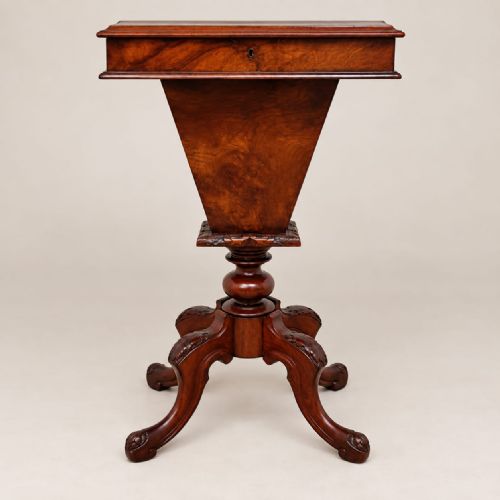
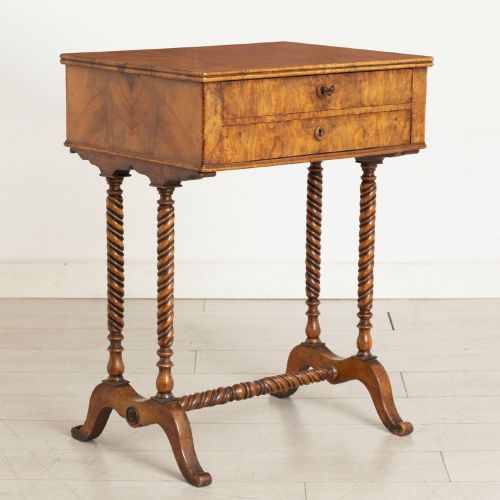
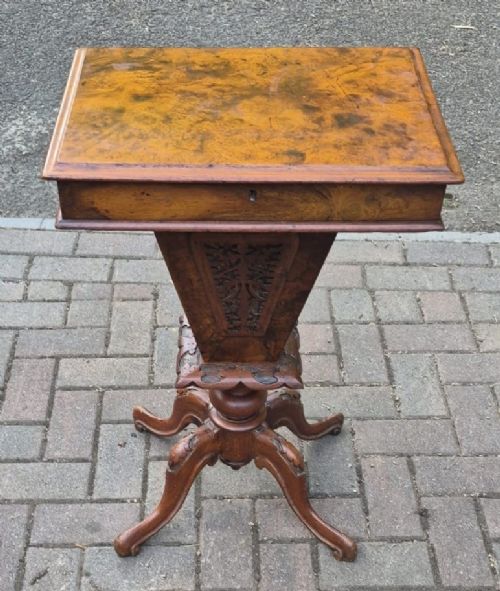
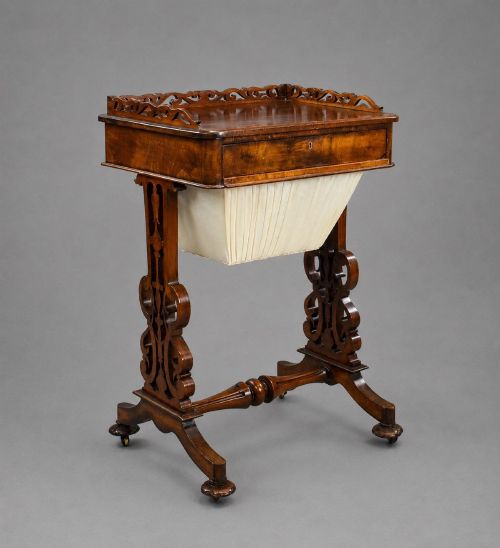
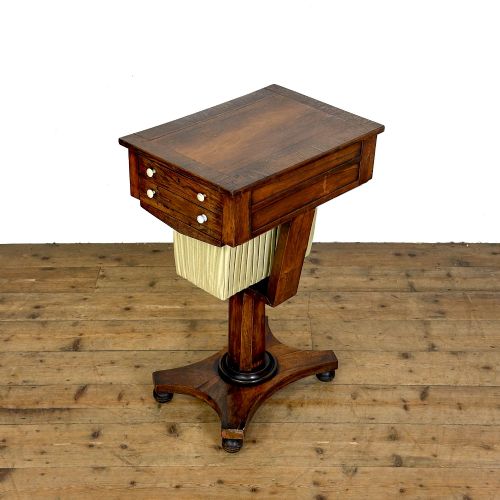
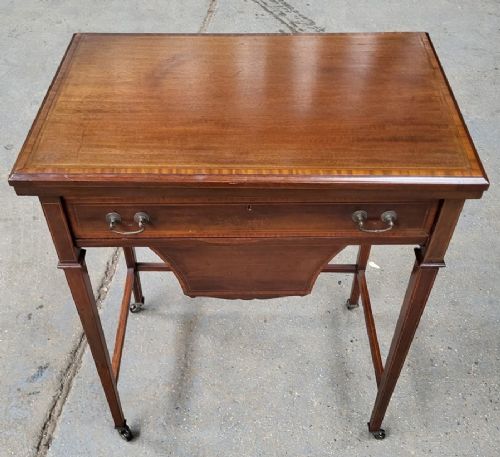
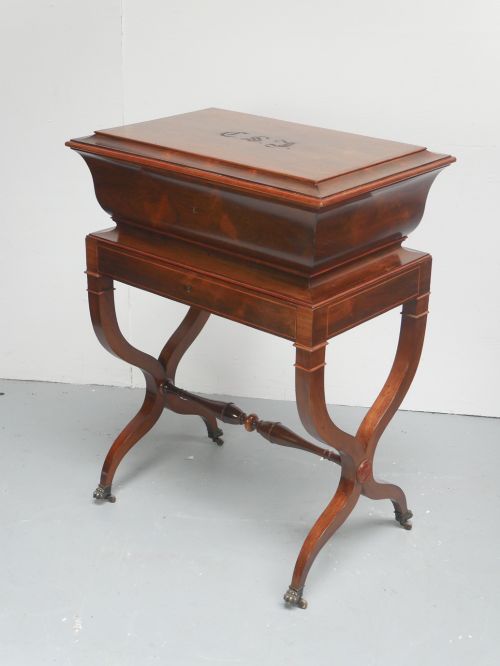
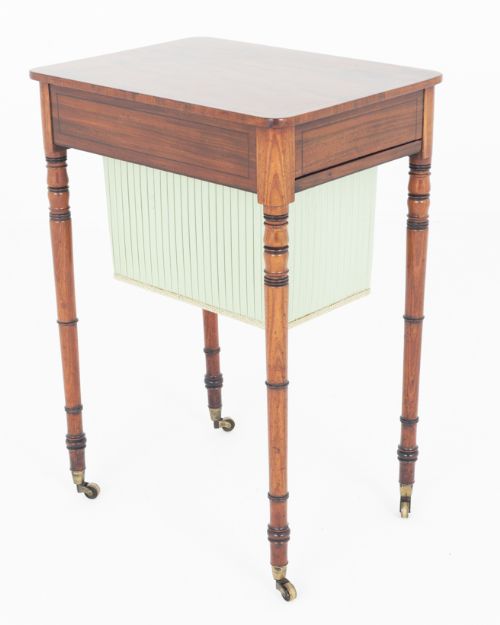
An antique worktable with box is a practical piece designed for needlework and small crafts, offering hidden storage beneath a fitted lid.
Antique Worktable with Box
An antique worktable with box combines a convenient surface with internal compartments for sewing equipment, threads and small writing materials. These tables function as dedicated spots for domestic handwork while serving as decorative furniture in a room.
The versions met most often on this page date from the Regency and Victorian periods, alongside Edwardian examples and occasional pieces from the early nineteenth century. Common forms include sewing tables, writing or sewing tables, and work boxes on stands.
Makers shaped these items using timbers such as mahogany, rosewood, walnut, burr walnut and oak. Many examples incorporate boxwood inlay, fabric or silk linings, and brass details to finish the design.
How they were made
Cabinetmakers constructed these tables from dense hardwoods like mahogany and rosewood, often utilising figured veneers such as burr walnut for visual depth. Carpenters integrated boxwood inlay to create fine geometric lines and decorative banding across the surfaces.
Internal storage compartments required precise joinery to house small sewing tools and writing equipment neatly beneath the top. Craftsmen lined the interior boxes with fabric and silk, adding fitted trays and compartments for thread and needles.
Some tables double as writing desks, proving that even in the past, nobody could decide whether to sew or answer letters first.
What varies in quality
Quality rests upon the selection of timber and the precision of the decorative inlay work. Pieces featuring figured burr walnut or finely grained rosewood sit at a higher tier than simpler constructions in plain oak or standard mahogany.
The sophistication of the internal box layout and the preservation of original fabric or silk linings distinguish finer examples. Refined brass mounts and crisp boxwood inlay indicate a higher level of workshop execution.
The Antique Worktable with Box Glossary
- Worktable
- A small piece of furniture designed for needlework, containing a box or bag to hold sewing supplies. These items gained popularity during the Regency and Victorian eras for domestic craft.
- Rosewood
- A dense, dark timber with distinct figuring, frequently utilised for high-status nineteenth-century furniture. Cabinetmakers prized it for its polished finish and rich colour.
- Boxwood Inlay
- Contrasting pale wood inserted into recesses in a darker wood surface to form linear patterns. This technique demands precise woodworking skill.
- Burr Walnut
- Wood taken from a walnut tree growth, yielding a swirling, highly decorative grain pattern. It appears on the surfaces of select nineteenth-century writing and sewing tables.
- Sewing Table
- An alternative term for a worktable, equipped with internal compartments specifically for threads, needles and fabric. Some versions double as writing desks.
Antique Worktable with Box: Frequently Asked Questions
What is an antique worktable with box used for?
These tables served as dedicated pieces for needlework, sewing and small writing tasks in the home. The internal box held threads, needles and fabric scraps out of sight.
Today, they function well as occasional tables or side tables beside a chair or sofa, providing useful concealed storage for small household items.
How do I tell Victorian tables from Regency ones?
Regency pieces often display classical proportions and dark timbers like rosewood or mahogany with restrained decorative elements. They typically date from the early nineteenth century.
Victorian examples often feature heavier proportions, walnut or burr walnut veneers, and sometimes more elaborate inlay work or carved details reflecting mid-nineteenth-century tastes.
What materials were used to make these tables?
Cabinetmakers relied on hardwoods including mahogany, rosewood, walnut, burr walnut and oak. Surfaces frequently incorporated boxwood inlay and brass hardware.
Interiors often featured fitted compartments lined with fabric or silk to protect delicate sewing tools and threads during use.
Where should I place an antique worktable in my home?
These compact tables fit comfortably beside a sofa, armchair or against a hallway wall as an occasional surface. The enclosed box top keeps small accessories tidy while the surface holds a lamp or book.
Their varied timber tones allow them to complement both traditional interiors and mixed contemporary spaces.