
Antique Narrow Side Cabinet
An antique narrow side cabinet solves the persistent problem of furnishing awkward alcoves and tight spaces without sacrificing period character.
Antique Narrow Side Cabinet
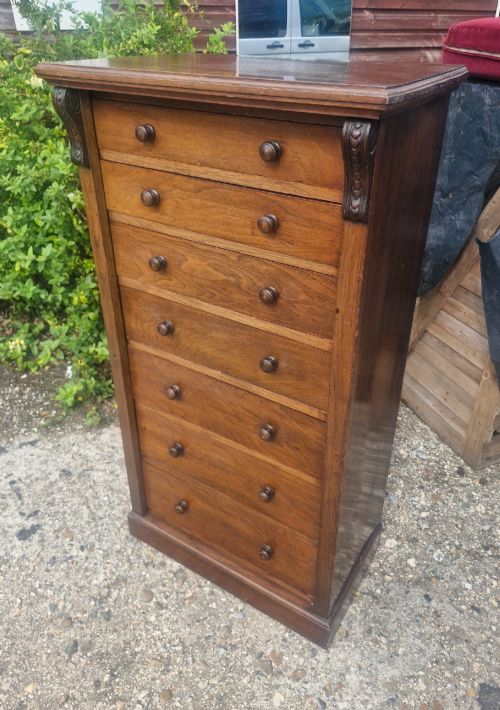
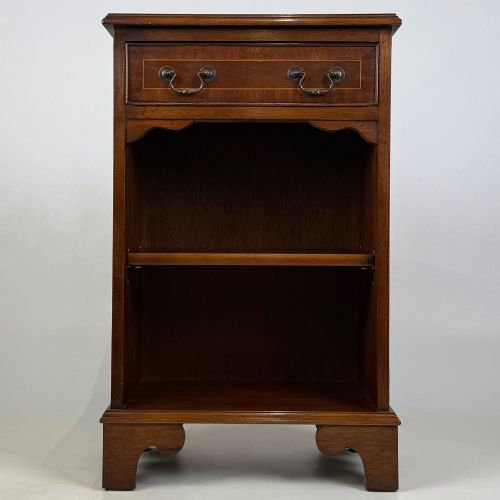
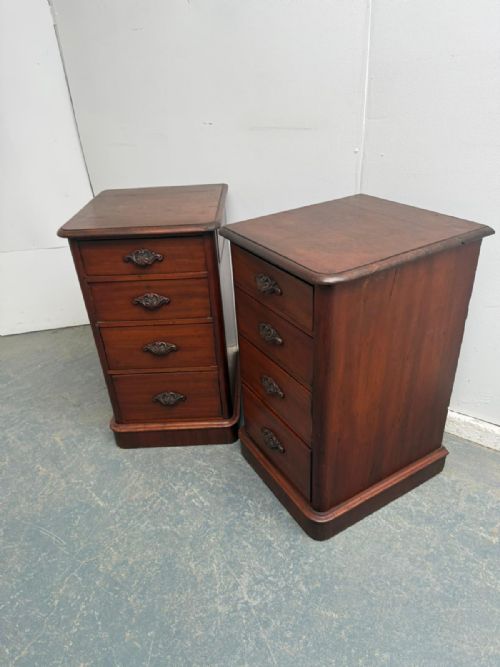
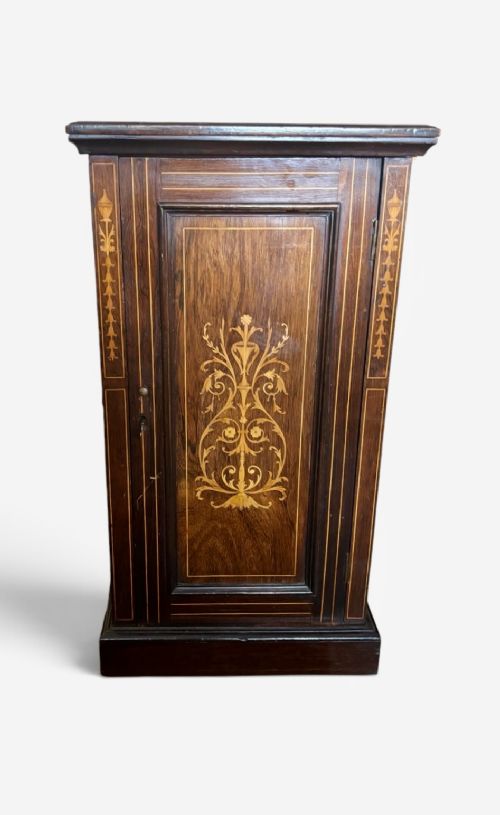
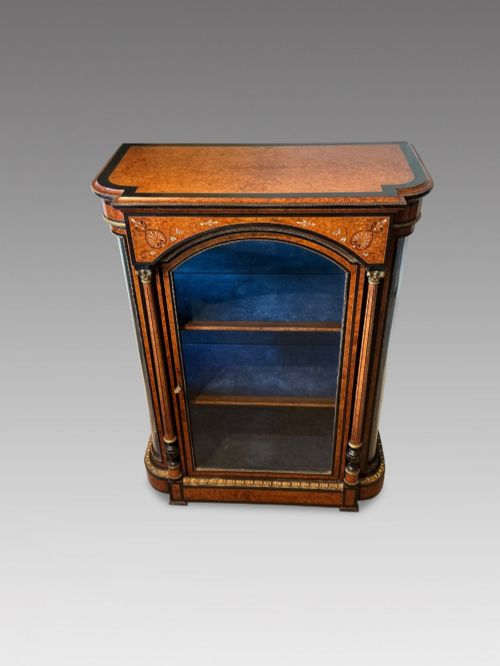
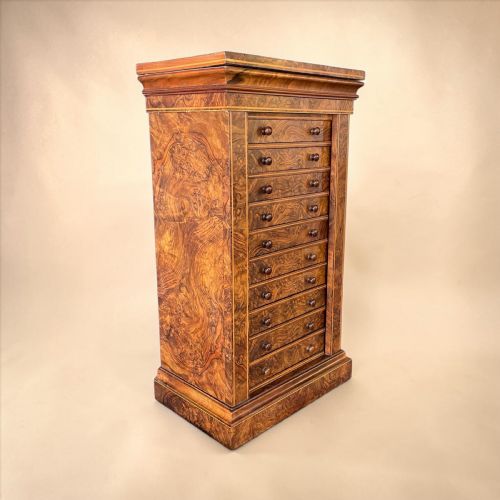
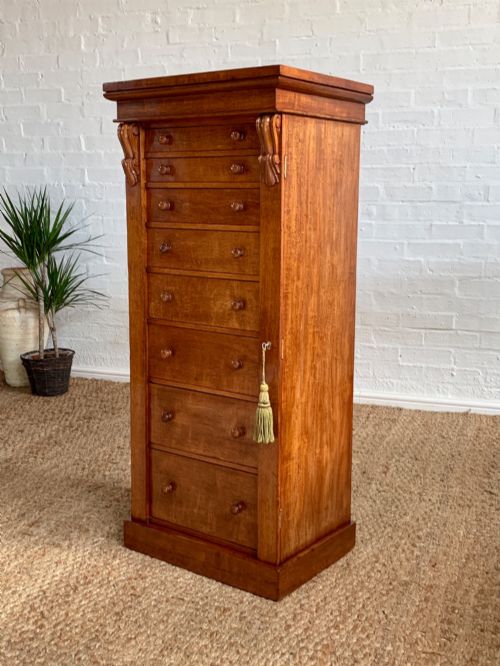
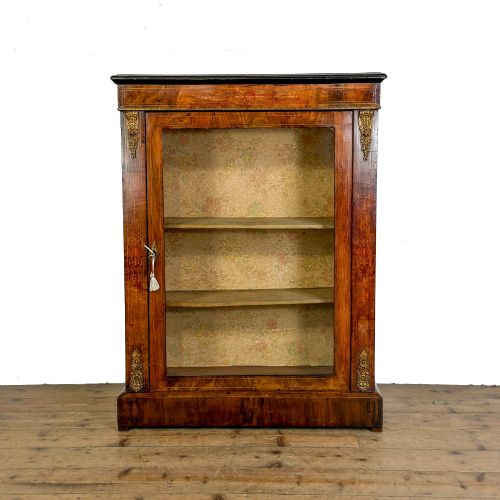
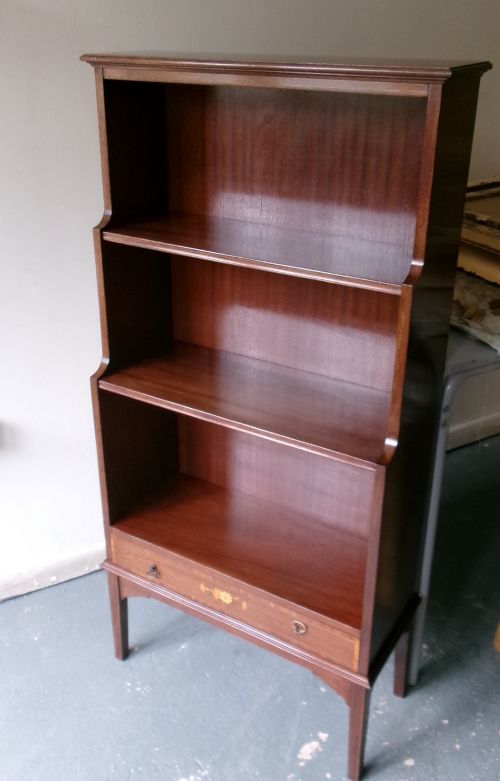
When you search for an antique narrow side cabinet, you encounter a surprisingly diverse group of compact furniture designed to occupy restricted spaces. These pieces span from the Georgian era through to the early twentieth century, taking the specific form of tall Wellington chests, glazed pier cabinets, bedside cupboards, and slender open bookcases.
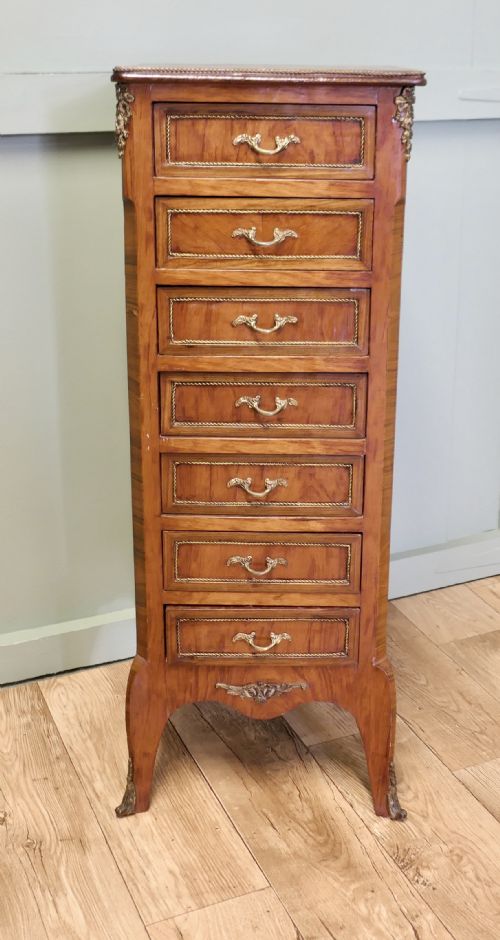
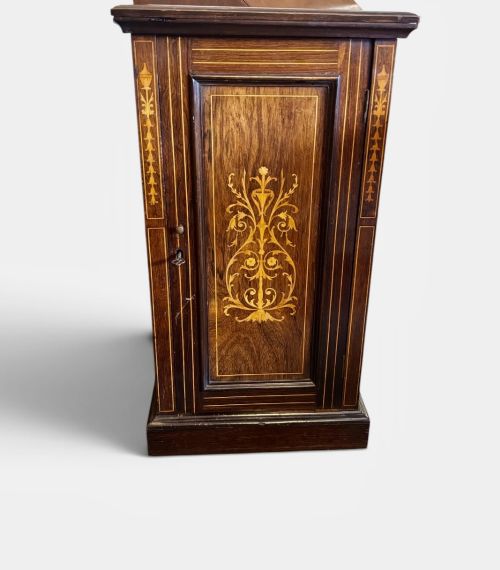
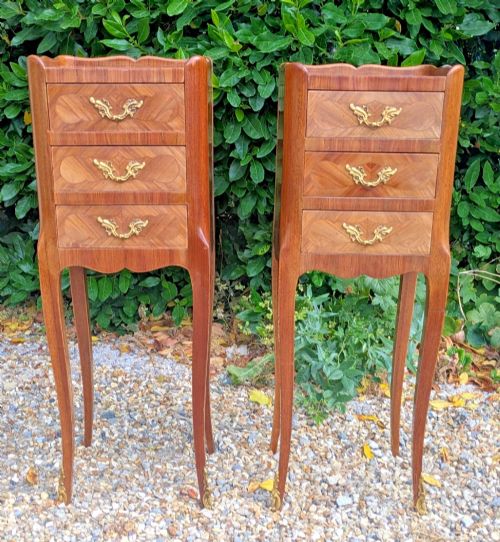
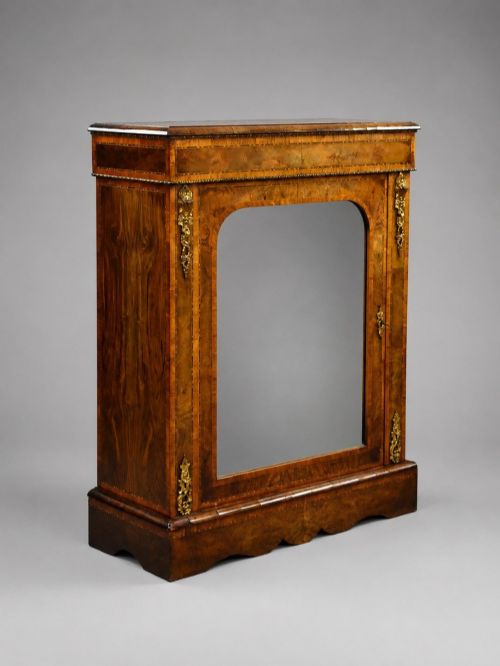
Victorian examples dominate the selection, frequently constructed as tall, shallow repositories for books or precious objects in figured mahogany, walnut, or rosewood. You also find Edwardian iterations in mahogany and oak alongside French-influenced pieces featuring marquetry and ormolu mounts, all sharing a distinctly reduced footprint suited to modern hallways and tight drawing rooms.
Materials and Technique
Cabinetmakers relied heavily on dense hardwoods such as mahogany, walnut, and rosewood, often choosing figured veneers and burr walnut to create striking grain patterns across flat drawer fronts and doors. Inlaid decoration utilising contrasting satinwood, boxwood, and brass strings added linear definition to otherwise plain vertical surfaces.
Structural integrity in these tall, slim proportions depended on robust carcase construction, sometimes augmented by locking pilasters in the case of Wellington chests or secure brass mechanisms on glazed pier cabinets. Ormolu mounts, gilt bronze details, and hand-turned wooden knobs finish the hardware, anchoring the decorative schemes of the period.
Listings feature narrow side cabinets spanning the Georgian, Victorian, and Edwardian periods, constructed predominantly in mahogany, walnut, and rosewood.
Craftsmanship and Proportion
The division between ordinary and exceptional examples rests upon the ambition of the timber selection and the precision of the cabinetmaker's joinery. Superior pieces display continuous, book-matched veneers across multiple drawers and crisp, unblemished marquetry inlay that integrates seamlessly into the primary wood.
Proportion and structural retention also dictate value, as slender pieces must endure the stresses of height without racking or warping over time. Finer cabinets retain original locks, keys, and integrated locking mechanisms, alongside fire-gilded ormolu mounts and intact ceramic or Sevres porcelain plaques.
S & H Jewells of London
The Antique Narrow Side Cabinet Glossary
- Wellington chest
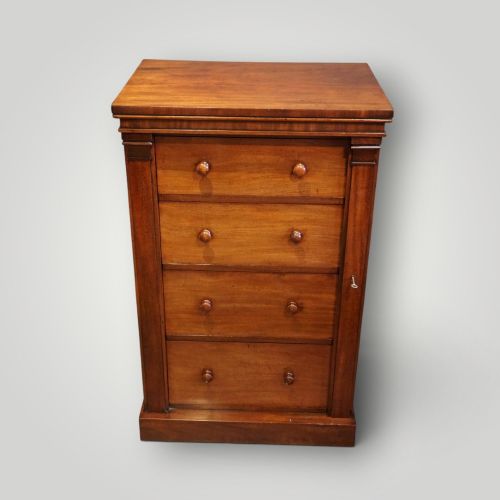
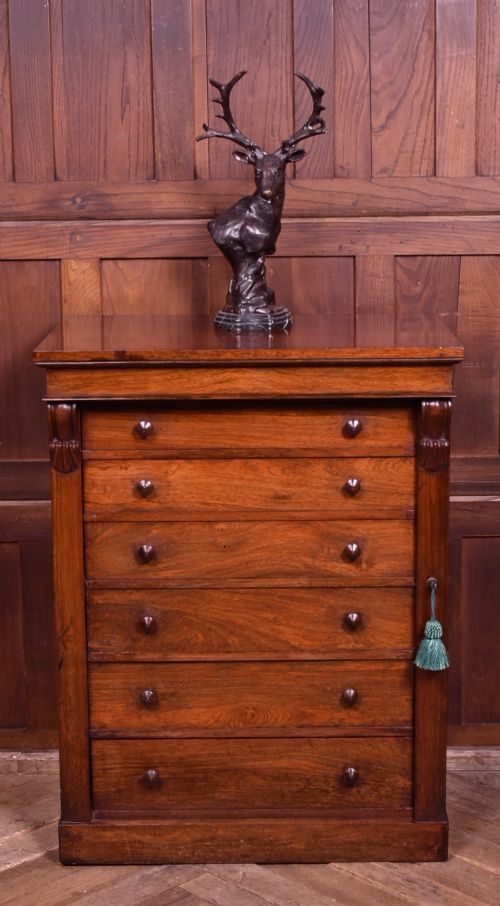
- A tall, narrow chest of drawers secured by a hinged locking pilaster on one side that fastens over the drawer edges. This specific form emerged during the early nineteenth century and typically contains seven drawers.
- Pier cabinet
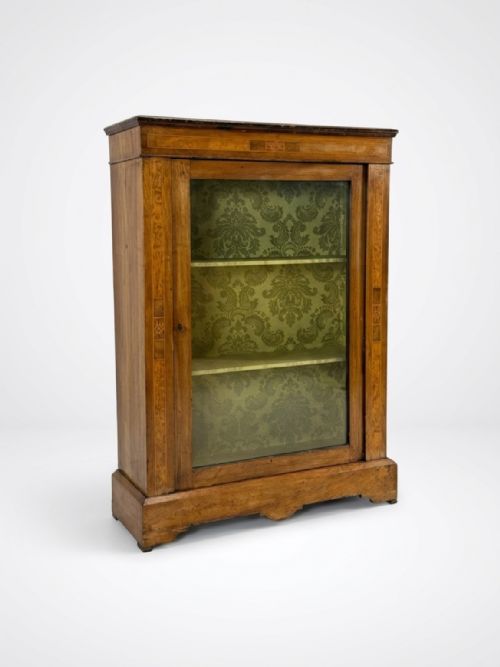
- A low, narrow cabinet designed specifically to stand against the wall space between two windows, often featuring glass doors for the display of ceramics or books. Victorian variations frequently incorporate ebonised wood and gilt bronze mounts.
- Marquetry
- Decorative woodwork where pieces of contrasting veneer are fitted into a ground material to form intricate pictorial or geometric patterns. Makers utilised satinwood and boxwood to achieve sharp contrast against dark walnut or rosewood carcases.
- Ormolu
- Gilded bronze ornamentation applied to the corners, feet, and friezes of finer nineteenth-century cabinets. The technique involves coating base metal in a mercury-gold amalgam before firing.
Antique Narrow Side Cabinet: Frequently Asked Questions
What rooms suit an antique narrow side cabinet best?
These slender units find a natural home in compact hallways, tight alcoves beside fireplaces, or beside low beds where standard furniture proves too bulky. Their restricted width preserves floor space while offering surprisingly deep vertical storage.
They also function effectively as lamp tables or display surfaces in smaller reception rooms without dominating the visual weight of the interior.
How do I distinguish a Wellington chest from a standard chest of drawers?
A Wellington chest stands taller and narrower than conventional chests, distinguished by a locking wooden flap or pilaster attached to one vertical edge. Swinging this flap open allows all the drawers to be unlocked simultaneously with a single key.
This distinct locking mechanism was originally engineered to secure private papers or precious collections securely within a compact footprint.
What is a pier cabinet used for?
Pier cabinets were originally built to occupy the narrow strip of wall between large nineteenth-century windows, serving as both decorative furniture and display space for prized porcelain. Their glass doors protected delicate ornaments from dust while reflecting natural light around the room.
Today, they serve a similar purpose for housing small collections, glass art, or specialised book sets in drawing rooms.
How do I care for antique veneered furniture?
Maintain these surfaces by avoiding direct sunlight and excessive humidity swings, which cause delicate nineteenth-century veneers to lift or crack. Apply a quality natural beeswax polish sparingly to nourish the wood without building up heavy chemical layers.
Lift the cabinet entirely when moving it rather than pushing or pulling, as the tall, narrow proportions place undue strain on the lower joints.