


Antique Narrow Chest
An antique narrow chest offers compact storage without sacrificing period character, making these slender drawers ideal for tighter spaces.
Antique Narrow Chest
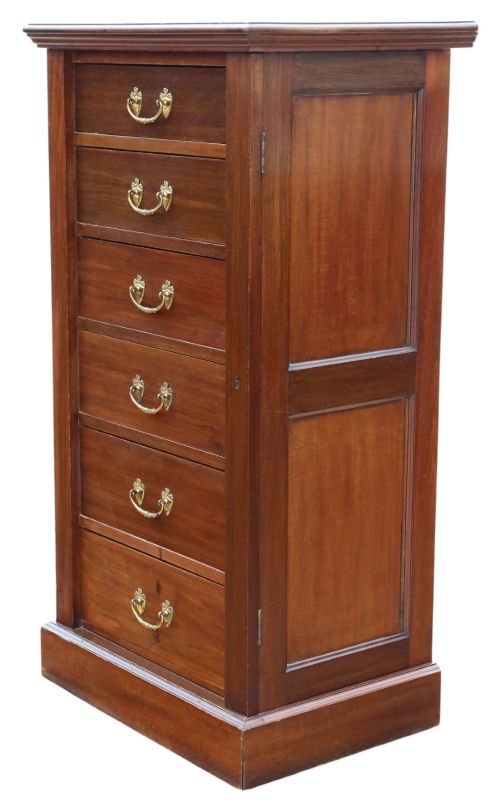
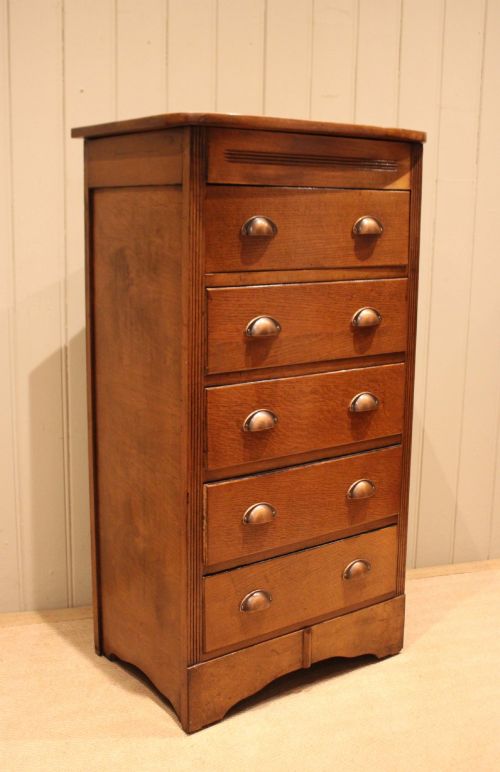
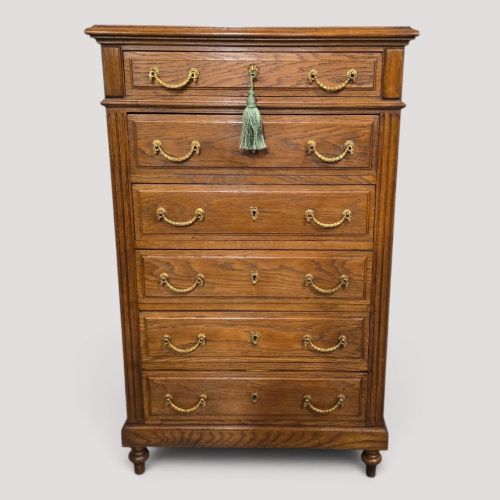
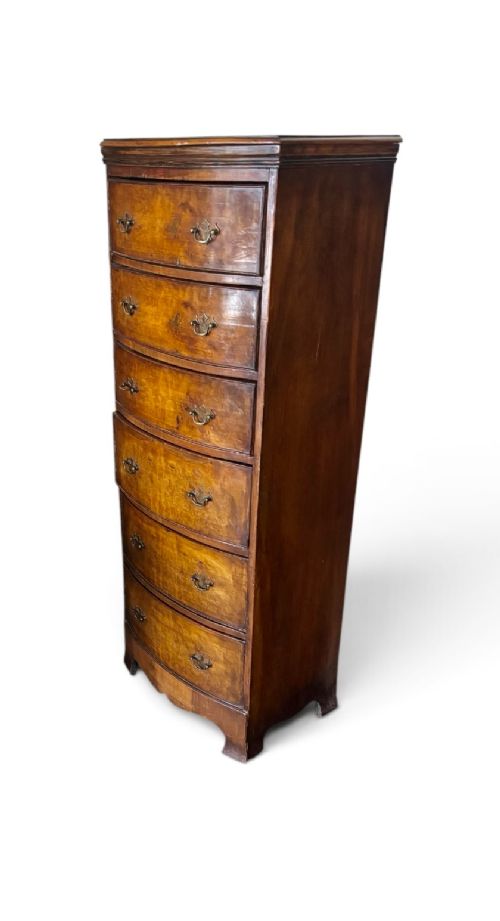
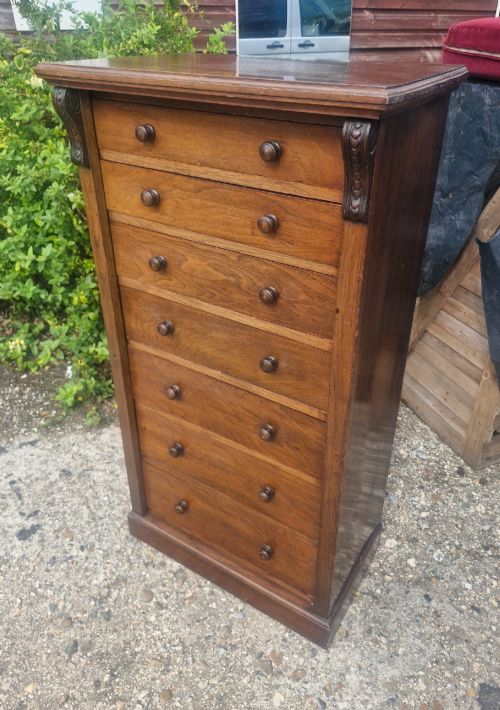
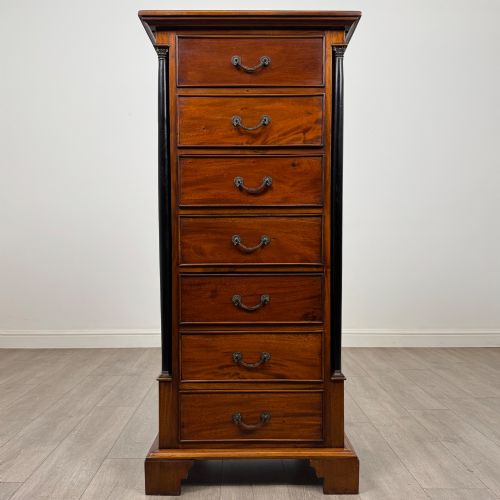
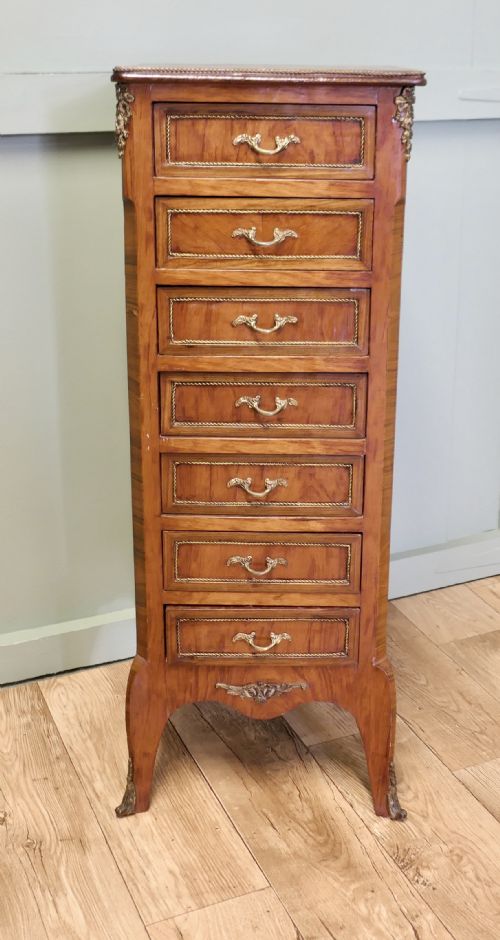
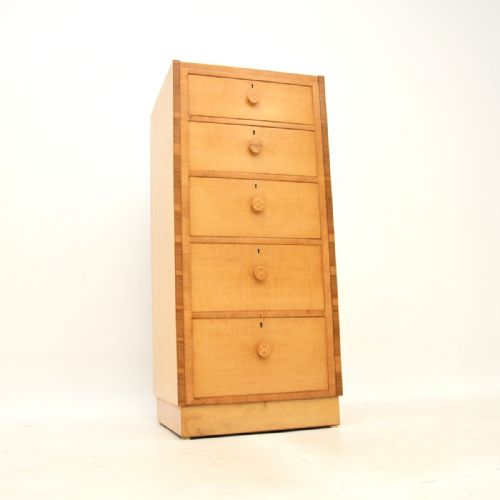
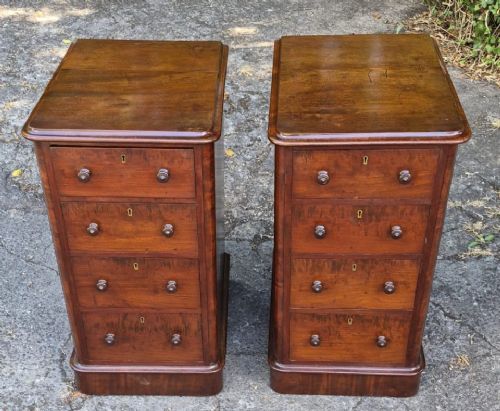
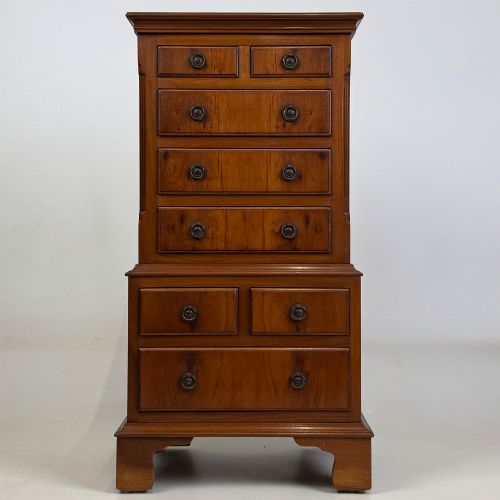
An antique narrow chest provides storage tailored for compact footprints, drawing from Victorian, Edwardian, and Georgian periods. These pieces appear frequently as tallboys, bedside cabinets, and Wellington chests designed with restrained proportions.
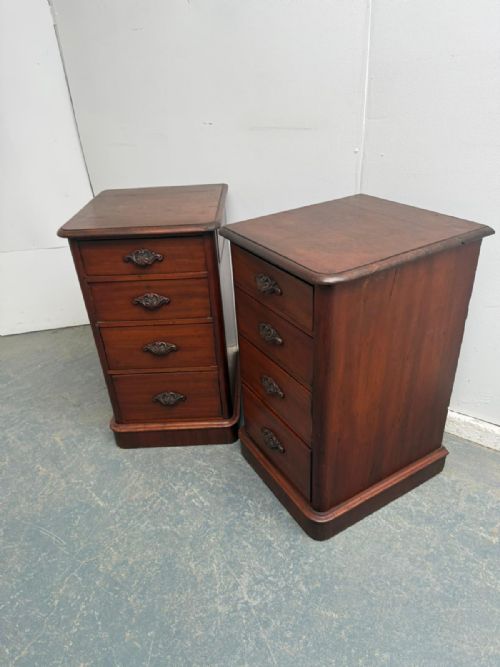
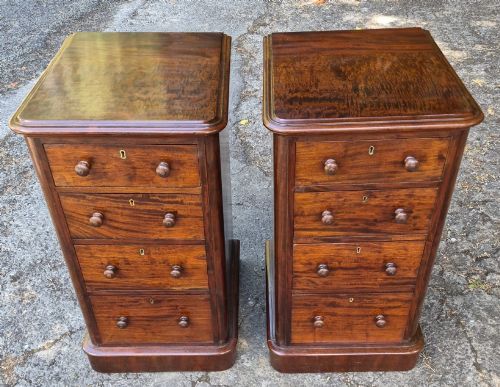
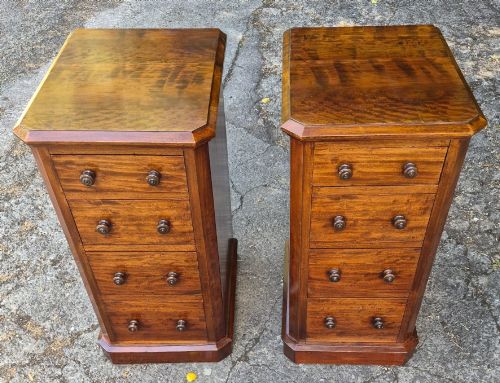
Makers adapted standard drawer storage into vertical formats using mahogany, walnut, and oak. Buyers encounter both single chests and matched pairs intended for bedroom placement.
Materials and construction
Cabinet makers utilised dense hardwoods including mahogany, walnut, and oak, often selecting figured veneers like burr walnut or flame mahogany for drawer fronts. Brass hardware, turned knobs, and occasionally parquetry patterns finished the exteriors.
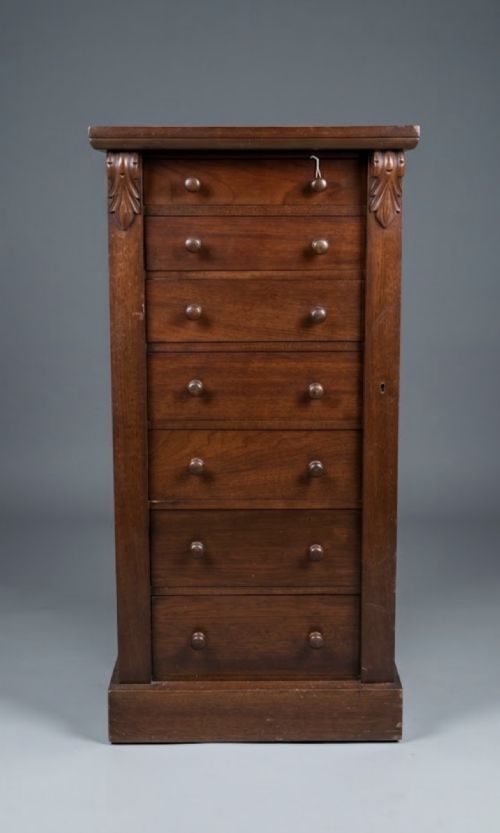
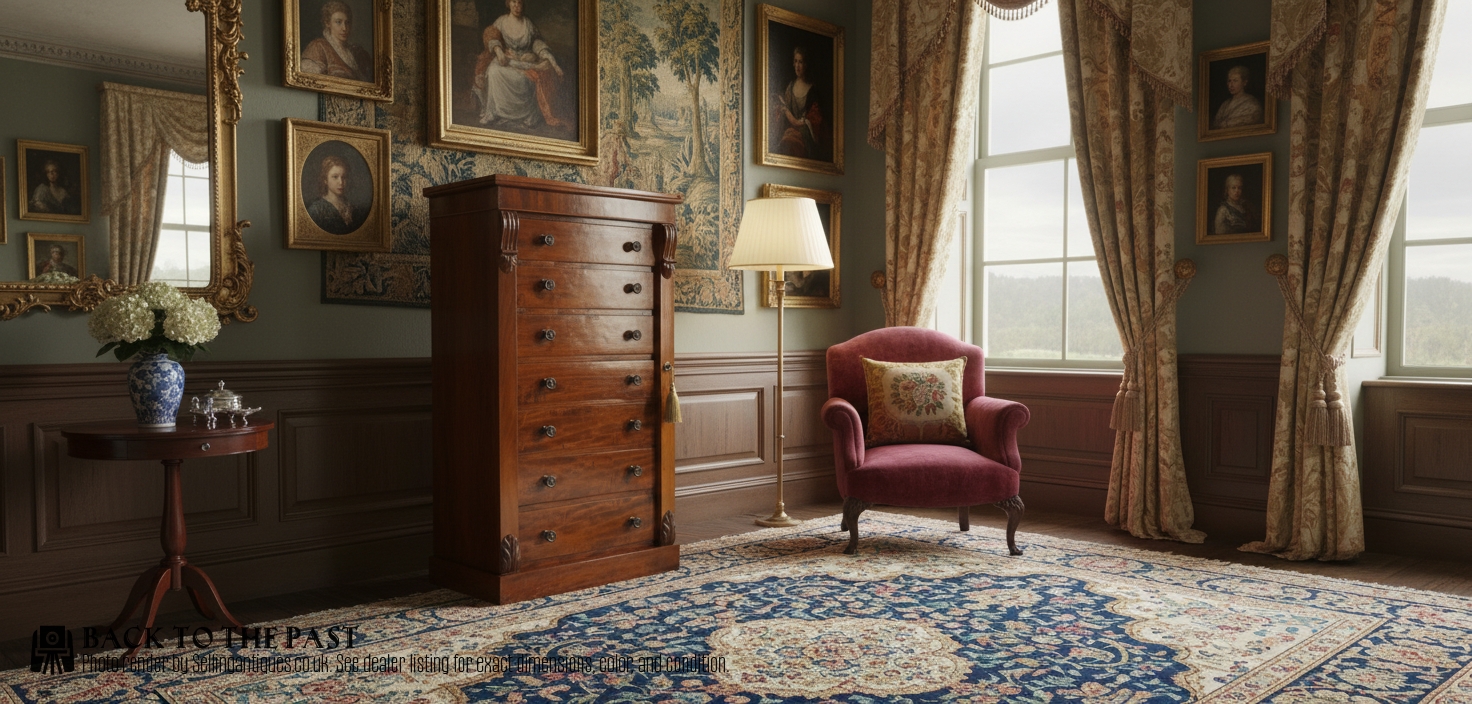
Joinery relied on traditional dovetailed drawer construction and solid timber framing. Tall forms incorporated locking mechanisms, particularly on Wellington chests where a side-locking stile secured all drawers simultaneously.
Antique Narrow Chest Retail Price Guide 2026
Typical asking prices for narrow chest among the pieces listed under this phrase on Sellingantiques today, from the lower quarter to the upper quarter. They describe what is for sale here now, not the wider market.
Common narrow formats include bedside cabinets, tallboys, and six-drawer Wellington chests equipped with side-locking bars.
Assessing construction and finish
Quality rests in the selection of timber veneers and the crispness of carved or turned details. Superior examples exhibit book-matched grain patterns across drawer fronts and retain original polished surfaces and hardware.
Internal construction distinguishes finer pieces through solid secondary woods, cleanly cut dovetails, and smooth drawer action. Adaptations or replaced elements alter the integrity of period pieces.
Warings Liverpool·Gillows·S and H Jewells of London
The Antique Narrow Chest Glossary
- Wellington chest
- A tall, narrow chest of drawers secured by a hinged locking side-bar that fastens over the drawer edges. This form originated in the nineteenth century.
- Tallboy
- A tall chest of drawers, often constructed in two stacked sections. The upper chest sits upon a lower chest or base stand.
- Bow front
- A convex curved drawer front that projects outward from the centre. This profile appears frequently on nineteenth-century pieces.
- Parquetry
- Geometric wood mosaic work used for decorative surface veneers. Cabinet makers arranged contrasting timber tiles into repeating patterns.
Antique Narrow Chest: Frequently Asked Questions
What is a Wellington chest?
A Wellington chest is a tall, slender set of drawers characterised by a hinged vertical locking flap on one side. This bar fastens with a key to secure all the drawers at once.
Cabinet makers originally built these compact units to maximise vertical storage in bedrooms without occupying much floor space.
How do I spot a tallboy?
A tallboy is recognised by its stacked two-section construction, combining a taller chest format with a narrow footprint. These pieces often feature graduated drawers decreasing in depth toward the top.
They provide substantial storage capacity while maintaining the slim proportions required for tighter rooms.
Where should I place a bedside chest?
Bedside chests fit neatly beside low or standard height bed frames where traditional wide cabinets prove too bulky. Their compact surface area accommodates lighting and small bedside items.
Pairs of these chests offer symmetrical bedside storage across various historical styles.
How do I care for polished wood?
Maintain polished mahogany and walnut surfaces by dusting with a soft, dry cloth and avoiding direct sunlight. Apply traditional wax periodically to nourish the timber grain.
Keep these chests away from direct heat sources to prevent wood movement and veneer separation.