


Antique Music Canterbury Cabinet
An antique music canterbury cabinet holds sheet music and periodicals in tiered compartments or enclosed shelves.
Antique Music Canterbury Cabinet
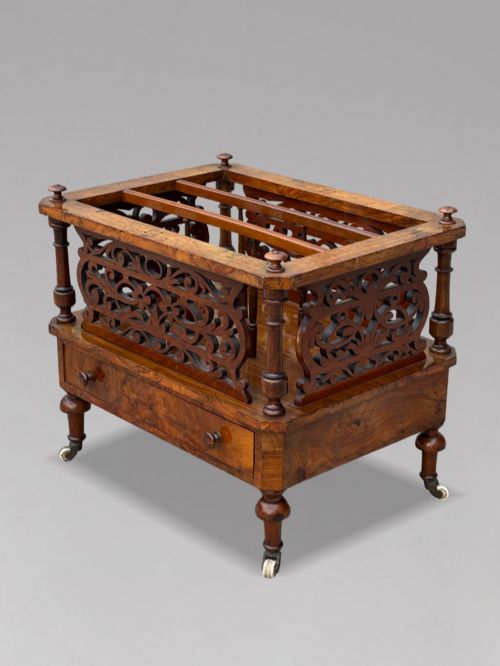
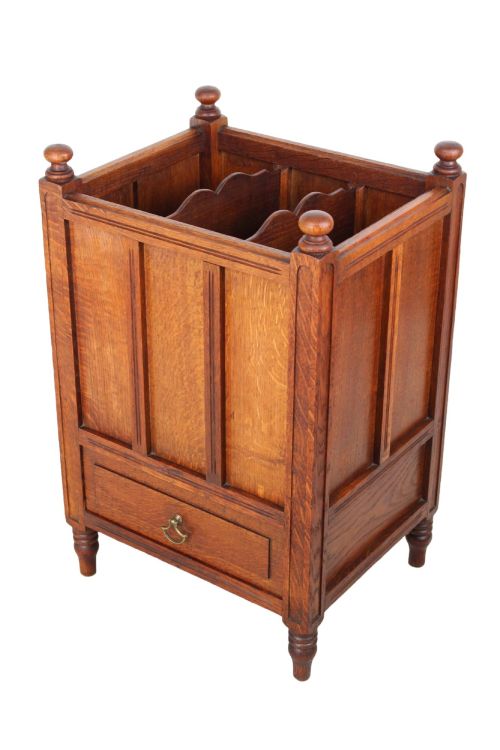
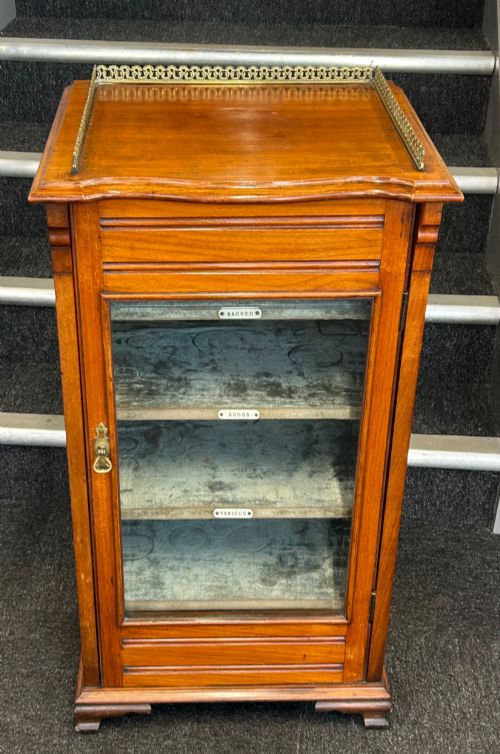
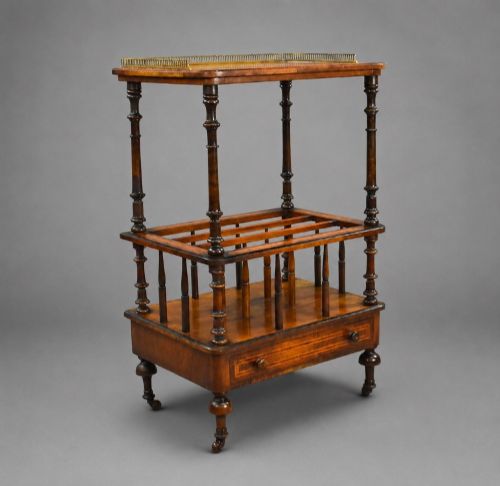
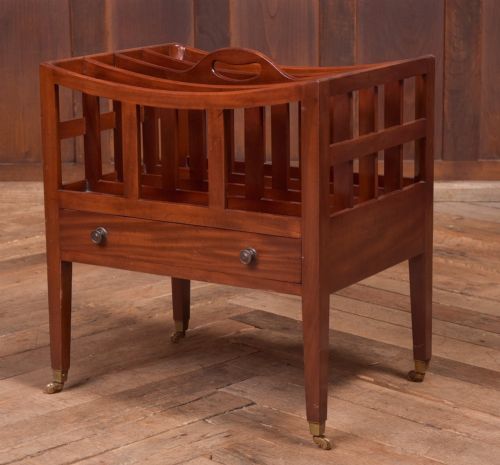
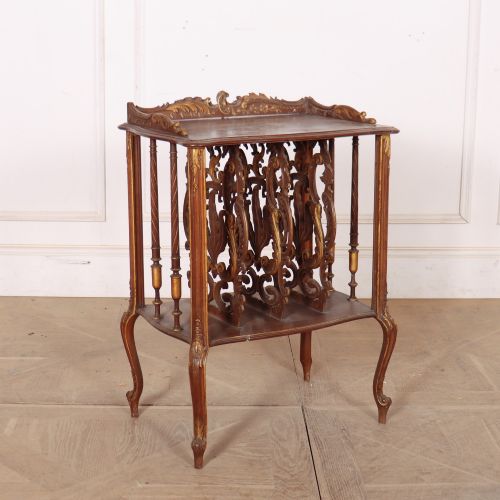
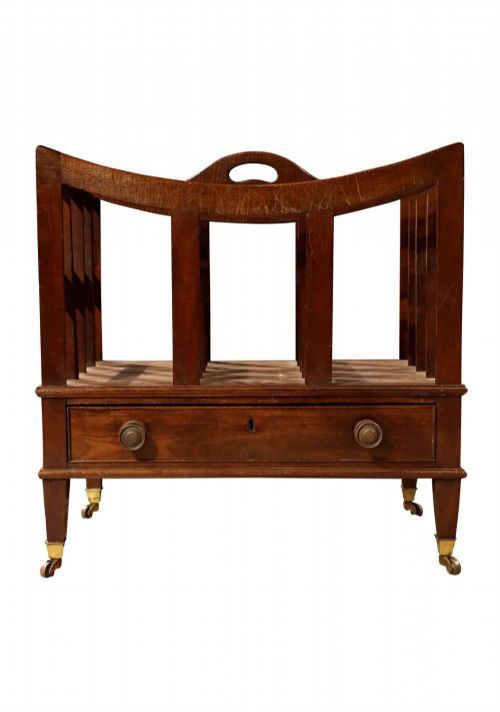
An antique music canterbury cabinet combines open divisions for folios with enclosed storage for smaller sheets, appearing across Victorian, Edwardian, and Regency periods. Pieces range from low, wheeled stands with vertical partitions to tall cabinets featuring glass doors or fall fronts.
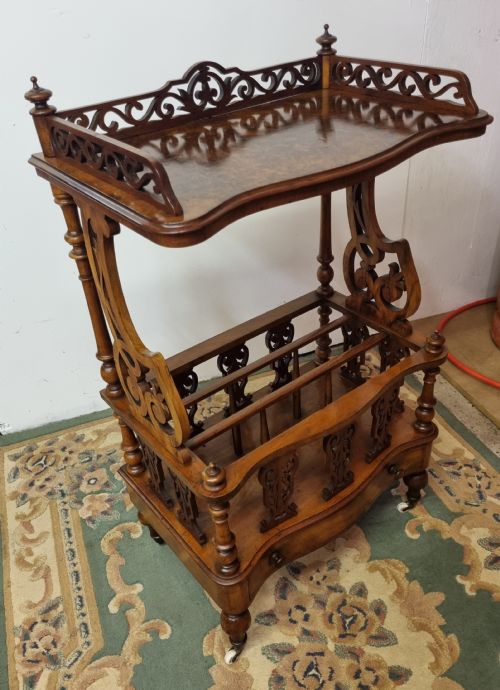
The most common examples on this page are walnut and mahogany versions from the nineteenth century, often incorporating lower drawers and inlaid marquetry. Formats stretch from simple four-division racks to multi-functional whatnots and étagères designed for the parlour.
Materials and construction
Cabinetmakers utilised rich timber veneers such as burr walnut, figured walnut, rosewood, and mahogany over solid carcases. Marquetry inlay, brass castors, and turned supports frequently accent the main structure.
Joinery methods combine traditional dovetailing for drawers with fitted vertical slats and carved detailing. Later Edwardian examples introduce simplified panel work alongside glazed doors.
Musicians from the Victorian era kept their sheet music so tidy that craftsmen invented rolling wheeled stands just to chase the scores around the parlour.
Judging standard and execution
Distinction lies in the choice of timber figure, such as highly figured burr walnut or dense rosewood, paired with precise marquetry and fine brass hardware. Superior examples display crisp carving and robust internal framing for the division slats.
The integration of secondary functions, including work tops, lower drawers, or combined whatnot shelving, separates standard utility pieces from more ambitious workshop productions.
Henry Ogden & Son
The Antique Music Canterbury Cabinet Glossary
- Canterbury
- A low stand fitted with vertical partitions for holding sheet music or newspapers. Originating in the late eighteenth century, it often includes a single drawer beneath.
- Whatnot
- A piece of open shelving supported on pillars, used for displaying ornaments or books. They frequently combine with music cabinets in later Victorian designs.
- Marquetry
- Decorative patterns formed by inserting pieces of contrasting wood veneer into a solid background. This technique appears widely on Victorian walnut surfaces.
- Fall Front
- A hinged flap that drops down to form a writing surface or to reveal internal compartments. It defines several music cabinet formats on this page.
- Étagère
- A set of open shelves for display, similar in function to a whatnot. These structures appear frequently in nineteenth-century rosewood and mahogany forms.
Antique Music Canterbury Cabinet: Frequently Asked Questions
What is an antique music canterbury cabinet?
An antique music canterbury cabinet is a dedicated piece of nineteenth or early twentieth-century furniture designed to store sheet music, folios, and periodicals. It typically combines open vertical dividers with enclosed cupboards or drawers.
These items served domestic music rooms and parlours where musicians kept scores organised and accessible. Today they function as versatile side cabinets or magazine holders in modern interiors.
How do I date an antique music cabinet?
Dating relies on timber selection, decorative styles, and construction techniques visible across different eras. Regency and William IV pieces favour dense mahogany with cleaner lines, while Victorian examples often feature burr walnut, marquetry inlay, and serpentine shapes.
Edwardian cabinets tend to be lighter in build, utilising simpler mahogany or oak frames with glass doors or fall fronts. Hardware such as brass castors and handles also provides clues to the manufacturing decade.
Where should I place a music cabinet at home?
These cabinets suit living rooms, studies, or hallways where their slim proportions fit easily against a wall. The top surface functions well for lamps, small sculptures, or decorative objects.
Open division sections hold contemporary magazines or vinyl records, while enclosed cupboards store smaller items out of sight. Their varied heights allow them to integrate alongside standard sideboards and bookshelves.
What timber types appear most often?
Walnut and burr walnut dominate the Victorian pieces on this page, frequently enhanced by decorative marquetry and ebony stringing. Mahogany and rosewood also appear regularly across both Regency and later nineteenth-century examples.
Edwardian items introduce lighter oak and simpler mahogany finishes, reflecting changing domestic tastes towards brighter, less ornate furniture.