


Antique Miniature Coffer
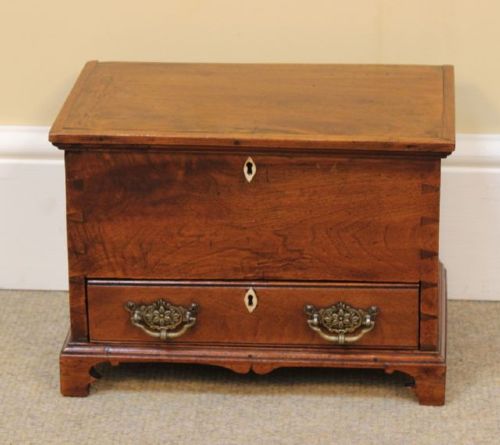
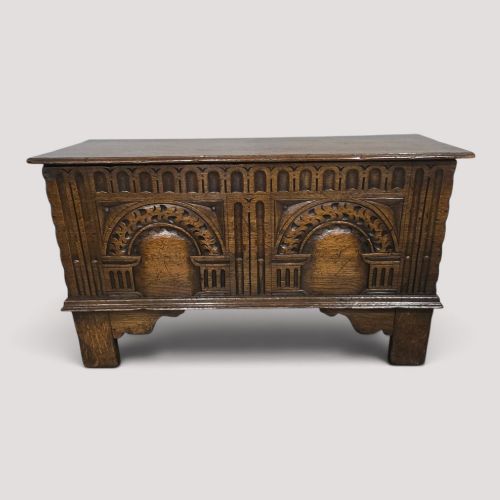
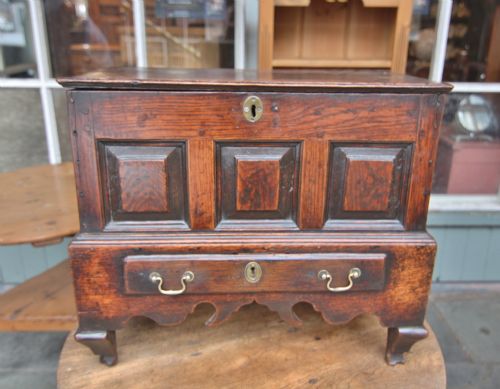
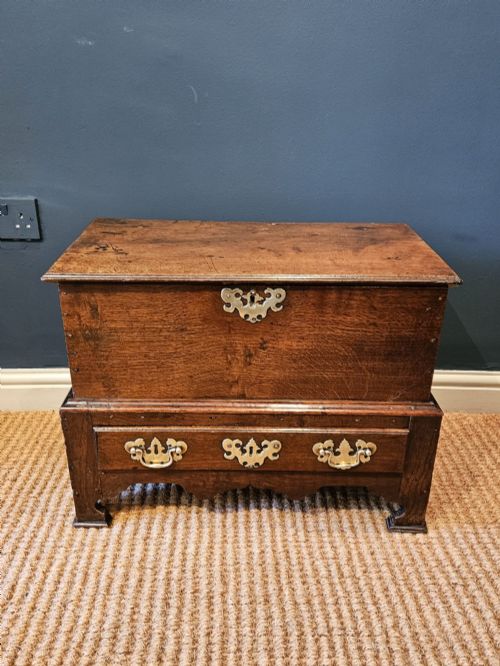
An antique miniature coffer brings the heavy presence of full-scale vernacular furniture down to tabletop scale, prized for holding small valuables.
Antique Miniature Coffer
An antique miniature coffer takes the form of a small chest or coffer bach, often constructed as an apprentice piece or a tabletop cabinet for domestic storage. These small vessels appear frequently in regional variations, most notably the Welsh coffer bach originating across the eighteenth century.
The objects span periods from the seventeen-hundreds through the Victorian era, utilising domestic forms like mule chests, miniature chests, and trinket boxes. Collectors encounter regional British vernacular styles alongside occasional continental and campaign examples made from teak or mahogany.
Makers designed these small chests to replicate larger furniture types faithfully, incorporating drawers, hinged lids, and turned feet. The scale remains compact, suited for display upon tables or desks.
Materials and construction
The primary material across these pieces is oak, frequently worked by regional carpenters to build solid planked bodies with traditional joinery. Walnut and mahogany also appear, sometimes paired with secondary woods and mother-of-pearl inlay.
Hardware consists of brass hinges, locks, and iron mounts, while select examples incorporate bone or enamel details for decorative effect. Surfaces display polished timber grains, showing hand-planed finishes characteristic of vernacular workshops.
Factors influencing quality
The standard of an antique miniature coffer rests on the crispness of its proportions and the fidelity of its joinery to full-size furniture traditions. Pieces built with thick oak boards and well-fitted internal drawers demonstrate superior regional craftsmanship.
Proportion and restraint in decorative elements separate finer vernacular items from simpler utilitarian boxes. Surviving original brassware and untouched surface patination elevate the standing of a coffer within any collection.
The Antique Miniature Coffer Glossary
- Coffer bach
- A small Welsh oak chest, translating literally as little coffer, traditionally featuring a hinged lid above one or more drawers. These pieces served domestic functions in rural households.
- Mule chest
- A traditional chest fitted with one or more drawers beneath the main storage compartment. Miniature versions replicate this functional layout on a tabletop scale.
- Apprentice piece
- An item created by a trainee craftsman to demonstrate mastery of joinery and woodworking techniques to a guild. These objects often display high technical skill in miniature form.
- Vernacular furniture
- Domestic pieces built by local tradesmen using regional materials and traditional designs rather than high-style metropolitan patterns. Oak is the dominant timber in these constructions.
- Campaign trunk
- Portable furniture made in sections with recessed brass hardware for military travel. Miniature interpretations utilise teak and structural brass corners.
Antique Miniature Coffer: Frequently Asked Questions
What is a coffer bach?
A coffer bach is a small Welsh oak chest featuring a hinged lid and typically one or more drawers beneath the main compartment. These traditional pieces were made during the eighteenth century for domestic use.
They function today as decorative tabletop storage for small items like trinkets and lace. Their regional designs make them distinct from standard English miniature chests.
How old are these miniature chests?
The pieces span from the seventeenth century through the Victorian period, with many examples originating in the eighteenth century. Dating relies on timber species, construction methods, and regional styles.
Earlier items often feature heavy oak framing and simple board construction. Later nineteenth-century examples introduce mahogany, walnut, and more complex inlay work.
Were apprentice pieces actually made by learners?
Apprentice pieces represent skilled work created to prove competency in woodworking techniques. These small-scale items allowed makers to demonstrate mastery of joinery, dovetails, and hardware fitting.
They mirror full-size furniture in every structural detail. This practice explains the high quality found in many surviving miniature chests.
Where were most antique miniature coffers made?
A significant portion of these pieces originate from Welsh regional workshops using local oak. Other examples emerge from English makers, alongside occasional continental and campaign pieces.
Regional characteristics help identify the local tradition behind each coffer. Carpenters utilised the timber available in their immediate geographic area.