


Antique Military Desk
An antique military desk provides practical modular writing space designed for travel.
Antique Military Desk
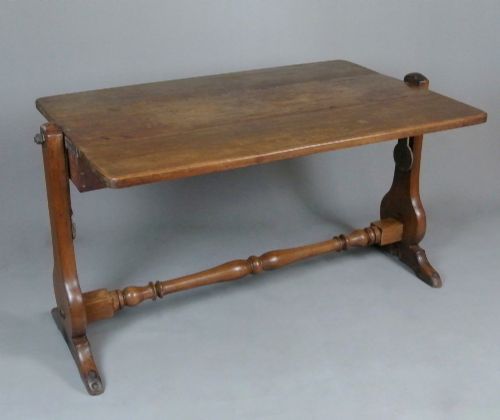
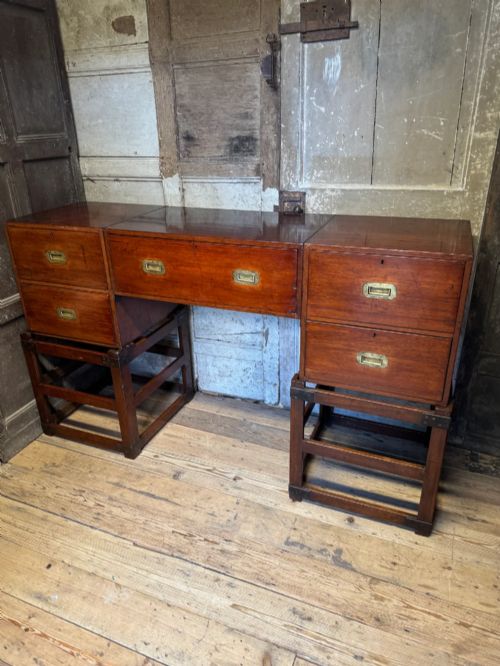
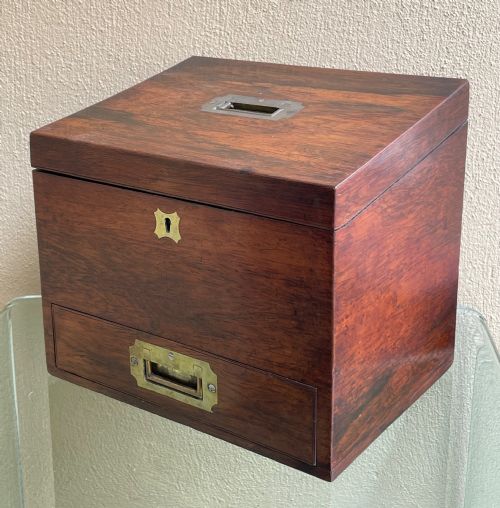
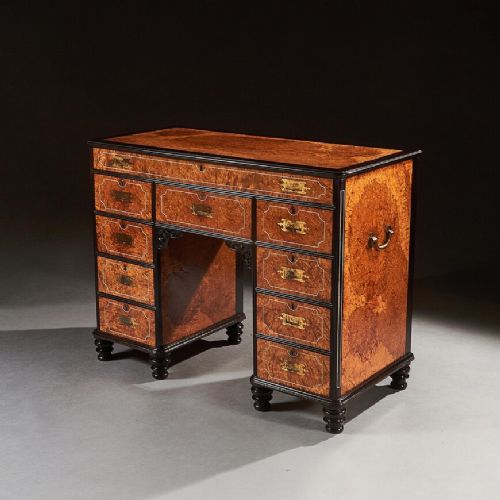
An antique military desk covers pedestal forms, kneehole variants, and compartmentalised writing boxes built for transport. These pieces derive from the functional demands of officers needing transportable workspace during campaign movements.
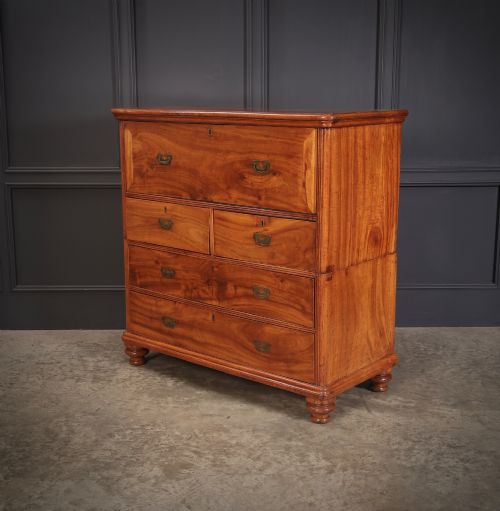
The material record shows mahogany, teak, and camphor wood configured into multi-part chests and tables. Buyers frequently encounter nineteenth-century pedestal desks and secretaire chests featuring removable sections.
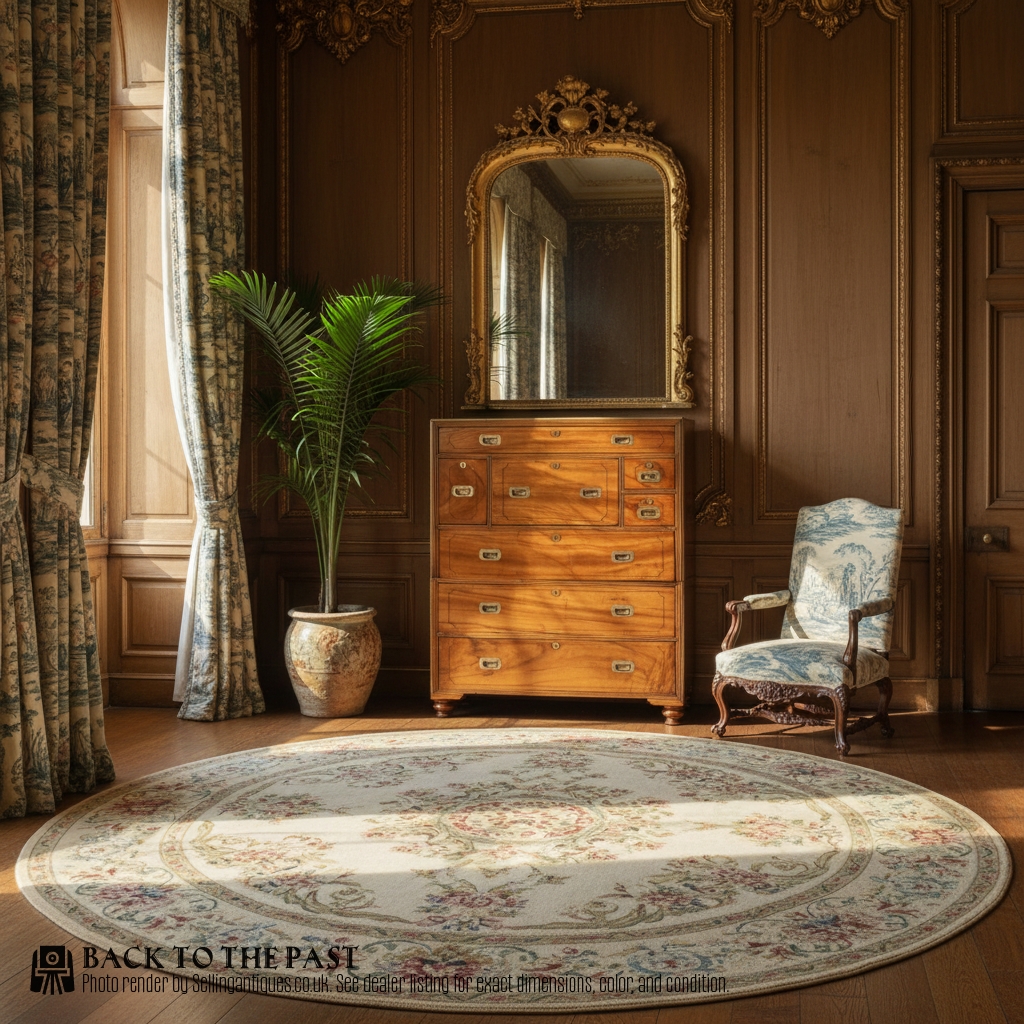
Materials and construction
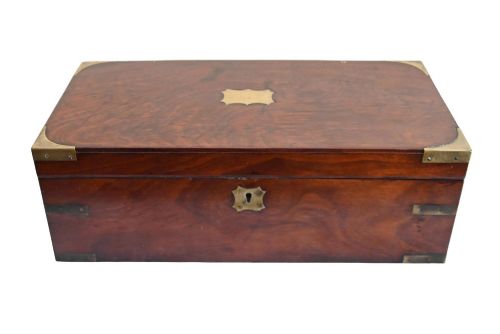
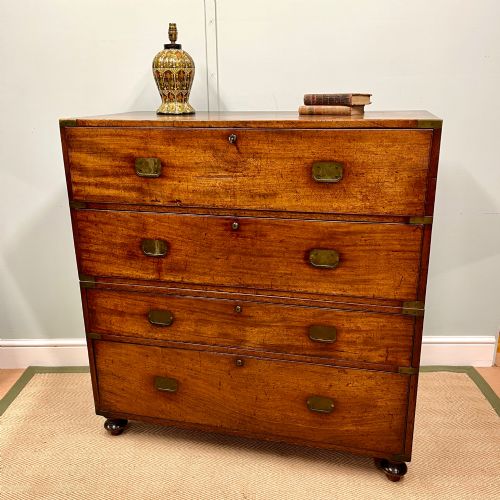
Cabinet makers utilised dense hardwoods like mahogany and teak to withstand frequent disassembly and relocation. Brass corners, binding, and recessed handles protect vulnerable edges and maintain structural integrity during transit.
Internal configurations incorporate leather writing surfaces and concealed drawers within modular frames. Joints and fittings allow sections to separate cleanly into manageable units for carriage.
Antique Military Desk Retail Price Guide 2026
Typical asking prices for military desk among the pieces listed under this phrase on Sellingantiques today, from the lower quarter to the upper quarter. They describe what is for sale here now, not the wider market.
Officers carried portable desks containing secret compartments designed to safeguard confidential dispatches during dusty campaigns.
Assessing construction standards
Quality rests in the precision of the brass hardware integration and the stability of the modular joins. Superior examples maintain alignment across multiple sections without looseness in the fittings.
Timber selection and secondary wood usage dictate the structural resilience of the piece. Fine execution shows restraint in decorative brasswork, prioritising functional durability over excessive ornamentation.
Gillows·Ross of London
The Antique Military Desk Glossary
- Campaign desk
- A portable writing table or pedestal desk built in sections for military transport. These pieces dismantle easily for movement.
- Secretaire chest
- A chest of drawers containing a fitted writing drawer with a drop front. The interior reveals small compartments and pigeonholes.
- Brass bound
- Edges and corners reinforced with brass plates and strips to prevent splitting. This method protects the wood from impacts during travel.
- Recessed handle
- A pull handle set into a flush cavity so it does not project beyond the surface. This prevents snagging during movement.
- Camphor wood
- An aromatic hardwood used for campaign furniture to deter insects. It appears frequently in nineteenth-century pieces.
Antique Military Desk: Frequently Asked Questions
How do military desks separate?
These desks typically divide into two or three separate modules, such as upper drawer sections resting upon lower pedestals. Brass drop-handles and side carrying brackets facilitate this modular separation.
Internal locking mechanisms often secure the stacked sections together when fully assembled for use. Buyers find pins or bolts holding the structural parts in alignment.
What woods were used for campaign desks?
Cabinet makers selected dense hardwoods capable of enduring arduous travel conditions without warping significantly. Mahogany, teak, and camphor wood dominate the surviving examples.
Secondary timbers like oak or pine appear in drawer linings and internal framing. The primary exterior woods provide both structural strength and resistance to humidity.
Where were writing slopes placed?
Portable writing slopes sat upon tabletops or served as lap desks while officers travelled in the field. Some rested inside larger correspondence boxes or atop dedicated folding stands.
The sloping lid opened to reveal velvet or leather writing surfaces alongside inkwell compartments. These portable units offered a stable writing platform away from permanent headquarters.
How are campaign pieces dated?
Dating relies upon construction techniques, timber choices, and the style of brass hardware fitted to the corners. Georgian pieces often display simpler box forms, while Victorian examples feature complex pedestal configurations.
Maker stamps and registry marks occasionally appear on drawer sides or brass fittings. Comparing the complexity of the recessed handles helps narrow the period of manufacture.