


Antique Metal Handle Tray
An antique metal handle tray brings weight and purpose to a room, serving drinks or display with enduring character.
Antique Metal Handle Tray
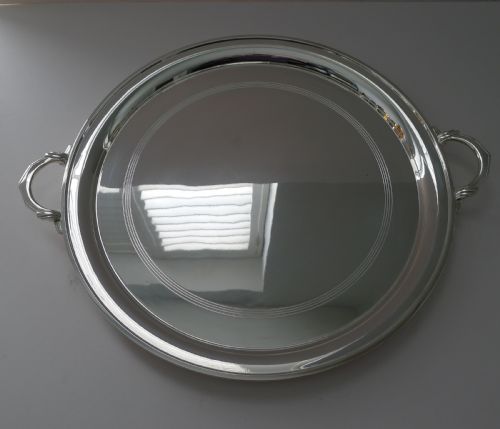
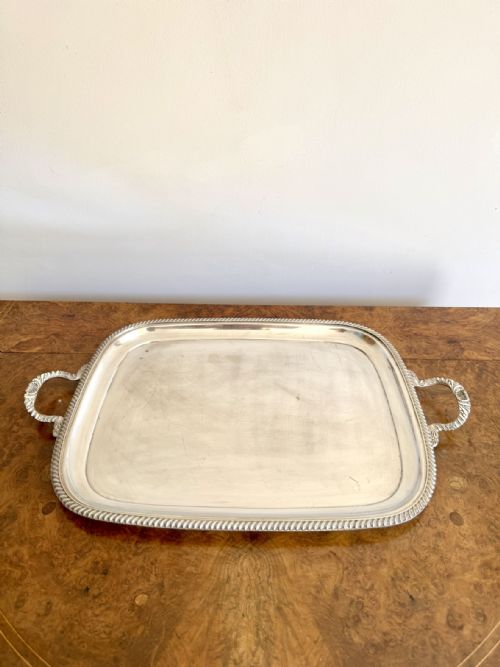
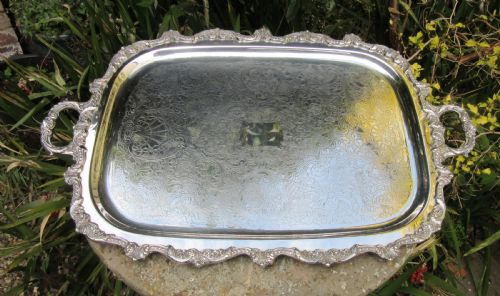
When you search for an antique metal handle tray, you encounter serving trays, platters, and salvers fashioned from silver plate, copper, pewter, and brass. These pieces span the Regency period through the Victorian era, Edwardian times, and into Art Deco designs of the 1930s.
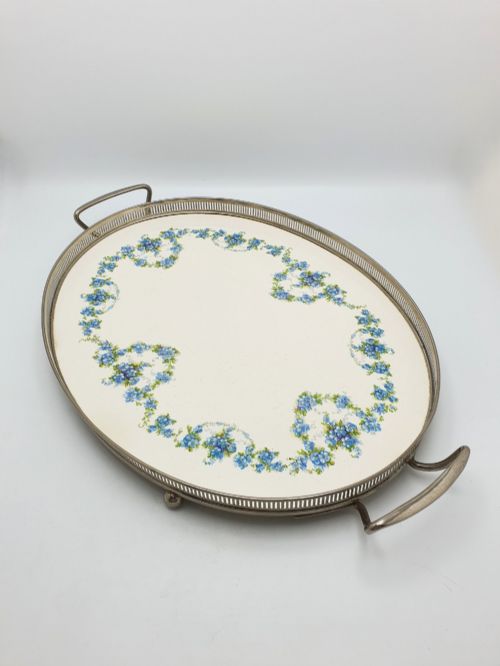
The selection ranges from large presentation pieces intended for afternoon tea to cocktail trays and oval serving dishes with blue floral centres. Makers such as Liberty & Co, Hukin & Heath, and Keith Murray for Mappin & Webb appear alongside continental and regional pieces.
You are most likely to meet silver-plated serving trays from the Victorian and Edwardian periods, often featuring decorative handles and generous proportions. Alongside these metal examples, papier-mâché and lacquered trays from the Regency period offer a different texture and visual weight.
How they were made
Silver plating and base metal fabrication form the backbone of these pieces, utilising techniques developed in Sheffield and Birmingham alongside continental workshops. Copper and pewter were hammered, spun, or cast into serving trays and dishes, sometimes incorporating contrasting materials such as ceramic centres.
Papier-mâché trays from the Regency era involved layering paper pulp with adhesive and lacquer, finished with hand-painted details. Metal handles were securely riveted or soldered to the bodies of silver-plated and copper vessels to withstand regular lifting and service.
Arts and Crafts, Art Deco, and Regency styles appear alongside Victorian and Edwardian manufacturing traditions.
What varies in quality
Quality rests in the crispness of the handles, the balance of the proportions, and the integrity of the plating or surface finish. Substantial weight and deliberate thickness in the base metal or silver plate separate superior service items from lighter domestic wares.
Design attribution to known makers or firms elevates a piece, as seen in signed works by Archibald Knox for Tudric or pieces associated with Clay of Regency period papier-mâché. The retention of original surface detail and the clean integration of handles into the body define the higher tiers.
Keith Murray For Mappin & Webb·Liberty & Co·Hukin & Heath·Frank Cobb & Co·Archibold Knox
The Antique Metal Handle Tray Glossary
- Silver Plate
- A thin layer of silver fused or electroplated onto a base metal such as copper or Britannia metal. This technique allowed manufacturers to produce affordable tableware with the appearance of solid silver.
- Old Sheffield Plate
- An early method of fusing a sheet of silver to a copper core before rolling into sheets for fabrication. This process creates a distinctive edge where the copper base becomes visible through wear.
- Salver
- A flat metal tray used for serving food or drinks, or for presenting letters and cards. They often feature footed bases and decorative chased borders.
- Papier-mâché
- A composite material consisting of paper pieces or pulp bound with glue, then lacquered and polished. It provided a lightweight yet durable surface for Regency and Victorian decorative trays.
- Tudric
- The trade name used by Liberty & Co for their range of pewter ware produced during the early twentieth century. Many of these designs were created by Archibald Knox.
Antique Metal Handle Tray: Frequently Asked Questions
How do I clean an antique silver plated tray?
Use a soft cloth and a gentle, non-abrasive silver cleaner designed for plated items. Avoid harsh scrubbing that can wear through the thin silver layer to the base metal underneath.
Store the tray in a dry environment and handle it by the edges or handles to minimise the transfer of natural oils from your hands onto the surface.
Were these trays used only for drinks?
While many examples served during afternoon tea or cocktail hours, larger presentation trays held dining service or displayed items in grand interiors.
Papier-mâché and lacquered versions often functioned as decorative dishes or letter trays in reception rooms rather than heavy serving pieces.
How can I tell a Regency papier-mâché tray from a Victorian one?
Regency pieces often display lighter framing, specific lacquer techniques, and makers such as Clay of King Street. They emphasise smooth contours and subtle painted motifs.
Victorian iterations tend toward heavier ornamentation, sometimes incorporating mother-of-pearl inlay or bolder floral decoration across the surface.
What is the difference between pewter and silver plate?
Pewter is a durable metal alloy primarily composed of tin, valued for its subdued grey lustre and use in Arts and Crafts designs. It requires no plating to achieve its finish.
Silver plate relies on a base metal core covered by a layer of pure silver, offering a brighter, reflective appearance associated with formal service.
Can I use these trays for daily serving?
Most antique metal handle trays tolerate careful daily use, provided you lift them by the handles and dry them promptly after contact with moisture. Heavier presentation pieces suit display or occasional service.
Papier-mâché and delicate lacquered trays require more care and are best reserved for light items or decorative placement.