


Gold Chinoiserie Tray
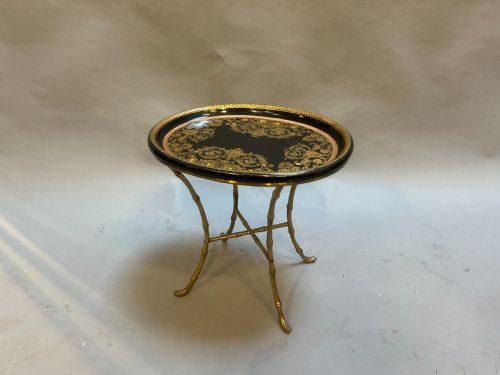
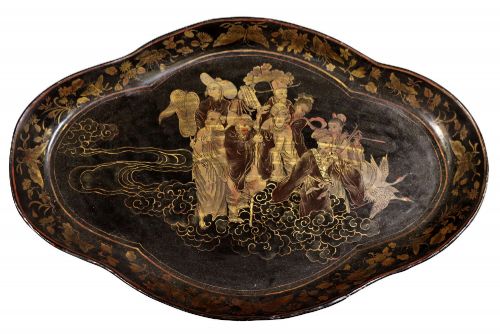
A gold chinoiserie tray brings painted oriental figures and gilt landscapes into a room, serving drinks or mounted on a stand as a low table.
Gold Chinoiserie Tray
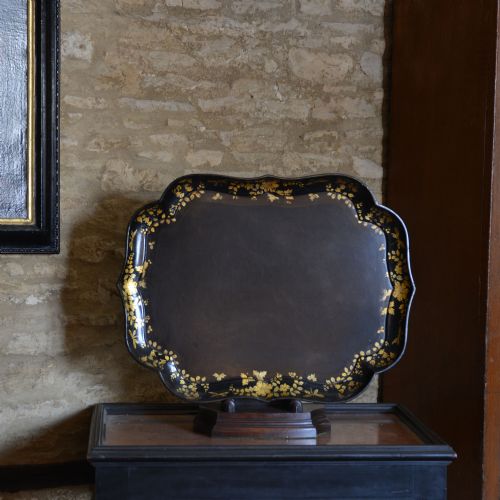
A gold chinoiserie tray combines dark lacquered surfaces with intricate gilt decoration depicting figures, pavilions, and natural scenes in an eastern-inspired style. Buyers searching for a gold chinoiserie tray encounter serving trays, decorative trays, and larger pieces mounted as occasional or coffee tables.
The pieces on this page span the Georgian, Regency, and Victorian periods, alongside Edwardian revivals and later twentieth-century interpretations. Most examples take the form of oval or circular trays, often paired with custom stands to function as low tables.
Originating in domestic English workshops of the nineteenth century, these objects range from handheld serving vessels to substantial lacquer tray tables. The aesthetic draws on eighteenth-century fascination with oriental design, executed through European craftsmanship.
How they were made
Makers built the foundation of these pieces using papier-mâché, pressed timber, or lacquered metal such as toleware. These sturdy bases received multiple coats of black or dark lacquer to create a smooth, deep ground before any ornamentation began.
Artisans applied gold leaf and hand-painted pigments directly onto the prepared surface to form the characteristic landscape and figural motifs. A protective clear varnish sealed the metallic details and the dark lacquer underneath.
Listings feature papier-mâché, lacquer, and gold leaf as the primary materials across nineteenth-century and Edwardian periods.
What varies in quality
The refinement of the hand-painted gold leaf decoration dictates the distinction between standard and superior examples. Skilled brushwork renders tiny figures and architectural details with crisp precision, whereas lesser pieces show rushed or simplified lines.
The integrity of the underlying papier-mâché or timber base and the depth of the surviving lacquer finish define the overall preservation. Trays retaining their original stands and unblemished gilding sit at the upper end of the range.
Clay
The Gold Chinoiserie Tray Glossary
- Papier-mâché
- A composite material made from paper pulp or layers of paper reinforced with glue, baked and pressed into sturdy boards for trays and furniture.
- Chinoiserie
- The European decorative style reflecting Chinese and East Asian artistic influences, popular in furniture and decorative arts during the Georgian and Victorian eras.
- Toleware
- Painted or lacquered metalware, typically tin or iron, used to create durable domestic items like trays and boxes.
- Gilt
- A thin layer of gold applied to the surface of wood, metal, or papier-mâché to provide a metallic sheen.
- Lacquer
- A durable resin finish applied in successive layers and polished to a hard, glossy sheen on furniture and decorative objects.
Gold Chinoiserie Tray: Frequently Asked Questions
What is a gold chinoiserie tray?
A gold chinoiserie tray is a decorative serving or display piece featuring dark lacquer decorated with hand-painted gilt oriental motifs. These items date primarily from the nineteenth century and the Edwardian period.
Many examples take the form of large oval or circular boards intended for display, while others are fitted to wooden frames to serve as coffee tables or occasional tables.
How were these trays used historically?
Historically, these trays served in wealthy households for carrying tea, wine, or glasses during social gatherings. Their decorative qualities meant they were often displayed on side tables when not in active use.
Over time, many of these trays were mounted onto folding or fixed wooden stands to convert them into permanent low tables for sitting rooms.
How do I care for a lacquer surface?
Protect antique lacquer from direct sunlight and excessive moisture, which can damage the delicate gold leaf and varnish layers. Dust gently with a dry, soft cloth rather than using liquid polishes or chemical cleaners.
Keep the pieces away from heat sources like radiators to prevent the wood or papier-mâché substrate from warping and cracking the finish.
How can I tell a Regency tray from a Victorian one?
Regency pieces often display crisp, classical proportions and refined hand-painted gilt detailing directly associated with leading workshops of the early nineteenth century. The materials typically rely on heavy pressed papier-mâché with deep black lacquer grounds.
Victorian and later Edwardian interpretations sometimes introduce broader floral borders or varied stamp work, reflecting shifting tastes and mass production methods in later decades.