


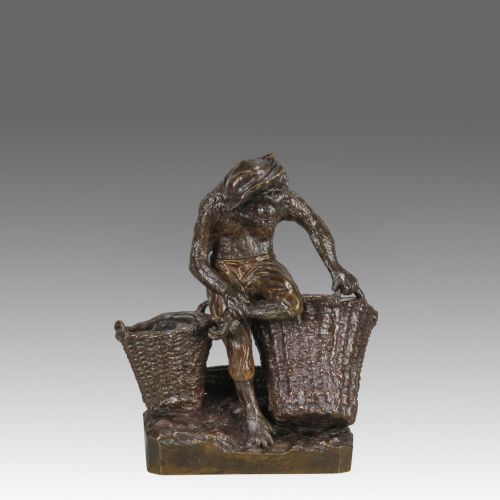
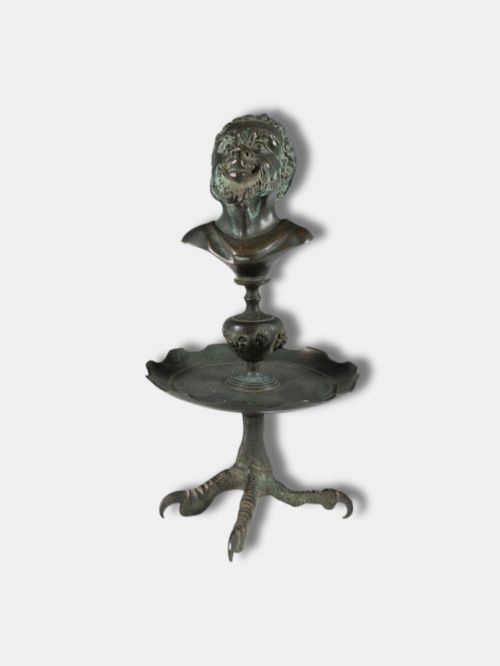
Antique Metal Desk Sculpture
These antique metal desk sculpture pieces bring desktop utility and classical presence into a room, spanning animal figures to architectural models.
Antique Metal Desk Sculpture
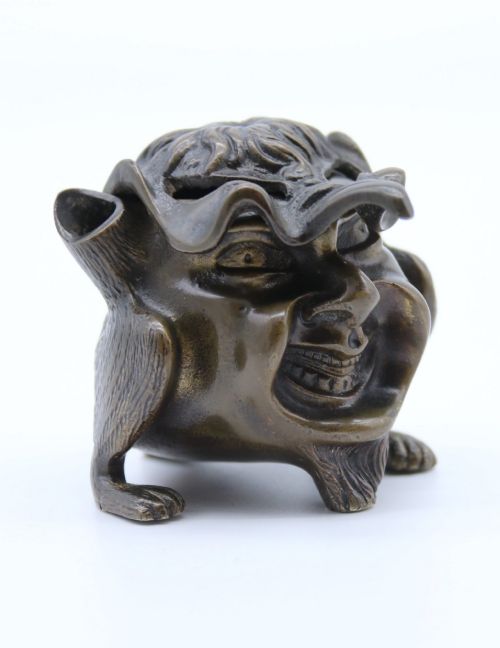
An antique metal desk sculpture serves both decorative and functional purposes on a workspace, incorporating items like inkwells, bookends, paperweights, and small statuary. These works range from seventeenth-century classical bronzes to twentieth-century Art Deco animalier figures and utilitarian objects.
The pieces appearing most frequently on this page combine bronze, brass, or spelter with bases of marble or onyx. Animal subjects, architectural models from the Grand Tour, and mythological figures dominate the selection, reflecting the tastes of past writing rooms and offices.
How they were made
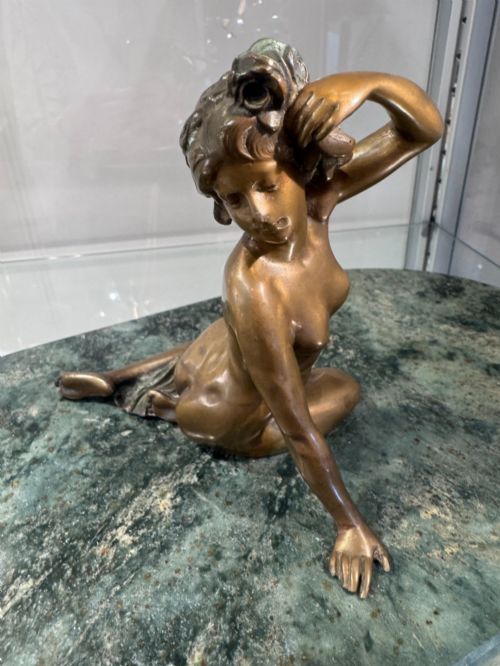
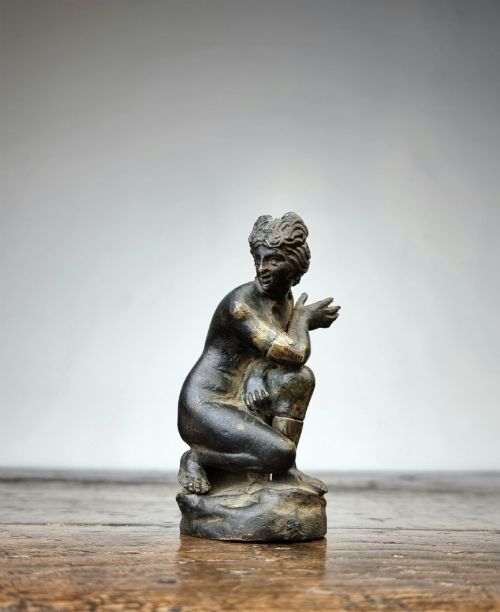
Foundry methods rely heavily on the lost-wax technique for bronze casting, allowing intricate detail in figures such as lions, horses, and human forms. Metalworkers applied patinas chemically to achieve dark brown, golden, or verdigris surfaces, while others used cold painting on bronze.
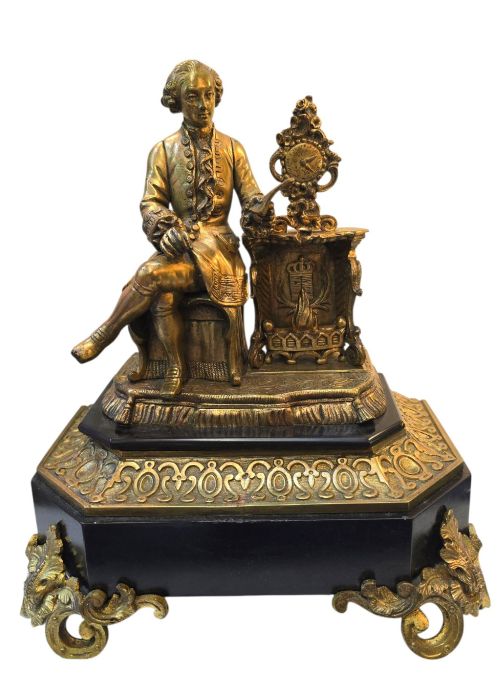
Many sculptures incorporate stone elements, mounting metal figures onto turned marble or onyx bases. Cast iron and spelter serve as alternative base metals, sometimes finished with metallic paints or electroplated coatings to simulate solid bronze.
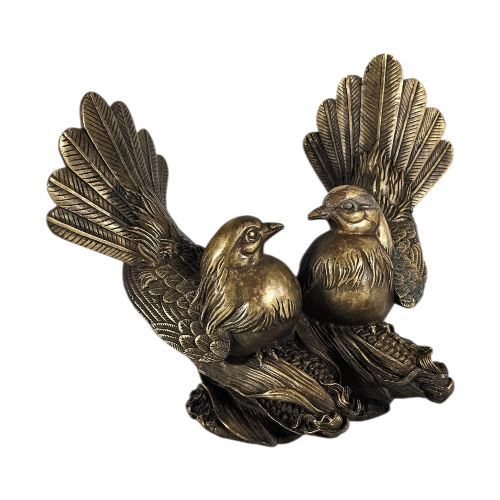
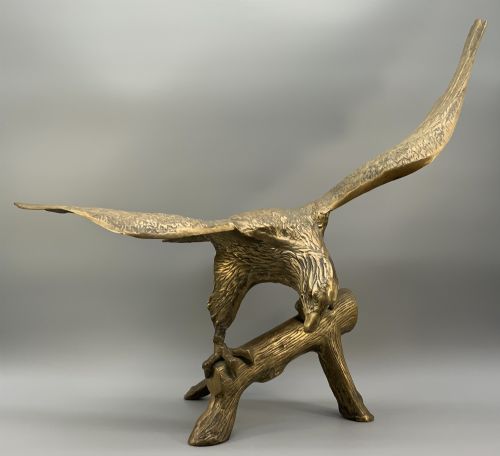
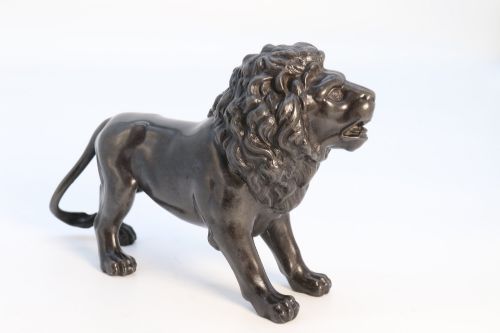
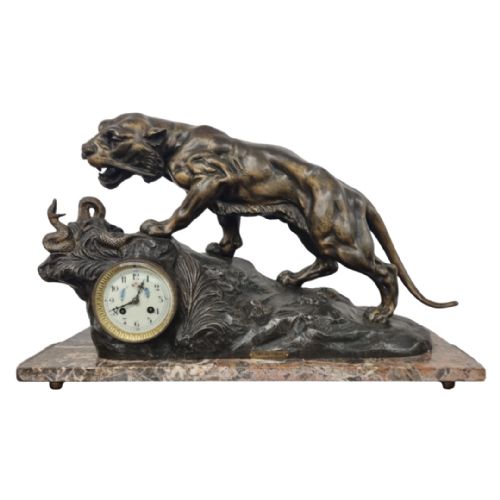
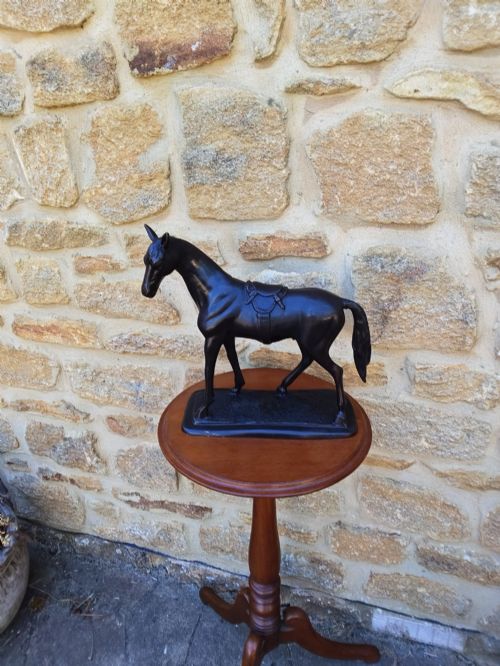
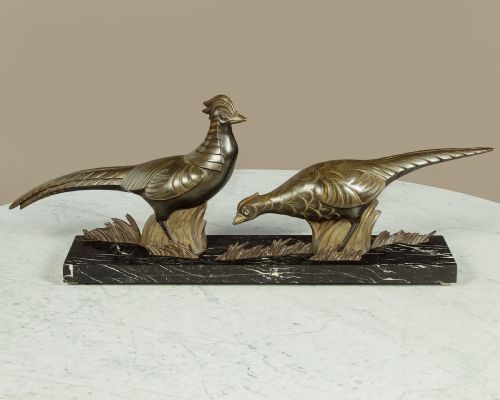
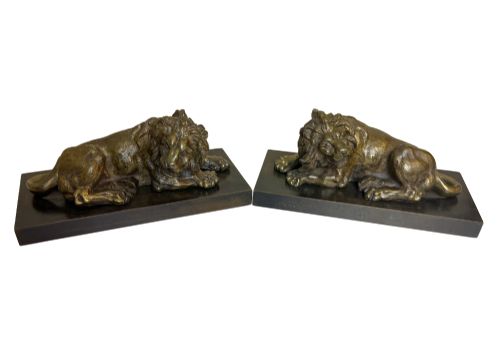
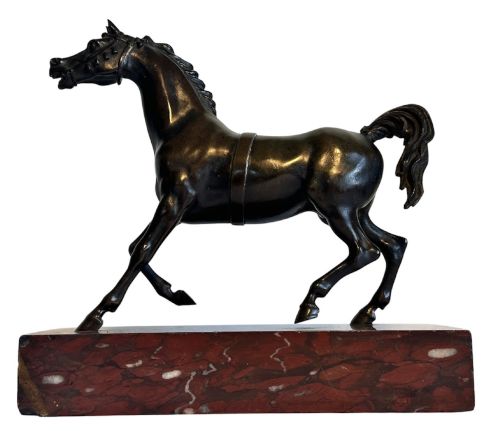
Animal subjects dominate the selection, ranging from lions and horses to pheasants, sea lions, and pigeons.
What varies in quality
The crispness of the casting defines the upper tier of these objects, where finely chased surfaces reveal individual feathers, fur texture, and facial expressions without blurring. Inferior examples show soft details and smoothed edges resulting from worn moulds or hasty finishing.
The choice of base materials and patination also separates standard output from superior studio pieces. Heavy, well-fitted marble plinths and stable, hand-rubbed patinas indicate higher workshop standards than light alloy castings with sprayed-on finishes.
R Varnier·Pierre-Augustin Caron de Beaumarchais·Christophe Fratin·Henry Wissen Senior·C Omin·Leon Message·Jollet et Cie·P. Sega·Pierre Le Faguays
The Antique Metal Desk Sculpture Glossary
- Animalier
- A nineteenth-century artistic movement focusing on the realistic depiction of animals, particularly predators, horses, and birds. Sculptors in this tradition studied anatomy closely.
- Spelter
- A zinc alloy commonly used as a less expensive substitute for bronze, frequently painted or patinated to resemble it. It appears widely in twentieth-century decorative figures.
- Grand Tour
- A traditional trip through Europe undertaken by upper-class young men to absorb classical culture. Travellers often purchased small bronze architectural models and sculptures as souvenirs.
- Patina
- The surface coloration and sheen developed naturally through age or applied chemically by a metalworker. This finish protects the underlying metal and adds visual depth.
- Ormolu
- Gilt bronze produced by applying a mercury and gold amalgam to copper or bronze and heating it. The technique creates a durable golden finish seen on decorative mounts and clock cases.
Antique Metal Desk Sculpture: Frequently Asked Questions
How were antique desk sculptures used?
Desk sculptures often doubled as practical items like paperweights, pen rests, inkwells, or bookends to keep writing materials in order. Others served purely as decorative conversation pieces for a study or library.
Wealthy owners displayed Grand Tour architectural models and animal bronzes to signal education, travel, and refined taste.
How do I date an antique metal desk sculpture?
Dating relies on stylistic clues, casting methods, and material choices associated with specific periods like Art Nouveau or Art Deco. Foundry marks, signatures, and the type of base stone also provide chronological markers.
Comparing the patina and wear patterns helps distinguish nineteenth-century sand castings from later reproductions.
How do I care for a metal desk sculpture?
Maintenance requires gentle dusting with a soft, dry brush to prevent dirt accumulation in crevices and engraved details. Avoid using commercial metal polishes, which can strip away original patinas.
Keep the pieces away from direct sunlight and moisture to protect any integrated marble bases or applied patinations.