26,445  PAGES BROWSED TODAY PAGES TODAY • 89 ANTIQUES UPLOADED TODAYNEW ARRIVALS
GIFTS
89 ITEMS ADDED TODAY
Sort Order
Items Per Page
Browse Categories
Sort order
Items per page
ID #SA1244318
FOR SALE
£875
Email Phone
Save
Antique English Silver Plated Sphinx Sculpture Dated 1864 19th C
For sale by Regent Antiques
for sale €1,024     $1,111
£875
Regent Antiques

Regent Antiques

Sellingantiques Verified Since Sep 2016
Browse dealers 658 items
  • About Us
    We specialise in english and continental furniture, silver, porcelain and decorative items.
  • Trade Associations
    Regent Antiques is a registered member of LAPADA  CINOA
Id #SA1244318
PDF SHARE
SAVE

Antique English Silver Plated Sphinx Sculpture Dated 1864 19th C

19th century
For Sale by Regent Antiques
Description

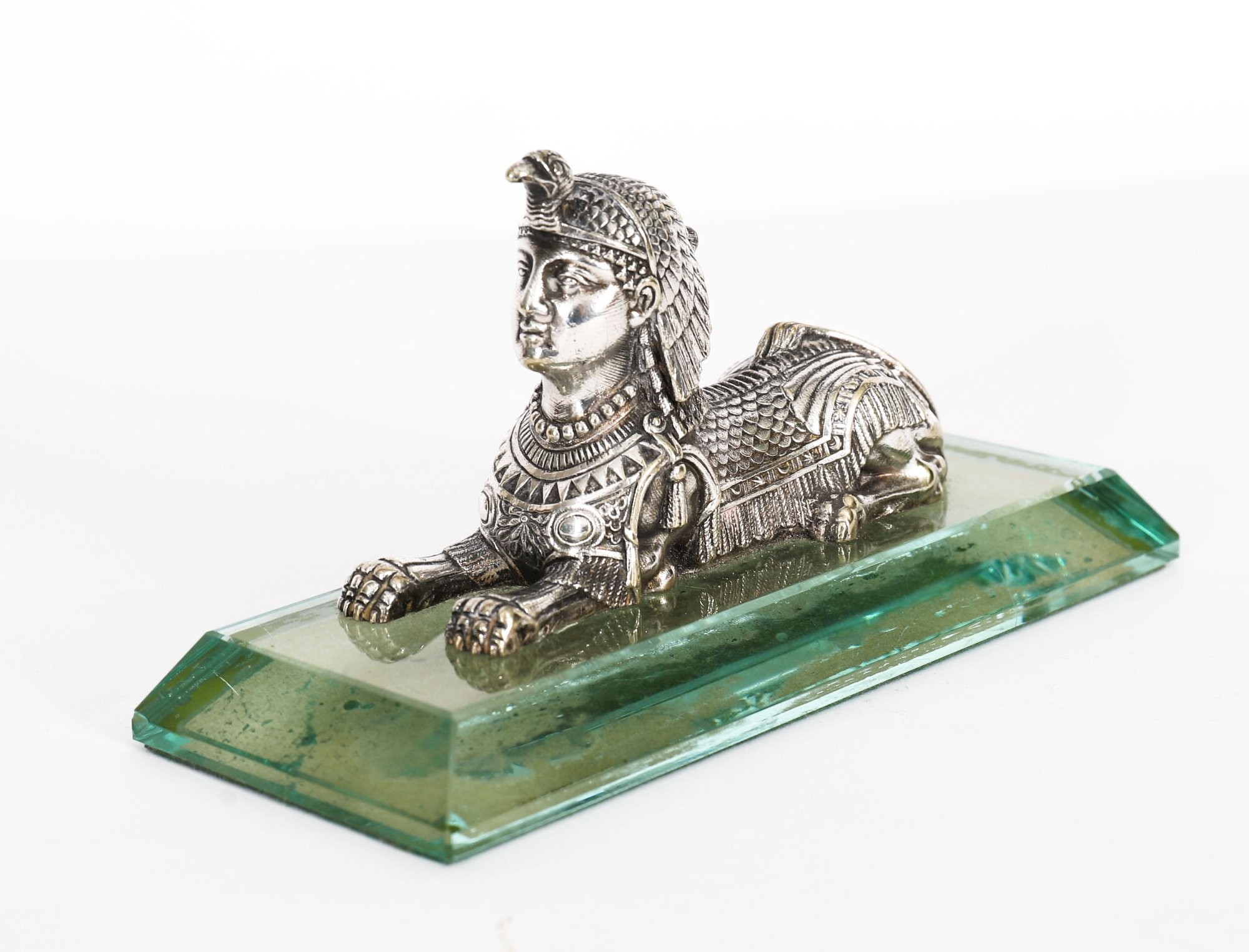
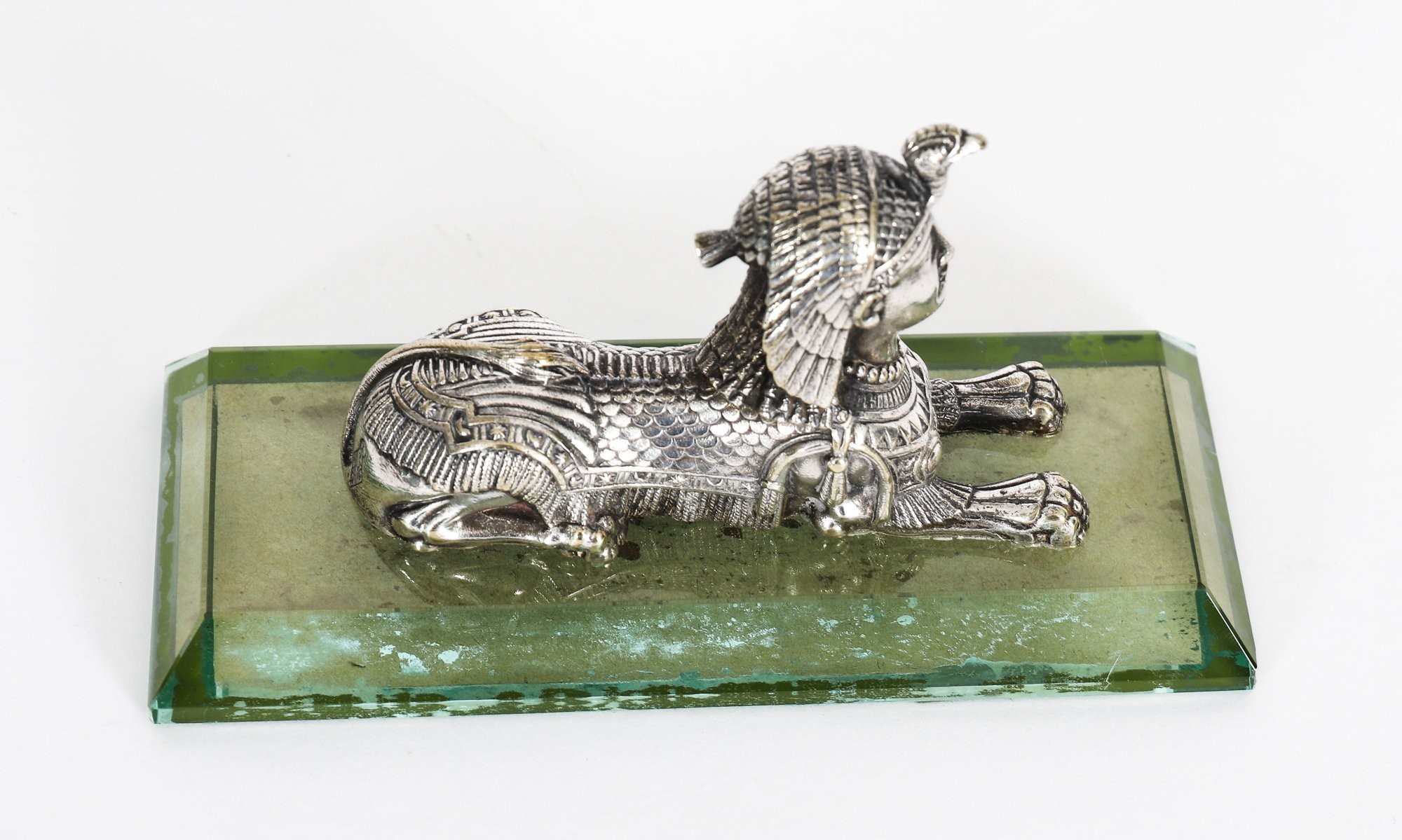
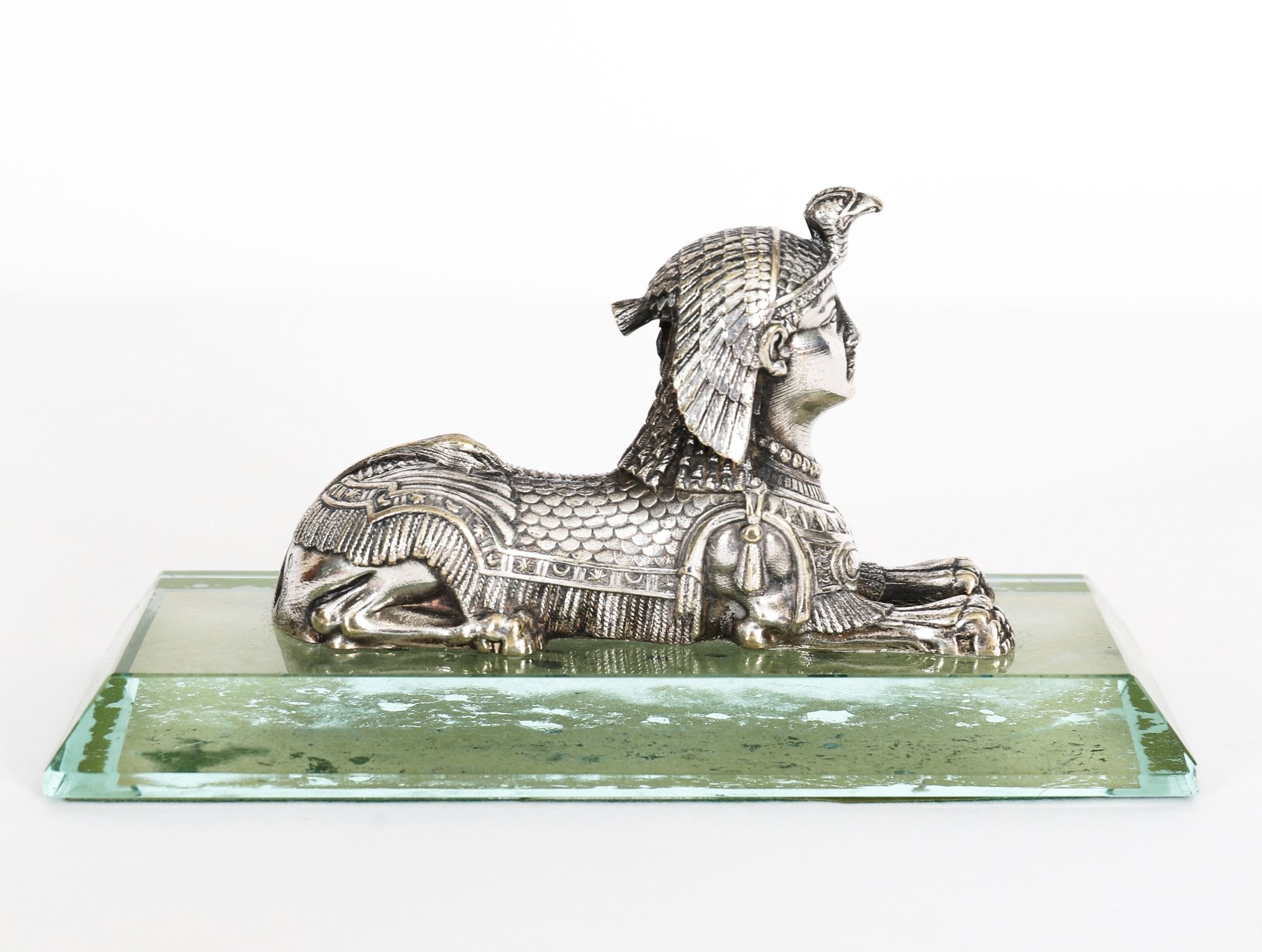
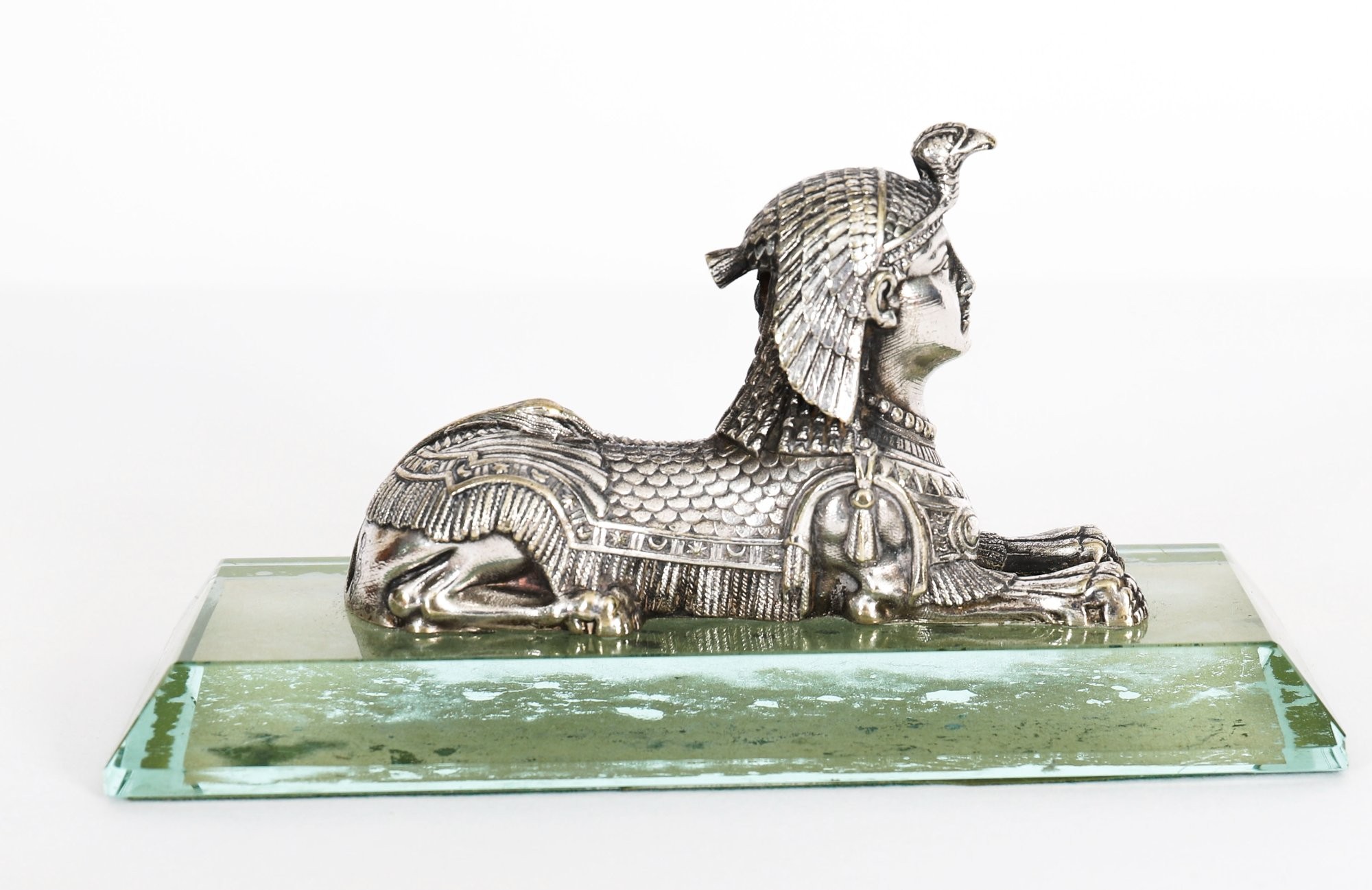
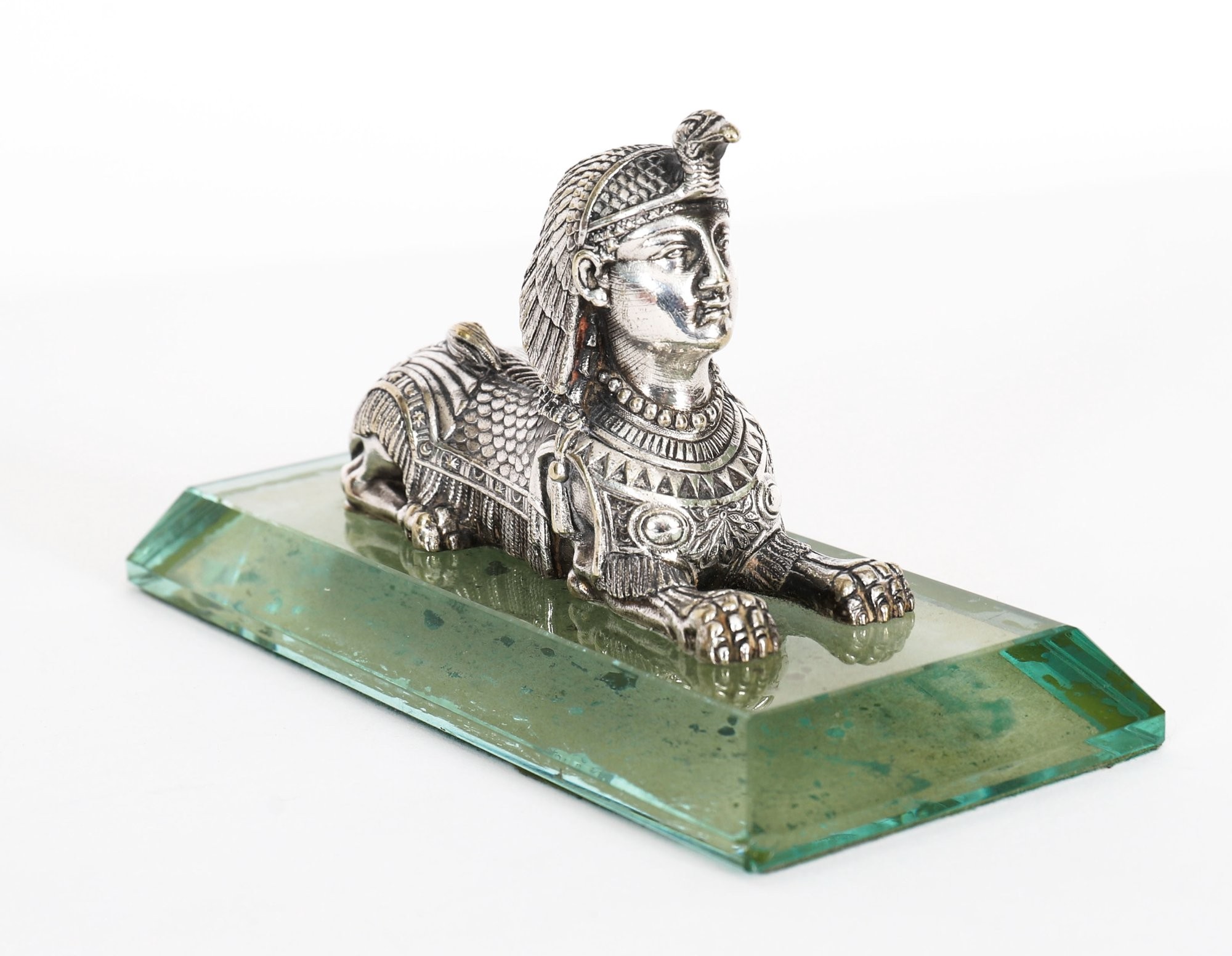
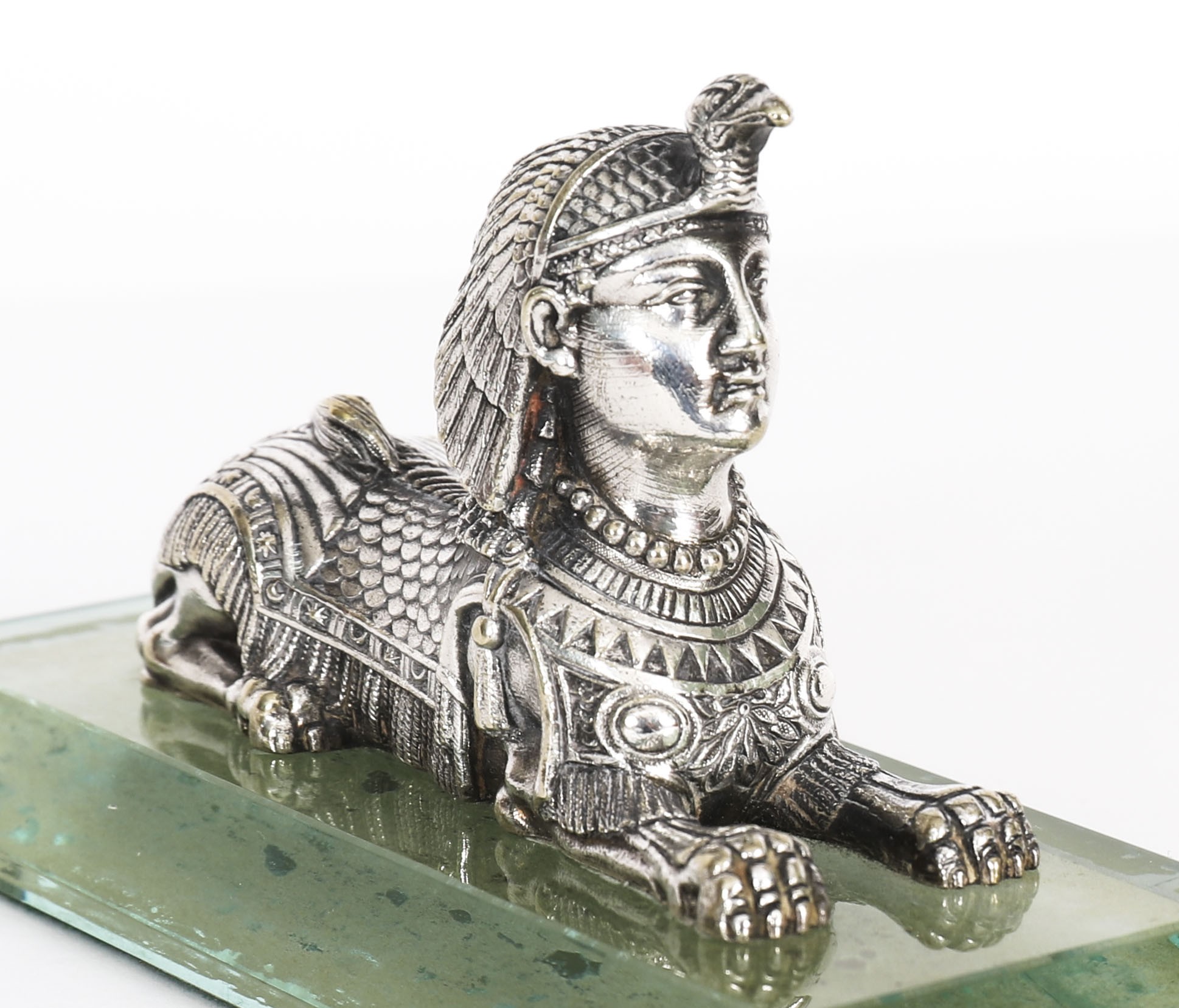
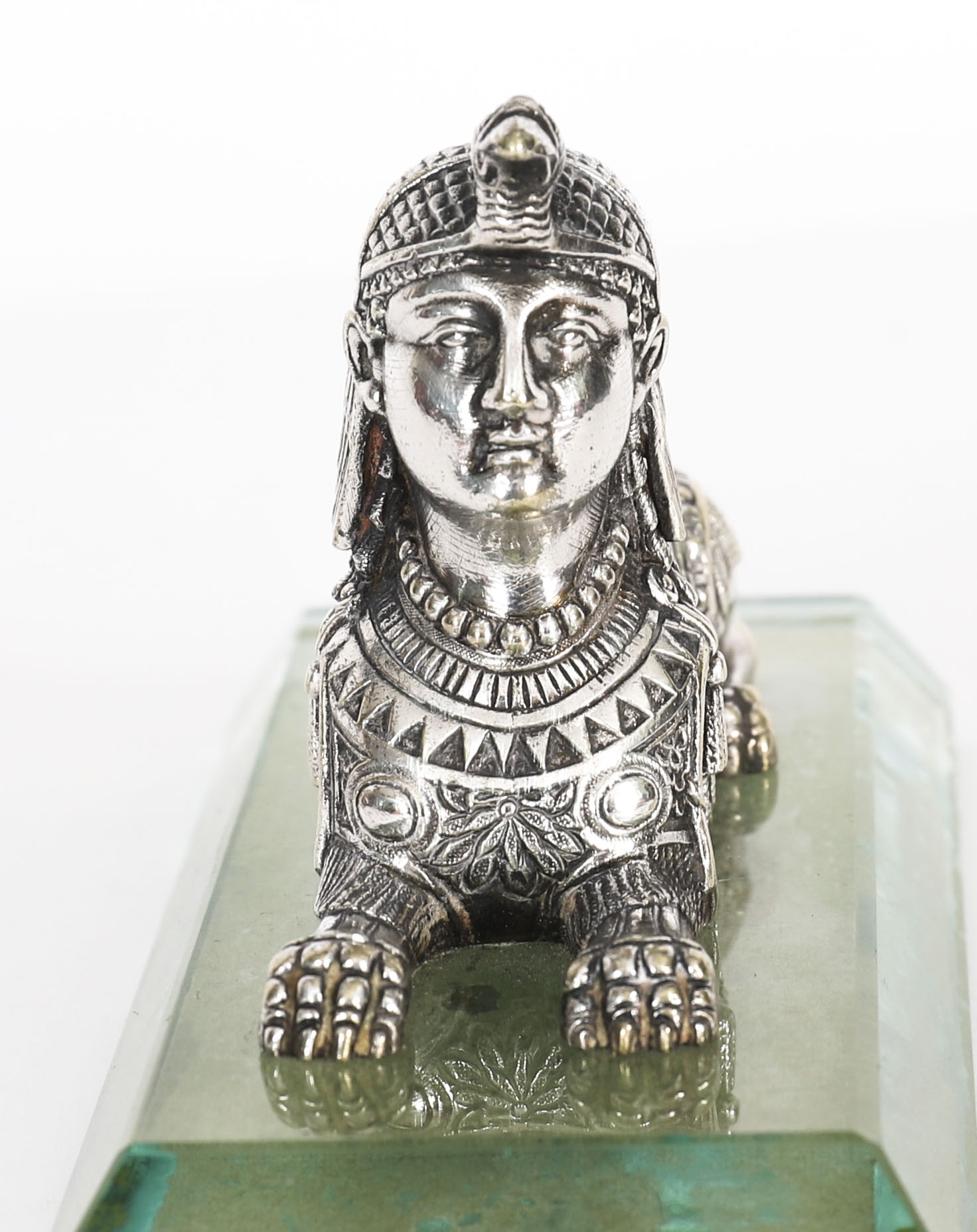
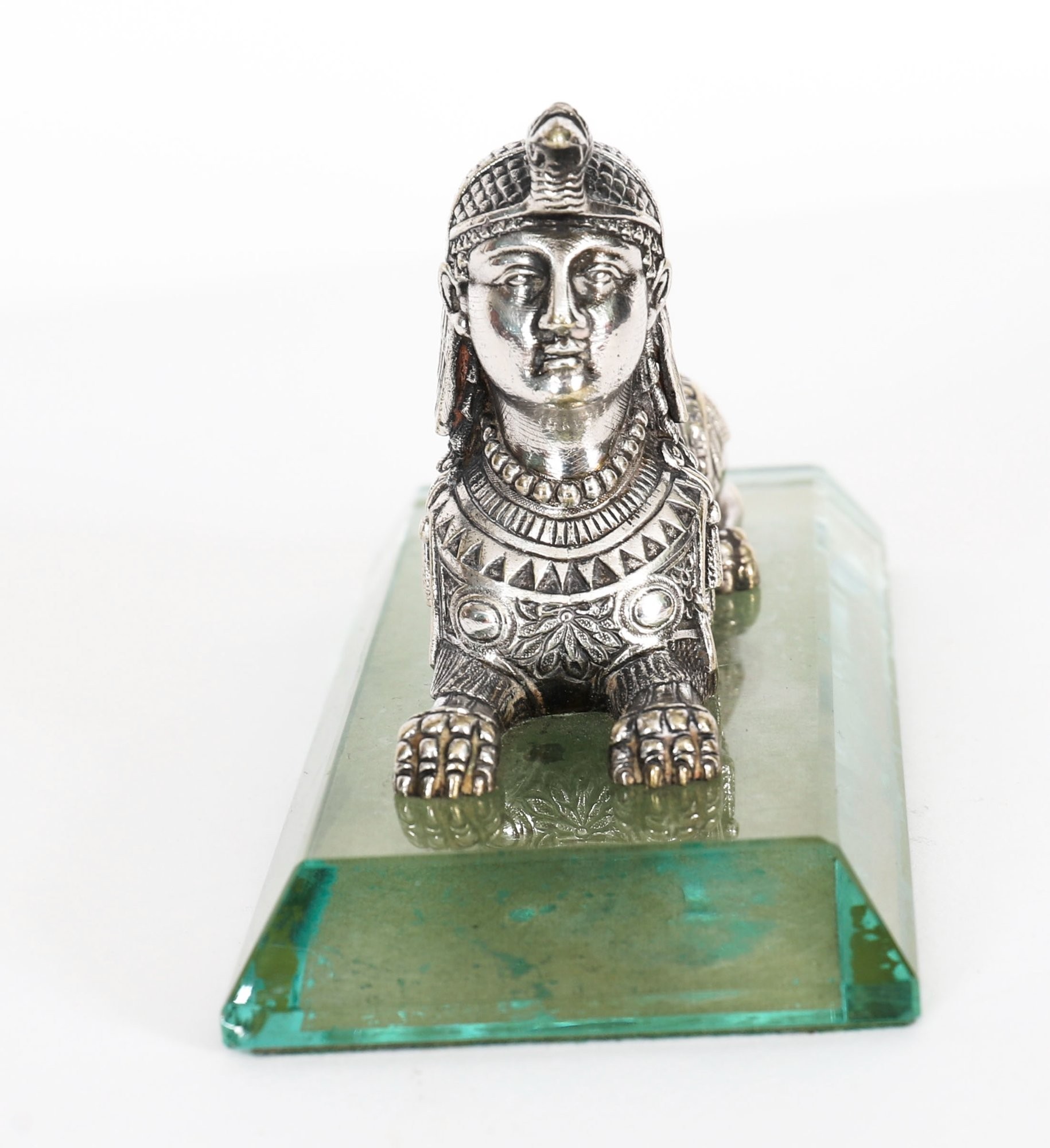
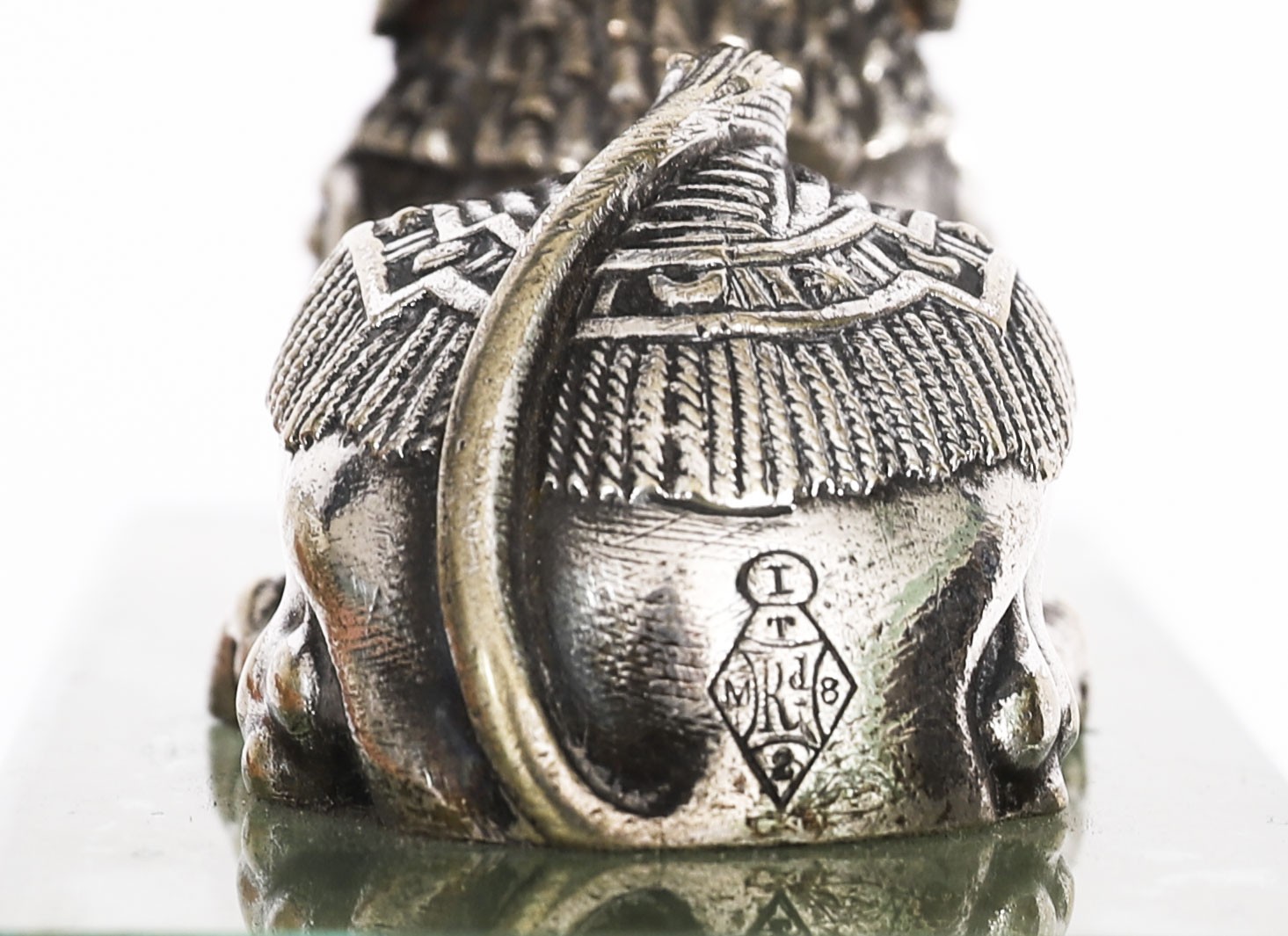
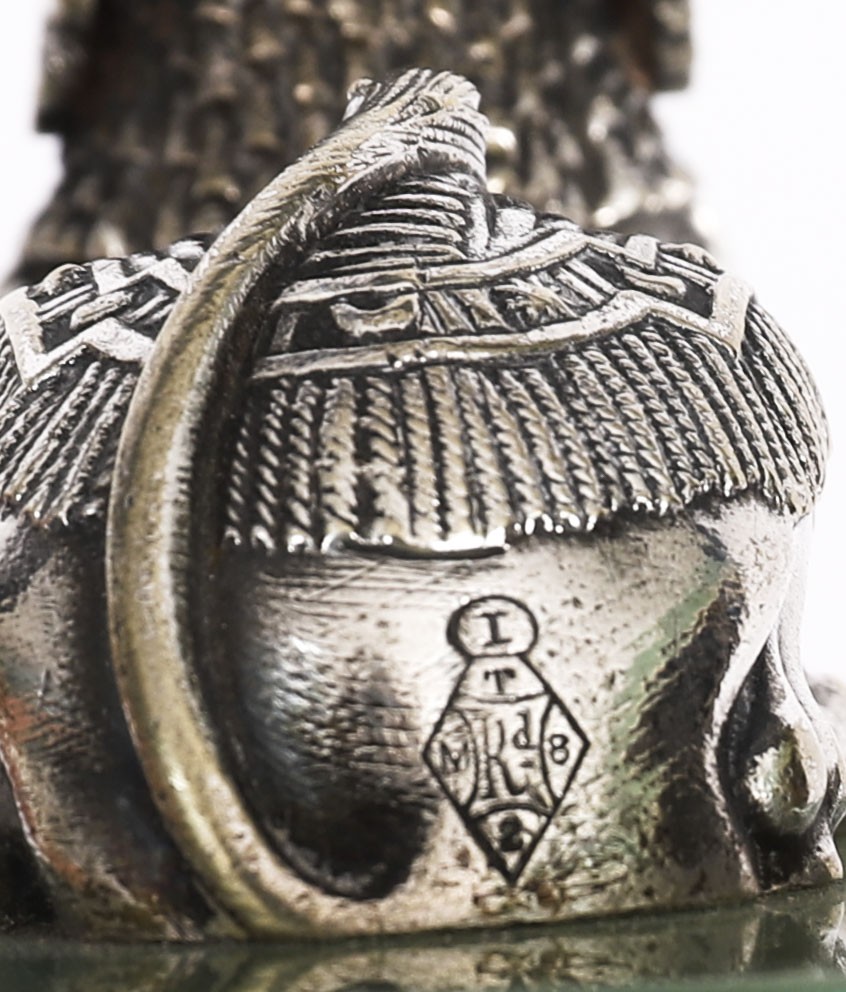
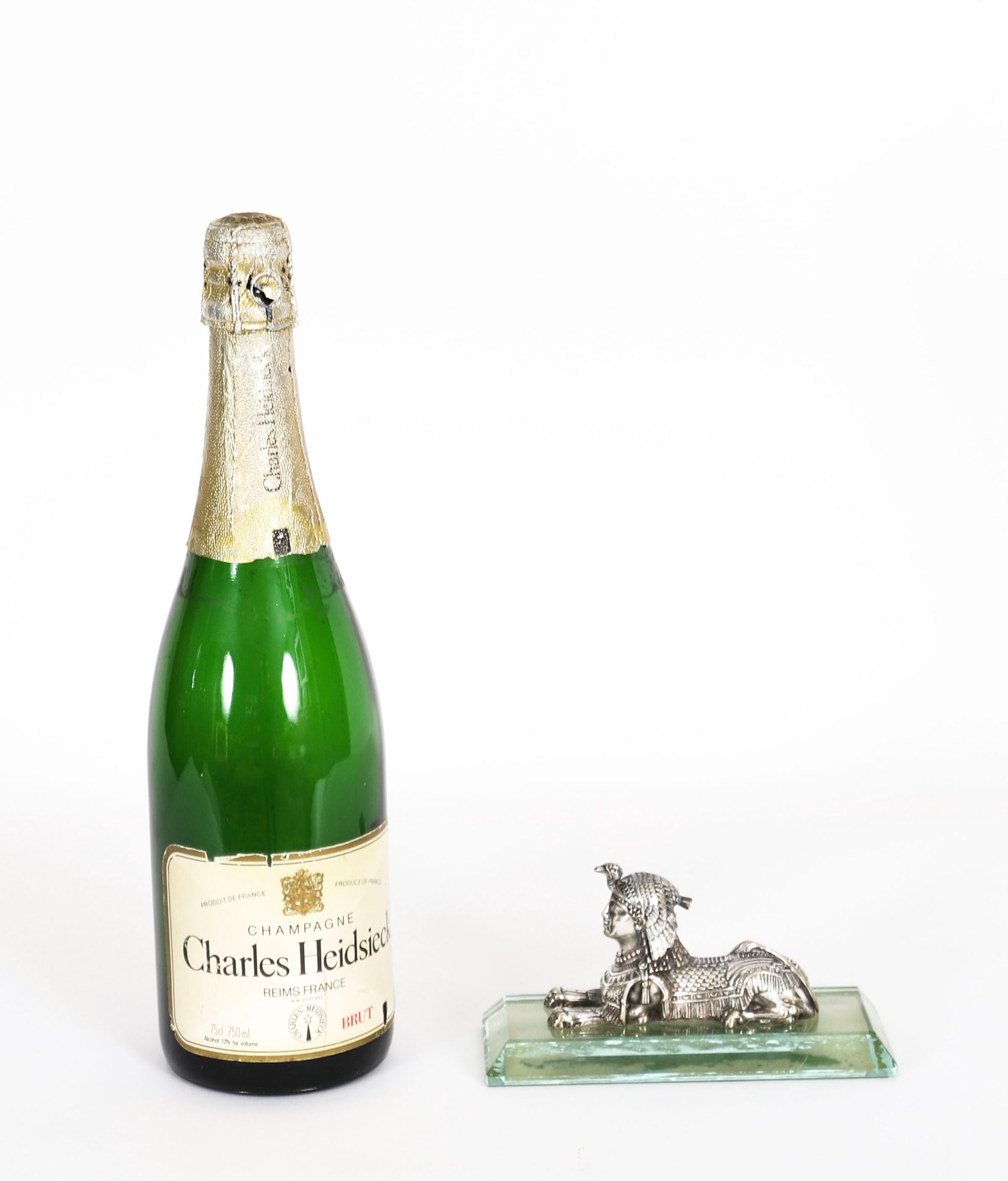
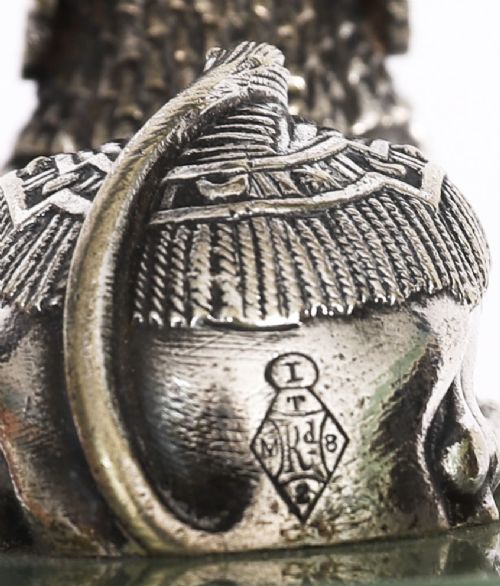
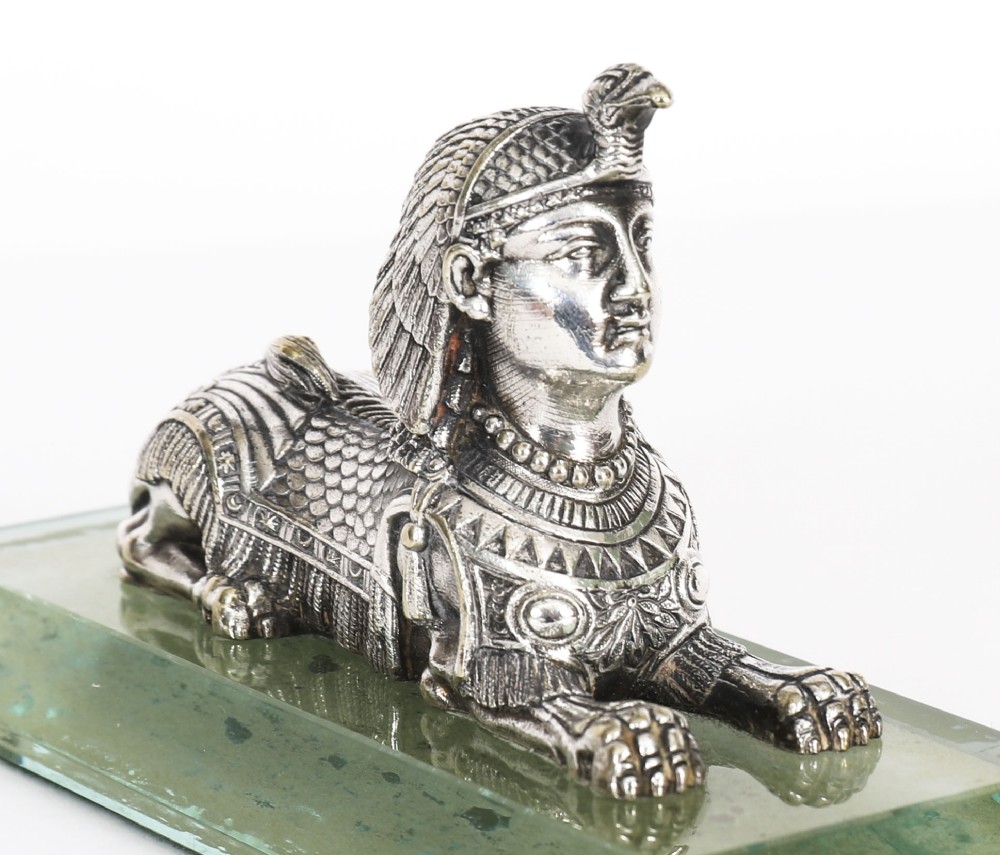
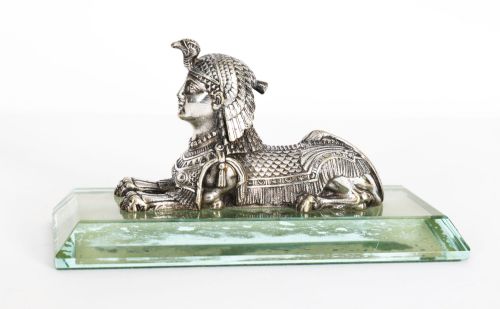
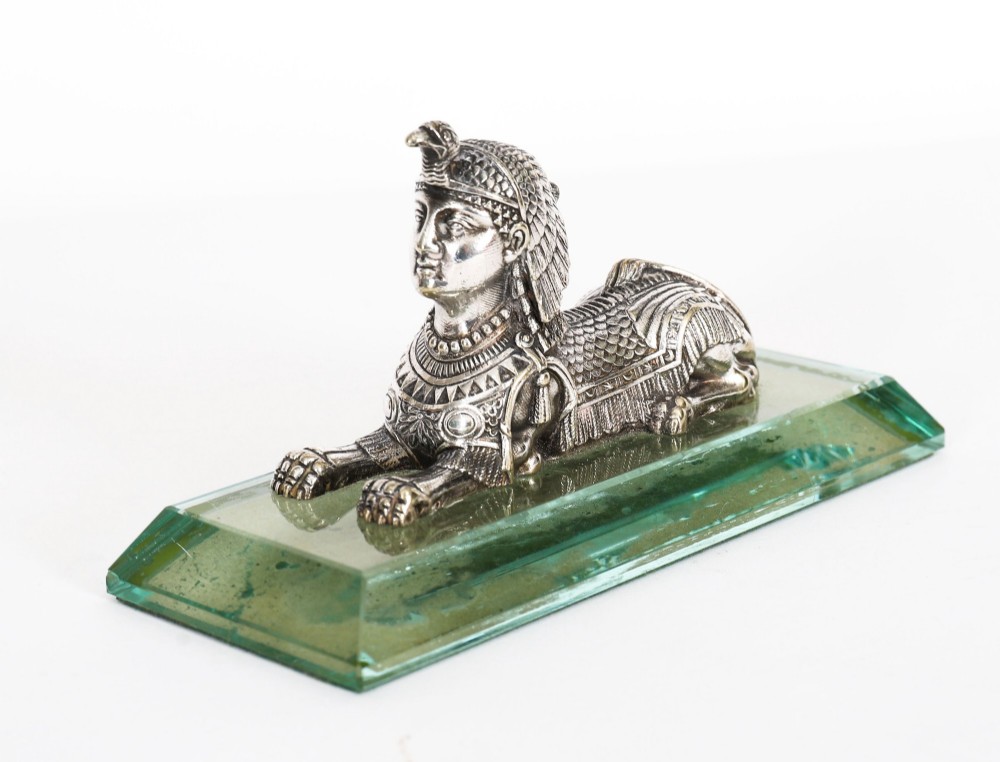
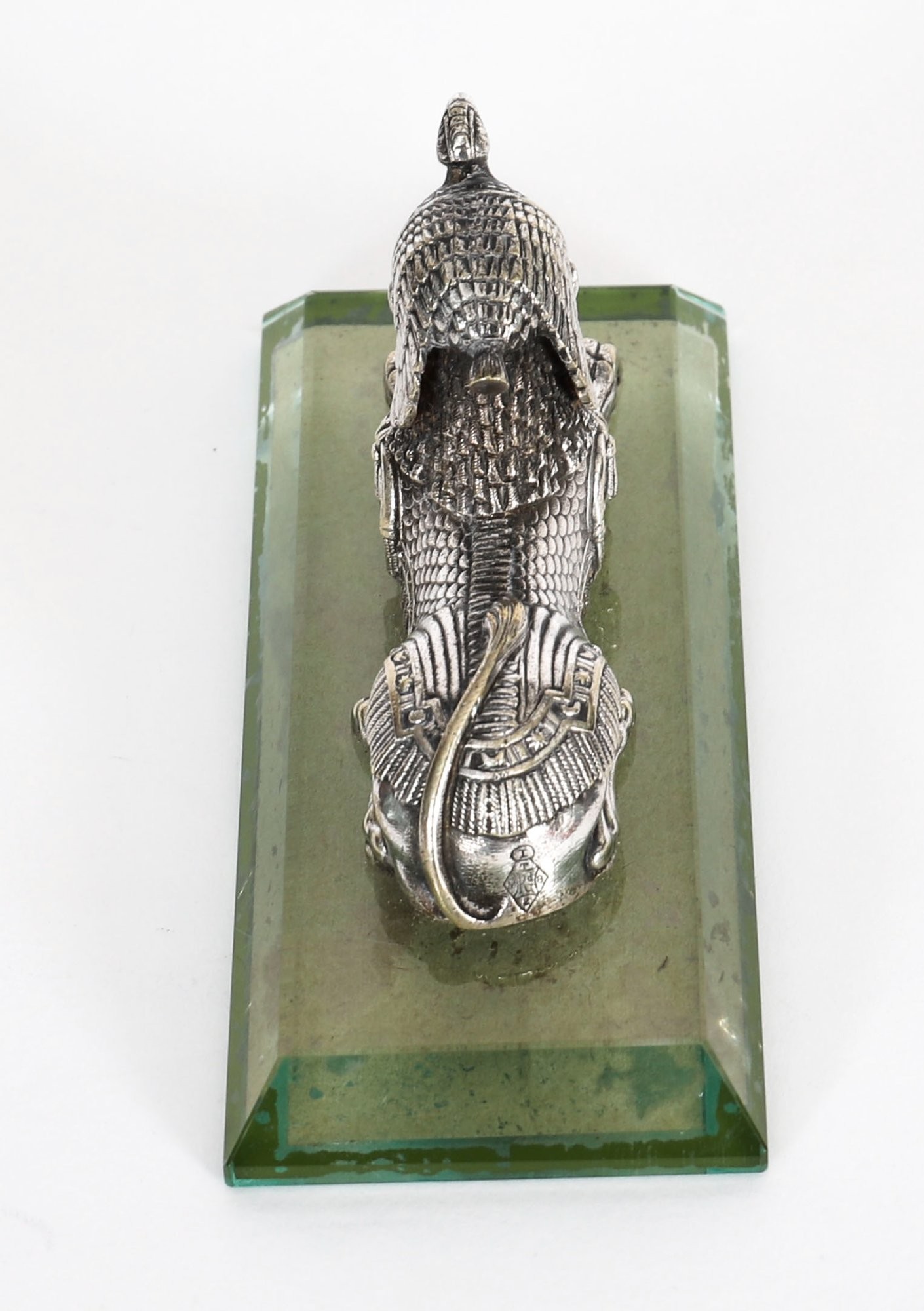
A fine quality English Empire Revival silver-plated figure of a recumbent sphinx sculpture set on an attractive rectangular crystal beveled edge plinth, stamped with the British Registry Design Lozenge Number and Date chart for 1864.

The sphinx is finely cast and consists of the body of a lion and the head of a King or God, this being symbolic of strength and wisdom. 

It is a fine piece which will look beautiful wherever placed.


Condition:

In excellent condition; please see photos for confirmation.

Dimensions in cm:

Height 9 cm x Width 15 cm x Depth 7 cm

Dimensions in inches:

Height 3 inches x Width 6 inches x Depth 3 inches

Empire symbols.

The Consular period in France began in November 1799 when the Directory was overthrown in a bloodless coup and replaced by three consuls, including Napoleon. This overthrow followed a series of military disasters and insurrections that led to a breakdown of faith in the government. A few weeks after the coup, Napoleon was named First Consul. In 1802, he was named First Consul for life, and in December 1804 Napoleon crowned himself Emperor. The period of his reign as Emperor, from May 1804 to June 1815, is known as the Empire period.

Napoleon, having gained his position through his political and military achievements, used artists, designers and architects to promote and legitimise his regime. He appointed Charles Percier (1764–1838) and Pierre-François-Léonard Fontaine (1762–1853) as the official architects and designers of the Empire period, and they became major exponents of the Empire style.

Design of the Consular and Empire periods was characterised by militaristic elements – symbols of war and victory, imperial emblems, such as the golden eagle, classical palm leaves and laurel wreaths. These symbols of power made a direct visual connection between the regime and the glory and authority of the ancient Roman emperors.

Sphinxes, winged lions and creatures with heads of eagles were employed as table legs and armrests on chairs. Broad, austere surfaces of exotic woods were ornamented with motifs in marquetry and ormolu (gilt-bronze), and the heavy, monumental style of the furniture reflected a grandiose magnificence. Heavy bases accentuated a monumental appearance, and symmetry was closely followed. At the height of the Empire period, the style was majestic.

Napoleon’s Egyptian Campaign brought about a craze in France for all things Egyptian. The detailed drawings of art and architecture published on his return by artist and archaeologist Dominique-Vivant Denon led to the incorporation of Egyptian motifs in the furniture and decorative arts of the following decades.

As well as military, Egyptian and Classical imagery, the Empire period also embraced opulence and imagery of love, sensuality and seduction: the swan – one of the forms the god Zeus took to seduce mortal women; the lyre – an instrument of art and seduction; and bows and arrows – the tools of Cupid.

Swans, also emblems of Venus and the adopted symbol of Josephine, were employed as armrests or as entire arms of chairs. Aspects of the myth of Cupid and Psyche were also a common theme. The butterfly symbolising both Psyche and the soul was a recurrent motif.

Other symbols and motifs of the Empire period included the bee, a symbol of immortality and resurrection, specifically chosen by Napoleon to link his new Empire to the very origins of France; the cornucopia or horn of plenty; images of Mars and Venus symbolising love and peace brought about through military success, and the initials of the Emperor and Empress – N for Napoleon and J for Josephine.

The Empire style achieved great popularity and was adopted in courts throughout Europe. In England, it was known as the Regency style.

Our reference: A5468

Date of Manufacture

Regent Antiques has dated this Silver Plated Sphinx Sculpture to the 1860s.

Independent Date Check ID 09710226
Dealer's Item Date1860s
Sellingantiques Date1860s
Sellingantiques agingItem 155-170 years old
Test ResultsPassed dating check
Why Sellingantiques dated this piece to THE 1860s:
British design registration diamond on the haunch: registered in the 1860s.
Silver plating worn to base metal on high points: long handling.
Bevelled heavy glass base: mid-Victorian desk ornament manufacture.

This is an independent date report produced by Sellingantiques using its own proprietary system. The process uses the photographs shown on this page. The system is never told the date the dealer has declared. This report shows that the two dates corroborate.
Physical Dimensions
Height
9cm (3.54")
Width
15cm (5.91")
Depth
7cm (2.76")
Reference Numbers
Sellingantiques Reference
SA1244318
Dealers Internal Reference
A5468
Description
A fine quality English Empire Revival silver-plated figure of a recumbent sphinx sculpture set on an attractive rectangular crystal beveled edge plinth, stamped with the British Registry Design Lozenge Number and Date chart for 1864.
“
The sphinx is finely cast and consists of the body of a lion and the head of a King or God, this being symbolic of strength and wisdom.
Regent Antiques


fig 1. A 19th-century silver-plated sphinx figurine with detailed engraving, mounted on a thick bevelled green glass base.
fig 1. Antique English Silver Plated Sphinx Sculpture Dated 1864 19th C

It is a fine piece which will look beautiful wherever placed.


Condition:

In excellent condition; please see photos for confirmation.

Dimensions in cm:

Height 9 cm x Width 15 cm x Depth 7 cm

Dimensions in inches:
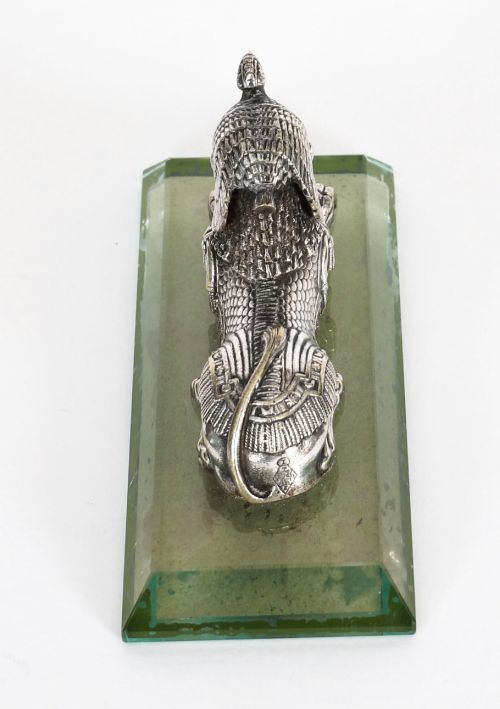
fig 2. A 19th-century silver-plated sphinx figurine with detailed engraving, mounted on a thick bevelled green glass base.
fig 2. Antique English Silver Plated Sphinx Sculpture Dated 1864 19th C

Height 3 inches x Width 6 inches x Depth 3 inches

Empire symbols.

The Consular period in France began in November 1799 when the Directory was overthrown in a bloodless coup and replaced by three consuls, including Napoleon. This overthrow followed a series of military disasters and insurrections that led to a breakdown of faith in the government. A few weeks after the coup, Napoleon was named First Consul. In 1802, he was named First Consul for life, and in December 1804 Napoleon crowned himself Emperor. The period of his reign as Emperor, from May 1804 to June 1815, is known as the Empire period.
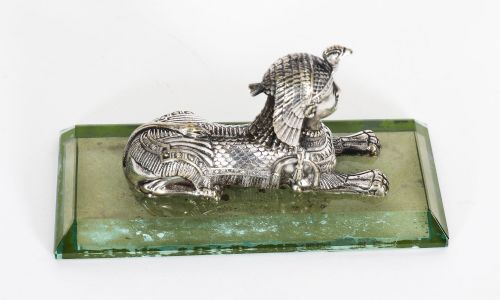
fig 3. A 19th-century silver-plated sphinx figurine with detailed engraving, mounted on a thick bevelled green glass base.
fig 3. Antique English Silver Plated Sphinx Sculpture Dated 1864 19th C

Napoleon, having gained his position through his political and military achievements, used artists, designers and architects to promote and legitimise his regime. He appointed Charles Percier (1764–1838) and Pierre-François-Léonard Fontaine (1762–1853) as the official architects and designers of the Empire period, and they became major exponents of the Empire style.
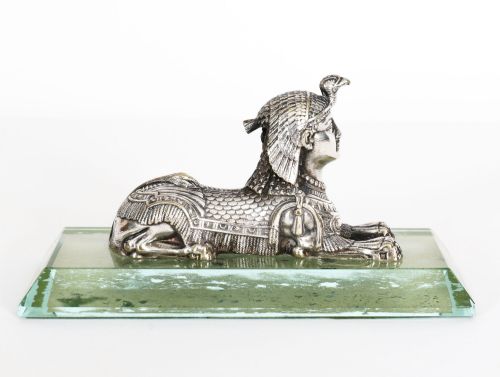
fig 4. A 19th-century silver-plated sphinx figurine with detailed engraving, mounted on a thick bevelled green glass base.
fig 4. Antique English Silver Plated Sphinx Sculpture Dated 1864 19th C

Design of the Consular and Empire periods was characterised by militaristic elements – symbols of war and victory, imperial emblems, such as the golden eagle, classical palm leaves and laurel wreaths. These symbols of power made a direct visual connection between the regime and the glory and authority of the ancient Roman emperors.
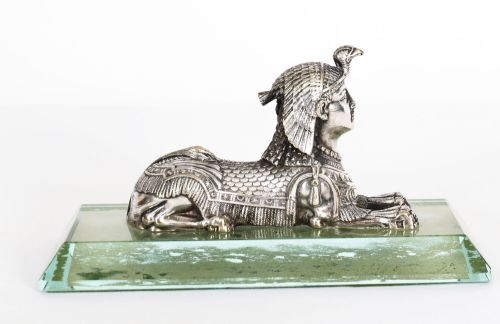
fig 5. A 19th-century silver-plated sphinx figurine with detailed engraving, mounted on a thick bevelled green glass base.
fig 5. Antique English Silver Plated Sphinx Sculpture Dated 1864 19th C

Sphinxes, winged lions and creatures with heads of eagles were employed as table legs and armrests on chairs. Broad, austere surfaces of exotic woods were ornamented with motifs in marquetry and ormolu (gilt-bronze), and the heavy, monumental style of the furniture reflected a grandiose magnificence. Heavy bases accentuated a monumental appearance, and symmetry was closely followed. At the height of the Empire period, the style was majestic.
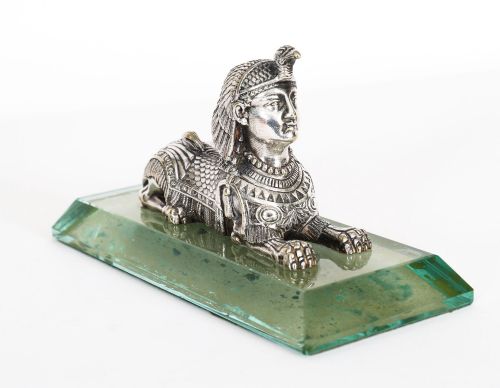
fig 6. A 19th-century silver-plated sphinx figurine with detailed engraving, mounted on a thick bevelled green glass base.
fig 6. Antique English Silver Plated Sphinx Sculpture Dated 1864 19th C

Napoleon’s Egyptian Campaign brought about a craze in France for all things Egyptian. The detailed drawings of art and architecture published on his return by artist and archaeologist Dominique-Vivant Denon led to the incorporation of Egyptian motifs in the furniture and decorative arts of the following decades.
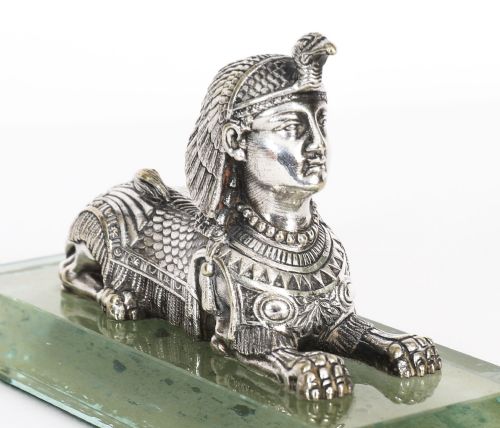
fig 7. A 19th-century silver-plated sphinx figurine with detailed engraving, mounted on a thick bevelled green glass base.
fig 7. Antique English Silver Plated Sphinx Sculpture Dated 1864 19th C

As well as military, Egyptian and Classical imagery, the Empire period also embraced opulence and imagery of love, sensuality and seduction: the swan – one of the forms the god Zeus took to seduce mortal women; the lyre – an instrument of art and seduction; and bows and arrows – the tools of Cupid.
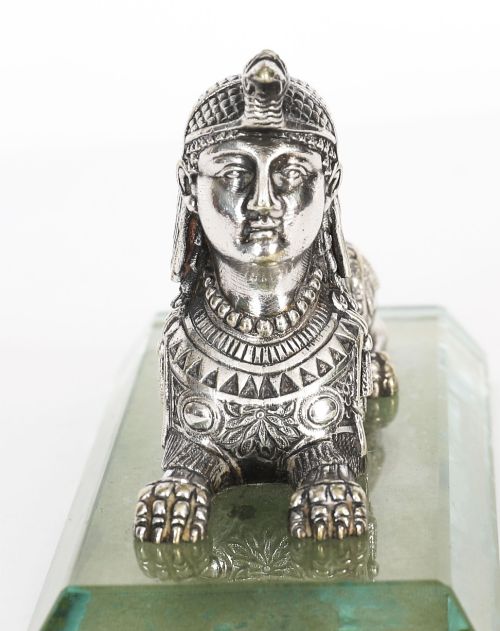
fig 8. A 19th-century silver-plated sphinx figurine with detailed engraving, mounted on a thick bevelled green glass base.
fig 8. Antique English Silver Plated Sphinx Sculpture Dated 1864 19th C

Swans, also emblems of Venus and the adopted symbol of Josephine, were employed as armrests or as entire arms of chairs. Aspects of the myth of Cupid and Psyche were also a common theme. The butterfly symbolising both Psyche and the soul was a recurrent motif.
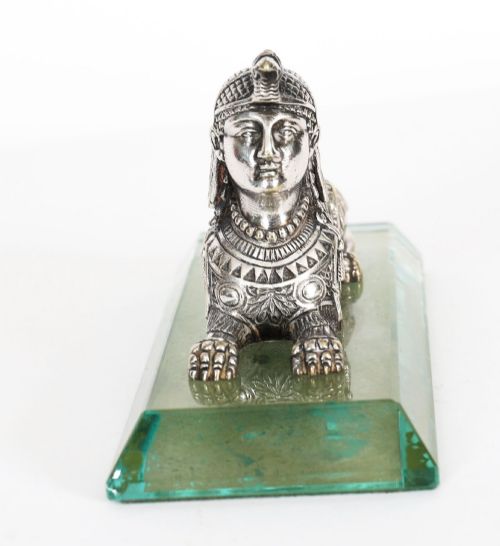
fig 9. A 19th-century silver-plated sphinx figurine with detailed engraving, mounted on a thick bevelled green glass base.
fig 9. Antique English Silver Plated Sphinx Sculpture Dated 1864 19th C

Other symbols and motifs of the Empire period included the bee, a symbol of immortality and resurrection, specifically chosen by Napoleon to link his new Empire to the very origins of France; the cornucopia or horn of plenty; images of Mars and Venus symbolising love and peace brought about through military success, and the initials of the Emperor and Empress – N for Napoleon and J for Josephine.

The Empire style achieved great popularity and was adopted in courts throughout Europe. In England, it was known as the Regency style.

Our reference: A5468

Date of Manufacture

Regent Antiques has dated this Silver Plated Sphinx Sculpture to the 1860s.

Independent Date Report ID 09710226
Dealer's Item Date1860s
Sellingantiques dating1860s
Sellingantiques agingItem 155-170 years old
Test ResultsPassed dating check
Why Sellingantiques dated this piece to the 1860s:
British design registration diamond on the haunch: registered in the 1860s.
Silver plating worn to base metal on high points: long handling.
Bevelled heavy glass base: mid-Victorian desk ornament manufacture.

This is an independent date report produced by Sellingantiques using its own proprietary system. The process uses the photographs shown on this page. The system is never told the date the dealer has declared. This report shows that the two dates corroborate.

Height
9cm (3.54")
Width
15cm (5.91")
Depth
7cm (2.76")
Reference Numbers
Sellingantiques Ref
SA1244318
Dealers Internal Ref
A5468
Regent Antiques
Regent Antiques
Sellingantiques verified Since Sep 2016

We specialise in english and continental furniture, silver, porcelain and decorative items.

Dealer Profile

You can view the stock and full dealer information on the Regent Antiques Profile Page

Trade Associations

Regent Antiques is a registered member of LAPADA  CINOA
PDF SHARE
SAVE
A 19th-century silver-plated sphinx figurine with detailed engraving, mounted on a thick bevelled green glass base.
1 / 13
Archive I A 19th-century silver-plated sphinx figurine with detailed engraving, mounted on a thick bevelled green glass base.

Antique English Silver Plated Sphinx Sculpture Dated 1864 19th C
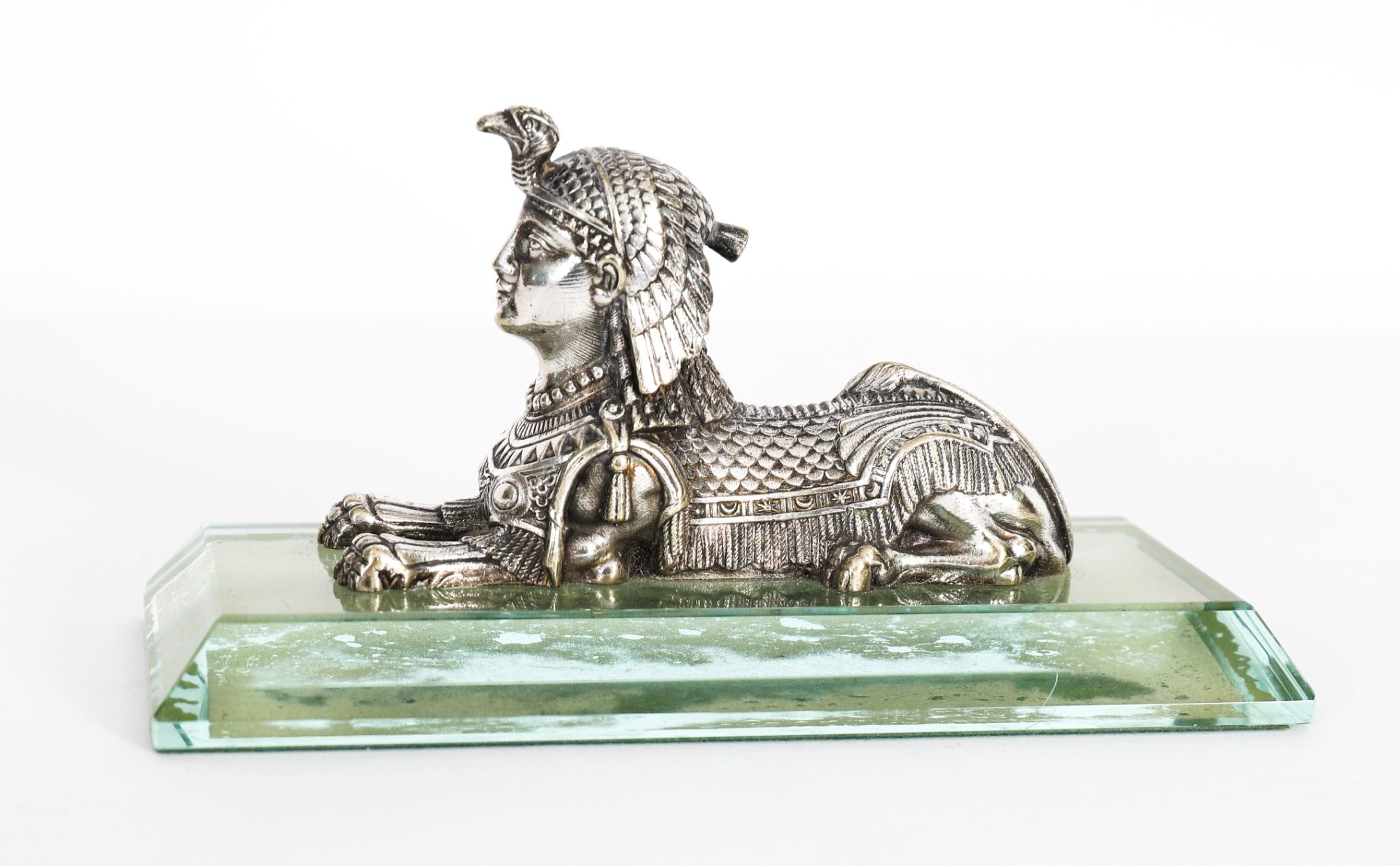
Archive II A 19th-century silver-plated sphinx figurine with detailed engraving, mounted on a thick bevelled green glass base. View II
Archive III A 19th-century silver-plated sphinx figurine with detailed engraving, mounted on a thick bevelled green glass base. View III
Archive IV A 19th-century silver-plated sphinx figurine with detailed engraving, mounted on a thick bevelled green glass base. View IV
Archive V A 19th-century silver-plated sphinx figurine with detailed engraving, mounted on a thick bevelled green glass base. View V
Archive VI A 19th-century silver-plated sphinx figurine with detailed engraving, mounted on a thick bevelled green glass base. View VI
Archive VII A 19th-century silver-plated sphinx figurine with detailed engraving, mounted on a thick bevelled green glass base. View VII
Archive VIII A 19th-century silver-plated sphinx figurine with detailed engraving, mounted on a thick bevelled green glass base. View VIII
Archive IX A 19th-century silver-plated sphinx figurine with detailed engraving, mounted on a thick bevelled green glass base. View IX
Archive X A 19th-century silver-plated sphinx figurine with detailed engraving, mounted on a thick bevelled green glass base. View X
Archive XI A 19th-century silver-plated sphinx figurine with detailed engraving, mounted on a thick bevelled green glass base. View XI
Archive XII A 19th-century silver-plated sphinx figurine with detailed engraving, mounted on a thick bevelled green glass base. View XII
Archive XIII A 19th-century silver-plated sphinx figurine with detailed engraving, mounted on a thick bevelled green glass base. View XIII
Enlarged Archival View
Location
Manor Warehouse
318 Green Lanes
London
N4 1BX
United Kingdom
Verified Since Sep 2016
Items For Sale 658
Items Sold 2,713
Regent Antiques
Regent Antiques
Verified Since Sep 2016
View Dealer Info
Location: Manor Warehouse, 318 Green Lanes, London, N4 1BX, United Kingdom
Verified
Sep 2016
For Sale
658
Sold
2,713
A 19th-century silver-plated sphinx figurine with detailed engraving, mounted on a thick bevelled green glass base.
Antique English Silver Plated Sphinx Sculpture Dated 1864 19th C
Ref: SA1244318
A 19th-century silver-plated sphinx figurine with detailed engraving, mounted on a thick bevelled green glass base.
Detail View 1
Detail View 2
Detail View 3
Detail View 4
Detail View 5
Detail View 6
Detail View 7
Detail View 8
Detail View 9
Detail View 10
Detail View 11
Detail View 12
Archival Detail
Every single antique dealer on our platform is individually approved by our internal team. We verify their professional trade history, ethical standards, and photographic quality to ensure a secure, high-standard buying environment. Upon joining, every dealer agrees to a strict 9-point code of conduct. While issues can occasionally arise, our dealers typically resolve them swiftly and directly with the buyer. In fact, since our founding in 2002, Sellingantiques has only had to step in to help resolve an issue on roughly five occasions—a true testament to the quality of our dealers and their dedication to your happiness.
Our dealers are highly experienced in packing and shipping fragile, high-value antiques. Because you are in direct contact with the dealer, you will be able to easily go through all available shipping and insurance options together to ensure your item arrives safely.
Antiques are the ultimate green purchase. By choosing historical pieces over newly manufactured goods, you completely eliminate the carbon footprint of modern mass production while preserving exceptional, timeless craftsmanship.
Written by Sellingantiques from the dealer’s photographs and listing
  • ObjectSculptures
  • Period19th century
  • StyleEgyptian Revival
  • MaterialSilver Plate, Glass
  • ColourSilver, Green
  • MotifsSphinx figure, Nemes headdress, Bevelled glass base, Feathered wings pattern
  • SizeH 9 cm (4 in) x W 15 cm (6 in) x D 7 cm (3 in)

This 19th-century English Empire Revival sculpture takes the form of a recumbent sphinx in the Egyptian Revival style, dating from 1860. The silver-plated metal piece depicts a mythological figure with a lion body and a human head wearing a nemes headdress, detailed with engraving on the feathered wings and patterned collar. It is mounted on a thick, rectangular bevelled green glass base with bevelled edges. The surface shows a silver finish with greenish undertones on the glass plinth, and the metal bears cast decorative motifs and a registry design lozenge number stamp. The sculpture measures 9 cm high, 15 cm wide, and 7 cm deep. Suitable for a gentleman's library or office, this decorative object functions as a paperweight or desk ornament. It sits on a work surface, library table, or shelving unit in a study or home office, bringing a classical aesthetic to a workspace. The piece is placed directly on a desk to organise papers or display historical metalwork.

Egyptian Revival decor emerged in response to 19th-century archaeological discoveries, incorporating classical iconography such as sphinxes, scarabs, and pharaonic motifs into decorative metalwork and home accessories.

These objects were typically cast in base metals like bronze, brass, or Britannia metal before undergoing electroplating with fine silver, often mounted on heavy leaded glass or marble bases for weight.

Authentic 19th-century pieces often feature Victorian registration marks, makers stamps, or date engravings, alongside signs of natural wear where the underlying base metal shows through elevated areas of the plating.

Position the sculpture on an office desk, a stacked set of art books, or a mantelpiece to serve as a focal point, pairing it with dark wood furniture and brass accents to enhance its historical aesthetic.

Dust regularly with a soft microfibre cloth and clean the silvered surfaces gently using a mild silver polish, avoiding harsh chemicals or submerging the piece in water to protect the glass mount.
items
Add keywords to the filter
Price
£100
£250000
Era
Period
Style
Material
Origin
Stock Location
Recently Added
Online Payments
Categories