



Antique Meissen Statues
These antique meissen statues are European porcelain figures shaped by historical kiln traditions, prized by collectors for their intricate modelling and painted detail.
Antique Meissen Statues
When you search for antique meissen statues, you enter a world of hard-paste porcelain figures depicting birds, animals, mythological subjects, and human characters. The pieces span centuries of production, from eighteenth-century figure groups to nineteenth-century pairs of parrots and seasonal allegories.
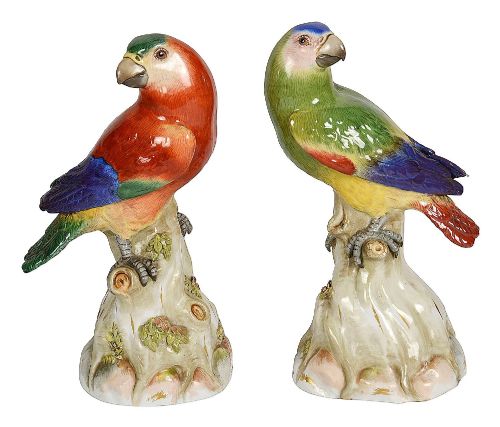
On this page, the selection leans heavily towards nineteenth-century iterations, including pairs of birds like hoopoes and parrots, alongside sets of the Four Seasons and children with flower baskets. These figures served as ornamental centrepieces for dining tables and drawing rooms in period homes.
The objects take various forms, from single figures like a woman playing a hurdy-gurdy or a grape harvester girl to complex figure groups such as a leopard attacking a snake or the Drunken Silenus. Each piece reflects the sculptural ambitions of European porcelain manufactories across different stylistic revivals.
Materials and manufacture
The core material is hard-paste porcelain, fired at high temperatures to achieve a dense, vitrified body that accepts detailed glaze and enamel painting. Artisans applied coloured enamels and gold leaf highlights by hand before secondary firings to fuse the decoration to the ceramic surface.
Modelters shaped the figures using multipart moulds, assembling individual components such as limbs, flowers, and perching birds while the clay was damp. The finished forms received clear glazes that provided a glossy sheen across the detailed surface relief.
Antique Meissen Statues Retail Price Guide 2026
Typical asking prices for meissen statues among the pieces listed under this phrase on Sellingantiques today, from the lower quarter to the upper quarter. They describe what is for sale here now, not the wider market.
A porcelain leopard attacking a snake shares space with cheerful fruit-harvesting girls.
Assessing quality in porcelain figures
Quality rests in the crispness of the modelling and the precision of the hand-painted enamels, where finer examples preserve delicate facial expressions and sharp feather or drapery details. The complexity of the composition also dictates value, with paired figures and multi-figure groups requiring greater technical skill in firing without warping.
The integrity of the glaze and the vibrancy of the gilding separate standard production pieces from exceptional works. Careful hand-finishing after moulding ensures that extremities and applied floral elements maintain their definition rather than appearing softened by worn or overused moulds.
Paul Scheurich·Helena Wolfsohn·Samson·Sitzendorf
The Antique Meissen Statues Glossary
- Hard-paste porcelain
- A vitrified ceramic composed of kaolin and petuntse, fired at high temperatures to create a durable, non-porous body. This material forms the structural base of traditional European figures.
- Enamel
- Coloured metallic oxide paints applied over the glazed porcelain surface and fixed in a muffle kiln. These pigments provide the vibrant clothing and naturalistic details on the figures.
- Gilt
- A thin layer of gold leaf or gold paint applied to decorate borders, clothing, and accessories. It adds a reflective metallic accent to the ceramic composition.
- Blanc de Chine
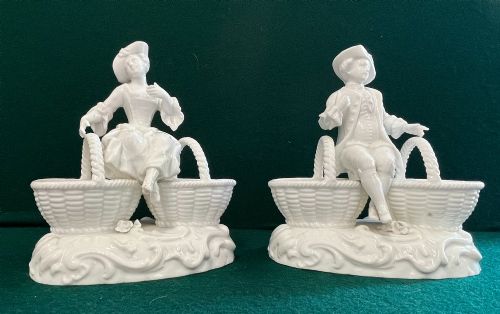
- A French term for white porcelain without coloured enamel decoration, allowing the unadorned white glaze to highlight the sculptural form. This style emphasises the purity of the ceramic body and the skill of the modeller.
- Figurine
- A small three-dimensional sculptural representation of a human, animal, or mythological subject. These decorative objects form the primary category within this collecting field.
Antique Meissen Statues: Frequently Asked Questions
How were antique porcelain figures displayed?
These figures traditionally sat on mantelpieces, side tables, and enclosed cabinets within formal reception rooms. Owners arranged them in symmetrical pairs or thematic sets to demonstrate social standing and refined taste.
In modern settings, they require stable surfaces away from high-traffic areas and direct sunlight. Placing them on dedicated shelves or inside glass-fronted cabinets protects the delicate applied elements and hand-painted surfaces from accidental damage.
What subjects do these porcelain figures show?
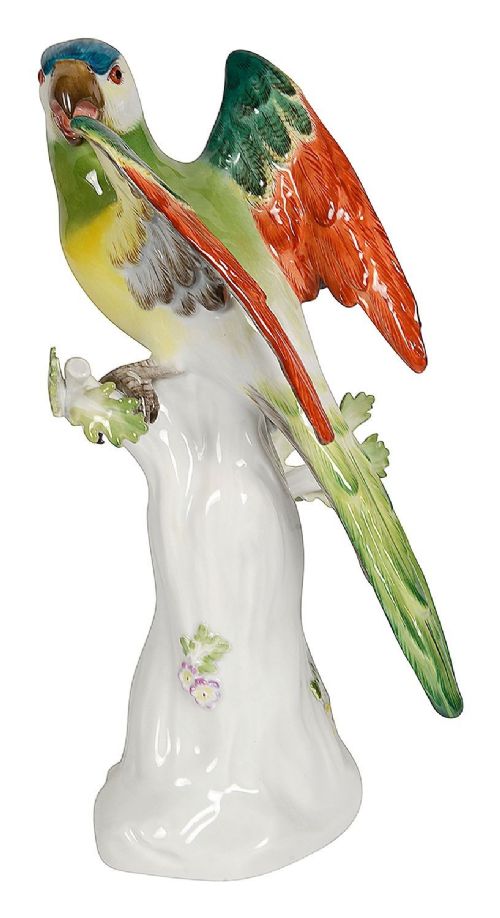
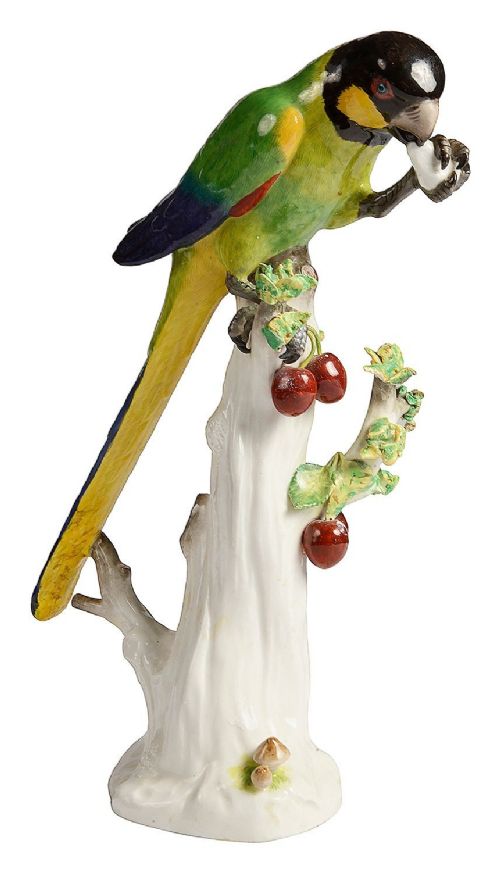
The subjects range widely across natural history and human activity, including exotic birds like parrots and hoopoes, domestic animals, and wild predators. Human figures often depict allegorical themes such as the seasons, street vendors, lovers, and mythological characters.
Victorian and eighteenth-century makers also produced children at play, grape harvesters, and musical performers. Each subject reflects the prevailing decorative tastes and artistic interests of its specific period of production.
How can I tell different periods apart?
Distinguishing periods relies on observing stylistic shifts, such as the exuberant curves of eighteenth-century Rococo modelling versus the more eclectic Revival styles of the nineteenth century. Examining the base, glaze texture, and painting style provides further clues regarding the manufacturing era.
Markings and the specific composition of the hard-paste porcelain also help establish a timeline. Earlier pieces often display distinct potting characteristics and softer enamel palettes compared to later nineteenth-century manufacturing methods.
Are these figures glazed or unglazed?
Most pieces feature a clear, glossy glaze applied over the hard-paste porcelain body and enamel decorations to seal the surface. This finish gives the figures their characteristic reflective sheen and protects the painted details underneath.
Certain specialised pieces, such as specific blanc de Chine figures, rely on the smooth white glazed surface alone without added enamel colours. The glaze acts as a protective barrier while enhancing the crisp contours of the moulded design.