



Antique Marquetry End Table
An antique marquetry end table brings precise floral and geometric wood inlay into smaller rooms as a functional surface.
Antique Marquetry End Table
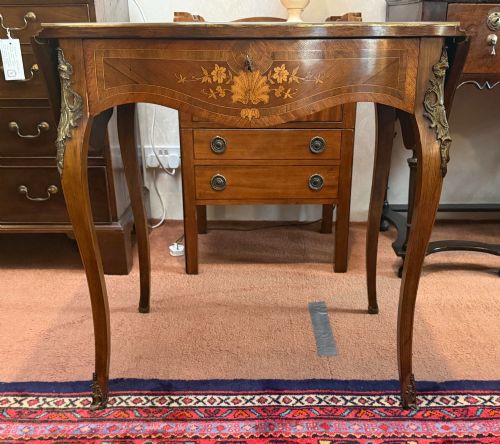
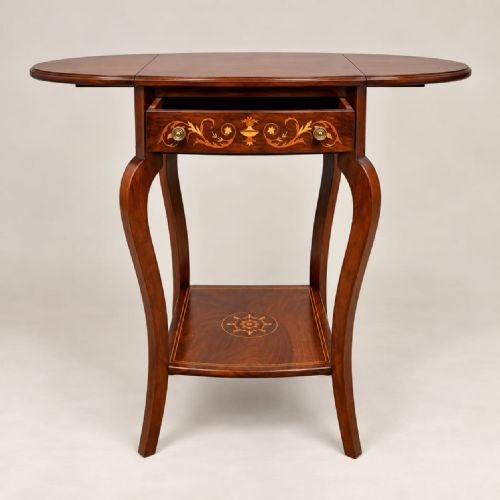
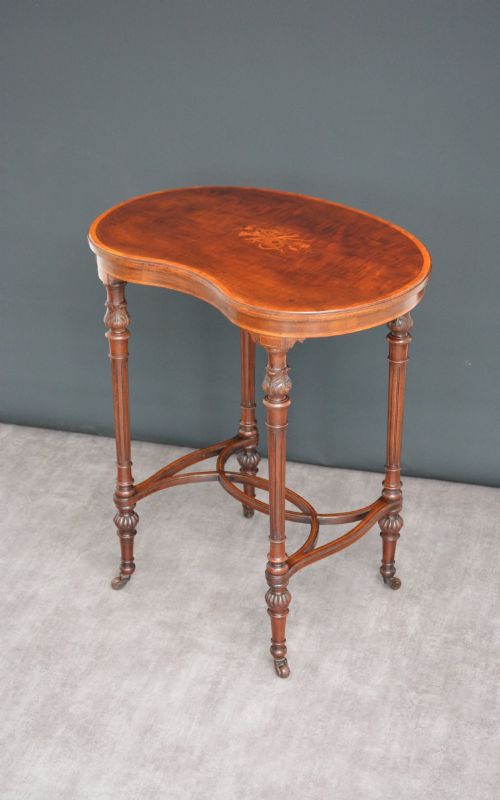
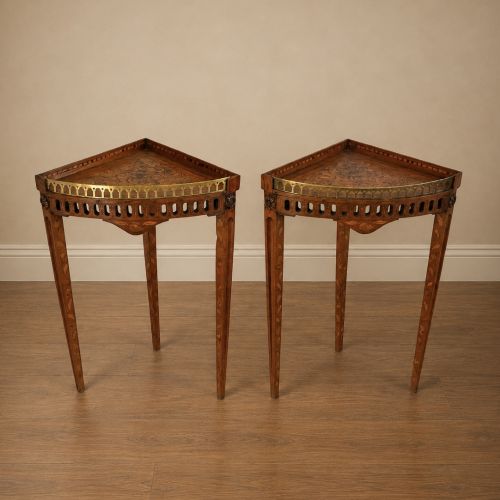
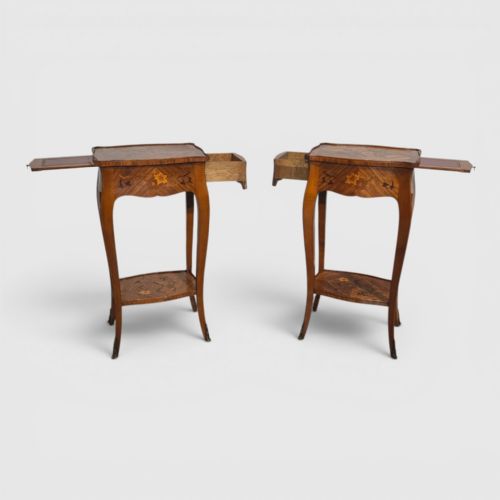
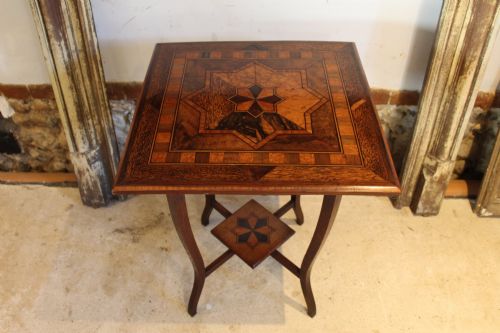
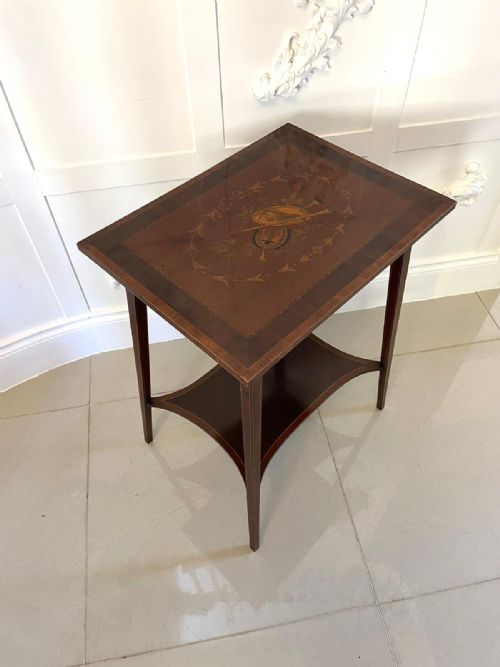
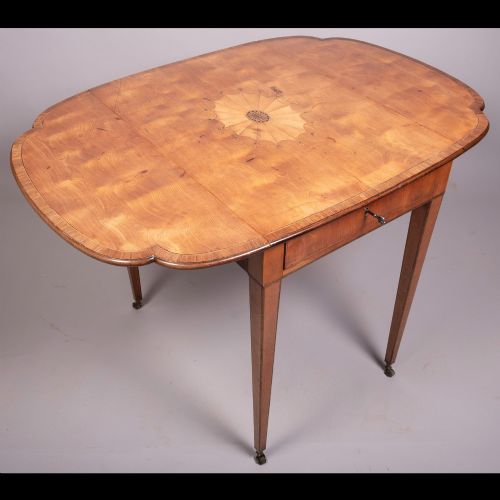
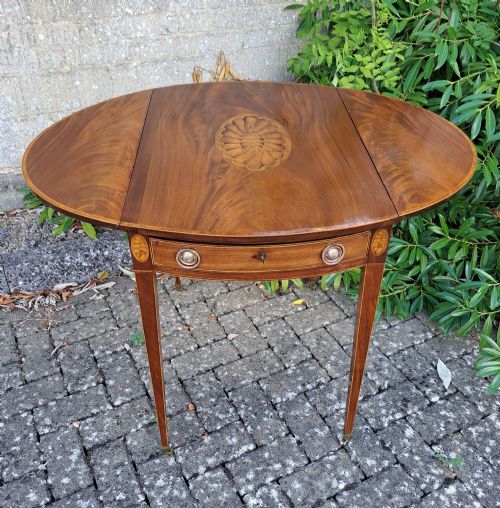
An antique marquetry end table is a compact occasional piece designed for a lamp or books, utilising detailed wood veneers to form ornamental patterns on the surface. These items appear across various forms in the inventory, including side tables, lamp tables, pembroke tables, and nests of tables.
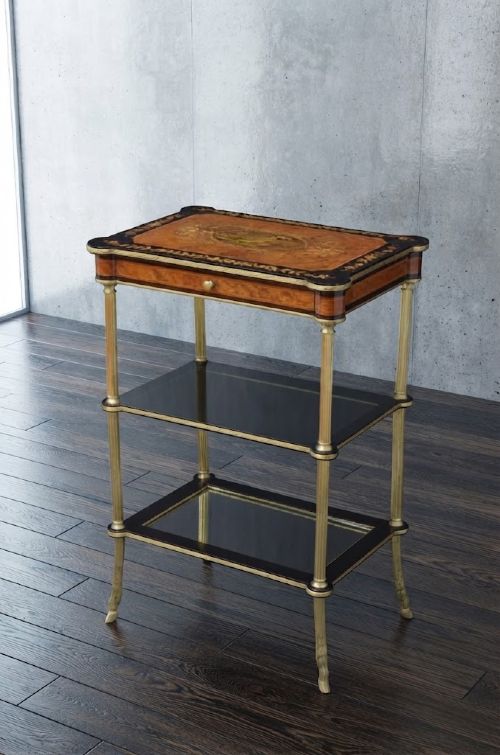
The version most commonly met on this page is an Edwardian or Victorian piece in mahogany or rosewood, often shaped as a kidney or oval top. Alongside these, French styles inspired by the Louis periods utilise rich timbers such as kingswood and satinwood.
Originating largely from British and French workshops across the eighteenth, nineteenth, and early twentieth centuries, these furniture items served sitting rooms and boudoirs alike. Buyers select them to introduce patterned wood surfaces into contemporary interiors without dominating the floor space.

How they were made
Cabinet makers built these pieces using solid core timbers like mahogany, walnut, or oak, which provided a stable structural foundation for the cabinet work. Onto this base, fine layers of contrasting veneers in satinwood, boxwood, and kingwood were applied by hand.
The decorative marquetry designs were cut using a fret saw and assembled like a puzzle before being glued into recessed channels on the table top. Ormolu mounts, brass galleries, and mother-of-pearl accents were frequently added to edges and corners to complete the ornamentation.
Antique Marquetry End Table Retail Price Guide 2026
Typical asking prices for marquetry end table among the pieces listed under this phrase on Sellingantiques today, from the lower quarter to the upper quarter. They describe what is for sale here now, not the wider market.
Materials documented in the inventory include mahogany, satinwood, brass, rosewood, walnut, ormolu, kingwood, and boxwood.
What varies in quality
Quality rests primarily in the crispness and complexity of the veneer cutting, where superior examples display tight joints and subtle colour shading within floral motifs. Lesser pieces rely on simpler geometric layouts with wider veneer seams and minimal hand shaping.
The choice of secondary woods and the refinement of subsidiary mounts also divide standard production from exhibition grade items. Maker signatures and balanced proportions elevate the status of individual pieces significantly.
F. Linke·Charles Topino
The Antique Marquetry End Table Glossary
- Marquetry
- Decorative veneer work arranged in pictorial or floral patterns across a wooden surface. Craftsmen cut thin slices of various coloured woods to form the design.
- Ormolu
- Gilt bronze mounts applied to furniture edges and legs for ornamental effect. This technique was favoured in French cabinet making.
- Pembroke table
- A small rectangular table with hinged drop leaves on two opposing sides. It often includes a single drawer and tapering legs.
- Satinwood
- A hard, durable timber featuring a lustrous golden sheen. It served widely for detailed inlay work and decorative banding.
Antique Marquetry End Table: Frequently Asked Questions
Where should I place an antique marquetry end table?
These compact tables fit neatly beside a sofa, armchair, or bed where surface space is required for a lamp or small objects. Their detailed tops look best in spots with adequate lighting to highlight the veneer work.
Avoid placing them in direct sunlight or damp environments, as extreme temperature shifts can cause the delicate wood veneers to lift or crack over time.
What is the difference between marquetry and parquetry?
Marquetry involves cutting and assembling wood veneers into pictorial, floral, or curvilinear designs. It requires intricate hand work to fit the various timber colours together.
Parquetry uses the same technique of veneering, but strictly limits the patterns to geometric arrangements such as cubes, chevrons, or triangles.
How do I distinguish Edwardian pieces from Victorian ones?
Victorian examples tend to use heavier timbers like rosewood and dark mahogany, often featuring deeper carving and robust proportions. They reflect nineteenth-century revivals of earlier historic styles.
Edwardian tables generally display lighter satinwood inlays, slender tapered legs, and a more restrained aesthetic that favoured brightness in smaller drawing rooms.