

Antique Marble Credenza
An antique marble credenza brings substantial presence to a room, combining heavy stone tops with figured timber cabinetry.
Antique Marble Credenza
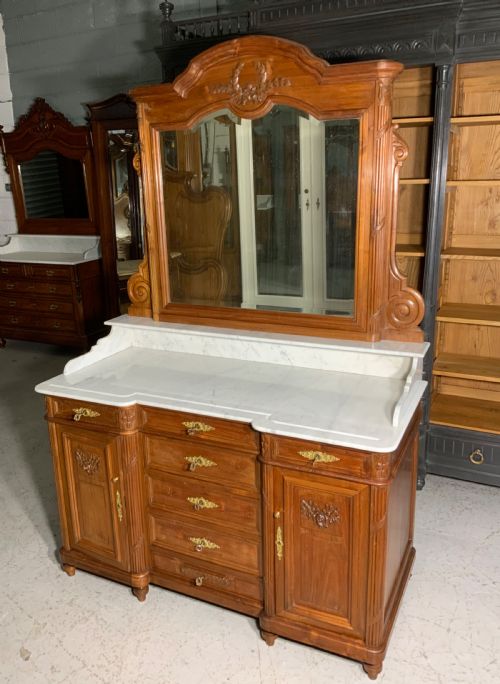
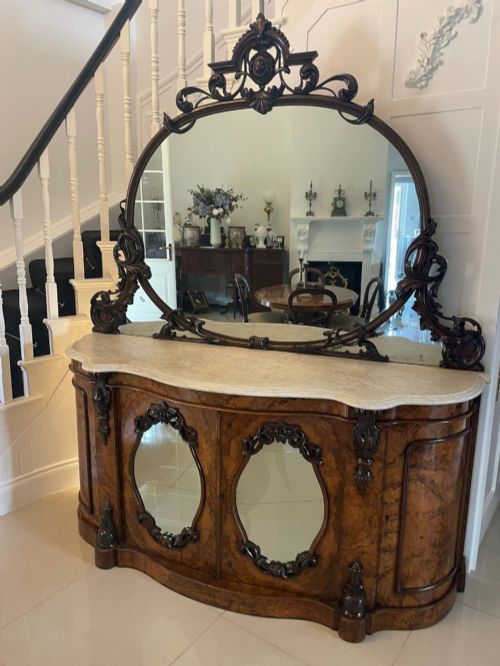
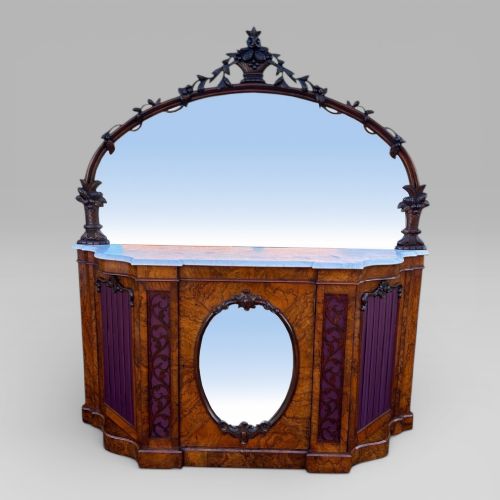
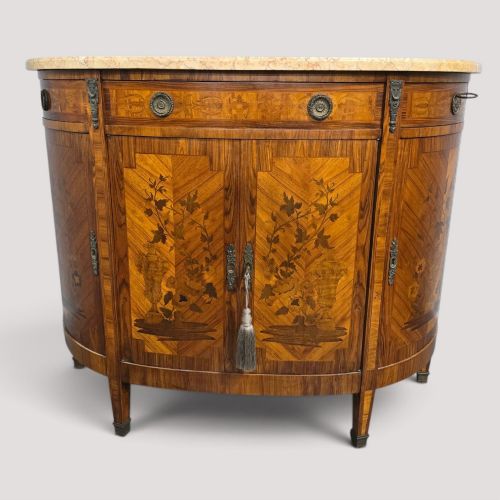
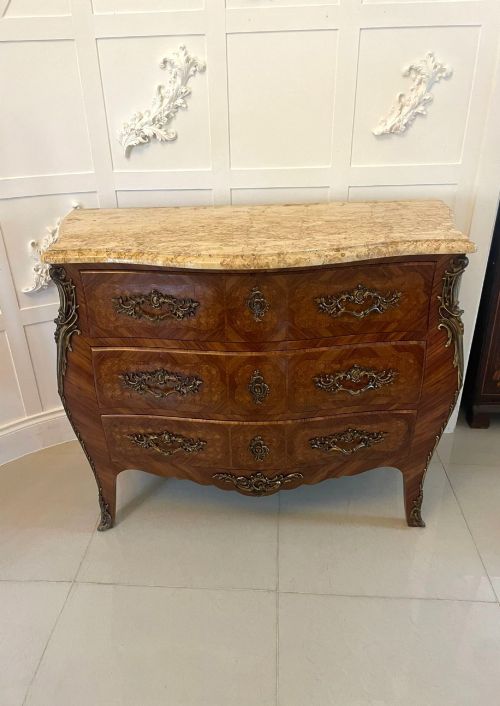
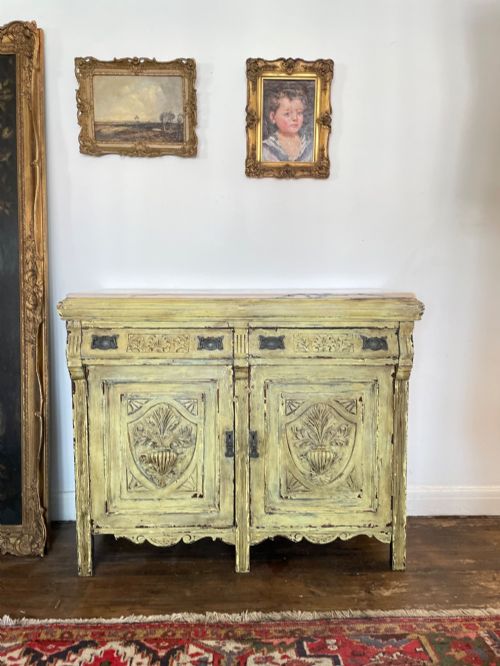
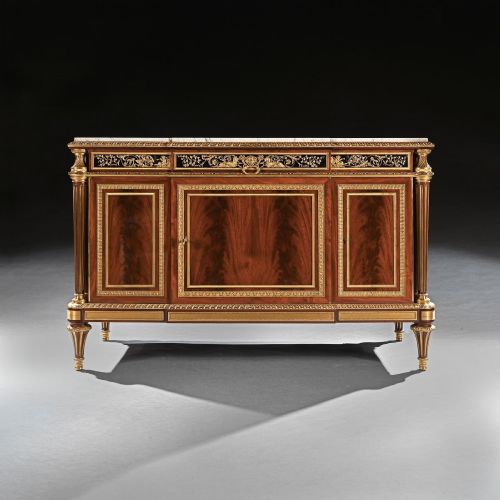
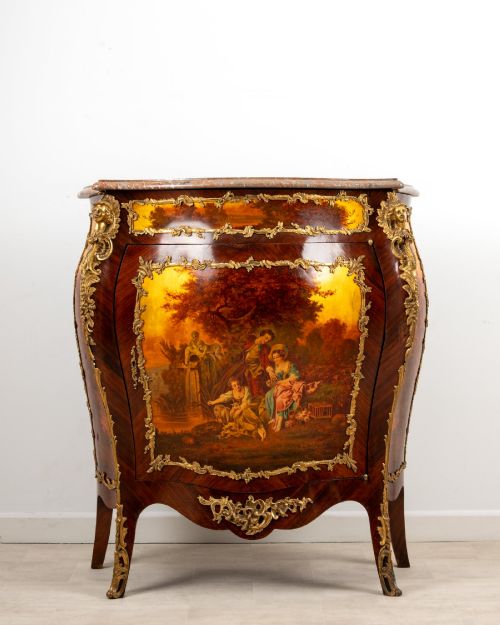
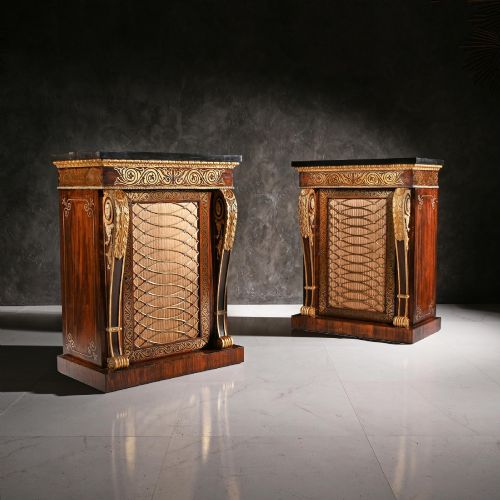
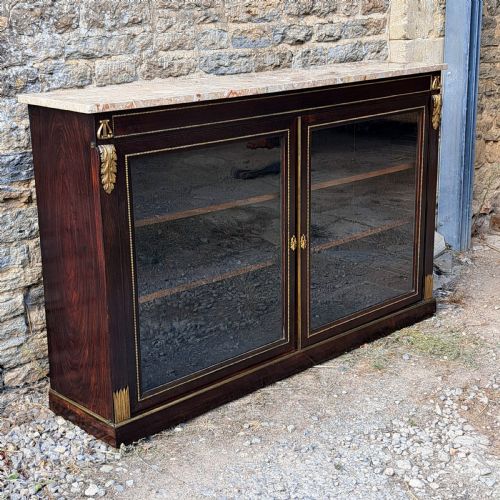
When buyers search for an antique marble credenza, they encounter low timber storage furniture crowned with fitted stone, predominantly originating from the nineteenth century alongside later revival periods. The most frequent examples on this page are Victorian burr walnut side cabinets and French commodes finished with inset marble slabs.
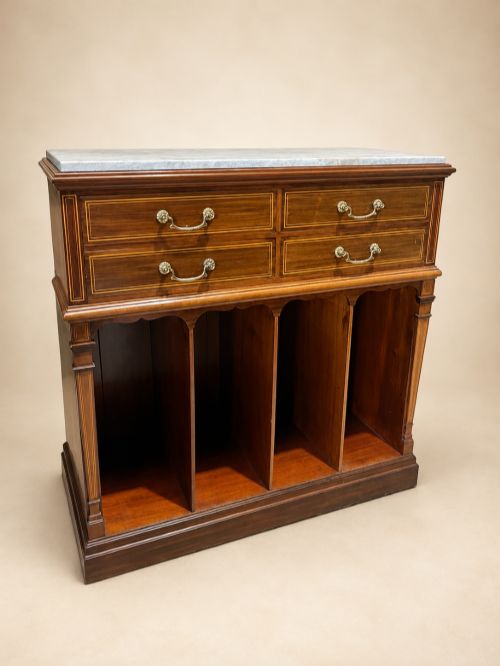
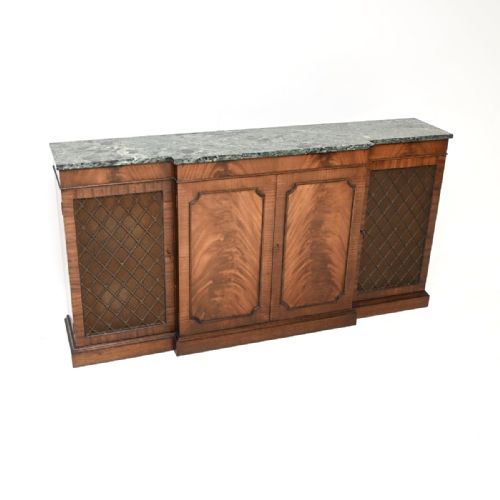
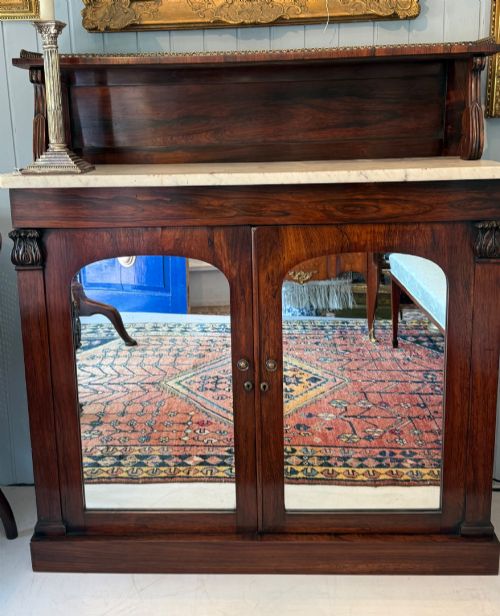
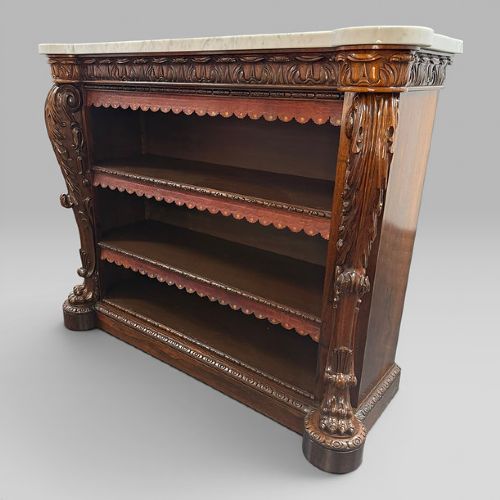
These pieces function as principal storage and display surfaces in dining rooms, drawing rooms and halls, combining enclosed cupboards with open shelving or mirror backs. Forms range from straight-fronted mahogany boards to demi-lune cabinets and serpentine sideboards.
Origins span English cabinetmakers and French workshops working in styles from Regency to Napoleon III and Louis XV revival. The unifying element across all variations is the heavy stone surface paired with veneered or solid timber carcasses.
How they were made
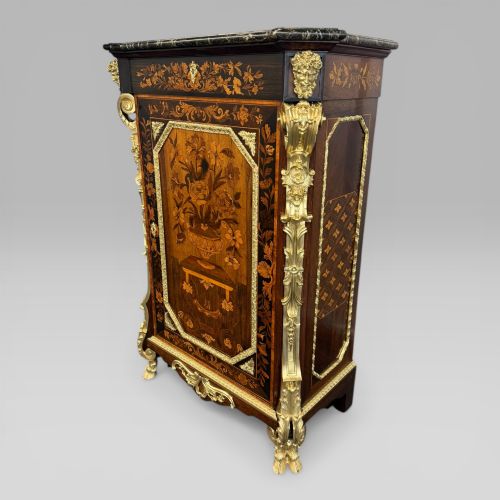
Cabinetmakers built the foundational carcasses from native and exotic timbers including mahogany, rosewood, walnut and kingwood, often laying intricate marquetry and parquetry veneers over the surfaces. Timber selection defined the character of the piece, with burr walnut and figured mahogany favoured for rich grain patterns.
Heavy marble slabs were quarried, cut and polished to fit precisely over the timber tops, sometimes featuring shaped edges or moulded profiles. Ormolu mounts, brass inlays and tortoiseshell Boullework were added to enrich the frameworks, particularly on French pieces.
The selection includes pieces from the Georgian era through the Victorian period and into the nineteen-thirties.
What varies in quality
Quality reveals itself in the choice of timber veneers, the complexity of the marquetry inlay, and the crispness of the cast ormolu mounts fixed to the corners and doors. Superior pieces display matched grain patterns across wide surfaces and heavy, finely figured marble tops without heavy repairs.
Construction methods distinguish standard workshop output from exceptional cabinet work, seen in the tight fit of panel joints, the weight of the bronze mounts, and the integration of carved mirror backs or detailed grill fronts.
Henry Dasson·Louis Constantin Le Gaigneur·Edward Holmes Baldock·Gillows·Weisweiler
The Antique Marble Credenza Glossary
- Ormolu
- Gilded bronze mounts applied to furniture for decoration. These metal details typically highlight corners, feet and friezes on French and English pieces.
- Boullework
- Marquetry of tortoiseshell and brass developed in France. This technique creates elaborate contrasting patterns across ebonised surfaces.
- Marquetry
- Decorative patterns formed by fitting together thin veneers of various wood types. Craftsmen use this method to create floral or geometric pictures on cabinet doors.
- Credenza
- A low side cabinet used for storage and display. Victorian and continental examples frequently feature glass doors and marble tops.
- Parquetry
- Geometric wood mosaic work used for floors and cabinet surfaces. The small wooden blocks form repeating patterns like cubes or chequers.
- Demi-lune
- Half-moon shape used for tables and cabinets. This curved profile allows furniture to sit flush against a wall while projecting outward.
Antique Marble Credenza: Frequently Asked Questions
What is a marble credenza?
A low storage cabinet fitted with a stone top, designed for formal rooms to display decorative objects and hold tableware.
These pieces combine timber cabinetry with heavy marble slabs, appearing frequently in Victorian and continental nineteenth-century designs.
How do I clean marble?
Maintenance requires gentle wiping with a damp cloth and mild soap, avoiding acidic substances that etch polished stone surfaces.
Protecting the heavy top from moisture rings preserves the original finish of the credenza.
Where were they placed?
These cabinets stood against dining room or drawing room walls, often beneath large mirrors or paintings.
The flat stone surface provided a sturdy staging area for serving food or displaying bronze figures and ceramics.
How do I date a credenza?
Dating relies on identifying the timber species, construction joints, and stylistic revival periods like Louis XV or Napoleon III.
Comparing the mount designs and veneer choices against known nineteenth-century production standards helps narrow the decade.