

Antique Marble Cherub
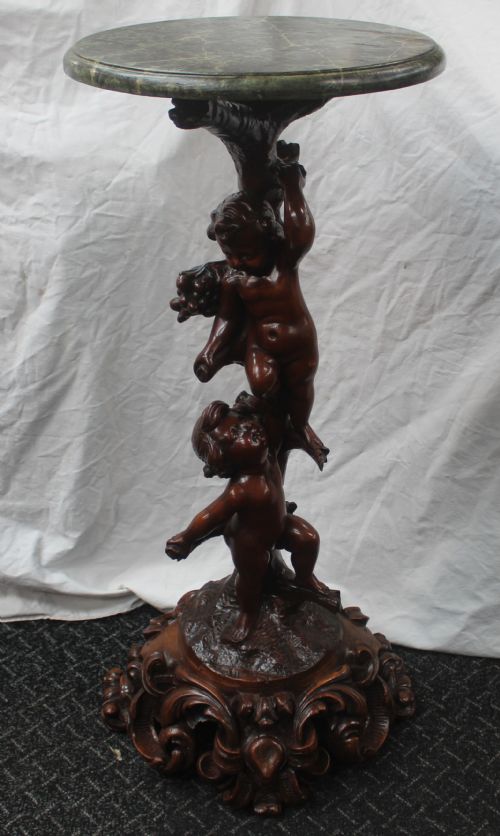
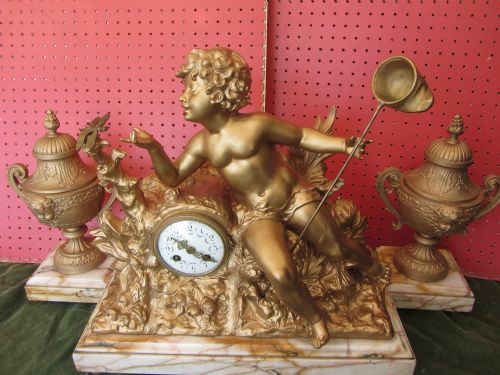
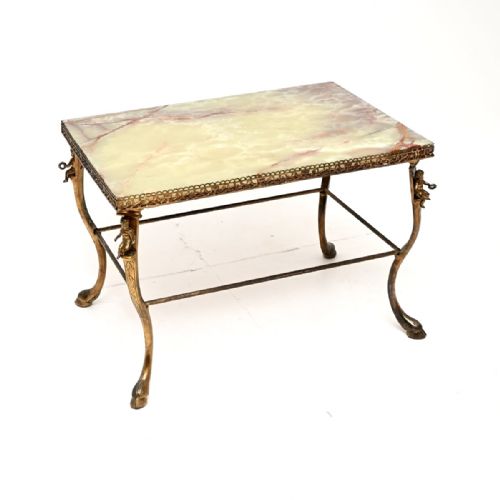
These antique marble cherub figures and garnitures combine carved stone with cast bronze or ormolu, originating mostly from nineteenth-century France and Italy.
Antique Marble Cherub
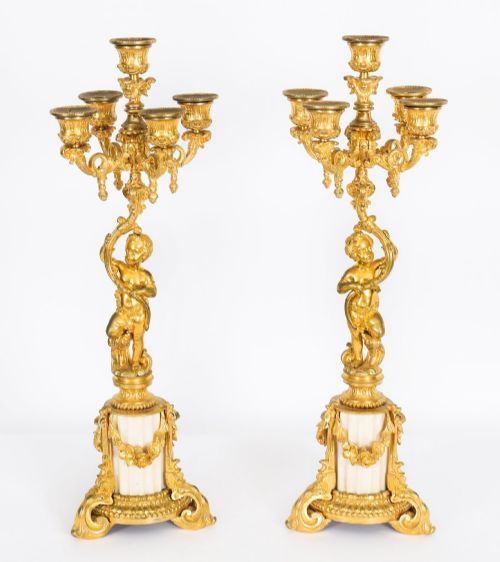
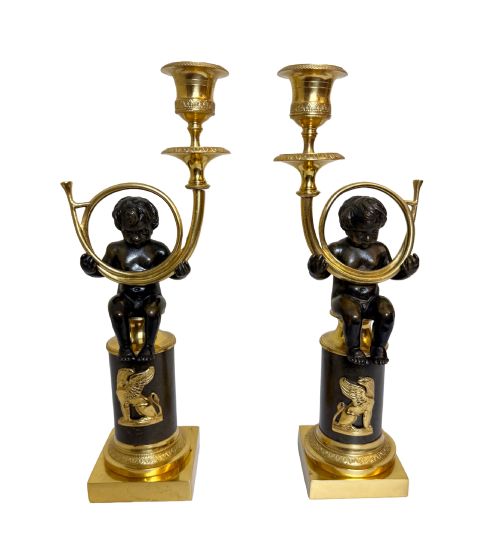
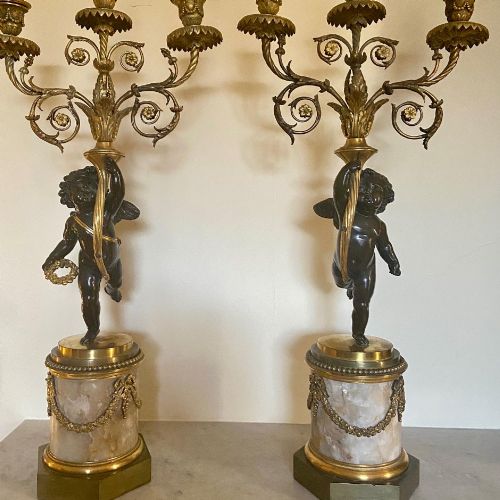
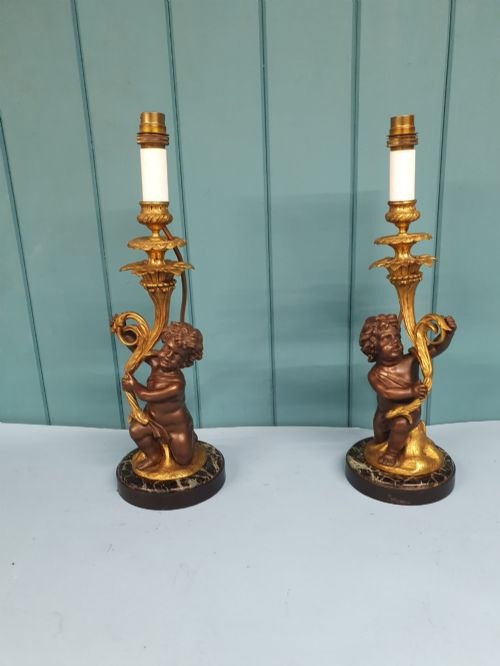
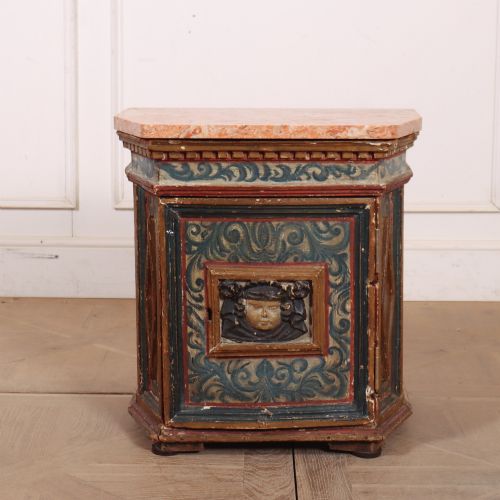
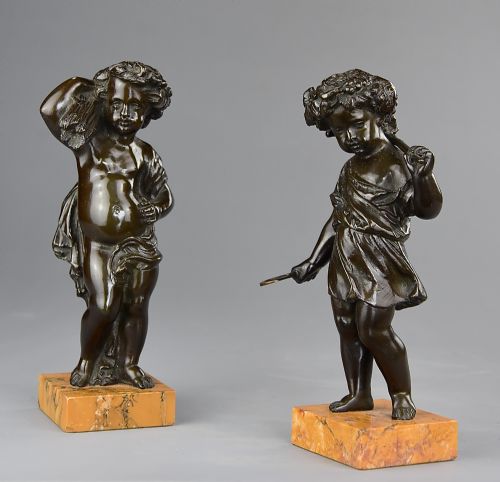
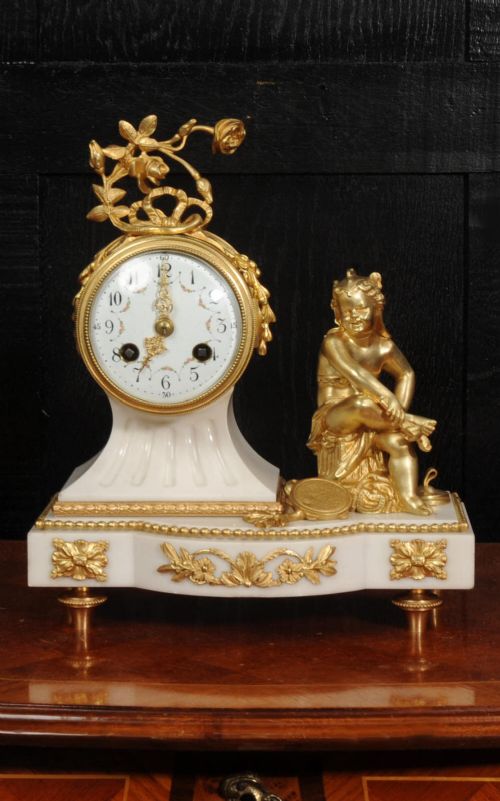
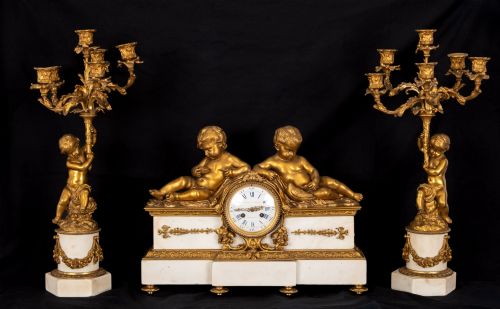
When you search for an antique marble cherub, you encounter sculptural works and decorative household objects where winged putti or children are paired with heavy stone bases, columns, or clock bodies. The most common examples on this page are nineteenth-century French mantel clock garnitures, candlesticks, and desk ornaments.
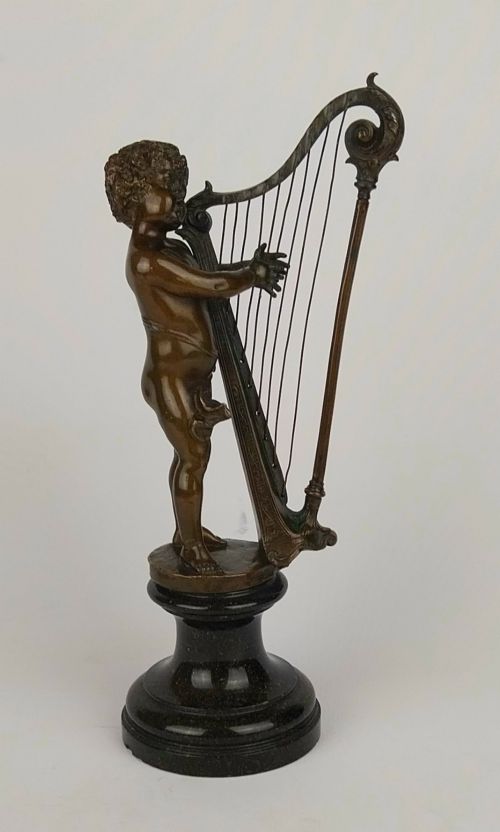
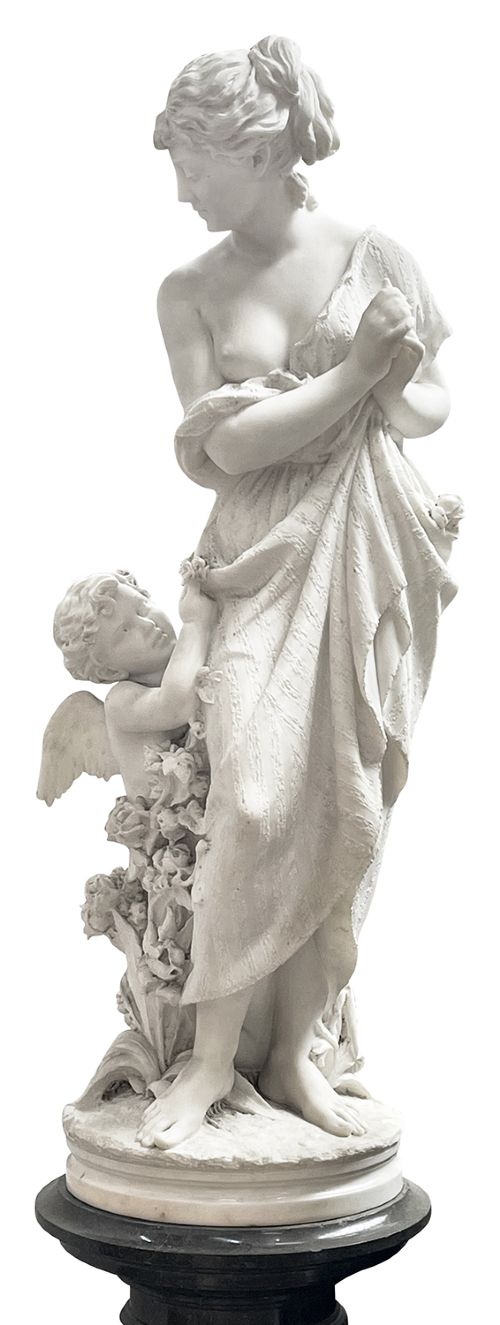
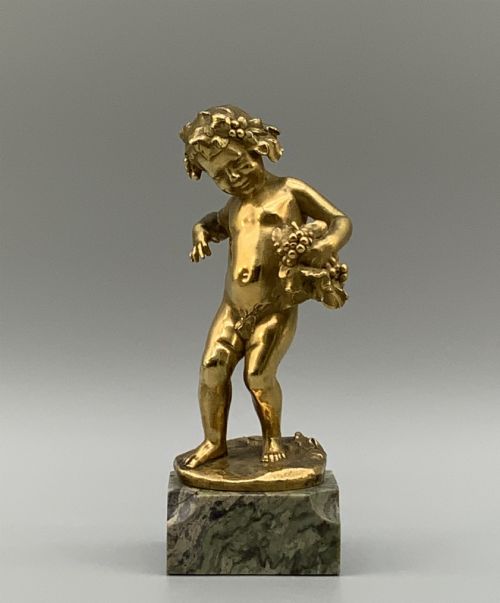
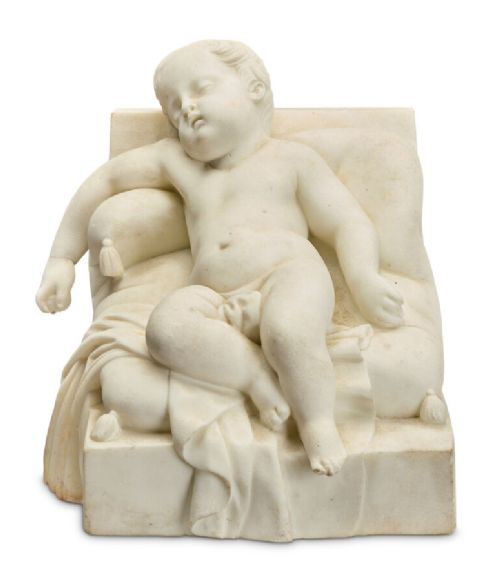
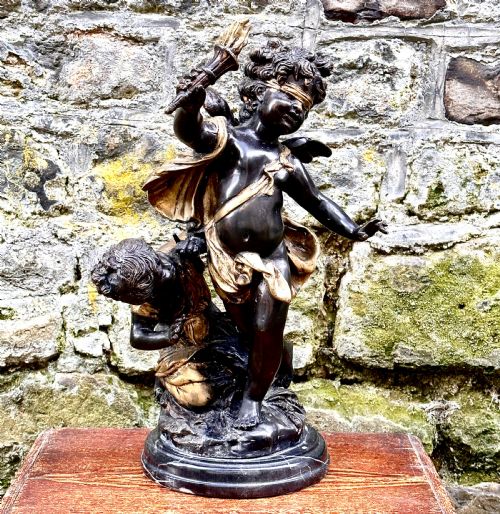
These items frequently draw on Neoclassical, Louis XVI, and Rococo Revival design vocabularies. The cherubs themselves appear as freestanding bronze figures mounted on white marble or as carved marble statuary depicting allegorical scenes of harvest, music, or love.
Makers and designers working in Paris and Italy produced these pieces for domestic interiors, often combining white or coloured marble with patinated and gilt bronze. They function simultaneously as timekeepers, lighting supports, and sculptural ornaments.
How they were made
Makers combined stone-carving with metal-casting, using Carrara or white marble for plinths, columns, and sculptural bodies, paired with cast bronze, brass, or spelter details. Ormolu, or gilded bronze, provided bright golden highlights against the cool surface of the stone.
Foundries employed the lost-wax casting method or sand-casting to produce intricate figures of putti, which were then chased by hand to sharpen feather and hair details before being patinated or fire-gilded.
Antique Marble Cherub Retail Price Guide 2026
Typical asking prices for marble cherub among the pieces listed under this phrase on Sellingantiques today, from the lower quarter to the upper quarter. They describe what is for sale here now, not the wider market.
Some cherubs refuse to stay solemn, doubling as musicians, hunters, or mischievous children wrestling with household cats.
What varies in quality
Matching garniture sets show consistent patination and unified casting styles across all components. Inferior items often rely on heavier, less refined metal alloys like spelter with painted rather than fire-gilded finishes, paired with softer or heavily veined stone of lesser density.
Japy Freres·Susse Freres·Louis Auguste Moreau
The Antique Marble Cherub Glossary
- Putto
- A plump, naked male child figure frequently found in classical art, often winged and synonymous with cherubs in decorative contexts.
- Ormolu
- Finely ground high-carat gold applied to a bronze object through a mercury amalgamation process, creating a durable golden finish typical of French decorative arts.
- Garniture
- A set of matching decorative objects, usually comprising a central clock flanked by a pair of matching candelabra or urns.
- Patinated bronze
- Metal that has been treated with chemical solutions to produce a controlled surface colour, ranging from deep brown to greenish tones.
- Campana
- A classical bell-shaped urn form popular during the Neoclassical period and frequently utilised in nineteenth-century decorative metalwork.
Antique Marble Cherub: Frequently Asked Questions
What is a cherub garniture set?
A garniture set consists of a central clock accompanied by matching side pieces such as candelabra or vases, designed to sit together on a mantelpiece.
These coordinated sets were centrepieces in nineteenth-century salons, sharing identical bronze mounts and marble bases.
How do I clean marble and bronze?
Dust marble gently with a dry microfibre cloth and avoid harsh chemical cleaners that can etch the polished stone surface.
Bronze and ormolu require only a soft brush to remove dust from recessed areas, preserving the original patination or gilding.
Are these figures cherubs or putti?
While modern usage often groups them together, art historians distinguish between biblical cherubim and classical putti representing mythological figures like Cupid.
Nineteenth-century makers frequently adopted the secular putto form derived from Renaissance and Neoclassical revivals.
Where were these pieces made?
The majority originate from workshops in Paris, which dominated the production of gilt bronze and marble clock garnitures during the nineteenth century.
Others stem from Italian workshops producing Grand Tour souvenirs and decorative carvings inspired by classical antiquities.