


Antique Mantelpiece Clock Set
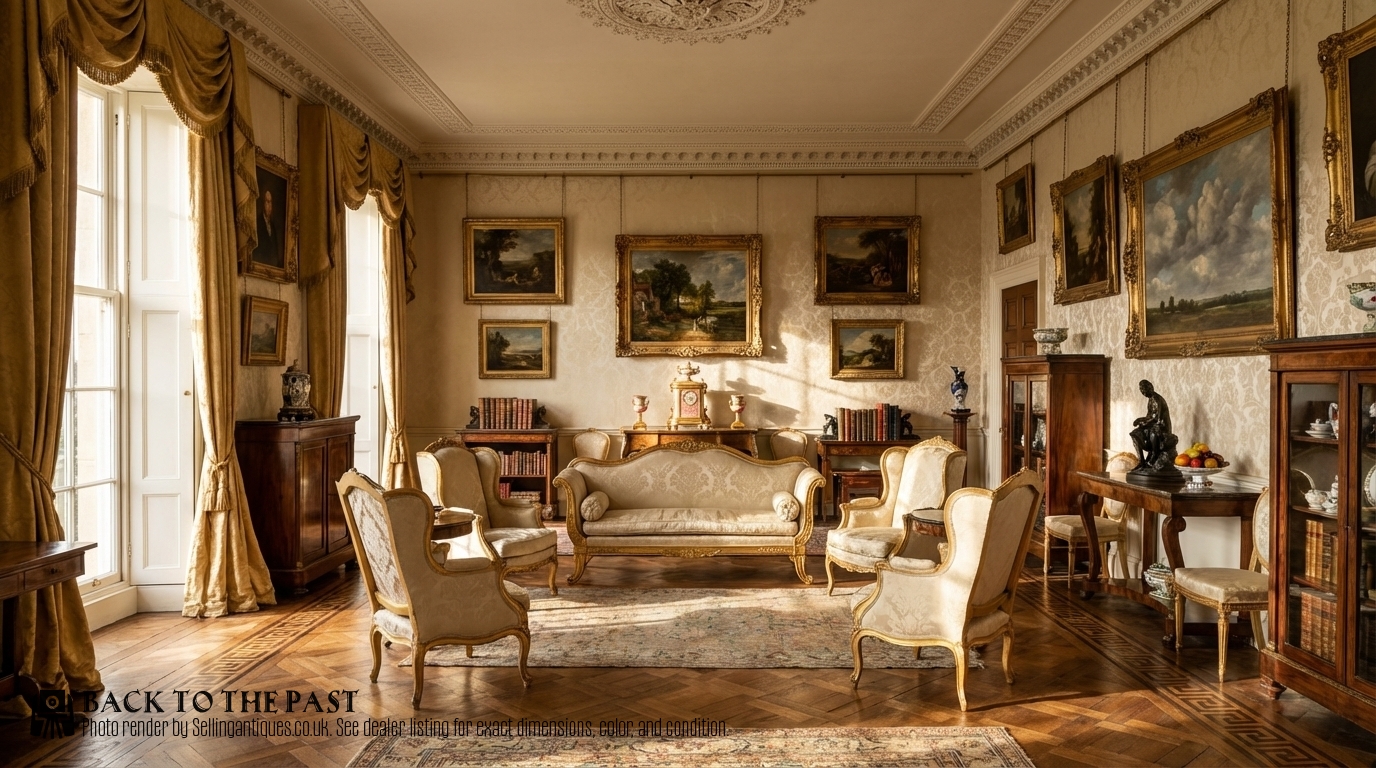
An antique mantelpiece clock set brings formal symmetry to a room, anchoring a fireplace with a central timepiece flanked by matching garnitures.
What these pieces are
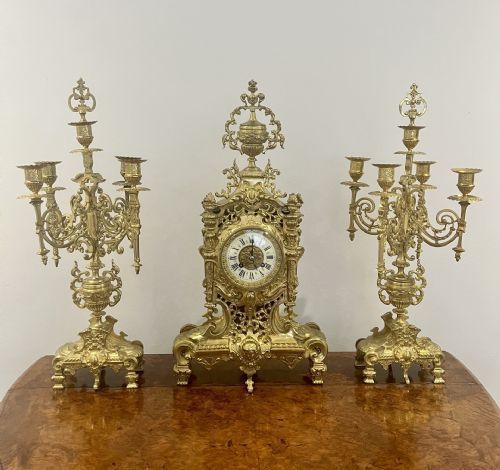
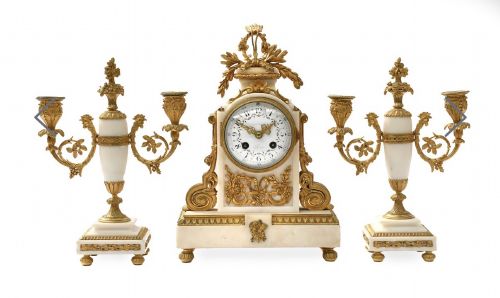
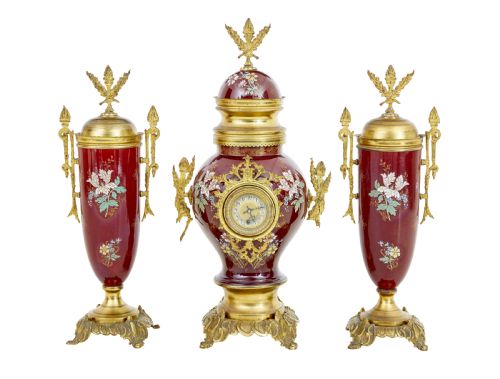
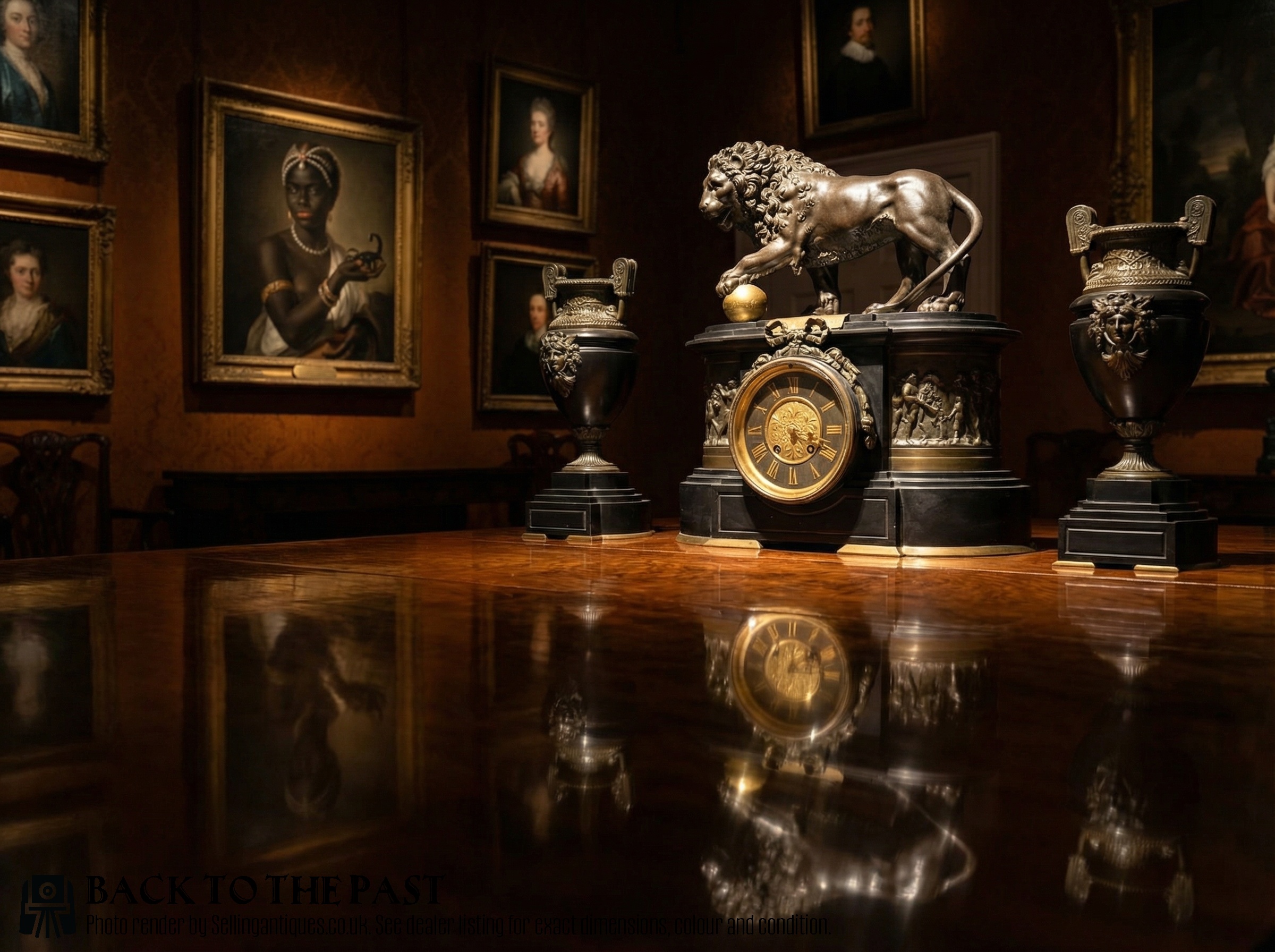
An antique mantelpiece clock set comprises a central clock accompanied by matching decorative pieces such as side urns or vases, forming a unified garniture arrangement. These complete sets appear in styles including Louis XVI Revival, Napoleon III, and Neoclassical, reflecting grand interior aesthetics.
The objects take the form of clock garniture sets, mantel clocks, and companion garnitures designed specifically for display on mantelpieces. Dating predominantly from the Victorian era and the late nineteenth century around eighteen seventy to nineteen hundred, these works originate largely from French makers and workshops.
Buyers encounter materials such as marble, black slate, gilt bronze, and ormolu, frequently enriched with enamel dial faces and decorative champleve or cloisonne detailing. The surviving sets range from small decorative French arrangements to large gilded suites.
What varies in quality
Quality rests in the crispness of the bronze casting and the depth of the ormolu gilding, where sharper chased details distinguish superior workshop output from softer, later production. The integration of materials also defines the tier, as seen in pieces combining Sevres-style porcelain panels with matched marble and gilt mounts.
The architectural harmony between the central clock and its flanking garnitures dictates the visual success of the ensemble, with finer sets maintaining strict stylistic consistency across every element. Preservation of the original enamel dials and the crispness of the applied polychrome decoration further separate standard domestic clocks from exceptional examples.
Retail Price Guide 2026
Typical UK retail prices for mantelpiece clock set, calculated from the Sellingantiques database of over a million retail prices indexed since 2003. This retail price guide relies exclusively on Sellingantiques data; no external sources or auction records are used, so the figures do not describe the wider market.
Some nineteenth-century clocks travelled across the Channel twice: first as bare French brass, and later back to Britain with a Manchester retailer's name stamped on the face.
Finnigan Manchester
The Antique Mantelpiece Clock Set Glossary
- Garniture
- A set of matching decorative objects designed for display together on a mantelpiece, typically consisting of a clock flanked by two matching urns or vases.
- Ormolu
- Finely chopped gold applied to a bronze base using a mercury amalgamation technique, producing a rich golden finish characteristic of high-end nineteenth-century decorative arts.
- Champleve
- An enamelling technique where troughs or cells are hollowed out of a metal surface and filled with vitreous enamel before firing.
- Cloisonne
- A decorative metalwork method where thin wires are soldered to a metal base to create compartments that hold coloured enamel paste.
- Patinated Bronze
- Bronze treated with chemical solutions to produce a darkened or antiqued surface finish that contrasts with bright gilt mounts.
Frequently Asked Questions
What is a clock garniture?
A clock garniture is a matched set consisting of a main mantel clock and accompanying decorative side pieces, such as urns or vases, designed to sit together on a mantelpiece.
These suites were created to provide balanced, symmetrical decoration for formal nineteenth-century reception rooms and parlours.
How do I date a clock set?
Dating relies on examining the stylistic markers, such as Louis XVI Revival motifs or Neoclassical proportions, combined with the materials used, like black slate or gilt ormolu.
Signatures on the dial or movement backplate, alongside retailer stamps from firms like Finnigan Manchester, help narrow the period of manufacture.
Where were these clocks made?
The majority of these mantelpiece sets originated in France during the nineteenth century, reflecting the dominance of continental bronze and horological workshops.
British retailers frequently imported these French movements and cases, sometimes adding their own shop stamps to the dials or bezels.
How do I care for marble and ormolu?
Maintenance requires gentle dusting with a soft, dry cloth to prevent abrasive particles from scratching the fire-gilded bronze or polished stone surfaces.
Harsh chemical cleaners must be avoided entirely, as they damage the delicate mercury gilt and discolour the natural marble or slate bases.