


Antique Mantelpiece Candle Holders
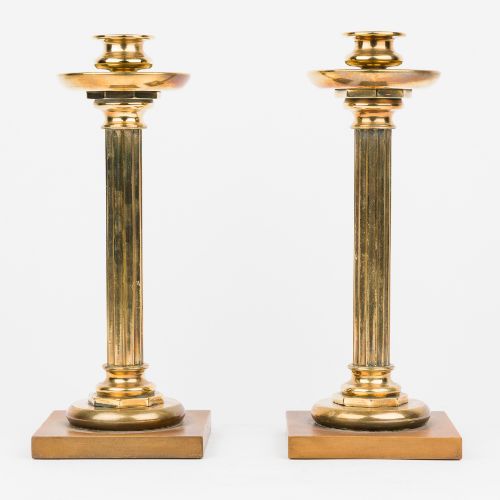
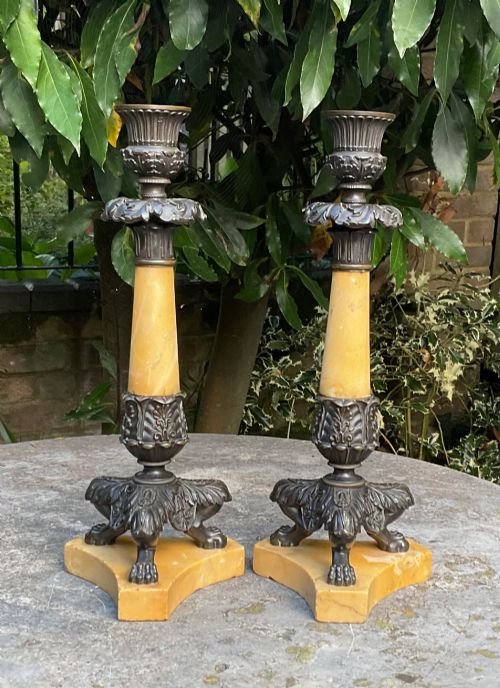
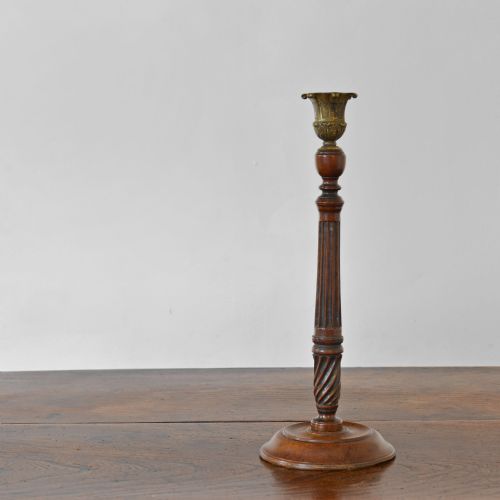
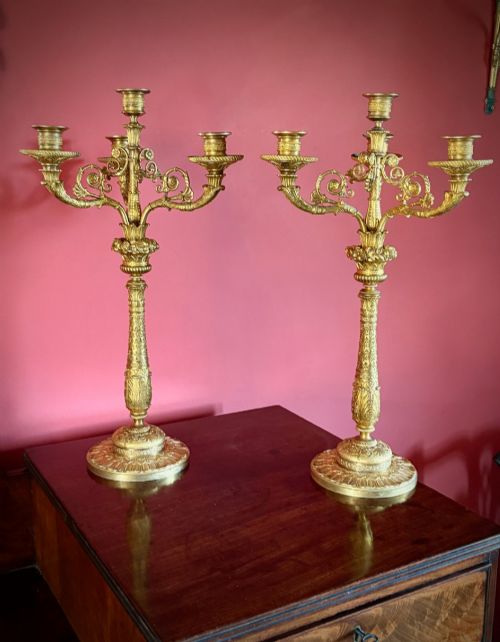
These antique mantelpiece candle holders bring warmth and polished metal to a room, catching the light as they sit upon a fireplace surround.
Antique Mantelpiece Candle Holders
When you search for antique mantelpiece candle holders, you encounter a range of forms designed to sit on a chimney piece, including paired candlesticks, branching candelabra, and crystal-hung mantel lustres. These pieces originate from the nineteenth century, with Regency, Victorian, and later periods well represented in the current selection.
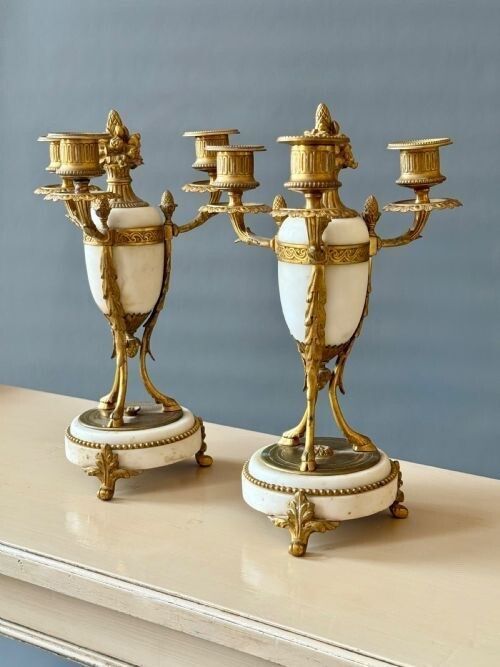
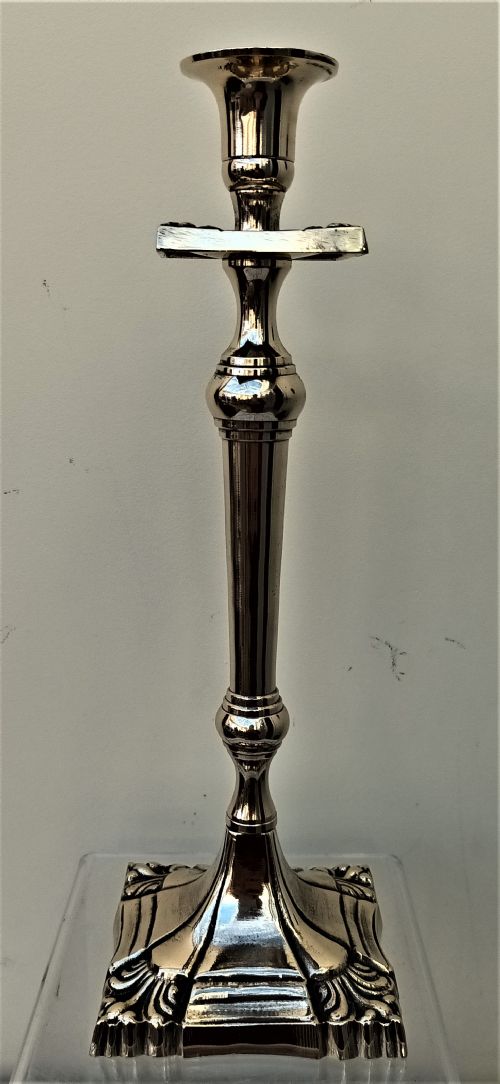
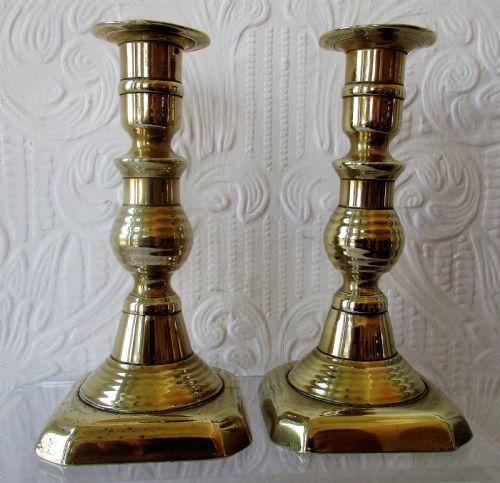
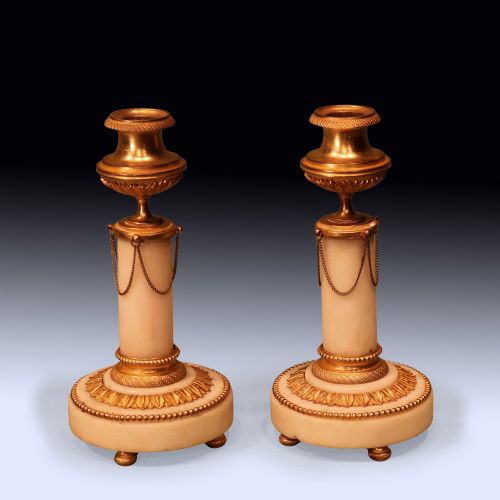
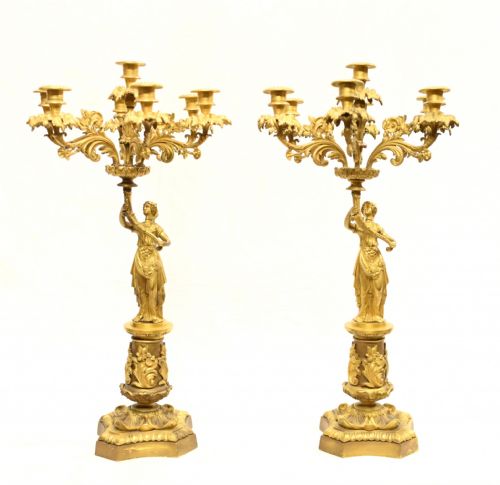
The objects take many shapes, from slender brass columns and cast bronze figures to multi-branch ormolu designs mounted on white marble or onyx bases. French and English workshops dominate the selection, offering styles that span from simple Georgian brass to elaborate Louis XVI and French Rococo Revival models.
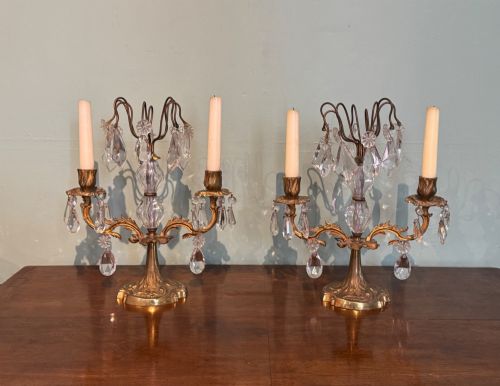
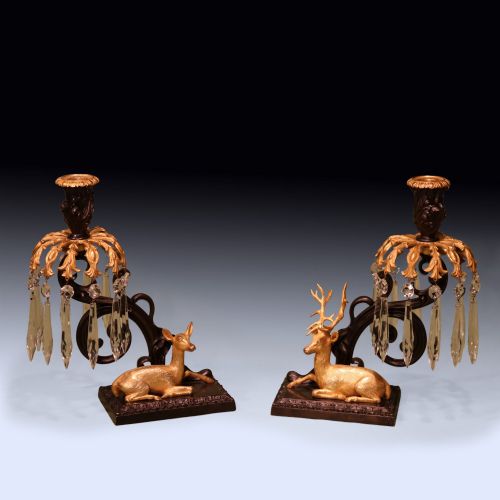
Pairs form the majority of what you find, often incorporating decorative elements such as stags, griffins, cherubs, or soldiers. Alongside standard candlesticks, you will see specialised forms like lustres adorned with cut glass or crystal pendants designed to catch the flicker of the flame.
Materials and construction methods
Metalworking defines these pieces, with brass, bronze, and copper cast and chased to create crisp surface detail. Gilt bronze and ormolu provide a rich, gold-coloured finish applied to metal foundations through mercury gilding or electroplating.
Stonework and glass complement the metal components, utilising white marble, onyx, and coloured Bohemian overlay glass for bases and central stems. Cut glass and crystal form the hanging pendants on mantel lustres, secured to arms with metal pins or wire.
Materials recorded across the inventory include gilt bronze, ormolu, brass, marble, bronze, crystal, cut glass, and enamel.
Distinctions in quality and execution
The crispness of the casting marks the difference between standard production and superior work. Finer pieces display sharp chiselling on bronze and ormolu surfaces, where leaf motifs, figures, and scrollwork retain distinct edges rather than soft contours.
Material selection and integration also separate grades of work. Higher quality examples combine heavy cast metals with genuine white marble or onyx and include well-matched crystal or cut-glass drops rather than pressed glass substitutes.
Claude Clodion
The Antique Mantelpiece Candle Holders Glossary
- Ormolu
- Finely ground high-carat gold applied to a bronze base through a mercury amalgamation process, or later via electroplating. This technique gives the metal a warm, enduring golden finish.
- Mantel lustre
- A type of candle holder featuring hanging glass or crystal prisms called spears or drops. These pendants catch and refract the light of the candles.
- Regency
- A British design period spanning the early nineteenth century, known for classical motifs, bronze finishes, and architectural lines. Pieces from this era often incorporate animal forms like lions or griffins.
- Spelter
- A zinc alloy used as a less expensive alternative to bronze for sculptural figures. It is frequently painted or bronze-finished to imitate more costly metals.
Antique Mantelpiece Candle Holders: Frequently Asked Questions
How do mantel lustres differ from standard candle holders?
Mantel lustres incorporate a ring of hanging crystal or cut-glass prisms suspended around the candle cup. When the candles are lit, the glass pendants refract the light and create a sparkling effect.
Standard candle holders rely solely on the polished metal or glass body of the piece to reflect the flame without the addition of hanging drops.
Which materials were most commonly used for these pieces?
Brass and bronze form the structural foundation for many nineteenth-century examples. Ormolu and gilt bronze provide a golden surface finish on French and English models.
Marble, onyx, and glass also appear frequently, serving as heavy supportive bases or as decorative bodies paired with metal mounts.
How can I identify pieces from the Regency period?
Regency items often feature classical architectural elements, such as columns or patinated bronze mounts combined with gilt details. Motif choices frequently include mythological creatures, lions, and griffins.
These pieces date to the early nineteenth century and possess a restrained, neoclassical geometry compared to later Victorian exuberance.