
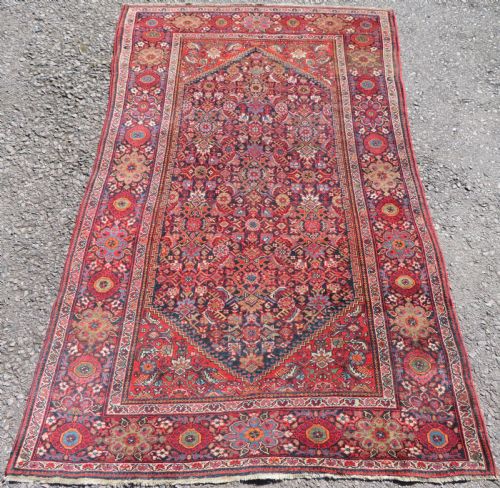


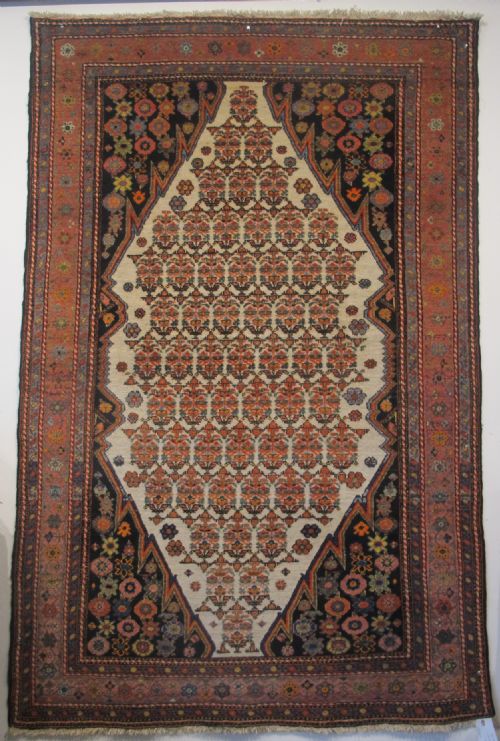

Antique Malayer Rug Red
These antique malayer rug red examples are Persian village and tribal floor coverings defined by rich red grounds and distinct regional patterns.
Antique Malayer Rug Red
When you search for an antique malayer rug red, you encounter Persian village and tribal floor coverings originating from West Persia. These pieces span from the late nineteenth century through to the early decades of the twentieth century, appearing as smaller area rugs, carpets, and long runners.
The version most commonly met on this page is the standard village rug featuring traditional Persian motifs such as boteh, Herati patterns, and lattice designs. Such formats reflect the weaving traditions of local artisans working within the Malayer region during the periods recorded in the evidence.
How they were made
The pieces listed in the evidence are constructed using wool pile on a cotton foundation, combining durable natural materials typical of Persian village production. Artisans knotted the wool by hand onto cotton warp and weft threads to create sturdy floor coverings designed for daily use.
Weavers utilised traditional techniques associated with Persian tribal and village workshops, incorporating regional designs like the boteh bird or mother and child boteh motifs into the textile structure.
Listings span production dates from eighteen ninety to nineteen thirty, featuring wool and cotton materials across Persian village styles.
What varies in quality
Quality in these textiles depends on the fineness of the knotting and the precision of the village design execution, distinguishing standard village pieces from finer workshop examples. The clarity of the red ground and the definition within motifs like the Herati or shield patterns alter the visual impact of each piece.
Proportion and scale also separate standard formats from exceptional long runners and carpets, where maintaining a balanced lattice or boteh layout across extended dimensions requires considerable skill from the weaver.
The Antique Malayer Rug Red Glossary
- Malayer
- A style of Persian village and tribal rug originating from the West Persia region. These pieces often feature geometric interpretations of classic Persian patterns.
- Boteh
- A stylised almond or paisley motif representing a floral spray or cypress tree. This design appears frequently in mother and child configurations or associated with bird patterns.
- Herati
- A repeating floral trellis pattern composed of a central rosette enclosed by leaves and flanked by fish-like motifs. It forms a dense overall field design in traditional Persian weaving.
- Runner
- A long, narrow carpet format suited for hallways and passages. The evidence includes narrow runners and very long pairs alongside standard area rugs.
- Foundation
- The underlying structure of a rug, consisting of warp and weft threads. In these listings, cotton serves as this foundational support for the wool pile.
Antique Malayer Rug Red: Frequently Asked Questions
What is an antique malayer rug red?
An antique malayer rug red is a hand-knotted Persian floor covering originating from West Persia, typically produced between eighteen ninety and nineteen thirty. These textiles feature wool pile on cotton foundations with traditional village designs.
They showcase distinct regional patterns such as boteh, Herati, and lattice layouts set against a dominant red ground colour.
Where were these rugs made?
These rugs were made in the Malayer region of West Persia by village and tribal weavers. The production reflects local traditions rather than large city workshop practises.
Craftsmen and women utilised materials available in the area to create durable village rugs and long runners for domestic use.
How do I identify a Malayer rug?
Identification relies on recognising typical Persian village designs such as the boteh, Herati motifs, and Afshar style shield elements. The combination of wool pile and cotton foundations points towards this West Persian origin.
Stylistic markers and period characteristics from the late nineteenth and early twentieth centuries help distinguish them from other regional types.
How should I live with an antique rug?
Living with an antique rug involves placing it in low to moderate traffic areas to preserve the wool pile and cotton foundation. Regular gentle cleaning and appropriate underlays help protect the textile from excessive wear.
Such pieces bring traditional Persian character and warmth to interior spaces through their historic red grounds and village patterns.