



Geometric Persian Wool Carpet
A geometric persian wool carpet brings heavy village texture and tribal pattern straight to the floor.
Geometric Persian Wool Carpet
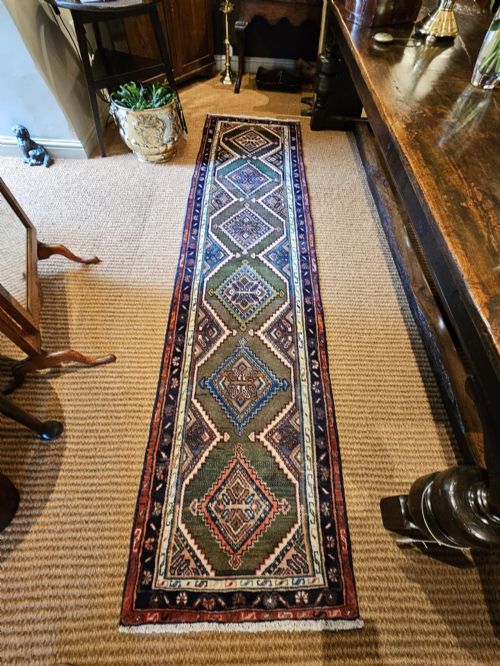
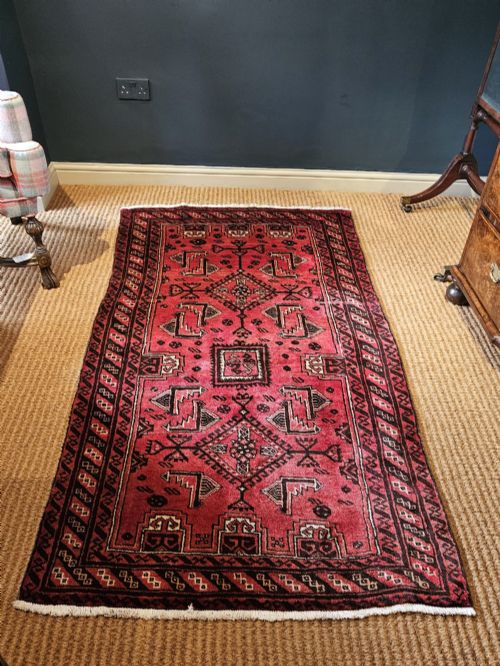
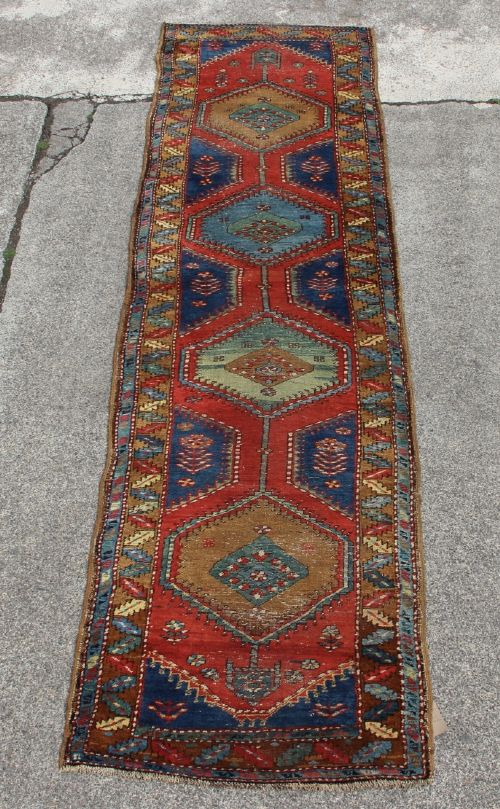
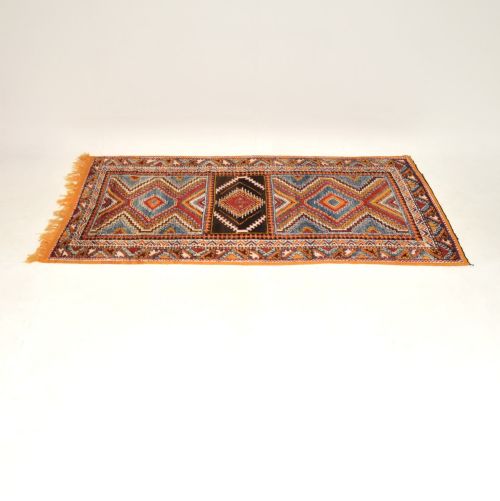
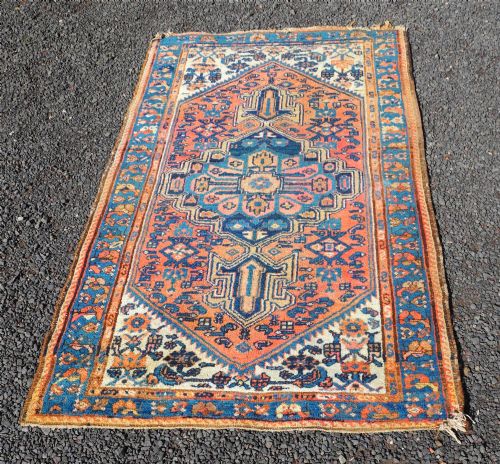
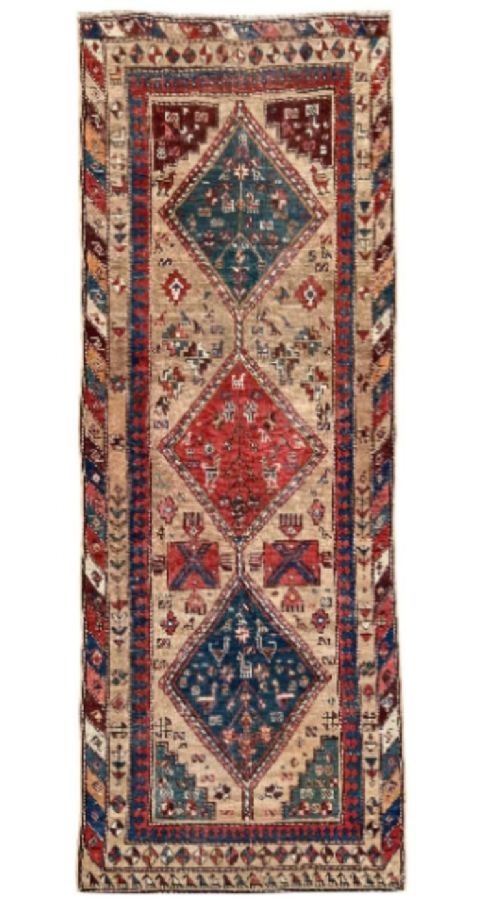
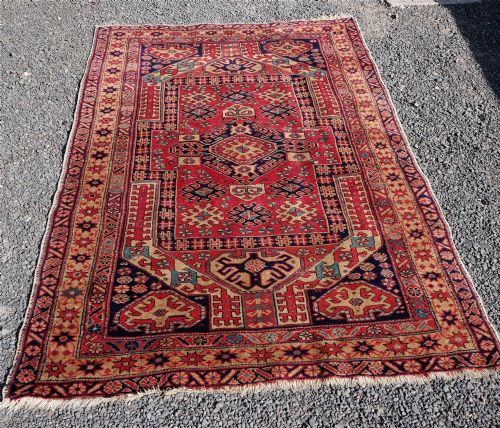
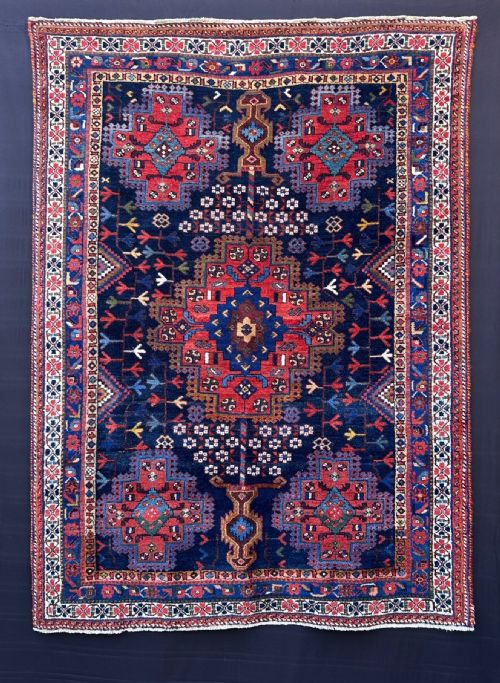
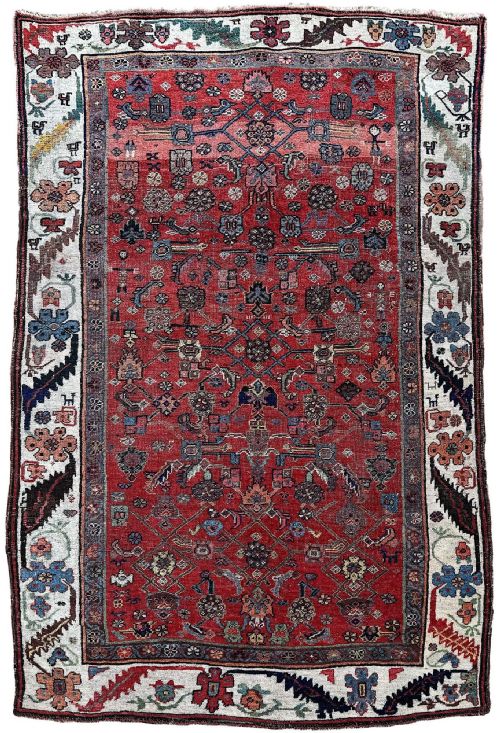
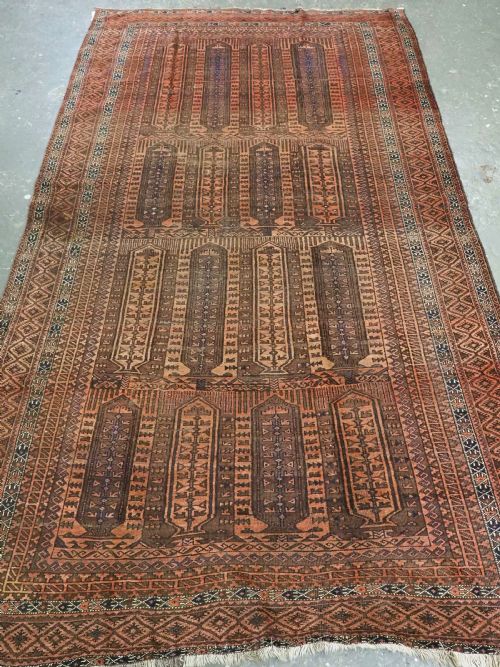
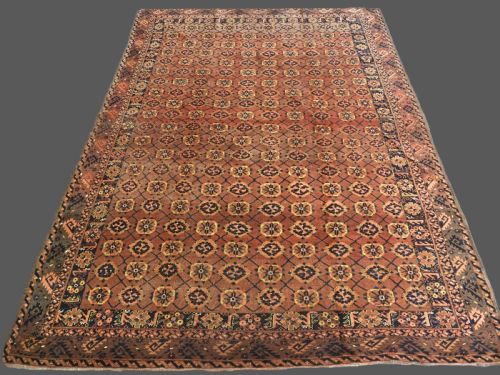
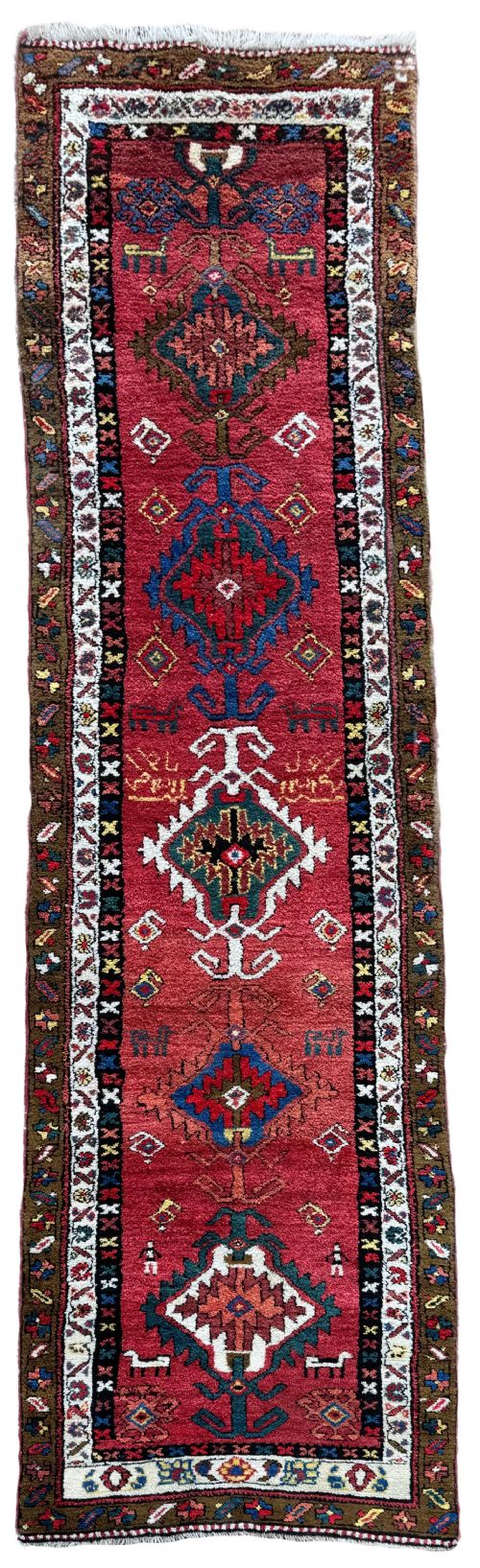
A geometric persian wool carpet delivers heavy village texture and tribal design straight to the floor, drawing from nineteenth-century and early twentieth-century traditions. Buyers seeking a geometric persian wool carpet will find runners, large carpets, and village rugs spanning the 1880s to the 1960s. The selection relies heavily on pieces originating from Heriz, Hamadan, and Kurdish or Baluch tribal regions.
Village weavers and tribal makers produced these formats using hand-knotted techniques rather than industrial looms. The forms vary from long narrow hallways to broad room-sized carpets and square cushions. Regional patterns range from large central medallions in Heriz pieces to repeat lattices and tribal guls in Baluch and Afghan work.
Materials and construction
Makers constructed these textiles predominantly using wool and cotton foundations paired with pure wool pile. Many pieces incorporate hand-spun wool and natural dyes to achieve deep red, olive green, and sky blue colourways. Camel hair also appears in the pile of specific village weaves.
The hand-knotting process secures the wool pile to the cotton or wool warp and weft threads. This traditional technique creates a dense, hard-wearing fabric designed for daily floor use.
Some nineteenth-century nomadic weavers hid small intentional wool colour errors in their carpets to ward off the evil eye.
Assessing quality
Quality rests on the precision of the hand-knotting and the integrity of the natural dyes used in the wool pile. Tighter knot counts provide crisper definition to the geometric medallions and lattice patterns across the surface.
The choice of materials also divides the range, with hand-spun wool and camel hair offering superior tactile depth compared to standard commercial wool. Secondary foundations of sturdy cotton or wool determine how flat and straight the runner or carpet rests on the floor.
The Geometric Persian Wool Carpet Glossary
- Wool
- The primary animal fibre sheared from sheep, forming the soft and durable pile of these carpets. It takes natural dye exceptionally well and withstands heavy foot traffic.
- Natural Dyes
- Colourants derived from plant, insect, and mineral sources before the widespread adoption of synthetic alternatives. They produce rich, variable tones that mellow gracefully over decades.
- Runner
- A long, narrow carpet format specifically proportioned for hallways, corridors, and stairs. These pieces typically measure three or four times longer than they are wide.
- Gul
- A repeating medallion or octagonal motif frequently found in tribal weaving traditions, particularly among Baluch and Turkmen groups. Each design often signifies a specific clan or lineage.
- Medallion
- A large central ornament placed in the field of the carpet, anchoring the surrounding geometric composition. Heriz carpets frequently employ a bold angular version of this form.
Geometric Persian Wool Carpet: Frequently Asked Questions
How do I clean a wool carpet?
Vacuum gently using a suction-only attachment without a rotating brush roll to protect the hand-knotted pile. Professional specialist cleaning is recommended for deep washing to preserve the natural wool fibres.
Avoid using chemical spot treatments or soaking the foundation with water. Blot liquid spills immediately with a clean, dry white cloth from the outer edge inward.
What is a tribal rug?
Tribal rugs are woven by nomadic or village groups working outside formal urban manufactories. They rely on memory, local heritage, and regional motifs rather than pre-drawn paper cartoons.
This freedom of production results in spontaneous geometric patterns, asymmetric details, and deeply personal colour combinations.
How do I date an antique carpet?
Dating relies on assessing the structural materials, the chemical or natural nature of the dyes, and the stylistic consistency of the motifs. Nineteenth-century pieces often display hand-spun wool and softer, oxidized colour palettes.
Later twentieth-century examples tend to feature more uniform yarns and brighter synthetic or transitional dye formulas.