


Antique Majolica Plaque
An antique majolica plaque brings rich polychrome tin-glazed earthenware and classical narrative scenes straight to your wall.
Antique Majolica Plaque
An antique majolica plaque represents a tradition of tin-glazed earthenware and ceramic wall art spanning the eighteenth, nineteenth, and early twentieth centuries. When you search for an antique majolica plaque, you encounter substantial chargers, decorative platters, and pictorial wall pieces shaped by diverse regional movements.
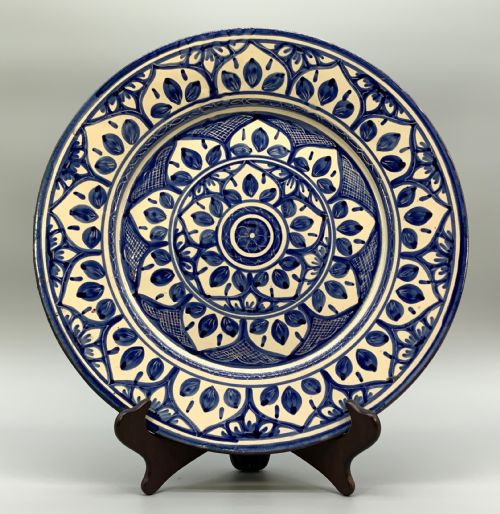
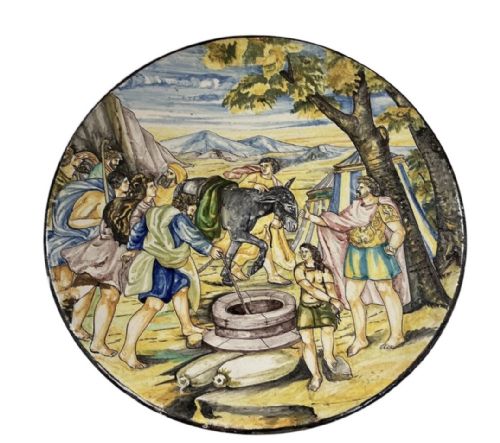
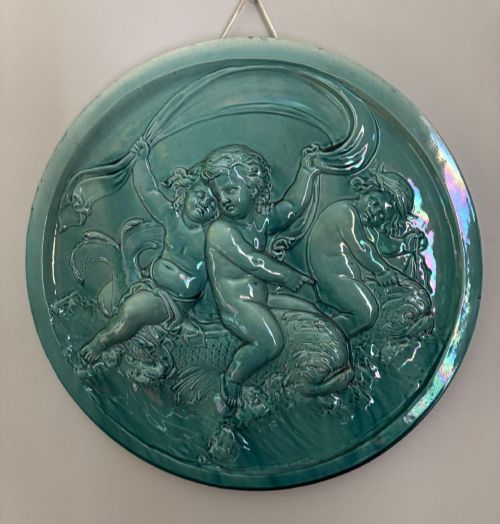
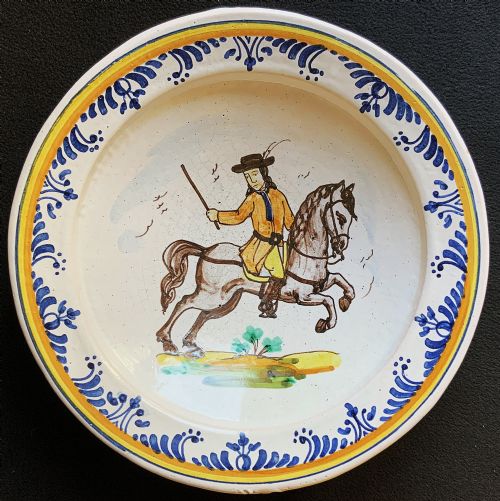
The pieces on this page lean heavily towards nineteenth-century Italian works, including Urbino style chargers and Pesaro school istoriato scenes depicting classical historical subjects. Alongside these Italian examples, you find French Art Nouveau plaques, Moorish Revival charger plates, and eighteenth-century Spanish faience.
Forms range from large decorative wall plaques and devotional Madonna and child panels to mirror-back cabinets inset with majolica ceramic panels. Each item functions primarily as wall art or a decorative charger designed to catch the eye with vivid glaze work.
How they were made
Maker's workshops shape these pieces from earthenware clay, coating the body in an opaque white tin glaze that serves as a smooth canvas for painted pigments. Artisans apply mineral pigments directly onto the unfired or absorbent tin glaze, capturing intricate polychrome details before the final firing.
Techniques vary from the fluid brushwork of Spanish faience and Dutch-influenced continental delft to the dense historical narratives of Italian istoriato painting. Specialised potteries like Bassano and individual makers utilise these traditional ceramic methods to achieve deep colour saturation and lustrous glazed surfaces.
Several plaques double as functional furniture by hiding bright majolica panels inside wooden mirror-back cabinets.
What varies in quality
Quality rests upon the ambition of the painted design and the sureness of the hand behind the brush, particularly in figurative istoriato scenes and devotional panels. Fine examples display crisp control over polychrome pigments and tin glaze without muddying or running during the kiln firing.
The weight of artistic ambition distinguishes standard decorative plates from major signed plaques by recorded makers. A strong piece demonstrates confident composition, whether handling classical historical narratives, botanical subjects like birds and sunflowers, or complex Renaissance and Moorish revival ornamentation.
Clement Messier·C Ravier·Bassano Pottery
The Antique Majolica Plaque Glossary
- Majolica
- A type of earthenware pottery decorated with opaque tin glaze and colourful metallic pigments. It encompasses Italian maiolica and related European tin-glazed wares.
- Tin-Glazed Earthenware
- Pottery fired with a lead glaze made opaque by the addition of tin oxide. This white surface provides the ideal ground for painted decoration.
- Istoriato
- A style of ceramic decoration featuring narrative scenes painted across the entire surface. These pictorial compositions frequently draw upon classical history and mythology.
- Charger
- A large decorative plate or platter intended primarily for display on a wall or sideboard rather than for dining use.
- Faience
- Tin-glazed earthenware originating in France, Spain, and other parts of Europe. It shares technical roots with Italian maiolica and Dutch delftware.
Antique Majolica Plaque: Frequently Asked Questions
How do I hang a heavy plaque safely?
Large chargers and ceramic plaques require robust wall fixtures designed to support substantial earthenware weight without placing undue stress on the rim or glaze.
Utilise adjustable wire-free metal display hangers or custom wooden brackets that grip the footring or underside securely.
What is the difference between majolica and faience?
Majolica traditionally refers to Italian tin-glazed earthenware, particularly Renaissance styles and later revivals, while faience describes similar tin-glazed pottery produced in France, Spain, and other European centres.
Both employ an opaque white tin glaze and vibrant pigments, though regional painting traditions and clay bodies vary between workshops.
How do I clean an antique tin-glazed plaque?
Dust ceramic plaques gently with a dry, soft cloth or a clean artist's brush to keep the tin-glazed surface free of particle buildup.
Avoid liquid cleaners, chemical sprays, or immersion in water, as old earthenware and reactive surface pigments can suffer damage from moisture.
Can I date a plaque by its glaze?
Glaze characteristics offer strong clues to a piece's period, as eighteenth-century Spanish delft and nineteenth-century Italian revival pieces display distinct pigment saturation and surface crackle.
Early works often show softer, thicker tin glazes, while later nineteenth and twentieth-century pieces can exhibit tighter crackle patterns and brighter modern mineral colours.