





Relief Cherub Wall Plaque
A relief cherub wall plaque brings carved timber and glazed ceramic putti into a room, offering the sculptural weight of centuries past.
Relief Cherub Wall Plaque
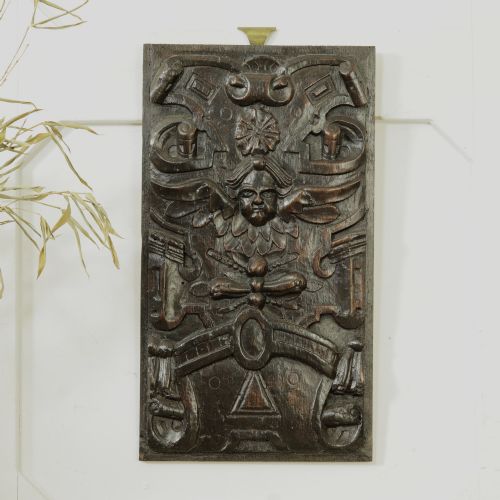
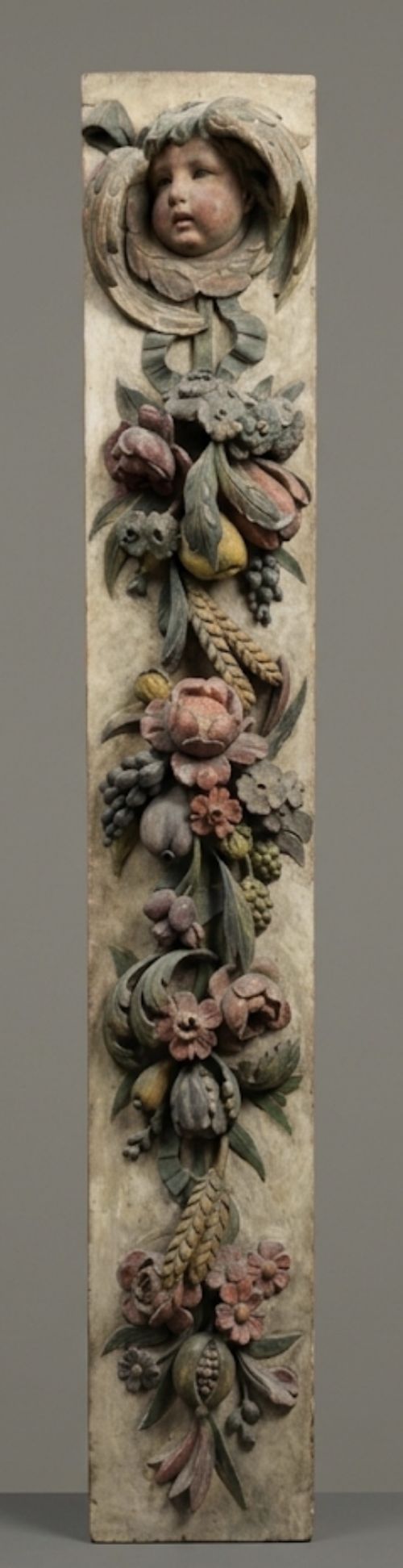
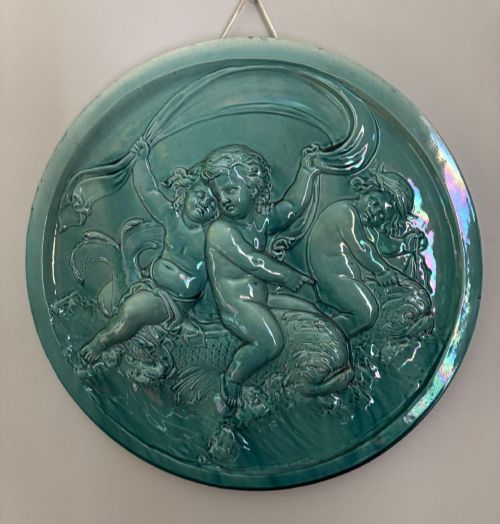
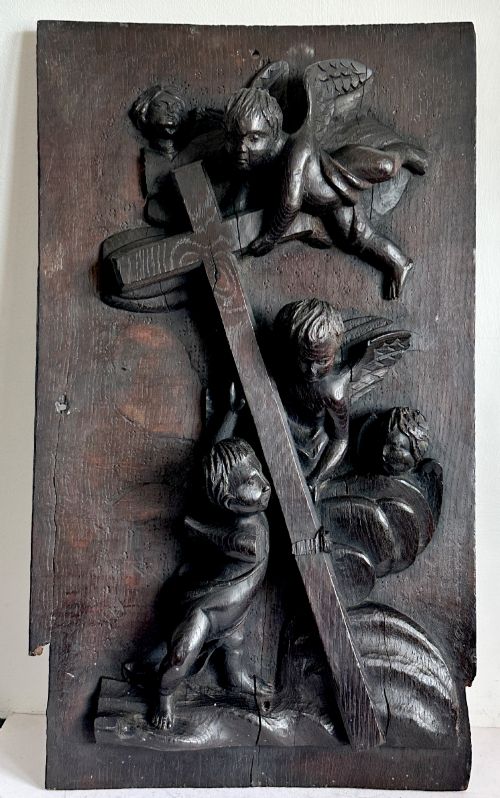
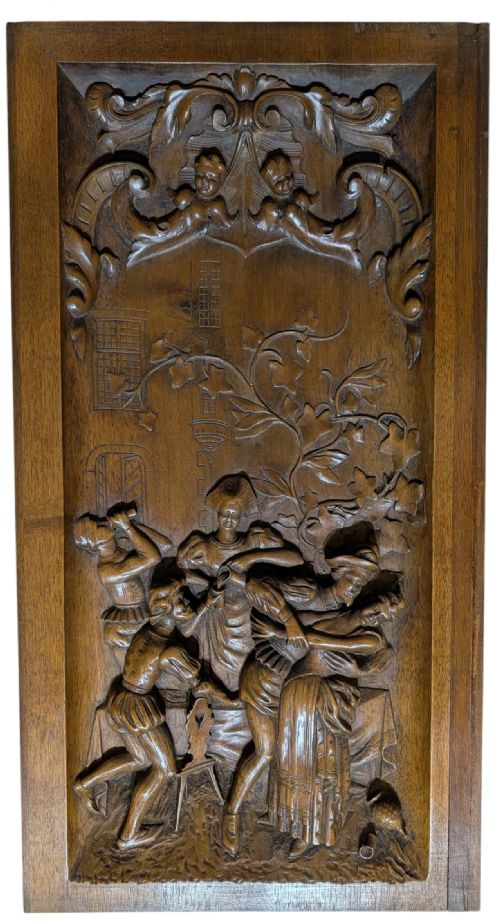
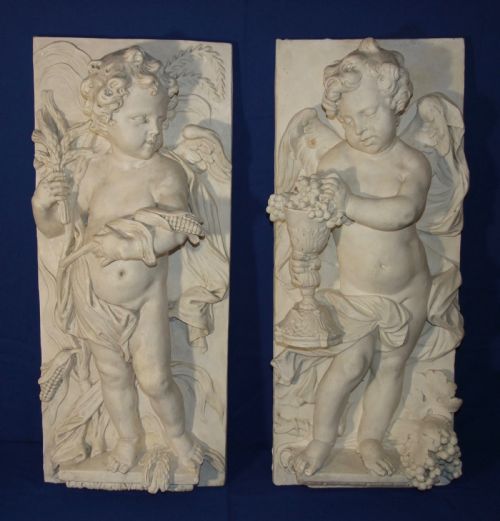
A relief cherub wall plaque covers carved wooden panels, glazed ceramic devotional pieces and plaster friezes depicting winged putti. Buyers searching this phrase encounter formats ranging from seventeenth-century oak carvings to Edwardian turquoise plaques and Victorian copper wall art.
The version most commonly met on this page is the carved timber panel, frequently originating in the seventeenth or eighteenth century and displaying deep relief work. Alongside these wood carvings, collectors find earthenware, gesso, slate, and leathermaché architectural decorations.
Makers and workshops across Britain and continental Europe shaped these architectural salvage pieces and wall reliefs during periods spanning the Renaissance Revival, Baroque, and Arts and Crafts movements.
How they were made
Wood pieces rely on hand-carved oak and timber, frequently shaped into high-relief panels displaying acanthus leaves alongside putti and cherubs. Artisans employed gesso and polychrome paint layers to finish wooden surfaces, adding colour and texture.
Ceramic and earthenware examples utilise glazes and pate sur pate techniques, while alternative materials include cast plaster, copper, and leathermaché. These varied methods produce everything from turquoise Arts and Crafts tiles to heavy architectural wall friezes.
Several pieces feature children playing with goats or dogs, proving that seventeenth-century cherubs shared their afternoons with farm animals.
What varies in quality
Quality rests on the depth of the carving and the crispness of the relief work, where confident hand-cut details distinguish superior panels from simpler production pieces. The preservation of original polychrome paint, glaze, or surface finishes also determines the standing of a plaque.
The integrity of the material itself, whether aged oak, slate, or earthenware, dictates the durability and visual impact of the wall hanging. Finer examples retain their structural harmony within their original architectural or framed context.
The Relief Cherub Wall Plaque Glossary
- Relief
- Sculpture technique where figures project from a flat background. High relief means the forms stand significantly out from the plane.
- Putto
- A figure of a small chubby boy, frequently winged, common in Renaissance and Baroque art. These are the cherubs seen on many wall plaques.
- Polychrome
- Painted or decorated in several colours. This finish appears on older wooden panels and ceramic pieces.
- Gesso
- A plaster mixture used as a base for painting or relief moulding on wood. It provides a smooth surface for detailed decoration.
- Pate sur pate
- A ceramic decorating method where design details are built up in layers of liquid clay. This technique creates a cameo-like relief effect.
Relief Cherub Wall Plaque: Frequently Asked Questions
How were these wall plaques originally used?
Many of these pieces served as architectural elements, built directly into wood-panelled rooms, church interiors, or grand mantelpieces.
Others functioned as standalone devotional items or decorative wall art within domestic spaces.
How do I hang a heavy wooden relief plaque safely?
Heavy timber and plaster pieces require secure wall fixings screwed directly into studs or masonry rather than standard picture hooks.
Checking the weight distribution and back framing ensures the plaque rests safely against the wall without straining the historic material.
How can I tell a seventeenth-century panel from later revival work?
Seventeenth-century panels typically show hand-tool marks, natural timber shrinkage, and wear patterns consistent with centuries of age.
Revival pieces from later centuries often display different surface treatments, machine-cut elements, or stylistic clues tied to nineteenth-century design movements.
How do I care for wooden and ceramic wall plaques?
Wooden plaques benefit from stable room humidity and gentle dusting with a dry cloth, avoiding harsh cleaning products that strip old finishes.
Ceramic and glazed pieces require careful handling to prevent chipping along the raised edges of the relief.