



Turquoise Wall Art
Turquoise wall art brings vibrant colour to a room through distinctive glazed ceramics, warm metals and period paintings.
Turquoise Wall Art
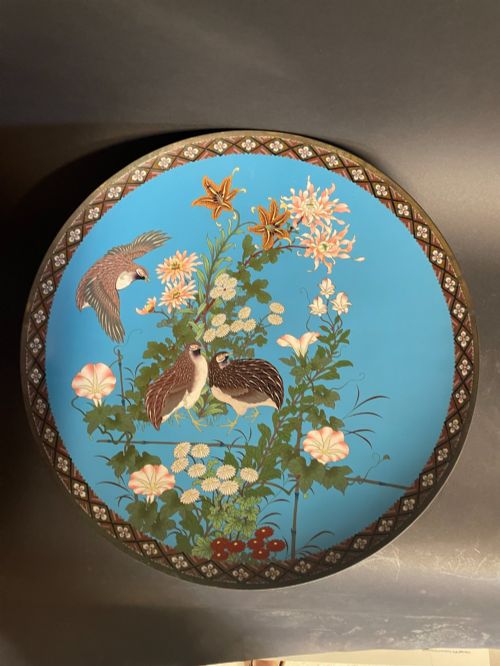
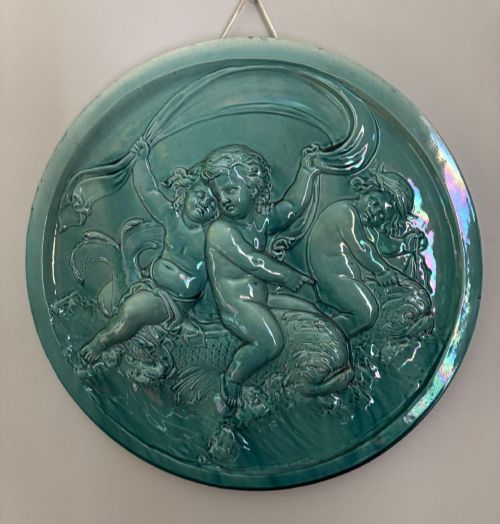
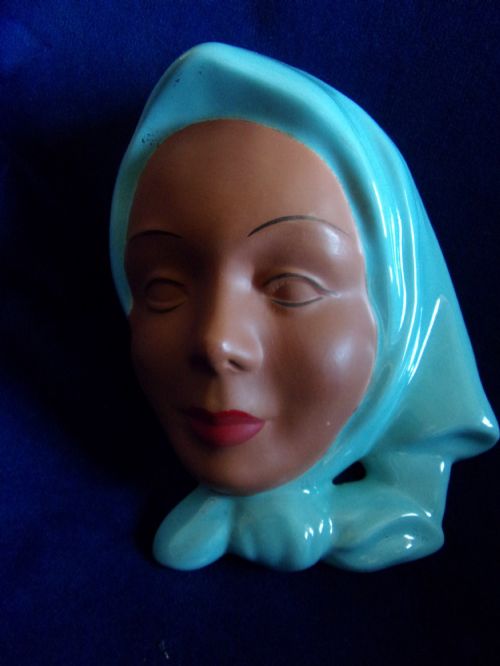
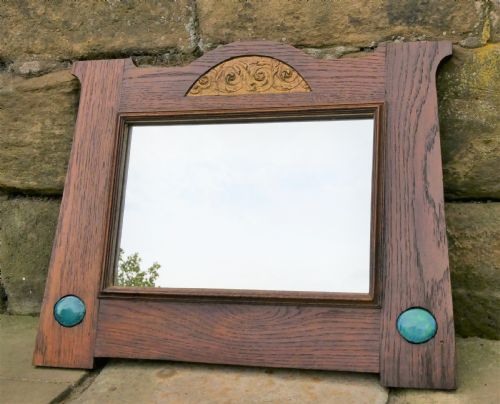
Turquoise wall art encompasses diverse decorative objects designed for hanging, spanning periods from the late nineteenth century through the mid twentieth century. Buyers seeking this category encounter an array of forms, including wall plaques, mirrors, decorative chargers, and oil paintings.
The selection ranges from Japanese cloisonne dishes and French earthenware tiles to Arts and Crafts copper mirrors and twentieth century abstract paintings. Pieces often display characteristic turquoise tones through ceramic glazes, enamel work, or oil pigments.
Examples from the Edwardian era and the Arts and Crafts movement appear alongside Art Deco pieces and later modernist works. Each object reflects the distinct aesthetic priorities of its period, whether through organic relief motifs or bold abstract gestures.
Materials and Construction
Makers utilised ceramic, earthenware, and glass alongside base metals such as copper and brass to achieve rich surface textures and deep turquoise colouration. Glazes and enamel were applied to metal bases or ceramic bodies and fired to create durable, lustrous finishes.
Periods represented include the Edwardian era, Meiji period, Arts and Crafts movement, and Art Deco.
Assessing Quality
Quality rests upon the precision of execution, from the clarity of cloisonne wirework and the evenness of ceramic glazes to the brushwork in painted canvases. Superior pieces demonstrate deliberate control over materials, creating harmonious compositions and durable physical structures.
The sophistication of the design and the integrity of the period materials distinguish finer examples. Maker attribution and the preservation of original surfaces further influence the standing of an individual piece.
Clement Messier·Reginald Robert Tomlinson·Rowland Fade·Negretti and Zambra
The Turquoise Wall Art Glossary
- Cloisonne
- Enamelling technique where thin metal wires form compartments to hold coloured glass paste before firing. This method creates detailed patterns bounded by fine metallic outlines.
- Cabochon
- Polished gemstone or ceramic piece cut with a convex, rounded surface rather than facets. These decorative elements frequently accent metalwork mounts on mirrors and plaques.
- Earthenware
- Porous pottery fired at lower temperatures, typically glazed to ensure a waterproof surface. It serves as the base for many decorative wall tiles and plaques.
- Relief
- Sculptural technique where figures or motifs project from a flat background surface. This approach adds physical depth and shadow to wall plaques.
- Charger
- Large ornamental plate intended for display on a wall or sideboard rather than for dining use. These items provide a broad canvas for decorative glazes and pictorial scenes.
Turquoise Wall Art: Frequently Asked Questions
How do I hang heavy ceramic wall plaques safely?
Heavy ceramic and metal pieces require secure fixings anchored directly into wall studs or masonry using appropriate wall plugs. Ensure the hanging wire or integrated bracket matches the weight of the object.
Avoid relying on standard picture hooks for dense earthenware or framed copper mirrors to prevent accidental falls.
Are these turquoise glazes original to the nineteenth century?
Nineteenth and early twentieth century ceramics utilised specific metallic oxides to produce distinct turquoise and blue-green tones. Chemical formulations of that era created characteristic crazing and depth within the glaze.
Examining the underside and mounting points often reveals age-appropriate wear confirming the period of manufacture.
How do I clean antique enamel and copper wall art?
Dust enamel surfaces and copper frames gently with a soft, dry cloth to prevent the accumulation of abrasive particles. Avoid chemical polishes or water on exposed metalwork and old glazes.
Professional conservation advice is recommended for pieces showing active tarnish or surface degradation.
What distinguishes Arts and Crafts mirrors from Art Deco pieces?
Arts and Crafts pieces frequently feature hand-hammered copper, exposed rivets, and organic cabochons reflecting a focus on artisan craftsmanship. Art Deco designs favour geometric symmetry, stylised motifs, and sleek industrial materials.
Comparing the decorative motifs and framing construction clarifies the stylistic origin of each item.