


Antique Majolica Dish
An antique majolica dish brings rich Victorian colour and heavy earthenware form to a table, offering relief from plain white porcelain.
Antique Majolica Dish
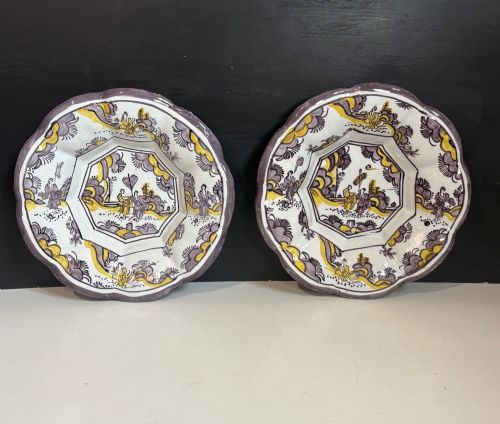
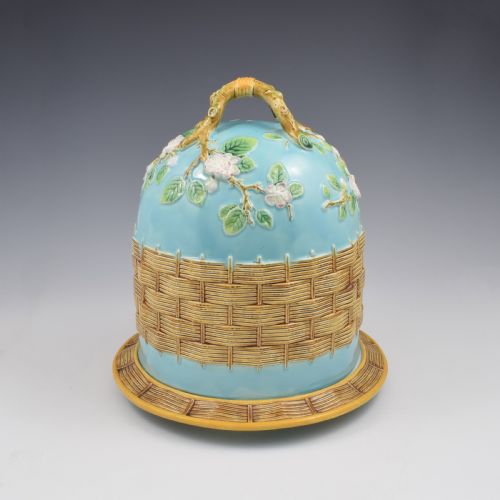
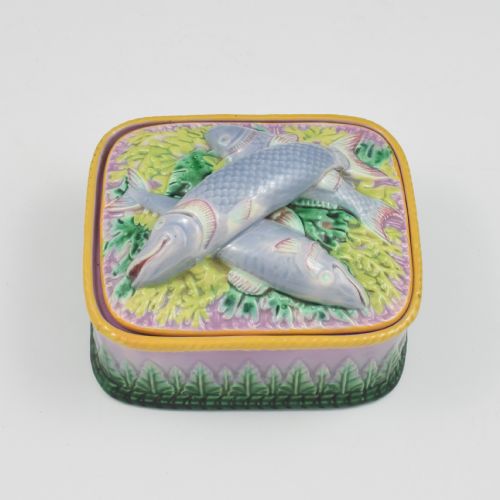
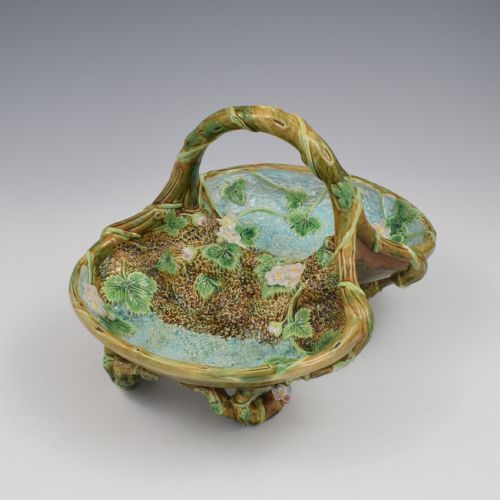
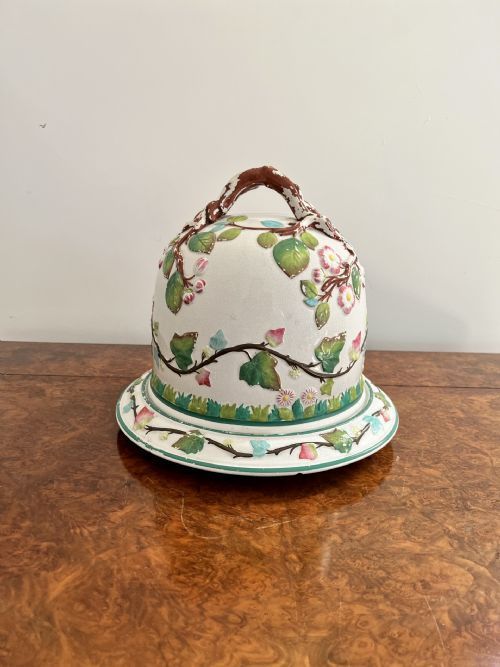
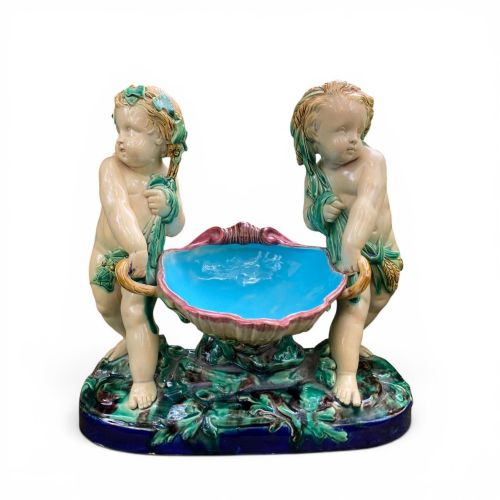
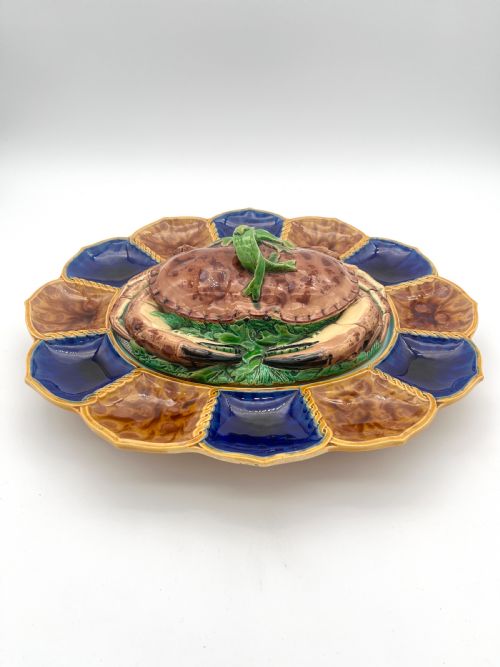
An antique majolica dish spans large cheese domes, sardine boxes, fruit baskets and chargers produced across the nineteenth and eighteenth centuries. English firms dominate the selection, alongside Italian, French, Austrian and Portuguese examples in styles ranging from Renaissance Revival to Victorian Naturalism.
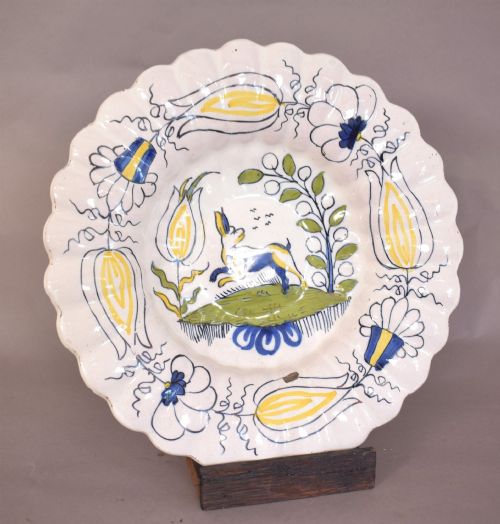
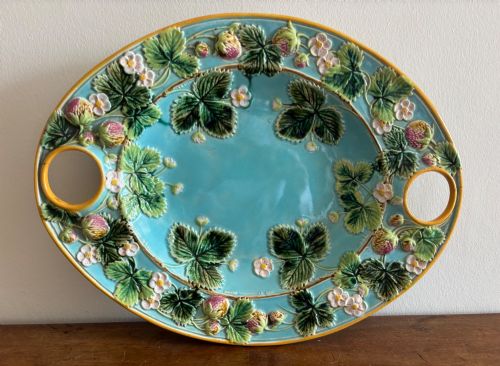
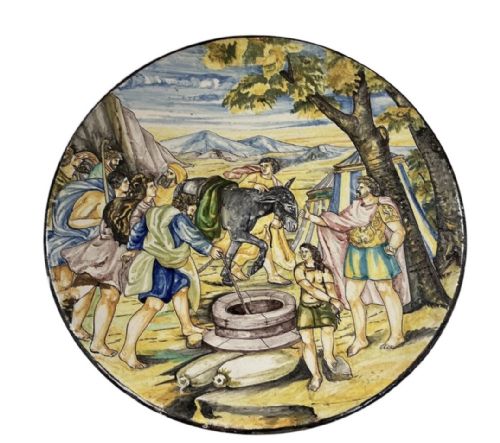
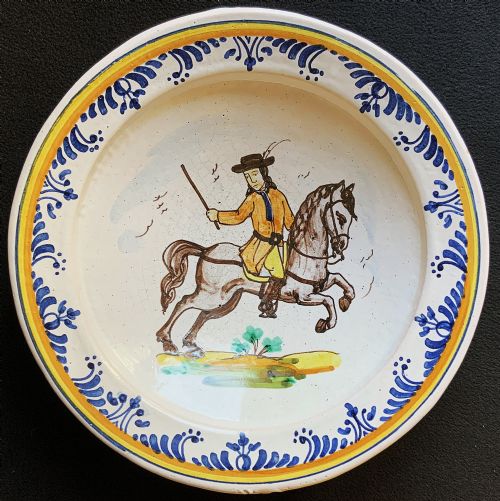
The nineteenth-century pieces frequently take naturalistic forms such as overlapping begonia leaves, apple blossom, strawberries or marine life. Earlier items lean towards tin-glazed earthenware and faience, showing polychrome painted decoration or classical historical scenes.
Materials and Technique
These items rely upon earthenware and terracotta bodies shaped into domestic vessels and decorative plates. Potters applied an opaque tin glaze or a translucent lead glaze mixed with metallic oxides to achieve the intense coloured surface.
The metallic oxides fuse during firing to create rich greens, purples, blues and yellows that pool across the moulded relief details. Firing techniques determine the depth of the glaze and the crispness of the modelled flora and fauna.
Listings feature earthenware bodies decorated with lead glazes and tin glazes across Victorian, Renaissance Revival and eighteenth-century styles.
Evaluating Execution
Quality rests upon the crispness of the modelling in high-relief pieces and the control of the coloured glaze running into the recessed details. Superior items maintain sharp botanical or figurative contours beneath thick, glossy layers of glaze.
The ambition of the form also separates standard production from exceptional works, distinguishing simple plates from elaborate centrepieces, figural tureens and multi-part cheese domes.
George Jones·Minton·Wedgwood·Thomas Forester and Sons·Jose Alvez Cunah
The Antique Majolica Dish Glossary
- Majolica glaze
- A lead-glazed earthenware covered with coloured metallic oxide glazes fired directly onto an opaque white tin enamel or raw body. This technique produces the vibrant palette characteristic of Victorian and Renaissance revival pottery.
- Tin-glazed earthenware
- Pottery coated with a white tin-oxide glaze that provides an opaque ground for painted decoration. It represents the primary precursor to later nineteenth-century polychrome wares.
- Faience
- European tin-glazed earthenware, particularly associated with French and Spanish traditions. The term covers decorative bowls, chargers and serving dishes produced from the eighteenth century onward.
- Comport
- A raised dish or bowl on a foot, used historically for serving fruit or sweetmeats at the table. Many nineteenth-century examples feature figural supports such as cherubs or putti.
- Istoriato
- A style of majolica decoration featuring painted historical, mythological or biblical scenes across the entire surface of a charger or dish. It draws inspiration from sixteenth-century Italian traditions.
Antique Majolica Dish: Frequently Asked Questions
What were majolica cheese domes used for?
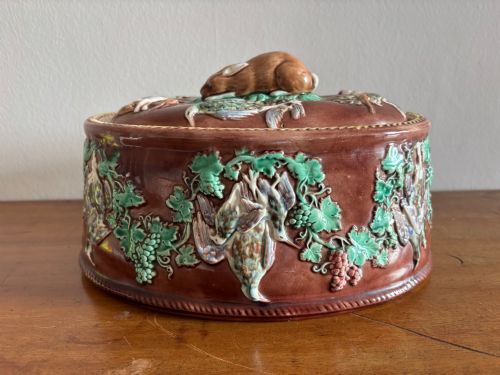
Victorian households utilised heavy ceramic cheese domes and stands to keep hard cheeses moist on the dining table. The tall covers trapped humidity while presenting elaborate botanical or animal ornamentation to guests.
These pieces combined practical food storage with sculptural table decoration, frequently featuring handles shaped like handles, animals or rustic handles.
How do I identify a Victorian majolica piece?
Victorian examples typically display dense earthenware bodies covered in brilliant lead glazes with high-relief naturalistic motifs. Look for botanical subjects like begonia leaves, strawberry plants or marine life rendered in intense greens, pinks and purples.
Many of these items bear registry marks or factory stamps from prominent English potteries active during the mid-to-late nineteenth century.
How should I display a majolica charger?
Chargers and large decorative plates work best displayed on sturdy wall hangers or dedicated plate stands that support their substantial earthenware weight. Their colourful glazes catch ambient light effectively when placed away from direct, harsh sunlight.
Due to their heavy construction, ensure any mounting hardware is securely anchored to support the dense ceramic body safely.