
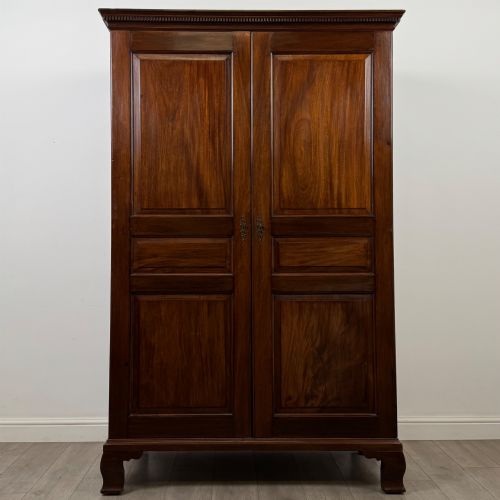
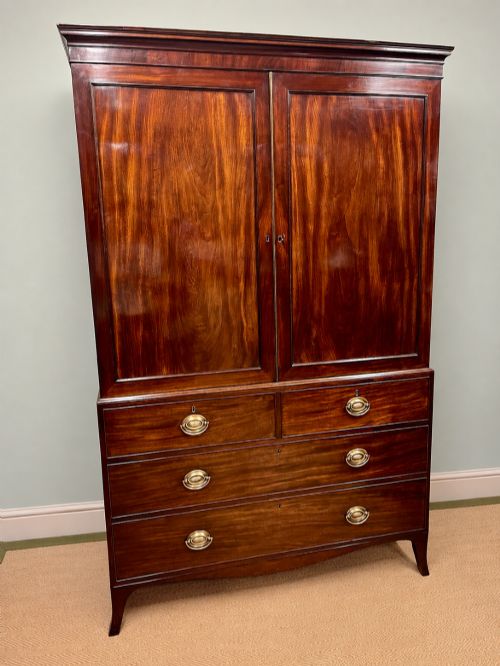
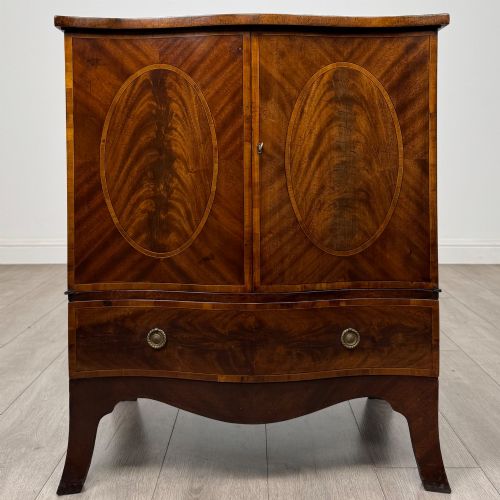
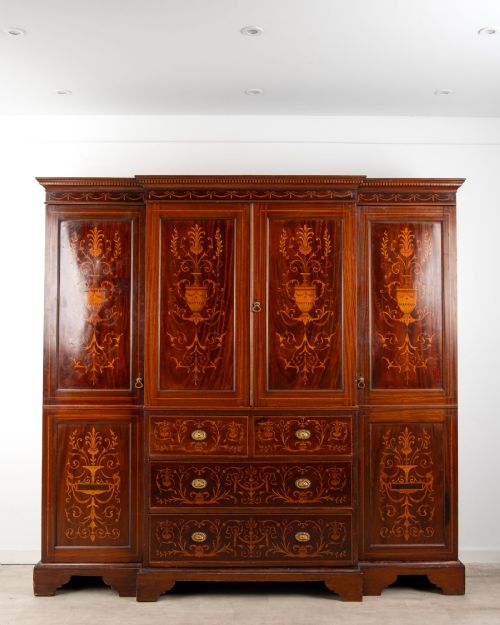
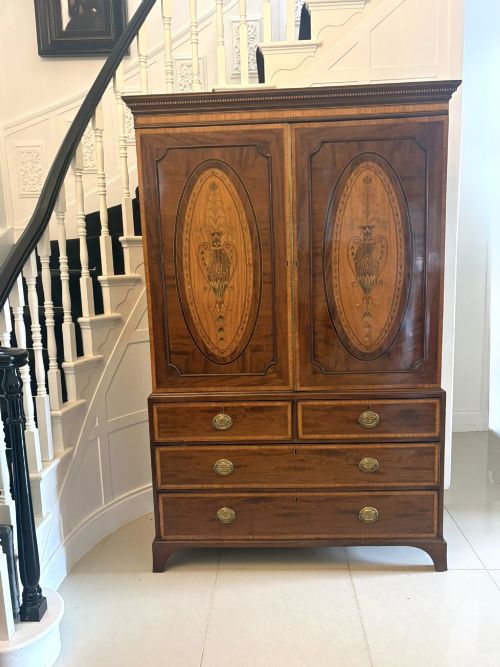
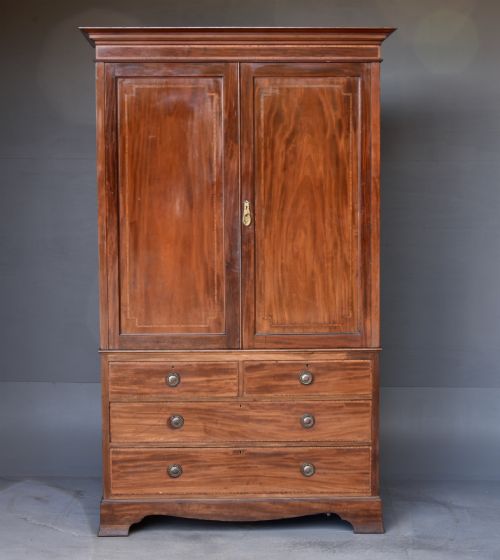
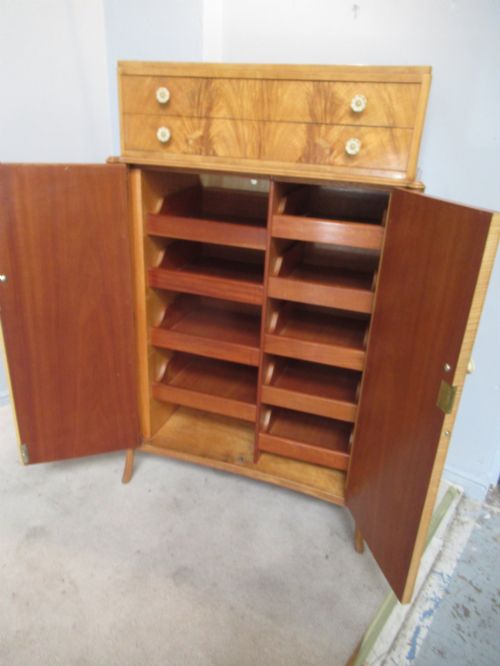
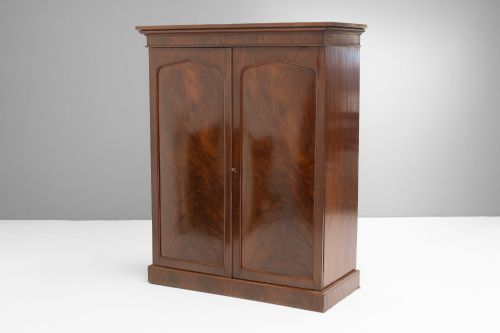
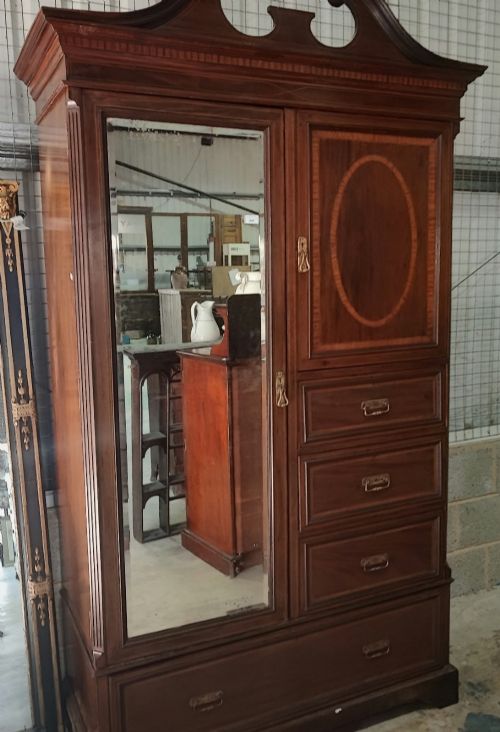
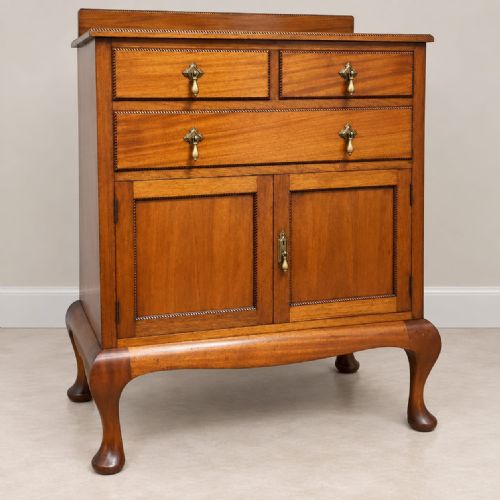
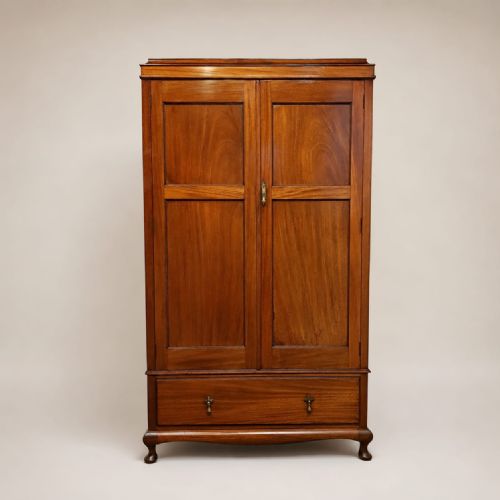
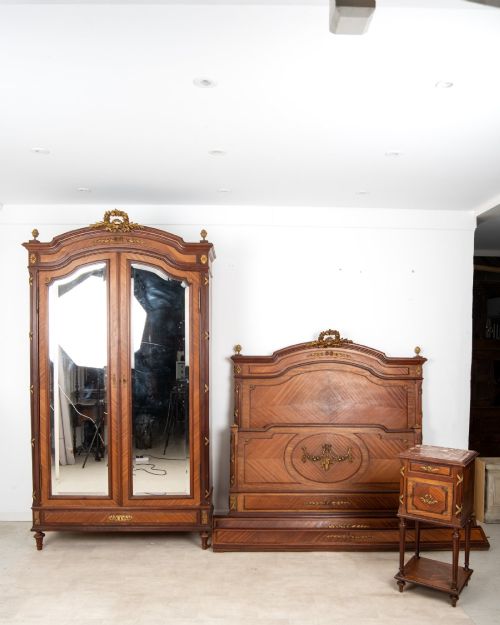
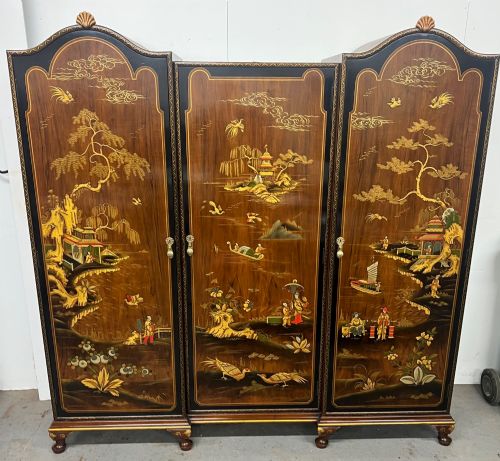
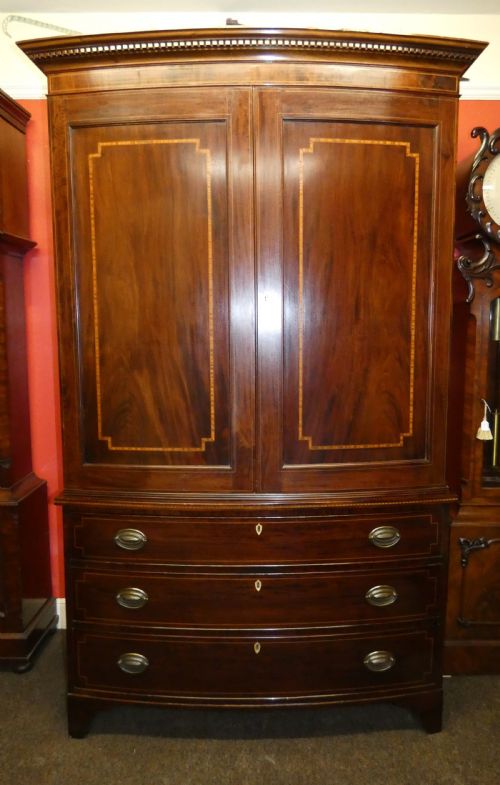
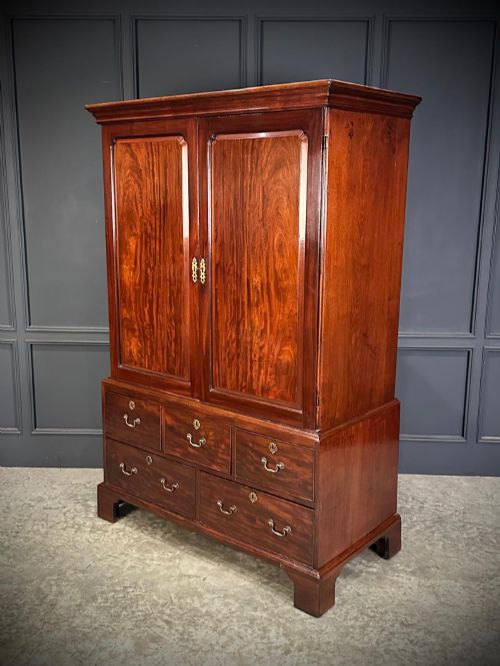
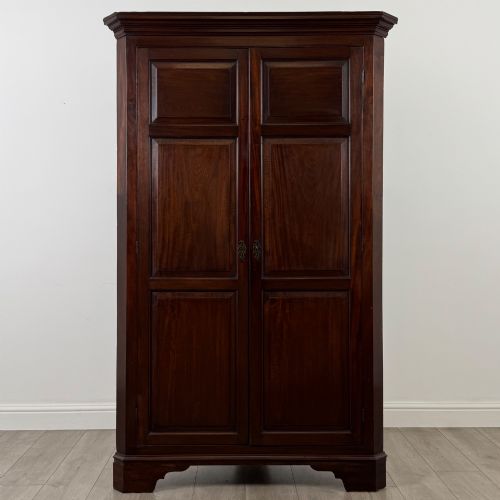
Antique Mahogany Wardrobe Cabinet
An antique mahogany wardrobe cabinet offers generous storage in timber of rich depth, bringing architectural presence and enduring craftsmanship to a bedroom.
Antique Mahogany Wardrobe Cabinet
When you search for an antique mahogany wardrobe cabinet, you encounter substantial storage furniture spanning the Georgian, Victorian and Edwardian eras. These pieces take various forms including linen presses, compactum wardrobes, tallboys and hanging cupboards constructed primarily during the eighteenth and nineteenth centuries.
The most common examples you meet on this page originate from the Georgian and Edwardian periods, featuring classic panelled doors, sliding trays or hanging space within. Makers adapted these cabinets to domestic needs, producing double wardrobes, bowfront linen presses and corner cupboards tailored for bedrooms and dressing rooms.
Earlier Georgian items often display architectural cornices and blind fretwork, whereas later Edwardian and Victorian versions incorporate satinwood inlay, glass panels or compact arrangements designed for modern interiors. Each piece reflects the prevailing style of its decade, ranging from strict George III proportion to revival aesthetics.
Materials and Construction
Cabinet makers utilised solid mahogany and flame mahogany veneer applied to secondary timbers such as oak, building carcases designed to withstand decades of domestic use. Timber selection governed the visual impact, with figured veneers and plum pudding mahogany chosen for primary display surfaces.
Decoration relied on contrasting inlays of satinwood, boxwood and rosewood crossbanding alongside hand-carved details and brass hardware. Craftsmen constructed interior linen presses with sliding trays and deep drawers, securing joints with traditional techniques that ensure structural integrity.
Early housekeepers stored lavender pouches inside linen press trays to keep freshly laundered sheets sweetly scented.
Distinguishing Quality
The distinction between standard utility storage and exceptional cabinet work lies in the choice of timber and the precision of decorative inlays. Superior examples exhibit tightly figured flame mahogany veneers matched symmetrically across doors and drawer fronts, demonstrating the maker's eye for pattern.
Structural refinement separates master furniture from mass production, visible in the careful hand-cut dovetails of internal drawers and the crisp execution of satinwood stringing or fretwork. High-quality pieces retain original brass fittings and functional sliding trays that operate smoothly within well-squared carcases.
maples & co·Edwards and Roberts·Druce & Co·Heals
The Antique Mahogany Wardrobe Cabinet Glossary
- Linen Press
- A tall storage cabinet featuring sliding internal trays enclosed by upper doors, placed above a chest of base drawers. Originally designed for storing household linen flat.
- Compactum
- A multi-functional fitted wardrobe designed to maximise storage efficiency by combining hanging space, drawers, shelves and sliding trays within a single cabinet. These units often date from the Victorian and Edwardian periods.
- Tallboy
- A tall chest of drawers standing upon another chest or base cabinet, providing vertical storage with a minimal floor footprint. They frequently incorporate a cupboard section at the top.
- Flame Mahogany
- A wood veneer cut from timber taken where branches join the main tree trunk, producing a distinctive flickering flame pattern. Cabinet makers reserved this highly decorative veneer for principal door and drawer fronts.
- Blind Fretwork
- Carved ornamentation applied to furniture mouldings so that the pattern appears pierced or flat against a solid background, characteristic of mid-eighteenth-century design.
- Crossbanding
- A decorative border of veneer laid around the perimeter of a panel or drawer front with the wood grain running perpendicular to the central surface. This technique frames the primary timber and adds visual contrast.
Antique Mahogany Wardrobe Cabinet: Frequently Asked Questions
What is an antique mahogany wardrobe cabinet?
An antique mahogany wardrobe cabinet is a large wooden storage piece built to hold clothing, linen or household goods. These items date primarily from the eighteenth and nineteenth centuries.
Craftsmen built them using solid mahogany and figured veneers, often incorporating internal sliding trays, hanging space and deep base drawers. Their designs range from formal Georgian linen presses to versatile Edwardian compactum wardrobes.
How do I use a linen press today?
A linen press serves as a practical storage unit for folded garments, knitwear, bed linens and towels within a modern bedroom. The sliding internal trays prevent clothes from developing deep creases.
Lower drawers accommodate bulkier items, while units with hanging space attached adapt easily to contemporary wardrobes. Their traditional proportions make them striking focal points in large rooms.
How can I tell Georgian from Edwardian pieces?
Georgian cabinets dating from the eighteenth century usually display architectural cornices, solid proportions and minimal inlay focused around stringing or brass escutcheons. Their construction emphasises clean lines and functional dignity.
Edwardian items from around nineteen hundred often feature lighter satinwood inlay, Sheraton revival motifs, and fitted interior compartments designed for contemporary convenience. They appear more decorative and occasionally lighter in colour than their earlier counterparts.
Will an antique wardrobe dismantle for transport?
Many large nineteenth-century wardrobes and linen presses feature modular construction designed to break down into a cornice, base, and two side sections for moving. This historical engineering allows the heavy mahogany carcase to pass through doorways.
Georgian and Victorian cabinets vary in construction, so it is necessary to check whether a specific piece disassembles before delivery. Professional transport ensures the structural joints remain protected.