
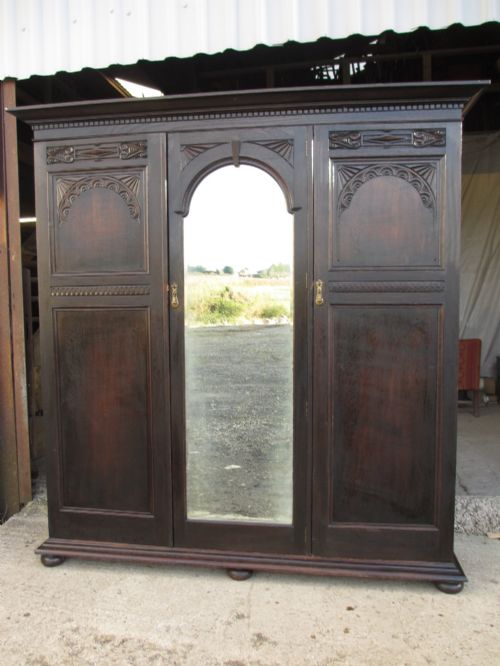
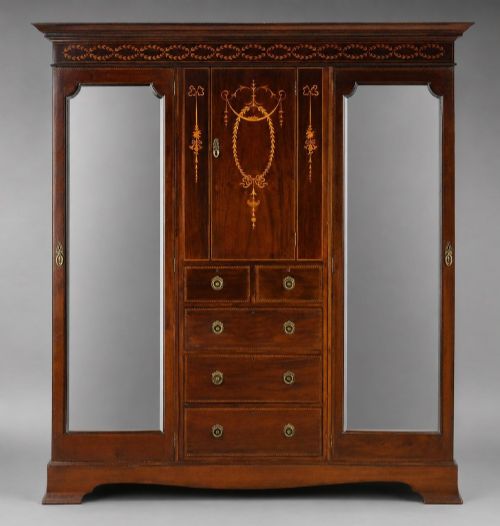
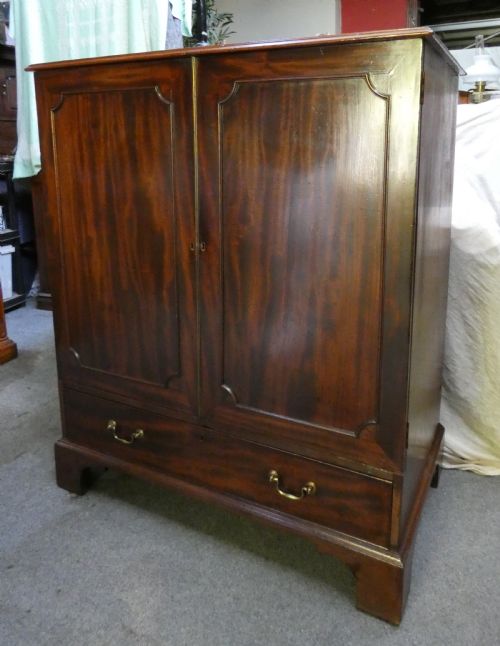
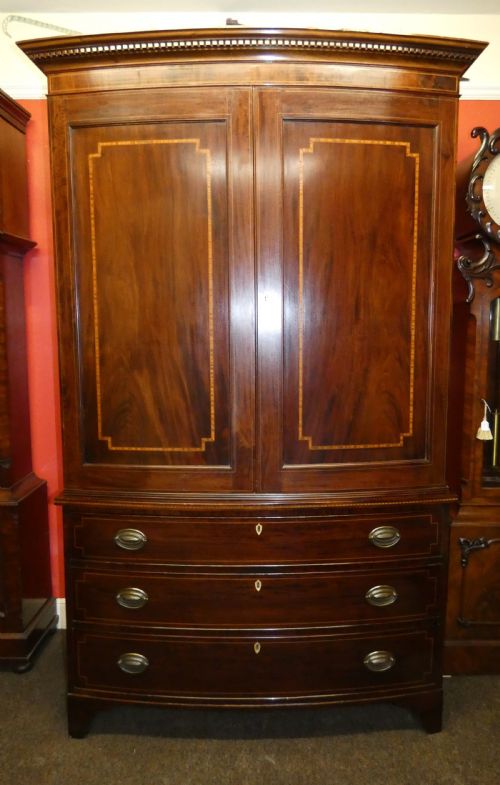
Dark Wood Clothes Press
A dark wood clothes press offers monumental storage and deep timber warmth, anchoring a room with centuries of cabinet-making heritage.
Dark Wood Clothes Press
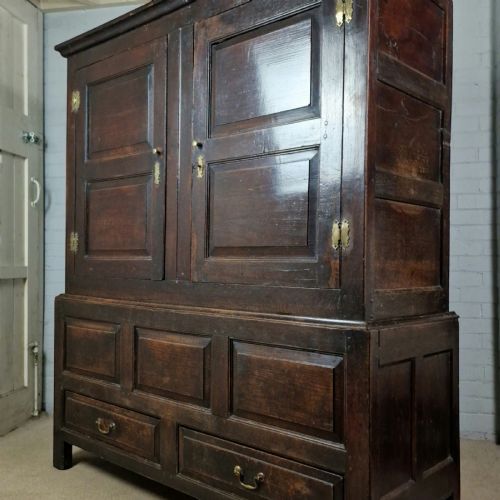
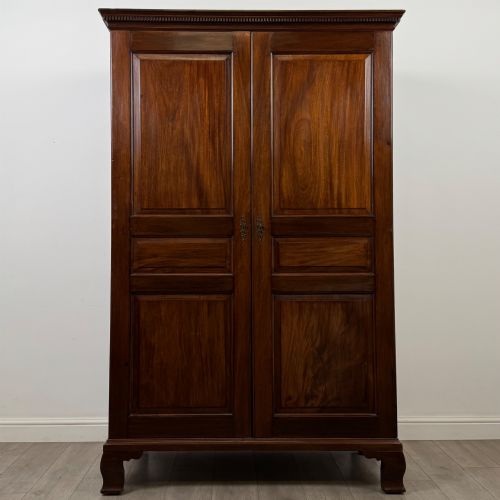
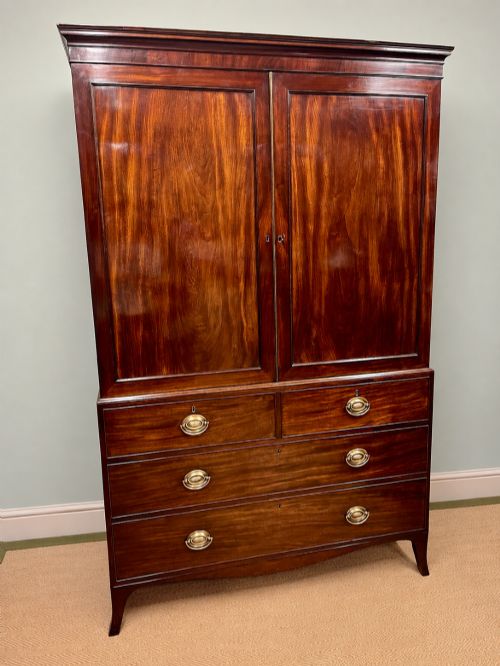
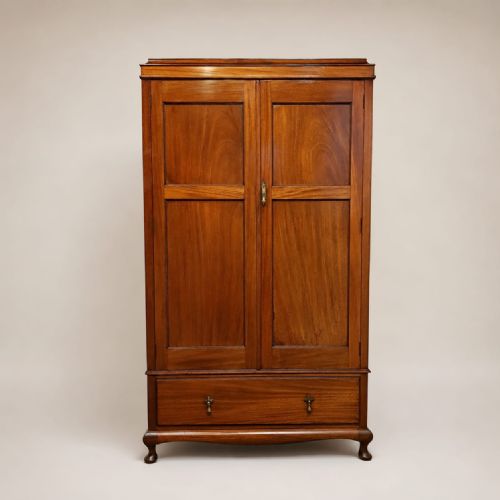
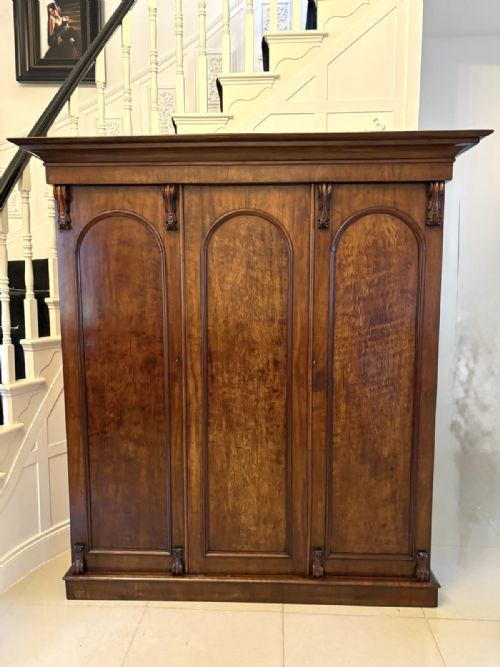
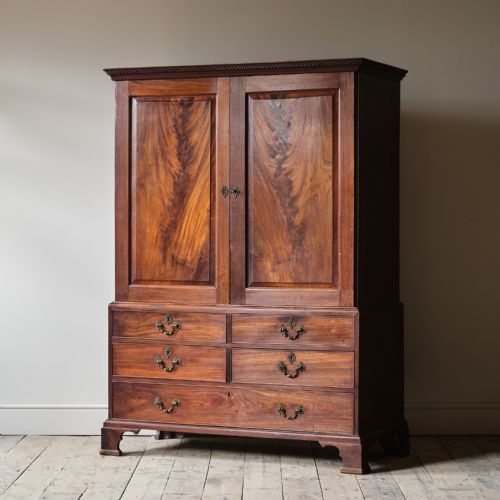
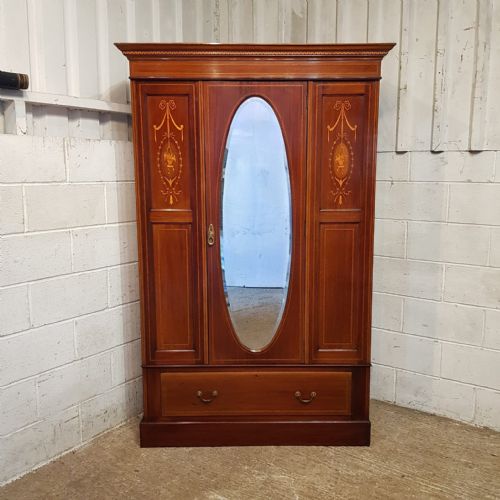
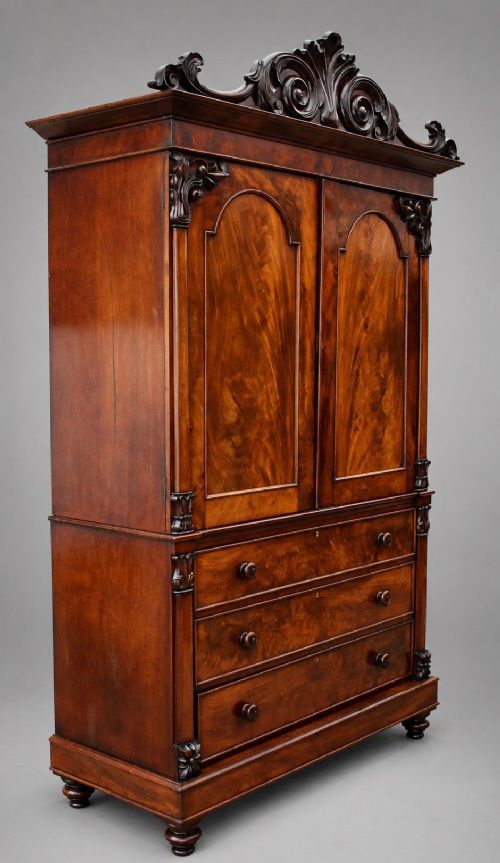
A dark wood clothes press provides substantial vertical storage, combining upper linen cupboards with lower drawers or hanging spaces. When you search for this phrase, you encounter grand case furniture spanning the Georgian, Victorian, and Edwardian eras.
Mahogany and oak dominate the forms on this page, appearing alongside rosewood and satinwood in styles ranging from early Georgian to Arts and Crafts. These architectural pieces served as the primary wardrobe and linen storage for large households before fitted closets existed.
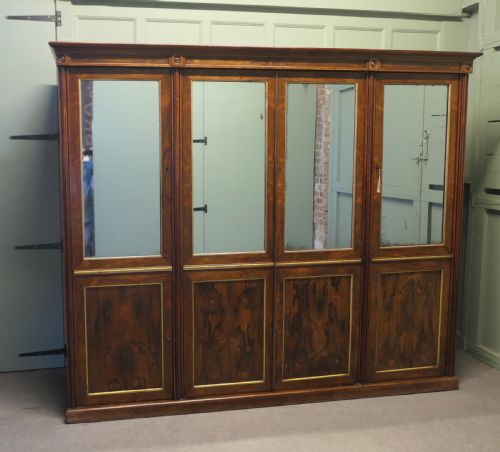
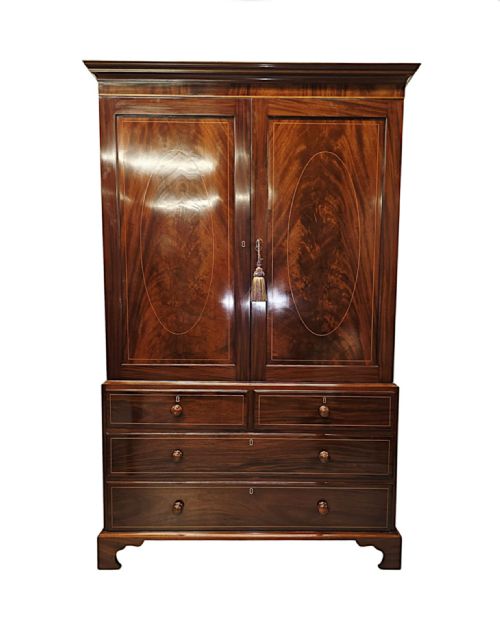
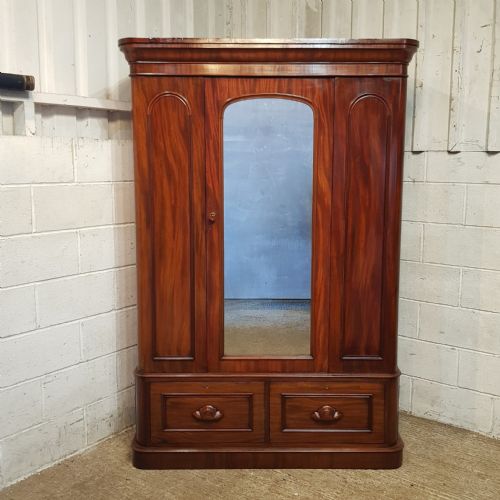
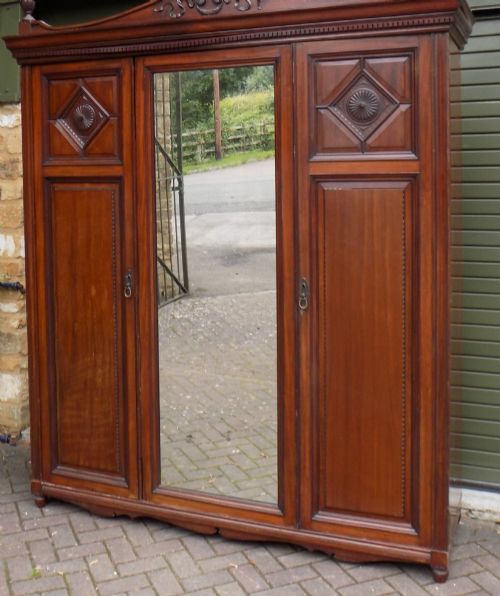
The most common formats on this page are two-door linen presses with sliding trays inside and breakfront triple wardrobes with mirrored doors. Buyers look to these substantial pieces to bring period character and generous storage capacity into modern bedrooms.
Materials and construction
Cabinet-makers constructed these pieces primarily using solid mahogany, oak, and rosewood, often selecting figured and flame veneers to create striking surface patterns. They framed large panelled doors and carcass bodies with traditional mortise and tenon joints to withstand decades of use.
Craftsmen enhanced the dark timbers using contrasting stringing, boxwood inlay, and rosewood crossbanding around drawer fronts and cornices. They fitted brass handles, escutcheons, and working locks to secure the heavy doors and internal linen slides.
Early linen presses preserved freshly laundered textiles from household soot while doubling as grand architectural statements in panelled bedrooms.
Judging the standard
Quality reveals itself in the selection of timber, particularly where cabinet-makers matched flame mahogany or rosewood veneers symmetrically across large panel surfaces. Superior examples display refined proportions, crisp carving, and hand-dovetailed drawer construction using solid secondary woods.
The interior fitments also distinguish finer presses, noting whether internal linen slides remain present and intact behind the upper doors. Heavy brass hardware, original bevelled mirror glass, and subtle marquetry inlay separate standard production from exceptional workshops.
Heals·Wylie Lochhead·Francis Brodie
The Dark Wood Clothes Press Glossary
- Linen Press
- A tall piece of furniture featuring upper doors that enclose sliding trays for folded textiles, placed above a base of drawers.
- Compactum
- A multi-functional wardrobe combining hanging space, linen drawers, and shelves within a single integrated cabinet.
- Flame Mahogany
- Timber cut from the fork of the mahogany tree, producing a distinctive rippled, flame-like pattern highly prized by Georgian and Victorian cabinet-makers.
- Crossbanding
- A decorative border of veneer laid with the grain running perpendicular to the surrounding wood, often seen framing drawer fronts.
- Breakfront
- A cabinet design where the central section projects forward from the flanking outer sections, creating architectural depth.
Dark Wood Clothes Press: Frequently Asked Questions
What is a dark wood clothes press?
A dark wood clothes press is a tall storage cabinet designed with upper shelving or sliding trays and lower drawers for garments.
Cabinet-makers built these pieces primarily in mahogany and oak during the Georgian and Victorian periods to organise household linens and clothing.
How do I date a clothes press?
Dating relies on architectural style, timber choice, and construction methods such as dovetailing on internal drawer boxes.
Georgian examples often feature bracket feet and modest cornices, whilst Victorian versions display heavier breakfront proportions and ornate moulding.
How were clothes presses used originally?
Households utilised these large pieces before fitted wardrobes existed to store freshly laundered flat linens on sliding internal trays.
The lower drawer section held bulky garments and folded clothing, keeping textiles protected from dust in grand bedrooms.
Can I fit standard hangers inside?
Some presses retain deep linen slides rather than hanging rails, though conversions are sometimes undertaken to suit modern clothing.
Checking the internal depth ensures the cabinet accommodates full-sized garments if the upper section is adapted for hanging.