

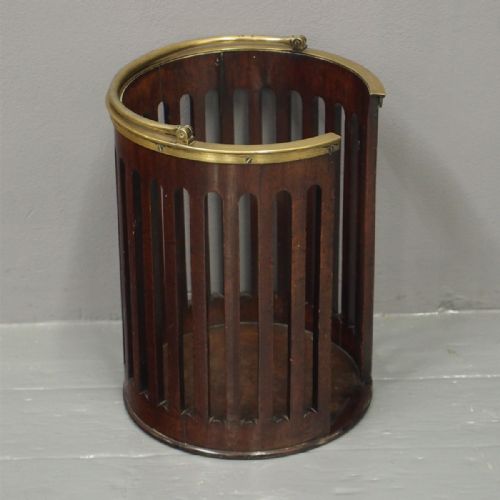


Antique Mahogany Pail
An antique mahogany pail is a robust timber container for wine, plates or fuel, prized for rich grain and brass bands.
Antique Mahogany Pail
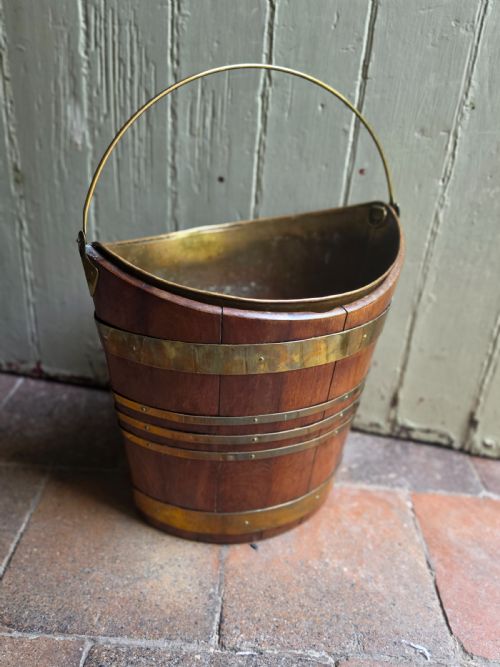
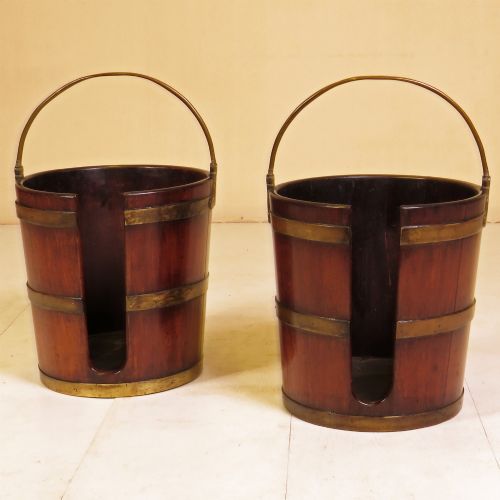
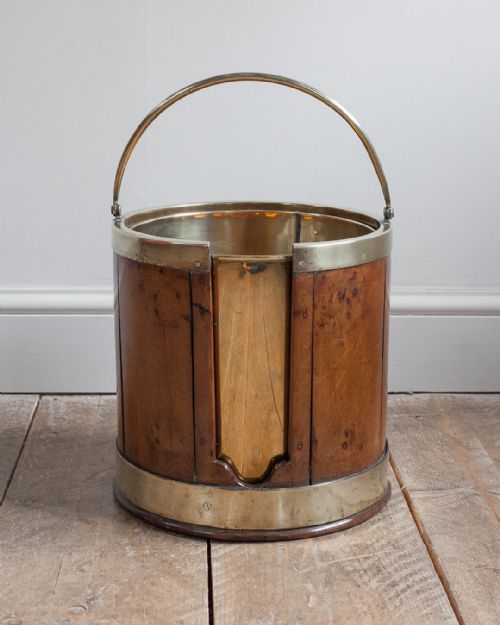
When you search for an antique mahogany pail, you encounter Georgian and Victorian vessels shaped for practical household service. The forms recorded here span plate buckets, wine coolers, oyster buckets, and fireplace buckets.
You are most likely to meet Georgian examples in this inventory, particularly pieces from the eighteenth century. These objects frequently display brass mountings and coopered construction.
The assortment includes oval wine coolers and tall cylindrical plate buckets designed to stand beside the dining table or hearth. Each piece demonstrates the utilitarian origins of these robust wooden containers.
How they were made
Craftsmen built these vessels using solid mahogany staves fitted closely together by skilled coopers. Metal bands of brass or iron were heated and hammered tightly around the timber circumference to hold the structure firm.
Many items incorporate zinc or metal linings designed to hold melting ice for wine cooling or to withstand the weight of heavy ceramic plates. Brass swing handles and side carrying rings were securely fastened with screws or rivets.
Antique Mahogany Pail Retail Price Guide 2026
Typical asking prices for mahogany pail among the pieces listed under this phrase on Sellingantiques today, from the lower quarter to the upper quarter. They describe what is for sale here now, not the wider market.
Some plate buckets feature internal divisions specifically curved to keep your best china from clinking too loudly while crossing the dining room floor.
What varies in quality
Quality rests upon the depth of the mahogany grain and the integrity of the original timber staves. Pieces retaining their matching brass hoops and fitted metal interiors command greater consideration from purists.
The refinement of the joinery and the presence of period brass swing handles distinguish superior examples from plain utility items. Condition is judged by the retention of deep surface patination rather than over-restored timber.
The Antique Mahogany Pail Glossary
- Coopering
- The craft of making wooden staved vessels bound by hoops. This method ensured watertight or heavy-load integrity for buckets and coolers.
- Plate bucket
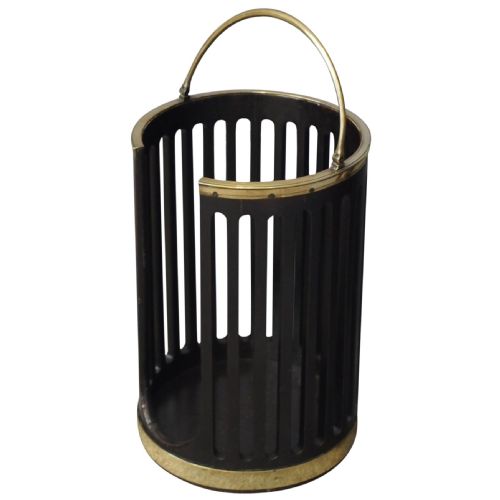
- A deep cylindrical container featuring a notched rim or vertical interior dividers. These items safely transported dining plates between the scullery and the table.
- Wine cooler
- A large staved vessel lined to hold ice and bottles during dining. These forms often feature oval shapes and robust brass carrying handles.
- Brass bound
- A description for wooden containers reinforced with exterior brass bands. These metal hoops provided structural strength and decorative contrast.
Antique Mahogany Pail: Frequently Asked Questions
What were antique mahogany pails used for?
These vessels served practical domestic roles in large dining rooms and hallways during the eighteenth and nineteenth centuries. They transported heavy ceramic plates, chilled wine bottles with ice, or held fireplace fuel.
Their robust construction allowed servants to carry heavy loads of silver, glass, or timber without straining the wooden staves. Over time, their utility evolved into decorative display pieces within period interiors.
How do I date a mahogany bucket?
Dating relies upon examining the timber grain, the style of the brass mountings, and the method of construction. Georgian examples often display rich, dark mahogany patination paired with hand-beaten brass hoops.
Victorian pieces may show machine-cut elements or different interior configurations. Comparing the joinery and hardware to documented examples from the eighteenth and nineteenth centuries provides chronological clarity.
How do I care for mahogany pails?
Keep wooden vessels away from direct heat sources and sudden temperature fluctuations to prevent the staves from splitting. Regular dusting and occasional application of appropriate wax maintain the finish.
Avoid exposing the interior linings to standing water if they are prone to corrosion. Gentle maintenance preserves the natural patination built up over centuries of use.
Are brass bands original?
Original brass bands show signs of age, including minor dents, patination, and hand-cut fixing screws. Replacement hoops often appear too bright and lack the integrated wear of the surrounding wood.
Inspect the seating of the metal against the timber staves to determine if the hardware has been disturbed or replaced during past repairs.