
Antique Mahogany Clothes Chest
An antique mahogany clothes chest offers substantial storage through periods ranging from Georgian craftsmanship to Victorian utilitarianism.
Antique Mahogany Clothes Chest
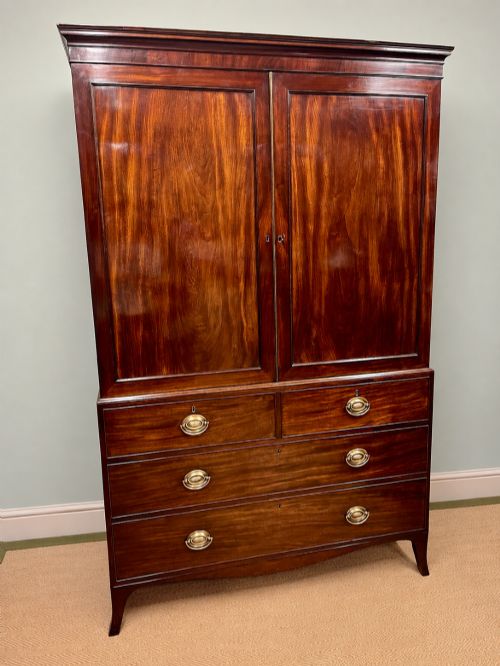
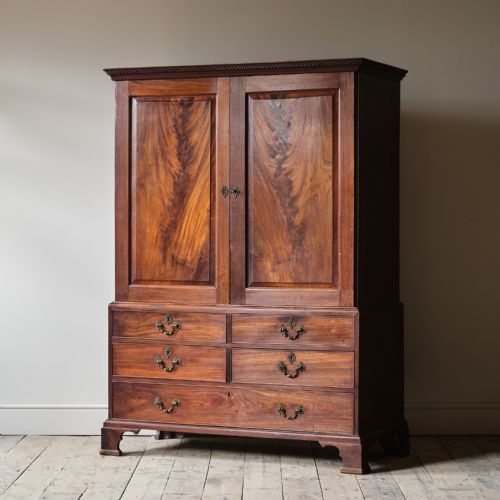
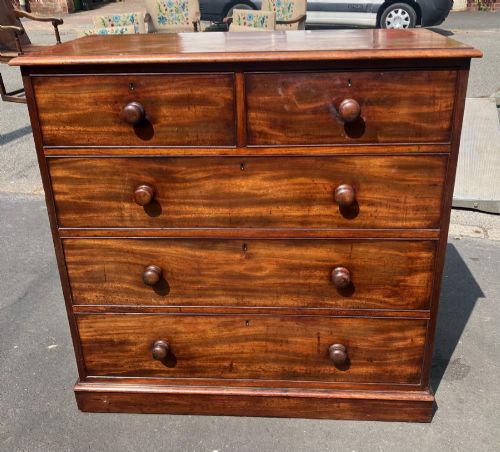
When you search for an antique mahogany clothes chest, you meet a variety of large storage furniture designed to hold garments and textiles. The selections span major historical periods including Georgian, Regency, Victorian, and Edwardian eras, reflecting changing domestic needs over centuries.
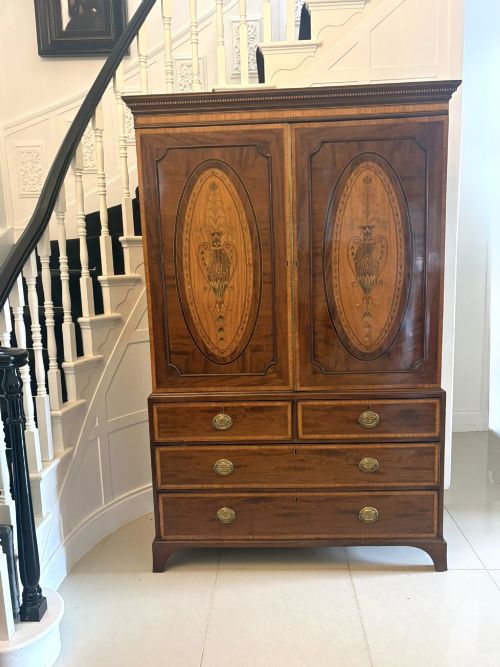
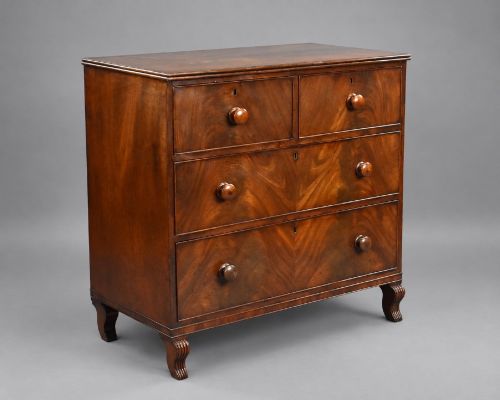
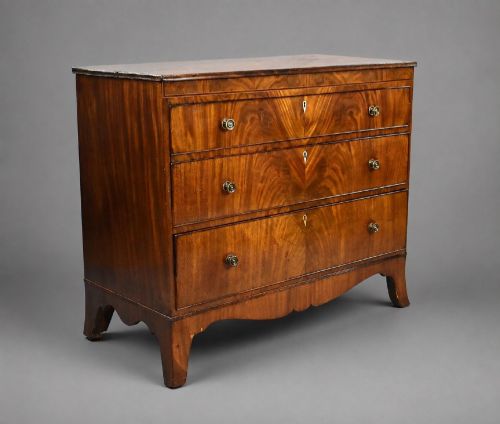
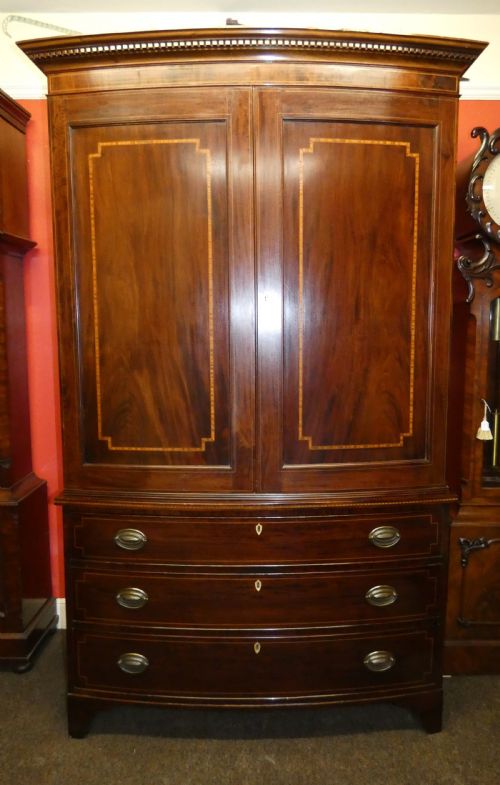
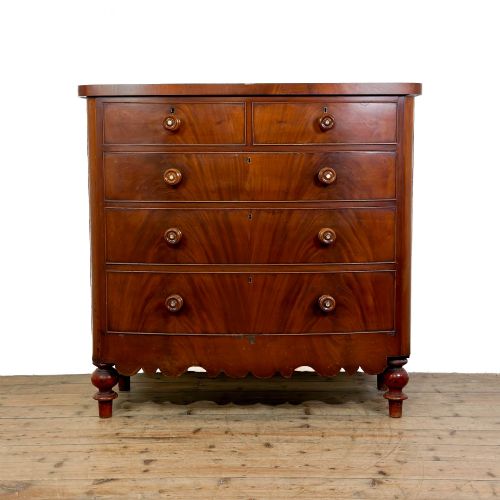
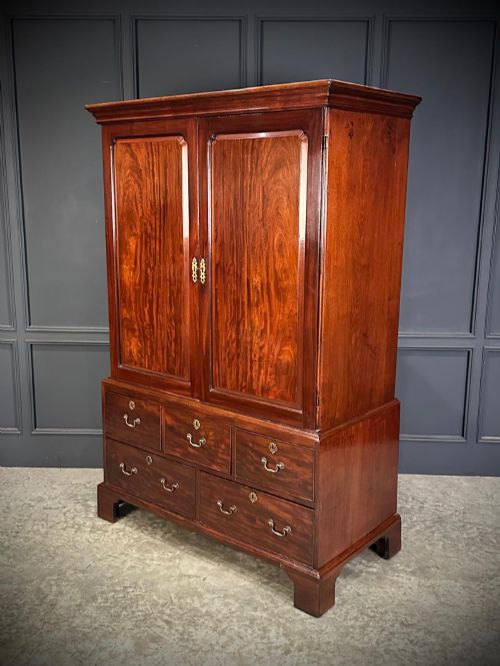
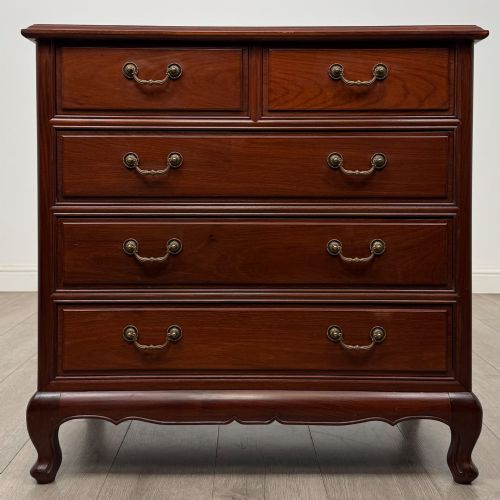
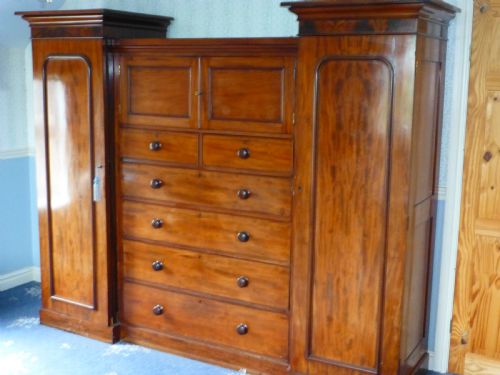
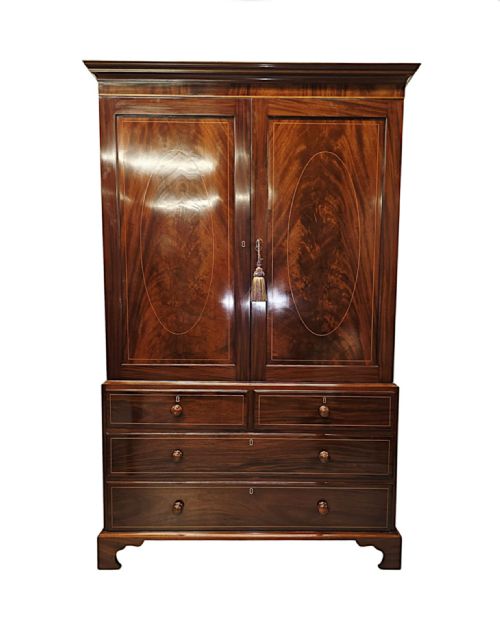
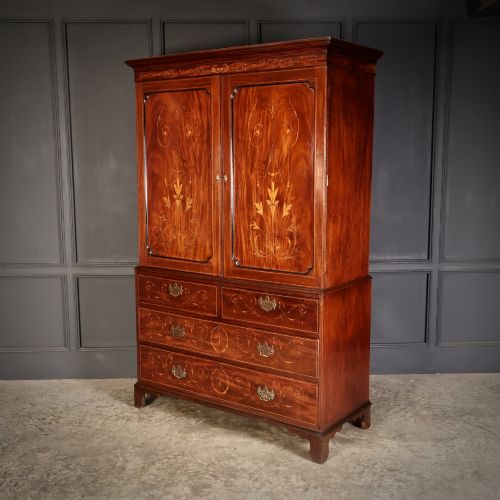
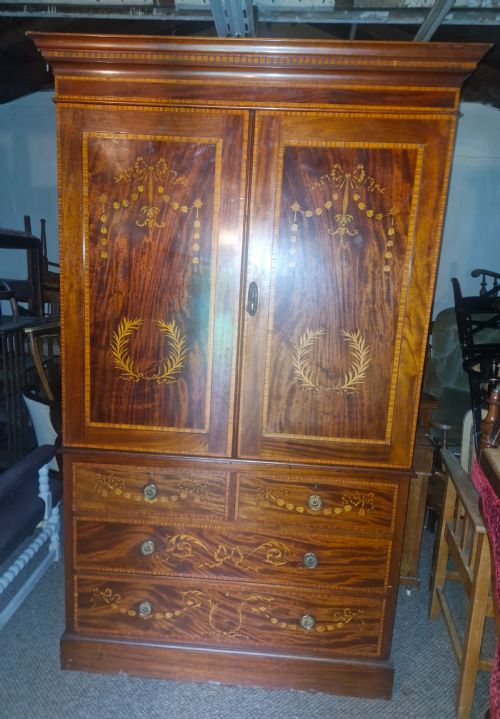
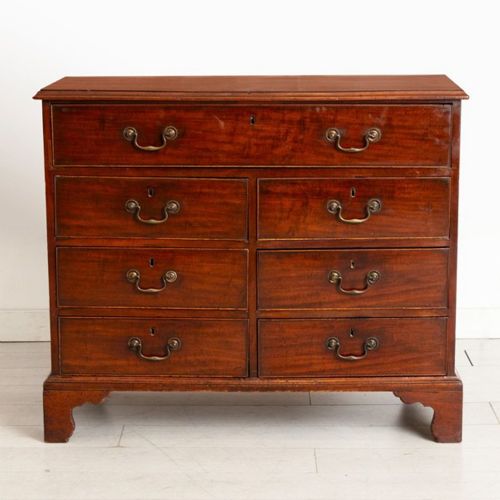
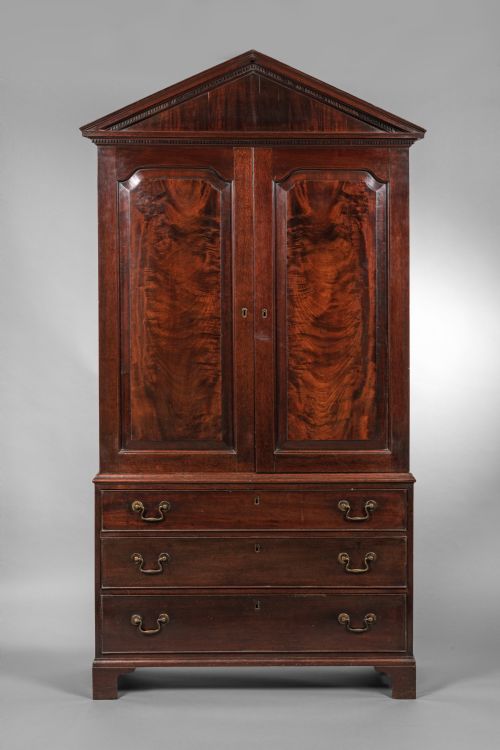
The objects take several distinct forms, most commonly appearing as linen presses, chests of drawers, and combination wardrobes. Linen presses feature upper cupboard sections housing sliding trays above base drawers, while standard chests provide stacked drawer storage.
Many examples incorporate regional variations such as Scottish cupboards or campaign wardrobes. Formats range from bowfront chests to tallboy and compactum configurations, showing diverse ways makers solved household storage.
How they were made
Makers constructed these pieces primarily using solid mahogany and mahogany veneers, frequently selecting flame mahogany to create striking grain patterns across drawer fronts and doors. Secondary timbers such as oak and pine appear inside drawer linings and internal carcases.
Craftsmen enhanced the primary wood with contrasting inlay materials, utilising satinwood, bone, and lighter stringing lines to define panels and borders. Crossbanding in rosewood and other timbers frames the main surfaces on select pieces.
Hardware played an essential functional and decorative role, with brass handles, escutcheons, and hinges fitted to drawers and doors. Structural support relies on bracket feet, plinth bases, or turned feet depending on the period.
Early clothes chests often retain faint herbal scents trapped inside deep drawers from centuries of linen storage.
What varies in quality
The selection of timber dictates much of the visual merit, with highly figured flame mahogany veneers and thoughtful book-matching setting superior examples apart from plain surfaces. The skill of the inlayer determines whether satinwood stringing and marquetry integrate cleanly into the carcase.
Proportion and architectural balance separate standard utility pieces from masterwork furniture, particularly in large linen presses and breakfront wardrobes. The execution of internal sliding trays, secretaire drawers, and dovetailed joints reveals the standard of workshop execution.
Gillows·Druce & Co.
The Antique Mahogany Clothes Chest Glossary
- Linen Press
- A tall piece of furniture featuring an upper section with doors enclosing sliding trays, sitting upon a lower chest of drawers. Originally built to store household linen flat.
- Compactum
- A large fitted wardrobe offering specialised internal storage compartments, often combining hanging space, drawers, and shelving within a single multi-door unit.
- Crossbanding
- A border technique where thin strips of veneer are laid with the grain running perpendicular to the main panel, framing the drawer front or door.
- Flame Mahogany
- Timber cut from the fork of the mahogany tree, producing a distinctive leaping flame pattern highly prized for principal decorative surfaces.
- Bracket Feet
- Miniature architectural feet supporting the bottom corners of a chest, shaped in bracket or ogee profiles typical of 18th-century cabinet work.
Antique Mahogany Clothes Chest: Frequently Asked Questions
What is a linen press?
A linen press is a tall storage unit that combines an upper cupboard housing sliding trays with a lower chest of drawers.
They were originally designed to keep folded textiles flat and protected before modern wardrobe hanging space became standard.
How do I date an antique chest?
Dating relies on observing construction methods, timber choices, handle styles, and overall architectural proportions across periods.
Georgian pieces often display fine bracket feet and cockbeaded drawer edges, while Victorian examples tend to be heavier with plinth bases.
Are the sliding trays removable?
The internal sliding trays inside the upper section can typically be pulled out or lifted clear of their internal runners.
This modular arrangement allowed owners to access stored textiles easily or modify the interior space.
Where should I place a clothes chest?
These large storage units require stable interior environments away from direct heat sources and strong sunlight to protect the mahogany veneer.
Ensure adequate clearance around the piece for doors and drawers to open fully.