
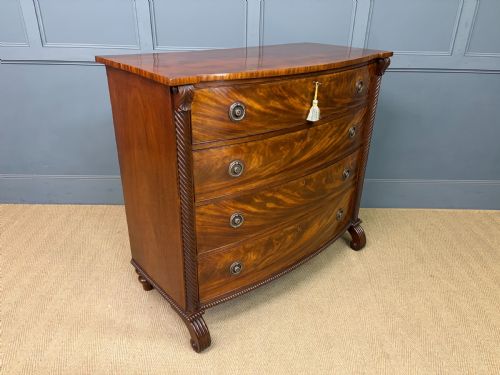
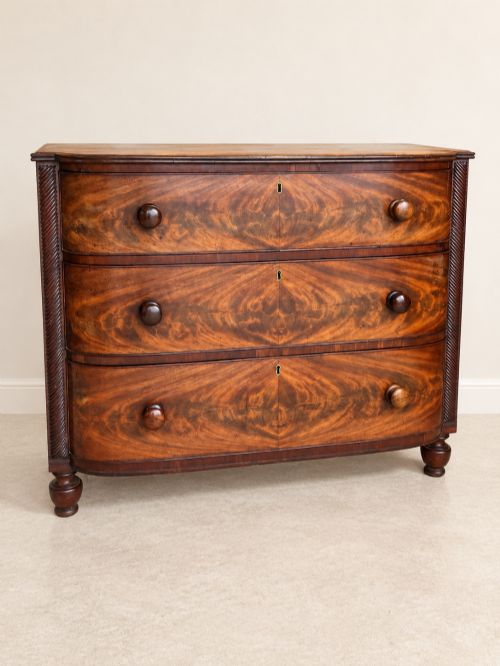
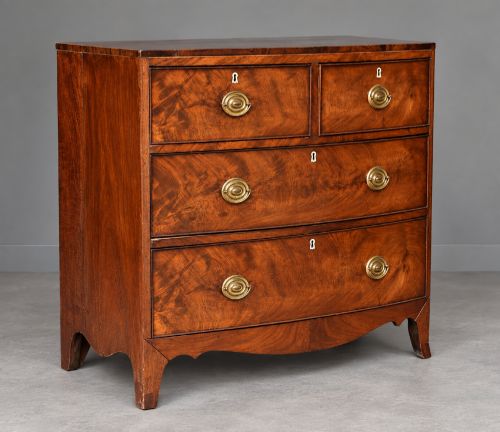
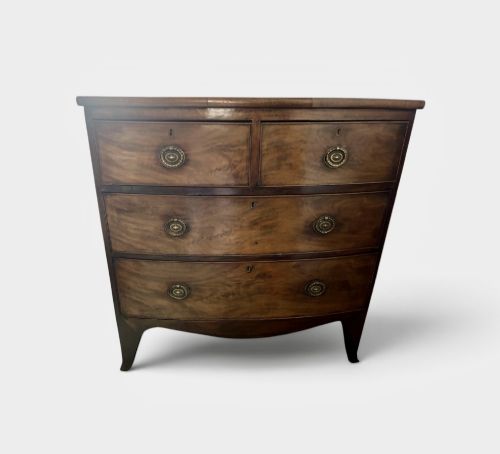


Georgian Mahogany Commode Drawers
Georgian mahogany commode drawers are practical storage furniture fashioned from dense timbers during the eighteenth and nineteenth centuries.
Georgian Mahogany Commode Drawers
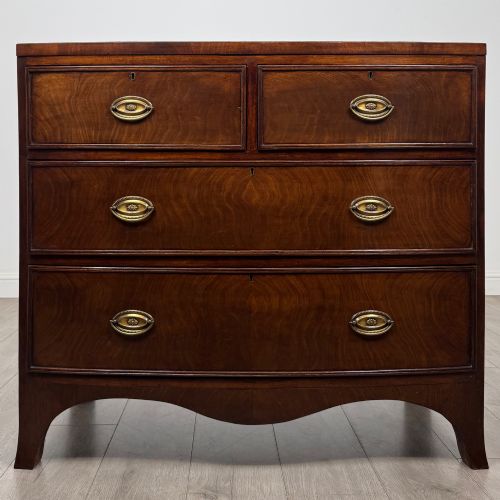
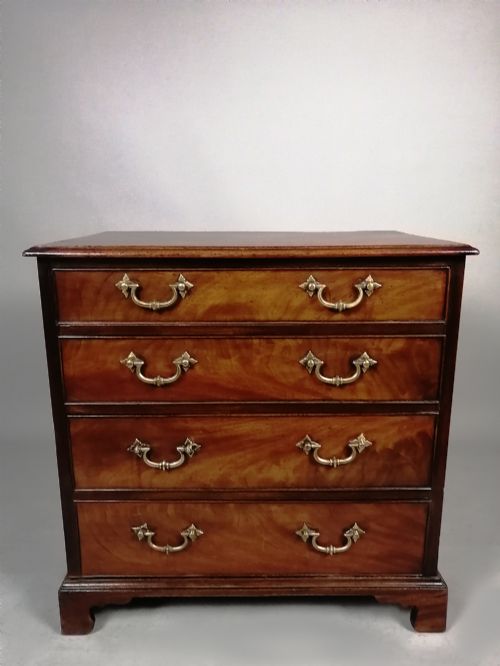
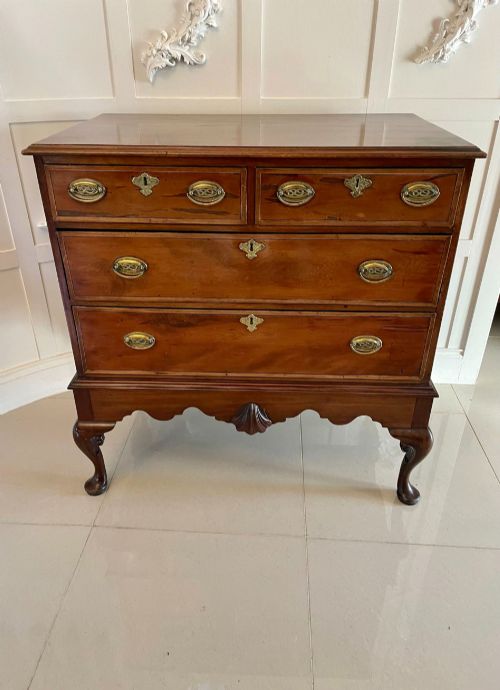
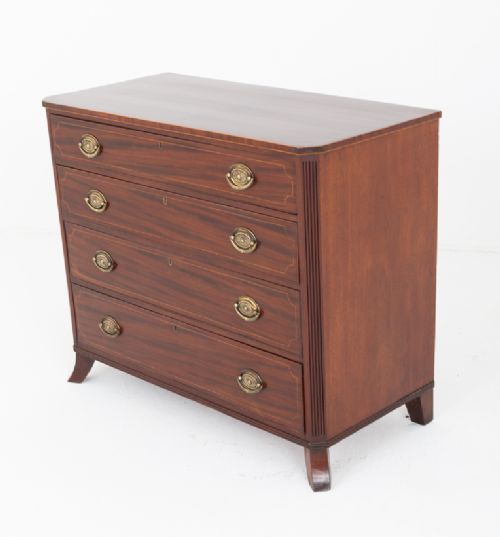
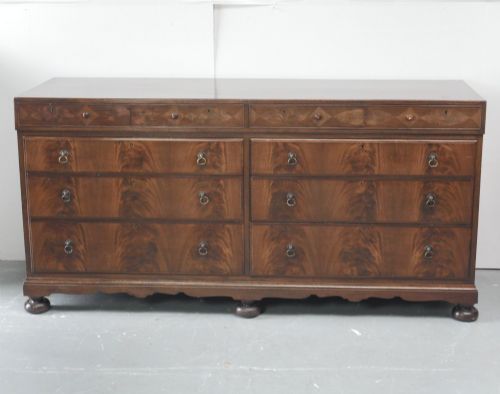
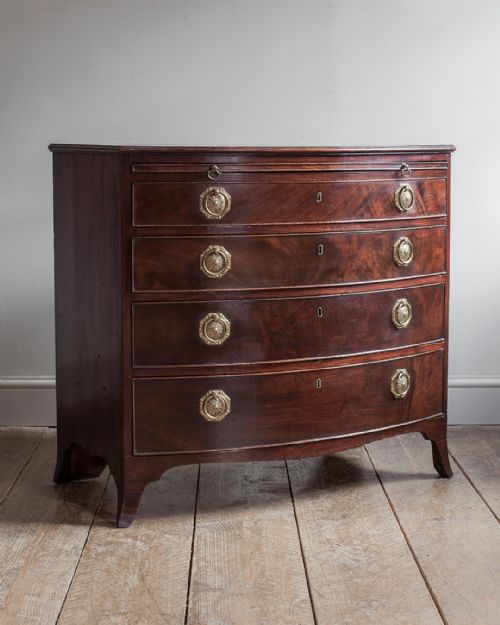
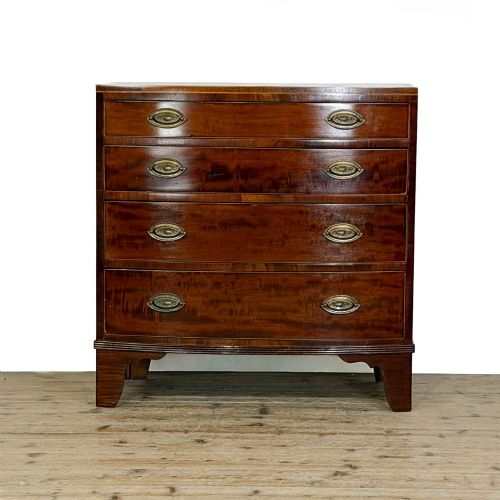
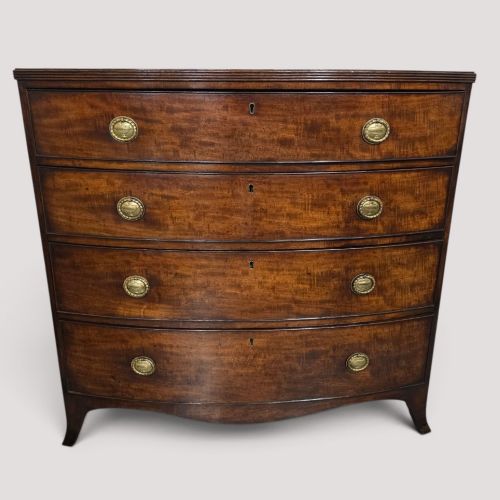
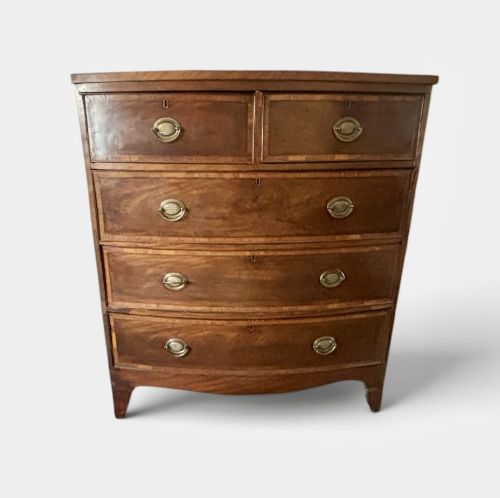
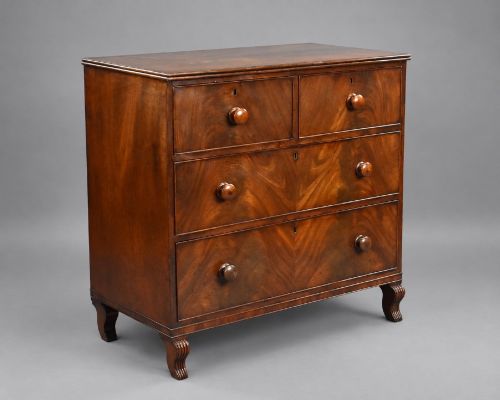
When you search for georgian mahogany commode drawers, you encounter timber storage chests originating from the Georgian, Regency and 19th Century periods. These pieces frequently manifest as bow front or serpentine chests of drawers, alongside forms adapted as commodes.
The objects span standard chamber chests to miniature furniture and pieces featuring pull out brushing slides. Cabinet makers constructed these items in standard configurations such as two short drawers over three long drawers.
Origins include English workshops and Scottish cabinet makers like Whytock and Reid. Surviving examples encompass George III and George IV periods alongside later Georgian Revival interpretations.
How They Were Made
Cabinet makers utilised solid mahogany and flame mahogany veneer applied over secondary woods like oak. Surfaces often incorporate satinwood banding, crossbanding, and ebonised wood details.
Construction techniques relied on dovetailed drawer boxes and precision jointing to accommodate timber movement over centuries. Drawer pulls typically employ cast brass handles affixed to the drawer faces.
Decorative elements involve curved serpentine outlines and bow front shaping formed from dense timber. Certain variants incorporate inlaid bone or marble tops depending on the specific commode form.
Listings feature mahogany, satinwood, oak, and brass across Georgian and Regency periods.
What Varies in Quality
The degree of figuring in the mahogany veneer defines visual depth across drawer fronts and tops. Pieces utilising matched flame mahogany or meticulous satinwood crossbanding demonstrate superior cabinet making ambition.
Proportion and scale dictate the desirability of individual chests, with smaller dimensions and complex serpentine profiles commanding particular attention. The crispness of the dovetail joints and the retention of original brass hardware further separate standard production from exceptional work.
Whytock and Reid
The Georgian Mahogany Commode Drawers Glossary
- Bow front
- A convex curved cabinet front that projects outward in a smooth arc. This shape became popular during the Regency period.
- Brushing slide
- A pull out wooden shelf positioned above the top drawers. It served as a temporary writing or dressing surface.
- Crossbanding
- A border technique where thin strips of veneer are laid perpendicular to the grain of the main surface. It frames drawer fronts and tabletops.
- Serpentine
- A horizontally undulating front edge featuring a convex centre flanked by concave curves. This contour requires advanced woodworking skill.
- Flame mahogany
- Timber cut from the fork of the mahogany tree to reveal a rippled, flame like grain pattern. It provides intense visual movement on drawer facades.
Georgian Mahogany Commode Drawers: Frequently Asked Questions
What is a commode drawer?
A commode drawer refers to a low storage chest or cabinet designed in the French fashion during the eighteenth century. These pieces often doubled as practical bedroom furniture or specialised drinks cabinets.
Over time, terminology shifted between chests of drawers and commodes. Surviving examples reflect these interchangeable historical descriptions.
How do I spot a George III chest?
George III chests typically display dense mahogany timbers, hand cut dovetails, and period specific brass handles. They often feature clean proportions and straightforward bracket feet.
Later Regency examples introduced more pronounced bow fronts and lighter satinwood banding. Examining the secondary woods inside the drawers helps confirm the period.
What is a brushing slide?
A brushing slide is a pull out shelf integrated just below the top surface of a chest. Wealthy owners used it for dusting clothes or writing notes without opening a main drawer.
This feature appears predominantly on better quality Georgian and Regency pieces. It pushes back flush into the frame when not in use.
Are these pieces made of solid mahogany?
Many surfaces utilise flame mahogany veneer applied over sturdy secondary timbers such as oak or pine. This technique prevented warping while displaying decorative grain patterns on the drawer fronts.
Solid mahogany was commonly reserved for structural framing, corner posts, and drawer linings. High grade examples combine both solid construction and figured veneers.