

Antique Mahogany Bureau Desk
An antique mahogany bureau desk brings traditional writing space and fitted compartments into a room, offering sturdy construction and rich timber figure.

The Form and Origin of the Antique Mahogany Bureau Desk
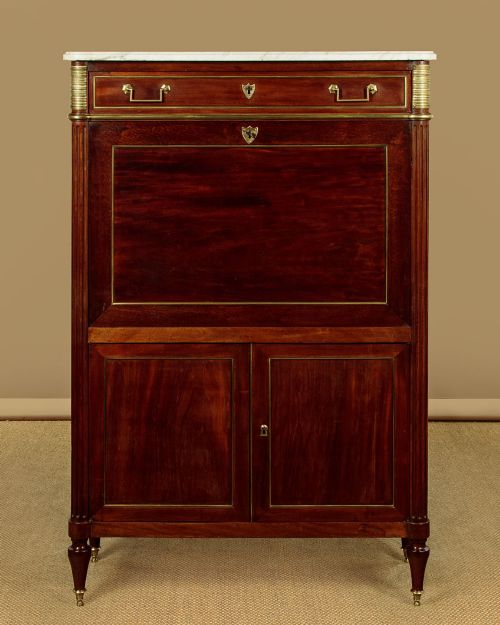
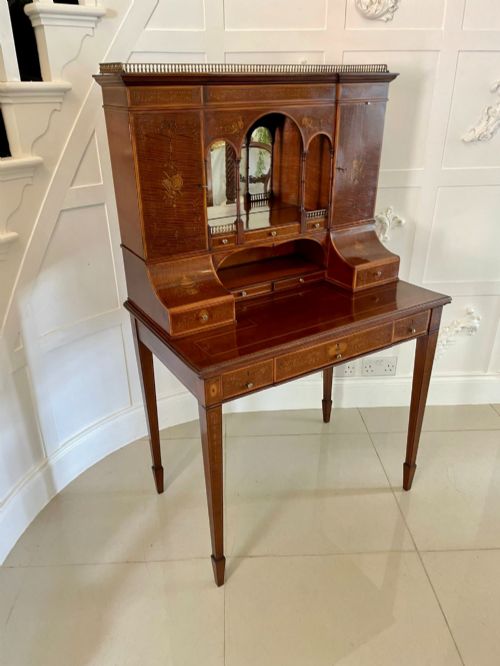
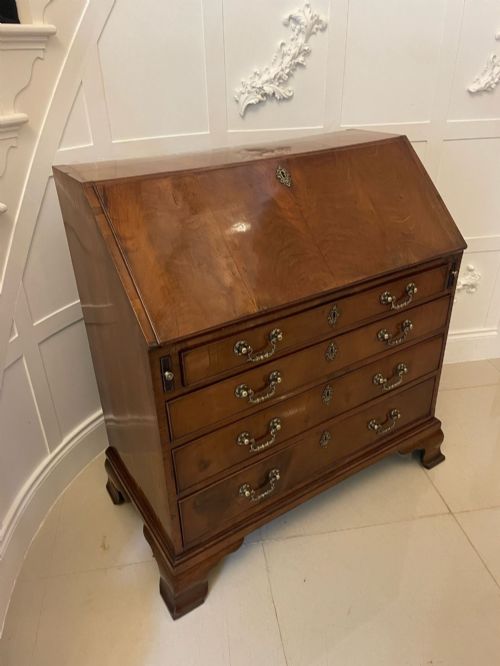
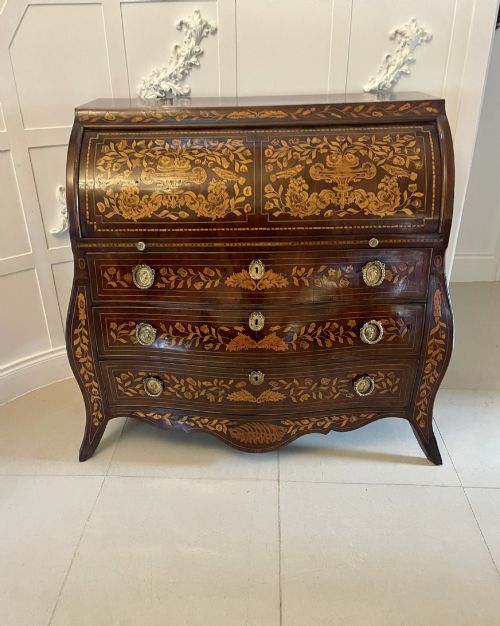
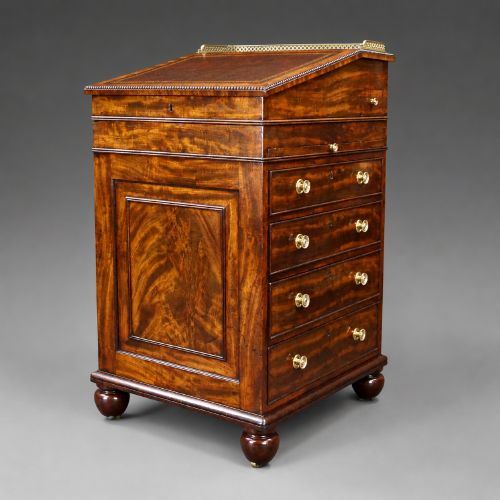
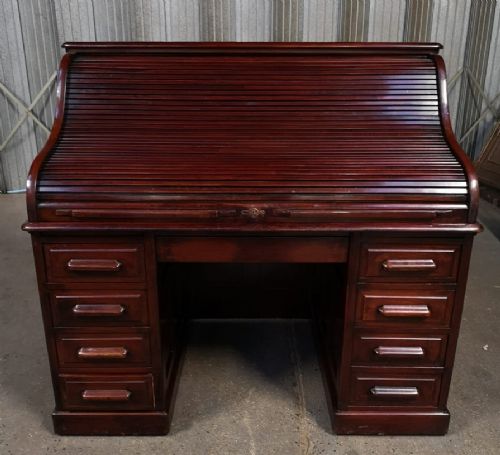
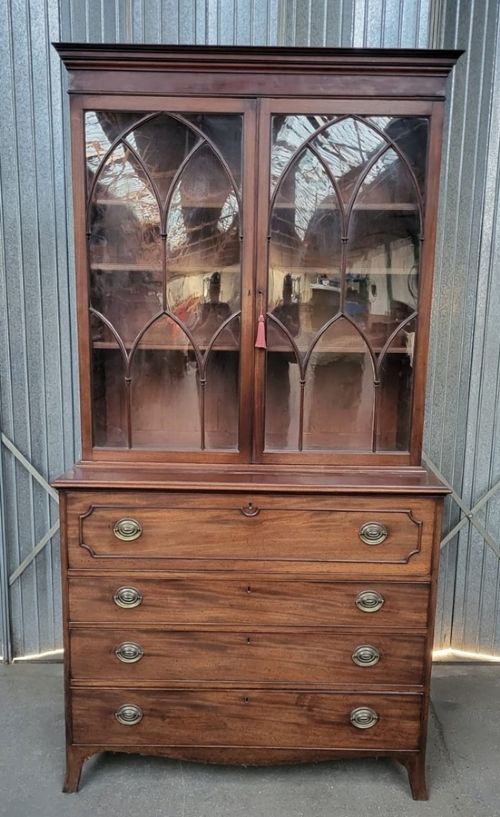
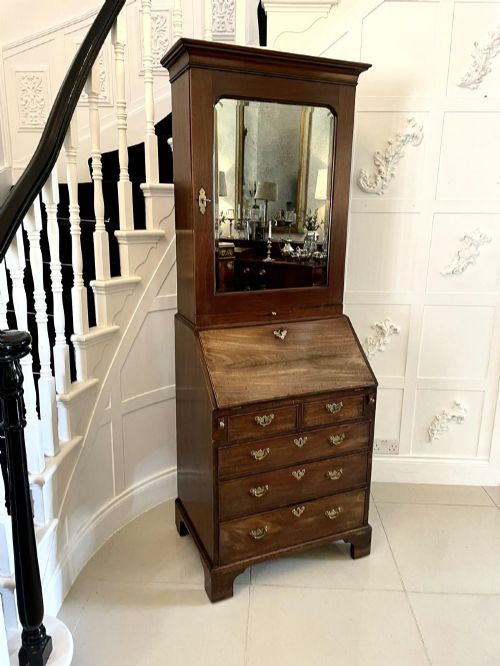
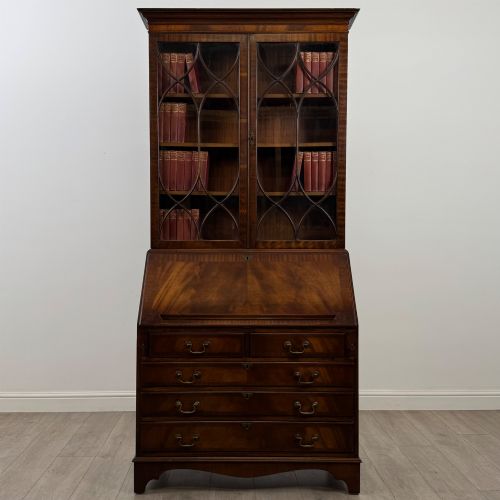
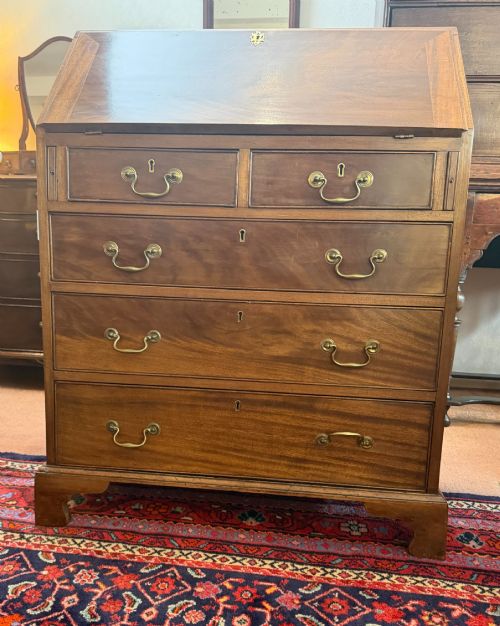
An antique mahogany bureau desk combines a slope-front writing flap with drawers below and internal pigeonholes above, designed for correspondence and household administration. You will most frequently encounter Georgian and Victorian iterations, alongside Edwardian and Regency examples.
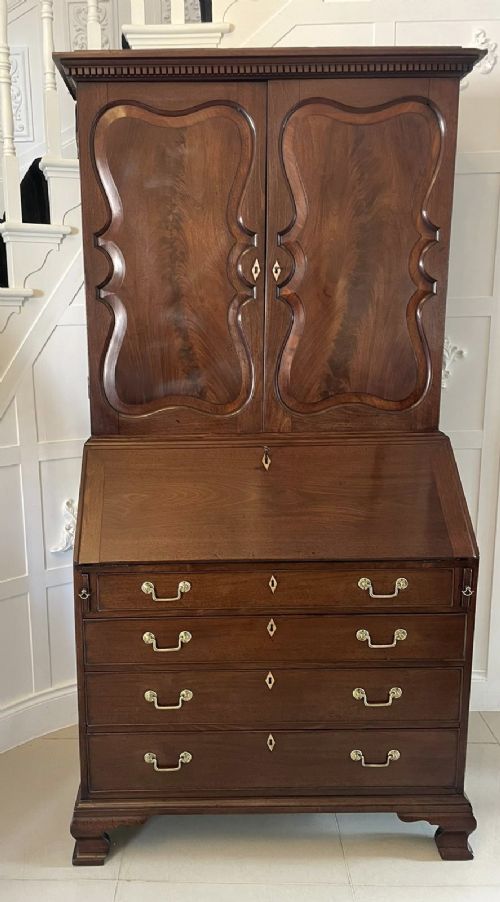
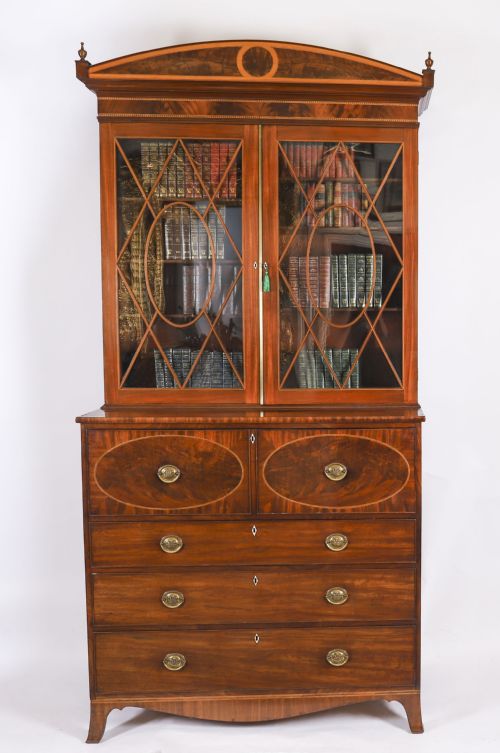
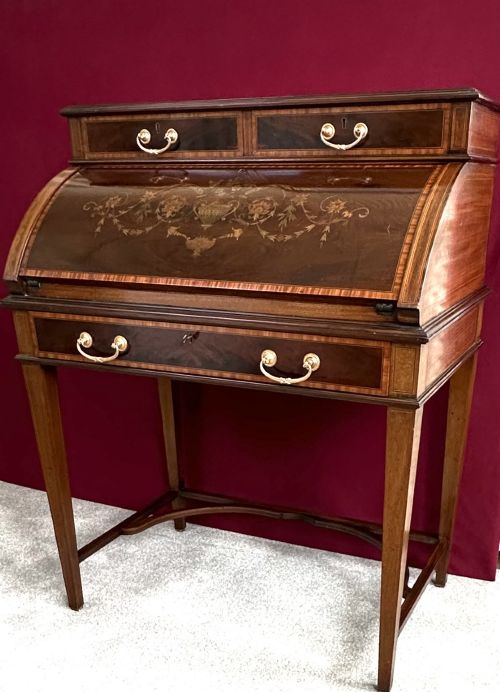
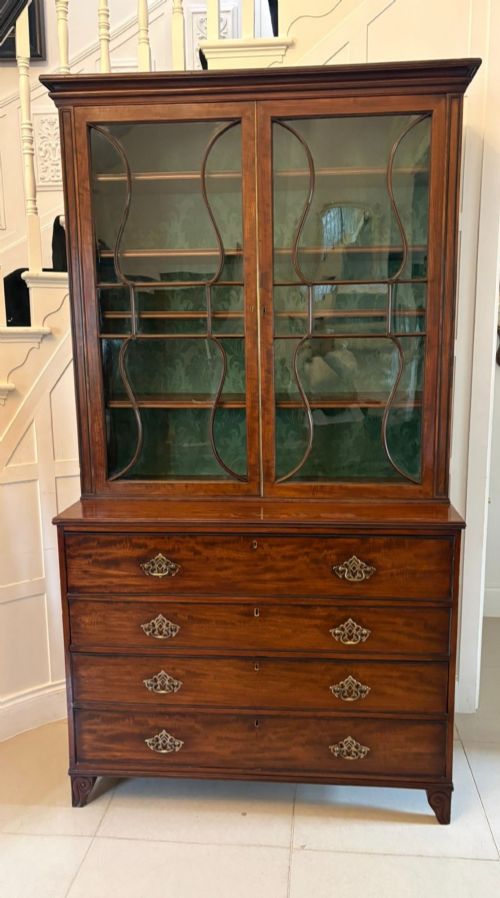
The archive shows these pieces appearing as standard fall-front desks, tall clerk forms, cylinder rolls, and large secretaire bookcases with glazed upper cabinets. English workshops produced the vast majority of these items, utilising dense timber planks.
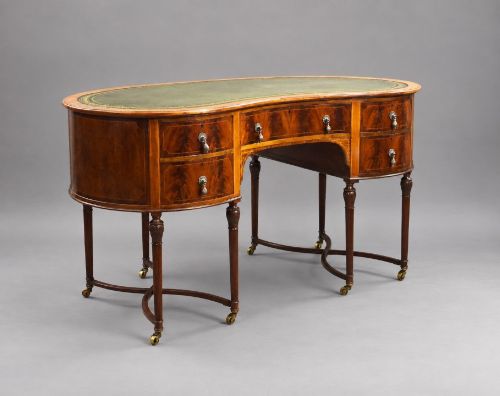
Proportions range from small chamber tables to wide library pieces fitted with leather writing surfaces, secret compartments, and kneehole recesses. Each variation served a domestic or professional purpose in period interiors.
Materials and Construction
Cabinet makers built these desks primarily from solid mahogany and flame mahogany veneers, frequently incorporating oak secondary timbers for drawer linings and internal dividers. Brass hardware such as escutcheons, drop handles, and hinges provided functional decoration.
Construction relied on tight dovetail joints for drawers and panelled framing for fall fronts, ensuring structural stability across seasonal humidity changes. Secondary woods like oak supported internal secret drawers and writing slides.
Retail Price Guide 2026
Typical UK retail prices for mahogany bureau desk, calculated from the Sellingantiques database of over a million retail prices indexed since 2003. This retail price guide relies exclusively on Sellingantiques data; no external sources or auction records are used, so the figures do not describe the wider market.
Listings feature Georgian, Victorian, and Edwardian periods utilising mahogany, brass, and glass across desks and bookcases.
Distinctions in Quality
Quality rests upon the choice of timber figure, the tightness of the drawer dovetailing, and the sophistication of the internal stationery compartments. Superior examples display deeply figured flame mahogany veneers matched symmetrically across the fall front.
Finer pieces feature well-executed secret drawers, original brasses, and secondary oak linings rather than softwoods. The precision of the joinery around the fall-front hinges and the proportion of the bracket feet determine the aesthetic success of the desk.
Gillows·Hobbs and Co
The Antique Mahogany Bureau Desk Glossary
- Bureau
- A desk featuring a sloping hinged writing flap that opens to reveal internal drawers and pigeonholes.
- Secretaire
- A piece of furniture incorporating a concealed writing drawer or fall-front desk compartment.
- Cylinder desk
- A desk fitted with a rolling quarter-circle wooden shutter that conceals the writing surface when closed.
- Pigeonhole
- A small compartment within a desk interior used for sorting letters and papers.
- Flame mahogany
- A veneer cut from timber fork joints that produces a distinctive flickering flame pattern.
Frequently Asked Questions
How do I use a fall-front desk?
Lower the hinged wooden flap until it rests horizontal, supported by lopers pulled out from the main carcase.
This creates a writing surface while granting access to the interior pigeonholes and small drawers.
Where were these desks placed?
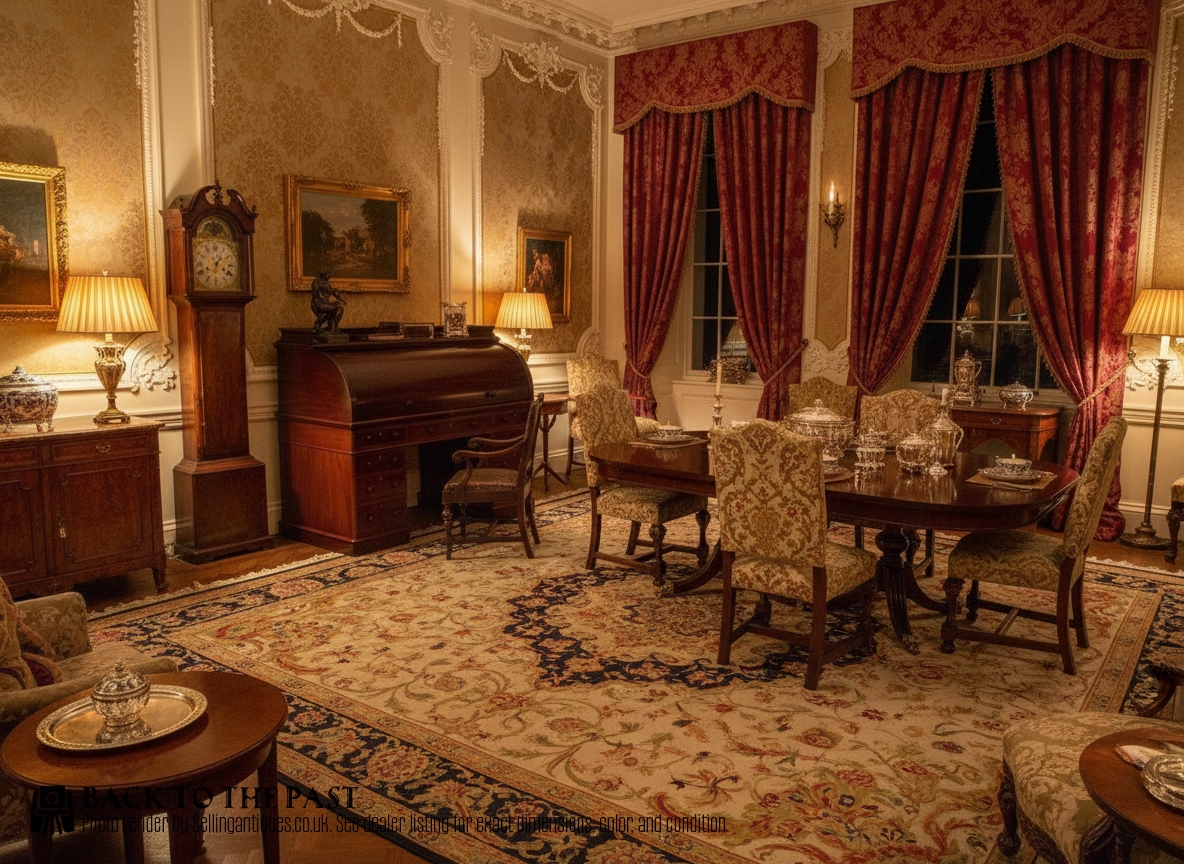
Period owners positioned them in private studies, libraries, bedrooms, and entrance halls for household accounts.
Their compact footprints allowed them to sit flat against walls in domestic rooms.
How do I date a bureau desk?
Examine the construction methods of the drawer linings, the style of the brass hardware, and the timber grain.
Georgian pieces often display hand-cut dovetails and bracket feet, while Victorian versions show heavier proportions.