
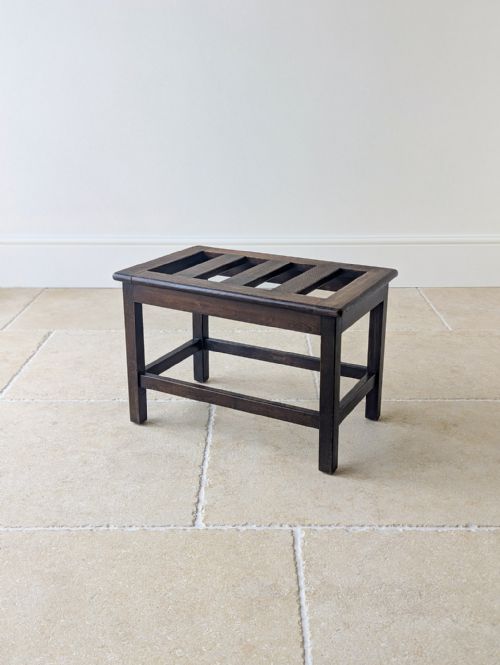
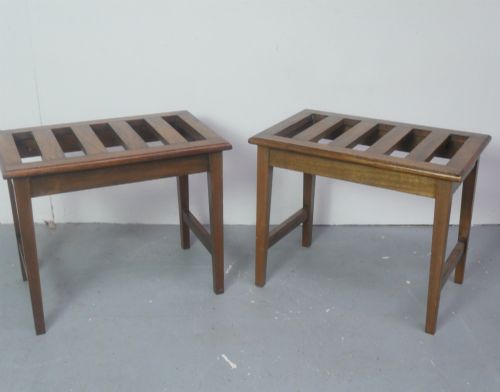
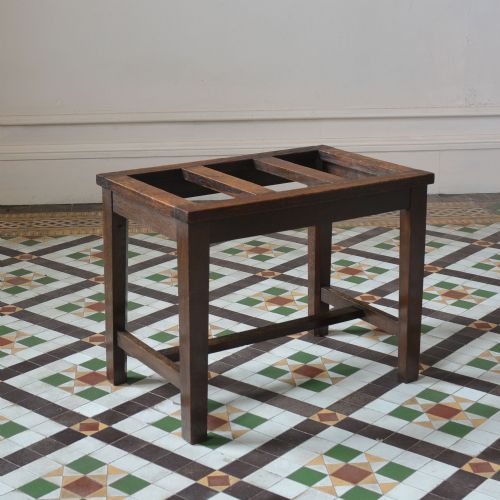
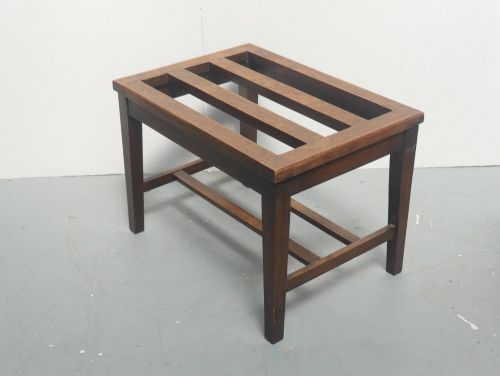
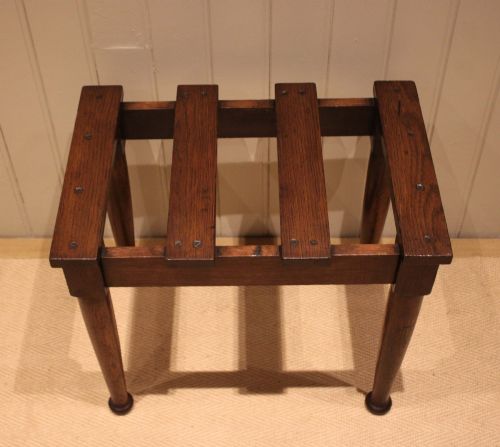
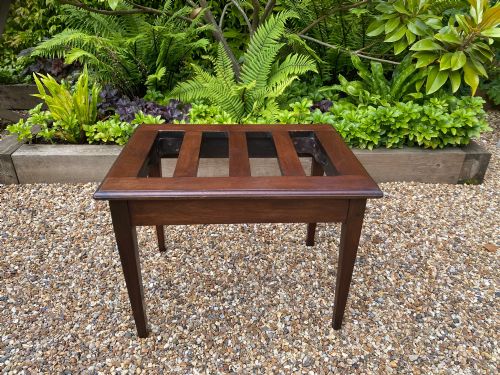

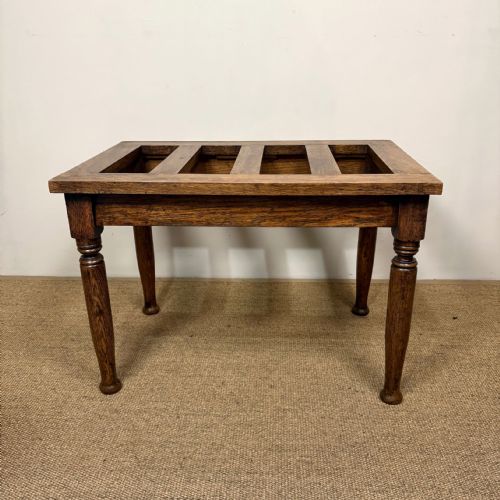
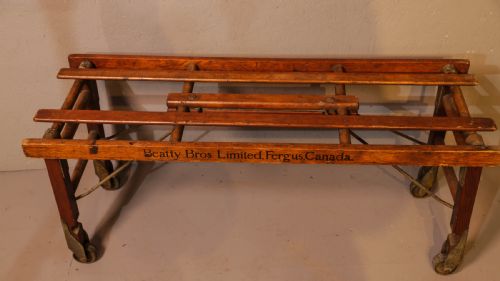
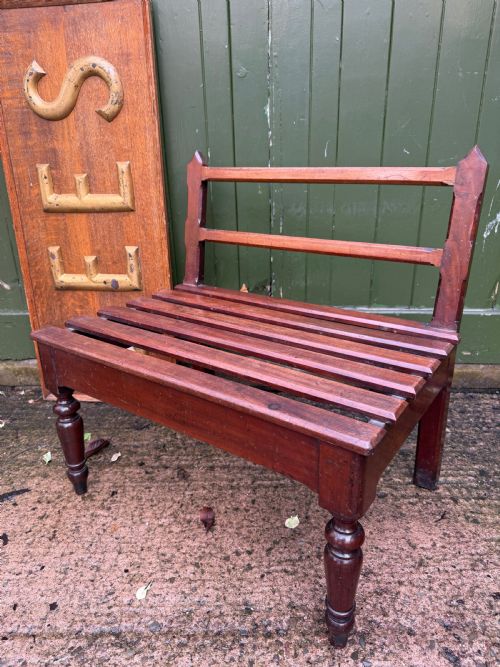


Antique Luggage Bench
These antique luggage bench examples are sturdy stands made to hold guest bags, combining utility with refined period timber work.
Antique Luggage Bench
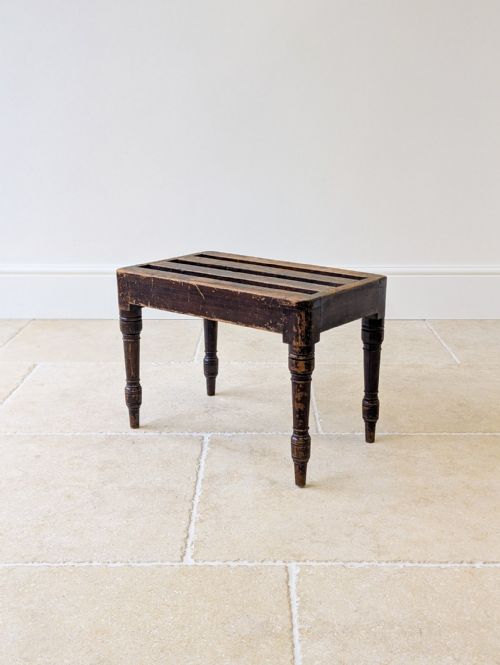
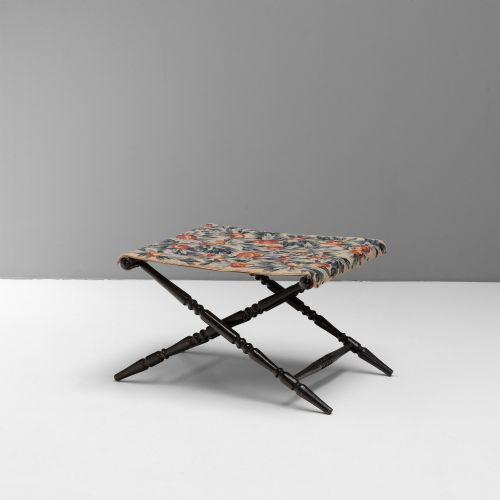
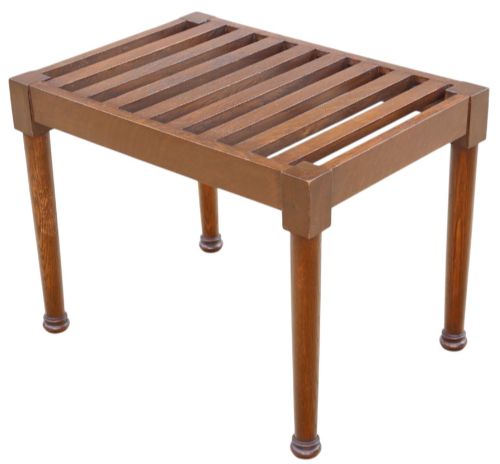
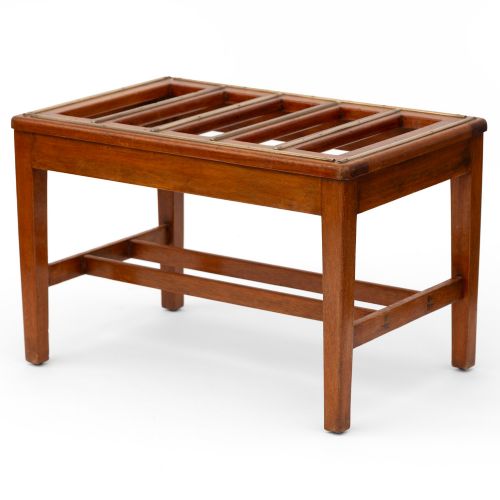
An antique luggage bench, also commonly called a luggage stand or rack, is a functional piece designed to elevate travel bags in domestic or hospitality settings. The pieces seen here span the Victorian, Edwardian, and early twentieth century periods, reflecting a steady tradition of guest room comfort.
The dominant forms on this page include mahogany, oak, and walnut stands featuring folding or rigid frames. Many examples display regional British country house or hotel origins, while others hail from Canadian makers or incorporate industrial iron and brass hardware.
Buyers will encounter specific variations such as pieces with raised rear upstands, extending bench configurations, and carved detailing. These range from utilitarian hotel survivors to finely polished domestic furniture.
Materials and construction
Makers relied on durable hardwoods such as oak, mahogany, walnut, ash, beech, and yew to construct frames capable of supporting heavy travel chests. Supporting webbing or straps were secured across the top rails to hold cases safely without scratching leather or wood.
Metal components in brass and iron appear across the joints, hinges, and corner brackets to reinforce high-stress areas on folding or extending stands. Polished finishes highlight the natural grain of the timber, whether on plain pine or high-grade mahogany.
Several pieces carry the unmistakable history of heavy travel, having served guests in bustling West End hotels before retiring to quiet hallways.
Separating the ordinary from the exceptional
Quality in an antique luggage bench rests upon the selection of timber and the integrity of the frame joints. Denser hardwoods like mahogany or figured walnut indicate a higher tier of production than simple painted pine.
Refements such as carved oak detailing, raised rear upstands, or maker stamps elevate a piece beyond standard utility. The presence of robust brass hardware and balanced proportions also distinguishes superior examples from simpler ones.
Beatty Bros Fergus Canada·Brown & Lamont·Waring & Gillow
The Antique Luggage Bench Glossary
- Upstand
- A raised barrier at the rear of a luggage stand designed to prevent bags from sliding backward against a wall.
- Webbing
- The sturdy woven bands stretched across the top of a rack to support the weight of luggage.
- Extendable
- A configuration allowing the frame width to adjust depending on the size of the bag placed upon it.
- Hardwood
- Timber derived from broad-leaved trees such as oak, mahogany, and ash, chosen for durability in heavy-use furniture.
- Turned leg
- A wooden support shaped on a lathe to create decorative circular profiles.
Antique Luggage Bench: Frequently Asked Questions
What were antique luggage benches used for?
These stands were placed in guest bedrooms to hold travel trunks and leather cases at a convenient height for packing and unpacking.
They spared guests from bending down to the floor and kept heavy luggage off fine carpets.
How do I date an antique luggage stand?
Dating relies on observing timber choices, construction techniques, and stylistic clues recorded in the period evidence. Victorian examples often display heavier proportions, whereas Edwardian pieces tend to feature lighter oak frames.
Maker stamps and regional design traits also help narrow down the decade of manufacture.
Where can I use an antique luggage bench today?
They serve well in modern guest rooms for visitors' bags or at the foot of a bed to hold extra blankets and cushions. Some collectors also utilise them as low display surfaces in hallways.
Their compact footprint makes them adaptable for storage in smaller rooms.
What is the difference between a stand and a rack?
The terms are largely interchangeable in historical listings, though both refer to elevated frames designed to support travel bags.
Some variants incorporate folding mechanisms or extending timber frames, while others remain rigid.