



Antique Louis XV Sofa
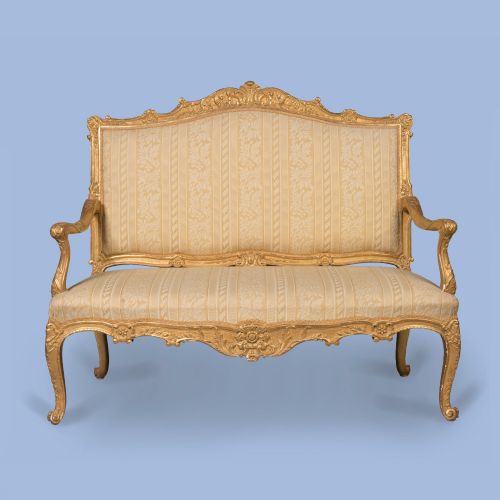
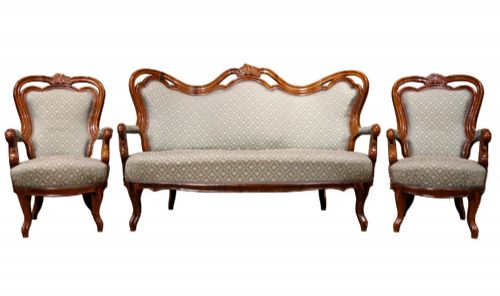
An antique louis xv sofa brings curved woodwork and fluid lines to a room, offering seats designed in walnut, giltwood or paint.
Antique Louis XV Sofa
When someone searches for an antique louis xv sofa, they encounter seating forms labelled as canapés, settees or couches from the nineteenth and early twentieth centuries. These pieces reflect revival styles, French provincial aesthetics and Rococo influences spanning decades from the eighteen-eighties to nineteen-twenties.
The selection on this page consists predominantly of walnut frames, giltwood carvings and painted woodwork configured for two or three occupants. Alongside standalone couches, buyers find salon suites that group smaller settees with matching armchairs.
Makers and manufacturers produced these items in various formats, including bergère versions featuring cane panels and daybeds designed for reclining. The common thread is the heritage of French design translated through later revival periods.
Materials and construction
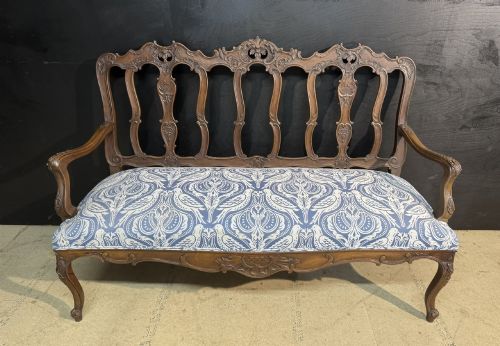
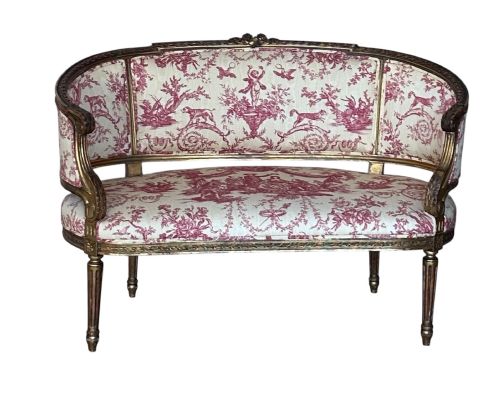
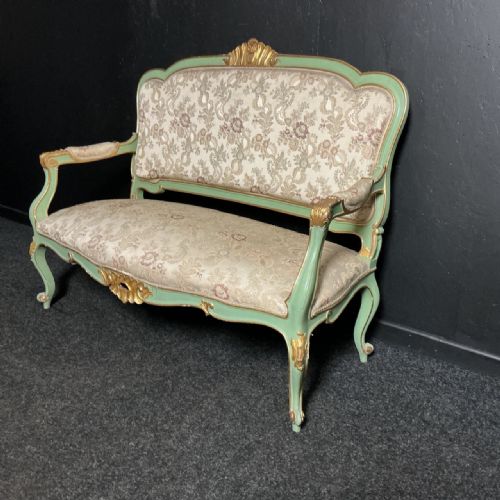
Carpenters shaped structural frames from solid walnut, oak and beech, applying intricate carvings of floral motifs and scrolling lines directly into the timber. Giltwood surfaces received layers of gold leaf over preparation grounds, whilst painted frames utilised cream, green or neutral pigments.
Upholstery methods incorporated fabric, velvet, silk, and needlepoint tapestry secured over internal padding. Cane weaving supplied lightweight backrests and side panels on specific bergère models.
Listings span from eighteen-fifty through to the nineteen-thirties, documenting walnut, giltwood, and painted finishes.
Variations in quality
Quality rests upon the crispness of the wood carving and the depth of relief in the floral and serpentine ornamentation. Hand-carved walnut and finely gilded surfaces distinguish superior work from simpler moulded alternatives.
The integrity of the frame construction and the proportion of the cabriole legs dictate the visual balance of the seating. Original upholstery materials and intact cane panels carry higher significance for preservation-minded collectors.
The Antique Louis XV Sofa Glossary
- Canapé
- An antique French sofa or settee featuring an upholstered backrest and seat supported by exposed wooden framing. These pieces typically display carved rails and cabriole legs.
- Cabriole leg
- A furniture leg that curves outward at the knee and tapers inward toward the foot, mimicking animal limbs. This form appears frequently on Louis XV style seating.
- Bergère
- An enclosed upholstered armchair or sofa with wooden frames and wooden sides filled with cane work. The design offers solid side support while maintaining a lighter visual weight.
- Giltwood
- Wood coated with a thin layer of gold leaf or gold paint applied to the surface. It is common on formal revival salon pieces.
- Rococo
- An artistic style characterised by asymmetry, curves, scrollwork, and naturalistic plant motifs. It forms the primary decorative vocabulary for these revival seats.
Antique Louis XV Sofa: Frequently Asked Questions
What is an antique louis xv sofa?
An antique louis xv sofa is a wooden framed seat created during nineteenth or early twentieth-century revival periods, echoing eighteenth-century French aesthetics.
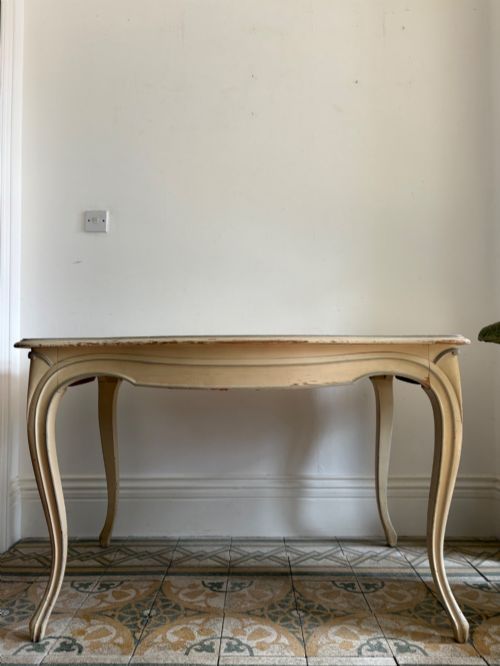
These pieces feature carved cabriole legs, exposed walnut or giltwood frames, and upholstered cushions designed for two or three people.
How do you use a canapé at home?
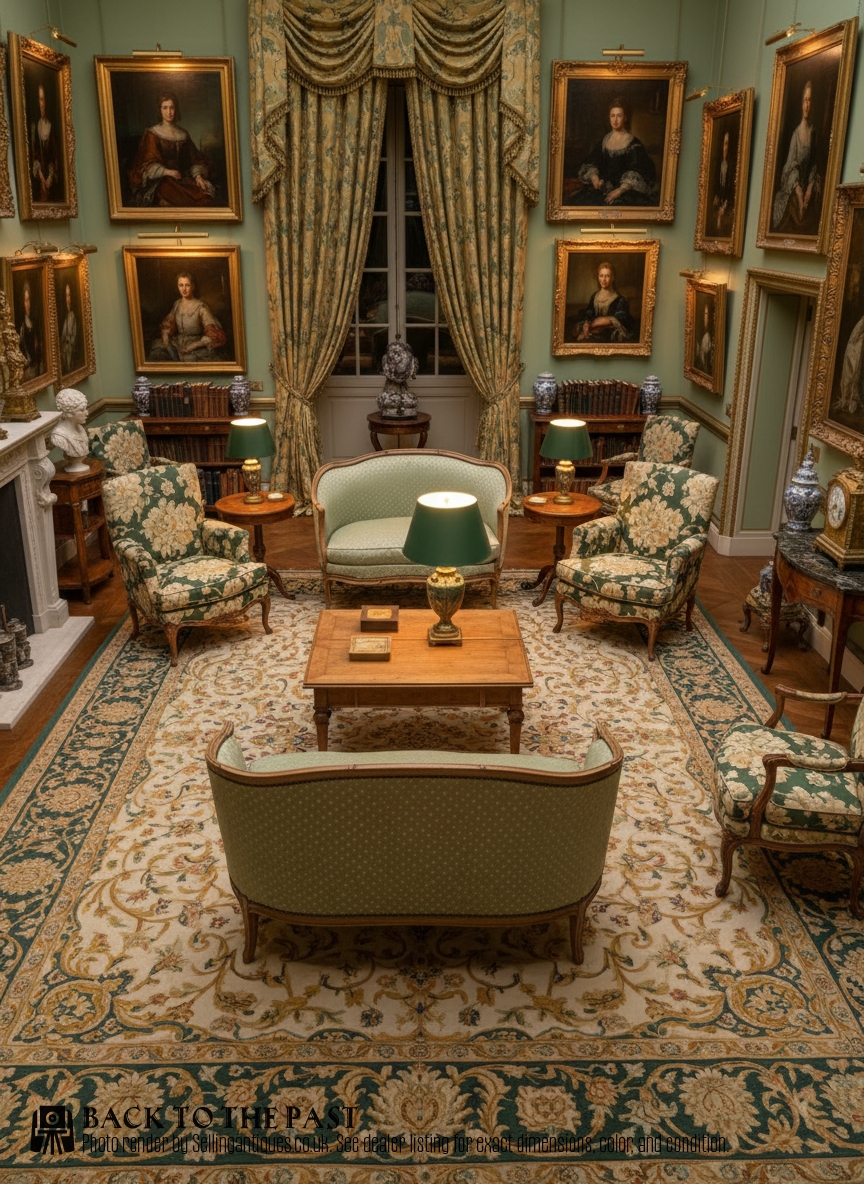
A canapé serves as formal seating in a drawing room or sitting room, often paired with matching armchairs from a salon suite.
Its decorative carved back and curved silhouette make it suitable for placement against a primary wall or as a central focal point in an open interior space.
What is the difference between a sofa and a bergère settee?
A standard sofa relies entirely on upholstered padding across the back and arms, whilst a bergère settee incorporates woven cane panels into the sides or backrest.
Cane panelling reduces the visual mass of the wooden frame and provides a distinct texture compared to plain fabric or velvet.
How do I identify a revival period piece?
Revival pieces display nineteenth or early twentieth-century construction methods, machine-assisted finishing alongside hand carving, and specific wood ageing patterns.
Stylistic cues include symmetrical interpretations of Rococo motifs paired with nineteenth-century upholstery textiles and frame proportions.