
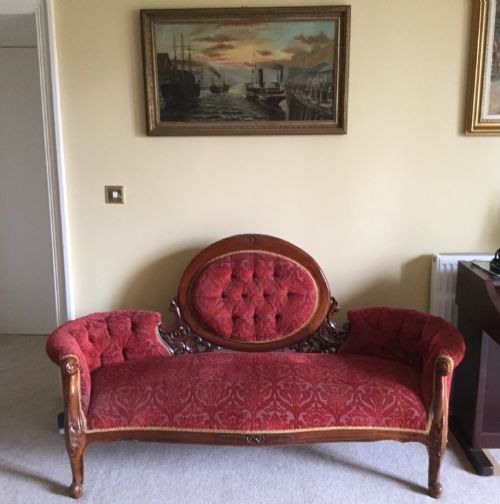
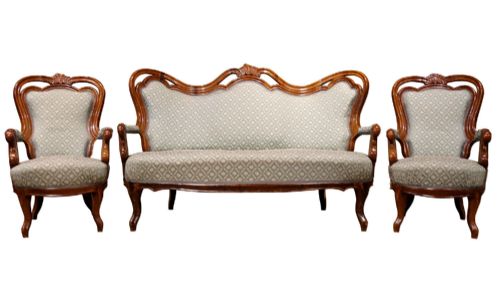
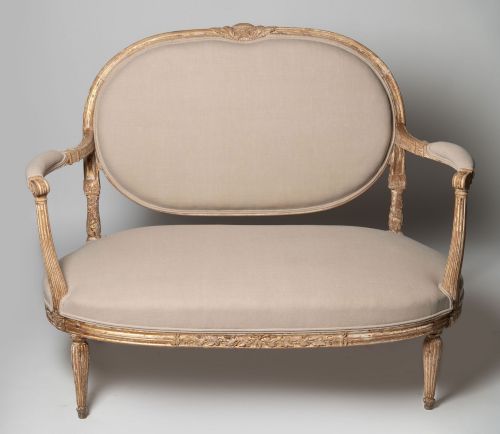
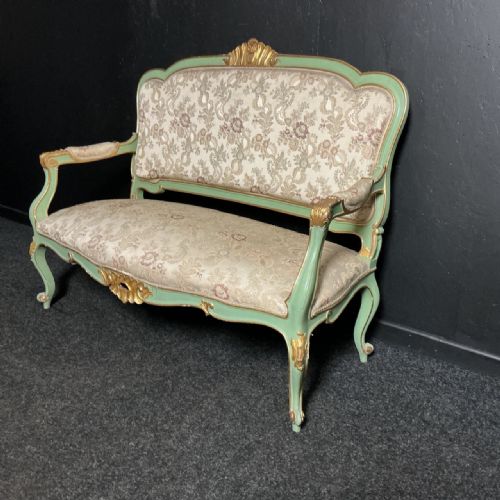



Carved Wood Salon Sofa
A carved wood salon sofa brings formal nineteenth-century reception rooms to life with generous proportions and elaborate woodwork.
Carved Wood Salon Sofa
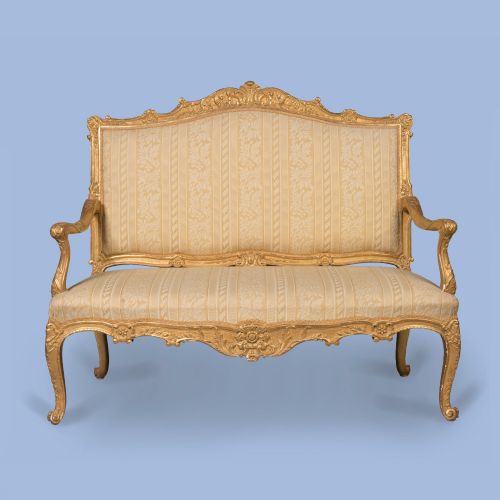
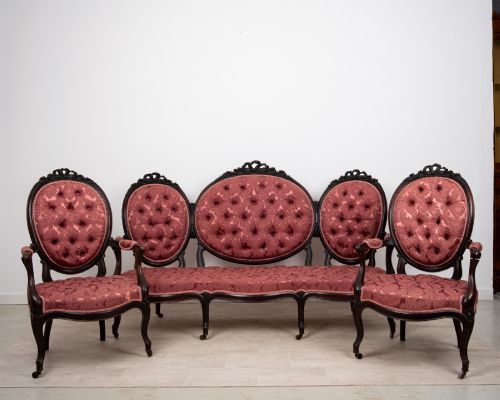
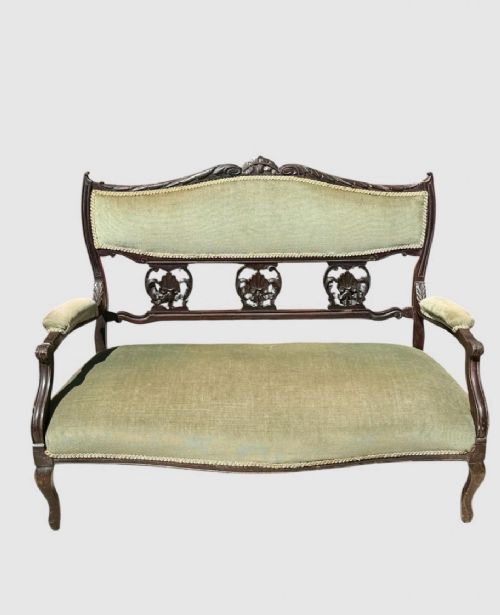
A carved wood salon sofa serves as the centrepiece of a formal nineteenth-century drawing room or reception space, designed to impress visitors and accommodate seated company. When you search for a carved wood salon sofa, you meet double-ended settees, French canapés, and multi-piece salon suites originating from Victorian Britain and continental workshops.
The pieces on this page span from the mid-nineteenth century through to the early twentieth century, taking the form of two-seater settees, couches, and larger drawing room suites. Walnut and mahogany provide the structural foundation for the majority of these seating options, accompanied by painted finishes and giltwood frames.
Stylistic influences draw heavily on French Rococo Revival and Louis XV and XVI revivals alongside distinct Victorian craftsmanship. Pieces range from modest country house settees to large giltwood frames and Egyptian Revival seating.
Materials and Technique
Cabinetmakers constructed the frames of these salon sofas using dense hardwoods like walnut, mahogany, and rosewood, which allowed for deep, crisp hand-carving along the crest rails, arms, and cabriole legs. Giltwood surfaces received thin layers of gold leaf applied over gesso grounds on carved timber bases.
Upholstery methods utilised traditional sprung bases paired with deep buttoning, bolster cushions, and textile coverings. Workshops employed luxury fabrics including damask, brocade, and patterned upholstery fabric secured with brass detailing.
Period styles span Victorian, French Rococo Revival, Louis XV and XVI revivals, and Egyptian Revival cabinetmaking.
Judging Quality
The calibre of a carved wood salon sofa rests primarily upon the crispness and depth of the timber carving, where sharp hand-tooled details distinguish superior joinery from softer, mechanical moulding. Frames constructed from solid walnut or mahogany with tight, stable joints hold their structural integrity far better than lesser builds.
Upholstery choices also dictate standing, with period-appropriate textiles, hand-tied springs, and meticulous deep buttoning elevating a piece above simpler re-covered alternatives. The harmony between the gilt or polished wood finish and the underlying period style marks the distinction between standard room furniture and high-status salon suites.
Morison and Co Edinburgh
The Carved Wood Salon Sofa Glossary
- Canapé
- An upholstered French sofa featuring an exposed wooden frame, typically with carved details along the back and legs. This form gained prominence during the Louis XV and XVI periods.
- Giltwood
- Timber that has been coated with a thin layer of gold leaf or gold powder. It appears frequently on formal revival salon furniture.
- Cabriole leg
- A furniture leg that curves outward at the knee and tapers inward toward the foot, mimicking animal limbs. It is a defining feature of Rococo Revival seating.
- Cameo back
- An oval-shaped upholstered panel set within a carved wooden frame on the backrest of a chair or settee. This design is common in mid-nineteenth-century walnut furniture.
- Double-ended sofa
- A seating piece with two raised scrolled ends rather than one distinct back and a single arm. This configuration allows a person to recline from either direction.
Carved Wood Salon Sofa: Frequently Asked Questions
What is a salon sofa?
A salon sofa is a formal, decorative seat designed for entertaining guests in a nineteenth-century drawing room or reception space. These pieces typically feature exposed carved wood frames and refined upholstery.
Unlike everyday domestic seating, salon furniture prioritized aesthetic impact and coordinated with matching armchairs and suites to create a unified room scheme.
How do I identify French revival styles?
French revival styles like Louis XV and Rococo Revival are identified by asymmetric carved cartouches, scrolling foliage, and graceful cabriole legs. Craftsmen drew inspiration from eighteenth-century royal designs.
Look for exposed walnut or giltwood frames adorned with floral motifs, curved lines, and open arm structures that emphasise lightness and elegance.
Where were these sofas placed?
These sofas stood in formal reception rooms, withdrawing rooms, and grand parlours where hosts received visitors. They served as focal points for conversation and social display.
Pairs of matching armchairs or entire drawing room suites often accompanied the sofa to furnish the space in a cohesive style.
Are these sofas comfortable for daily use?
Many nineteenth-century salon sofas offer firm support through traditional sprung bases and padded upholstery. However, their upright posture and formal dimensions suit social sitting rather than lounging.
Modern buyers often place them in bedrooms, hallways, or reception rooms where their decorative silhouette can be fully appreciated.