

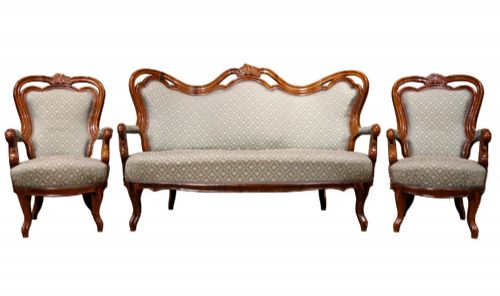


Rococo Carved Salon Settee
A rococo carved salon settee brings curved frames and ornate floral woodwork into a room, offering both decorative presence and comfortable seating.
Rococo Carved Salon Settee
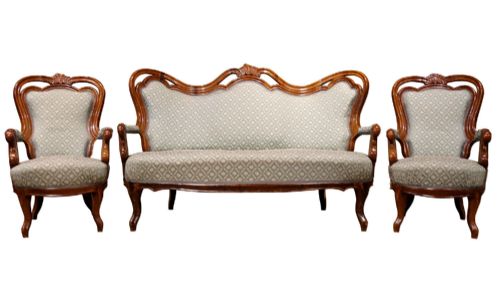
A rococo carved salon settee is typically encountered in Victorian and revival forms, drawing heavily on French Louis XV design traditions. These seats appear in walnut, mahogany, and giltwood finishes, often accompanying larger salon suites or appearing as standalone conversation pieces.
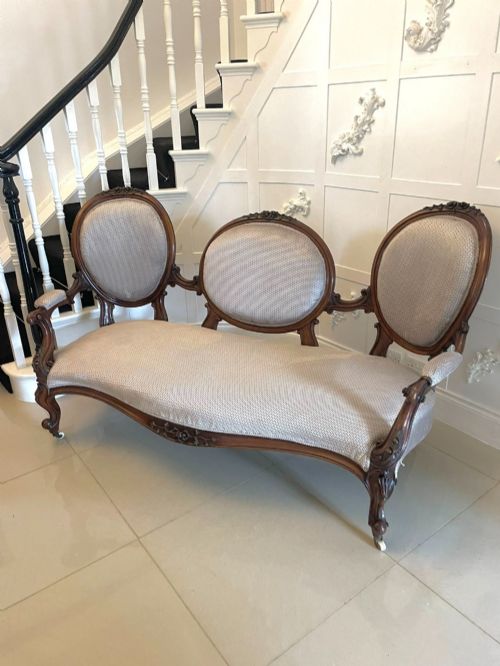
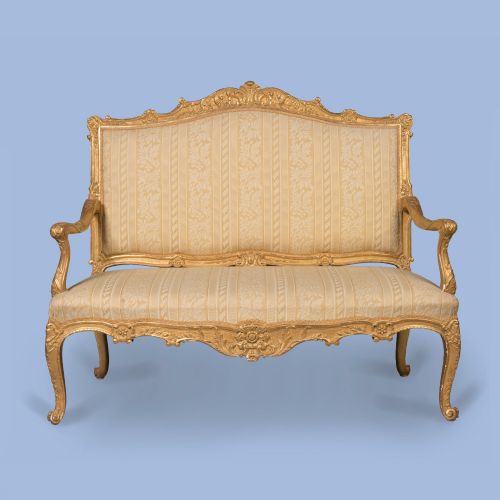
The physical form ranges from cameo-back and double-end settees to larger giltwood canapés. Makers fashioned these frames for formal reception rooms, where curved woodwork and upholstered seating signalled elegance and social standing.
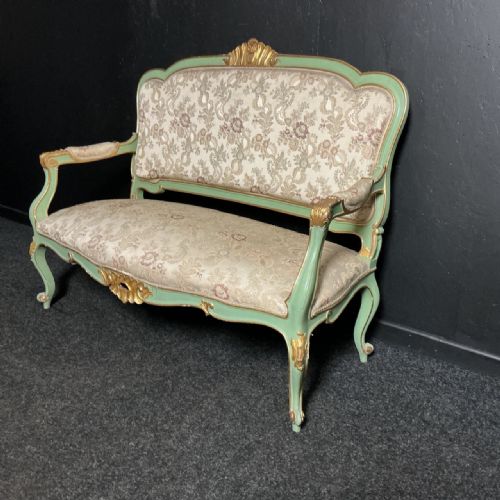
Most examples originate from the nineteenth century, spanning decades from the eighteen-fifties through to nineteen-ten, with occasional mid-century painted pieces also appearing. Buyers select them to anchor a drawing room or bedroom with historical character.
Assessing quality and craftsmanship
Depth and crispness of the wood carving separate standard production from superior examples. Finely executed floral motifs and scrolls show clean lines and careful hand-finishing across the entire wooden frame.
The choice of primary timber and the execution of the gilding or polishing dictate the visual weight of the piece. Walnut and giltwood frames with retained original surfaces command greater interest from collectors.
Listings feature walnut, mahogany, beech, and giltwood frames combined with silk and various upholstery textiles across nineteenth-century and revival periods.
Morison and Co Edinburgh
The Rococo Carved Salon Settee Glossary
- Canapé
- An upholstered sofa or settee designed in the French style. These pieces usually feature exposed wooden frames with carved decoration along the crest rail.
- Giltwood
- Wood covered with a thin layer of gold leaf. This finish appears frequently on revival salon furniture intended for formal entertaining spaces.
- Cameo Back
- A style of chair or settee back shaped to resemble a carved cameo. The wooden border frames the upholstered central panel.
- Double End Settee
- A sofa featuring raised scrolls or upholstered ends at both sides without a traditional back corner. This configuration allows a person to recline from either direction.
- Salon Suite
- A matching set of seating comprising a settee and matching armchairs. These ensembles were manufactured together for nineteenth-century drawing rooms.
Rococo Carved Salon Settee: Frequently Asked Questions
Where did people place a salon settee?
These settees stood in formal drawing rooms, boudoirs, and reception spaces where guests gathered for conversation and entertainment. They were positioned to catch the light and display the carved woodwork.
In larger houses, matching salon suites created a unified seating arrangement around a central table or fireplace.
How do I identify a revival style?
Revival pieces incorporate eighteenth-century French motifs, such as asymmetrical curves, cabriole legs, and acanthus carving, executed by nineteenth-century cabinetmakers.
Examination of the timber, joinery, and underlying webbing helps determine whether a piece dates to the Victorian period or the original era.
Are these settees comfortable for daily use?
While originally built for formal sitting, many retain supportive sprung bases and padded backs that suit modern relaxation. Much depends on whether the upholstery has been recently renewed using traditional methods.
Clients often place them in bedrooms, hallways, or living rooms where their visual impact outweighs heavy daily lounging.
What is the difference between a sofa and a settee?
The terms are often used interchangeably, though settee historically refers to a lighter, more decorative upholstered seat with an exposed wooden frame. Sofas can sometimes imply heavier padding and larger proportions.
On this page, both forms share the same decorative carving and nineteenth-century origins.